

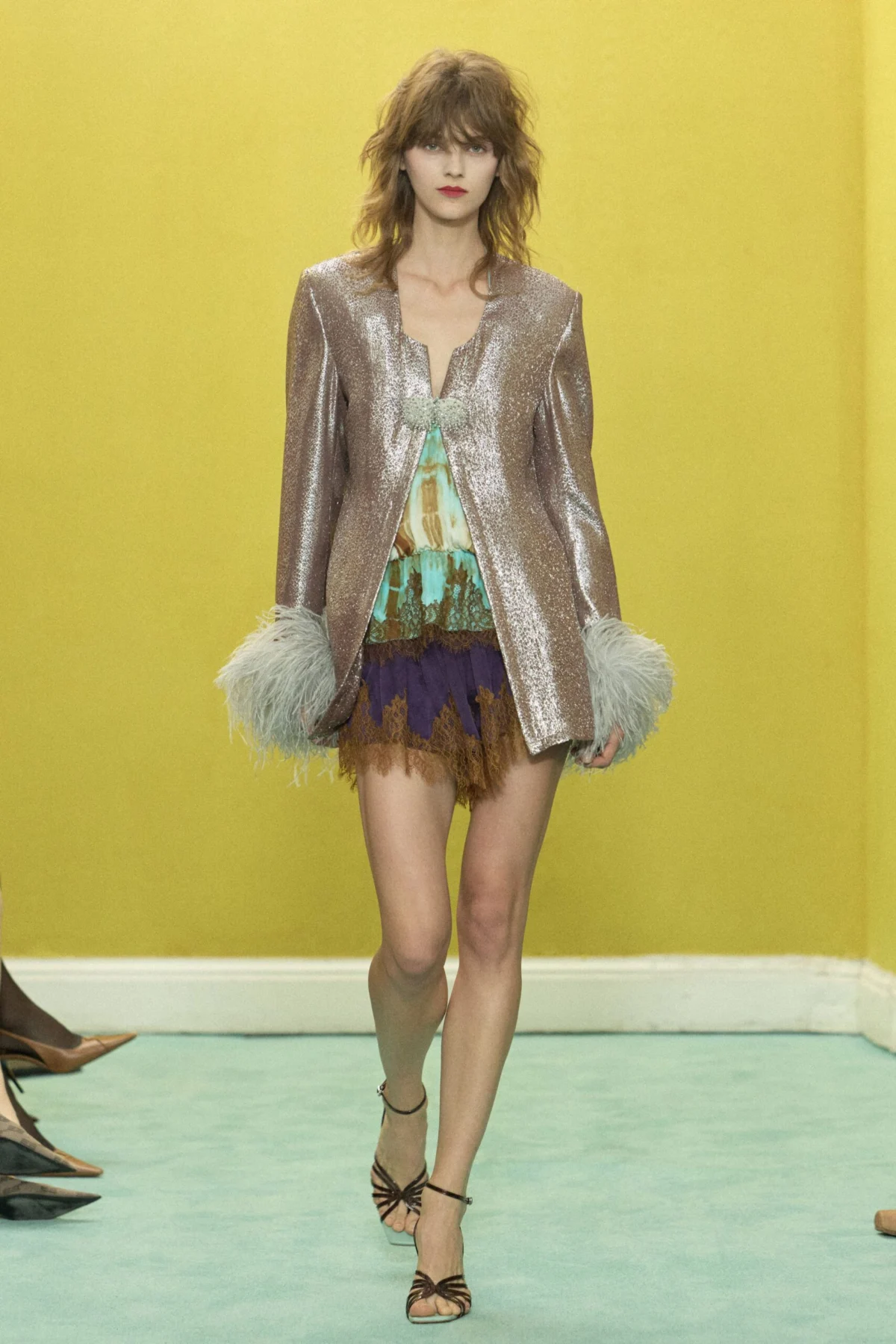
The whispers of Shanghai’s past converged with the bold pronouncements of contemporary fashion as designer Jacques Wei unveiled his latest collection, a vibrant ode to heritage and artistic reinvention, within the hallowed, yet recently rediscovered, walls of a 1928 villa. This architecturally significant residence, a final masterpiece by the esteemed Hungarian-Slovak architect László Hudec, provided a dramatically evocative backdrop for Wei’s ambitious vision, transforming a space steeped in “romantic melancholy” into a testament to the enduring power of creative dialogue between history and the future. The collection, aptly titled "Oriental Forest," pulsated with the ancient soul of Chaoshan craftsmanship, reimagined through a lens Wei termed "Sinic Fauvism." This artistic fusion resulted in an exuberantly verdant landscape of fashion, where riotous color palettes met the sharp precision of modern tailoring, and traditional brocades danced with contemporary silhouettes in a spirited exploration of contrasts.
A Heritage Reimagined: The Genesis of the "Oriental Forest"
Jacques Wei’s decision to stage his collection within the 1928 villa, a significant work by László Hudec, was not merely a stylistic choice but a profound engagement with Shanghai’s architectural legacy. Hudec, a prolific architect whose distinctive style shaped much of Shanghai’s urban fabric in the early 20th century, left an indelible mark on the city. The villa, his final completed project in Shanghai, had fallen into a state of disrepair, its abandonment lending it an air of poignant beauty. Wei, however, saw not decay, but potential. His approach, as he articulated, was to delve into the past, believing it to be a fertile ground for future innovation. This philosophy directly informed the collection’s thematic core, drawing heavily on the intricate symbols and motifs of Chaoshan’s ancient crafts.
The Chaoshan region, located in eastern Guangdong province, boasts a rich cultural heritage, renowned for its distinctive artisanal traditions, including intricate embroidery, wood carving, and porcelain making. Wei’s deliberate incorporation of these elements aimed to weave a narrative of cultural continuity, presenting them not as relics of the past, but as living inspirations for the modern woman. The "Oriental Forest" moniker itself conjured images of lush, untamed nature, a metaphor for the uninhibited expression of creativity and identity that the collection sought to embody.
Sinic Fauvism: A Daring Aesthetic Fusion
The stylistic bedrock of the "Oriental Forest" collection was Wei’s audacious concept of "Sinic Fauvism." This term, a portmanteau of "Sinic" (relating to China) and "Fauvism" (a post-Impressionist art movement characterized by strong colors and fierce brushwork), accurately describes the collection’s visual language. The vibrant, almost aggressive use of color, reminiscent of Fauvist painters like Henri Matisse and André Derain, was applied to traditional Chinese motifs and garment structures. This created a striking juxtaposition, injecting a sense of raw, untamed energy into the refined aesthetics of Chinese artistry.
The collection’s visual narrative was further enriched through a collaborative effort with artist Tang Haiqing. Haiqing’s contributions were instrumental in transforming the villa’s interior spaces into a series of immersive environments, each representing a distinct facet of a woman’s inner world. Paintings and vivid color palettes were strategically employed to set the mood for each "room," blurring the lines between historical architecture, an imagined boudoir, and a fantastical botanical garden. This multi-sensory experience amplified the collection’s themes, suggesting that even the most mundane activities, like gardening, could be imbued with an extraordinary sense of glamour and aspiration, symbolized by the whimsical notion of "sky-high stilettos" for such an endeavor.
The Collection: A Symphony of Glamour and Sophistication
The runway presentation itself was a spectacle of "glamour and seduction," yet it masterfully avoided the pitfalls of opulence that can feel forced or obligatory. Instead, Wei’s creations exuded an effortless allure, designed to empower the wearer rather than overwhelm her. The collection featured an array of garments that showcased a sophisticated interplay of textures, silhouettes, and embellishments.
Slender evening slip dresses, a staple of modern evening wear, were elevated with lavish feather fringes, adding a dynamic, tactile dimension that swayed with every movement. Jackets featured undulating hemlines and ornate, bejeweled buttons, offering a contemporary take on classic tailoring with a playful, almost Baroque, sensibility. The Vinyl miniskirts, a daring choice for many, were softened and refined with delicate lace edging, demonstrating Wei’s skill in balancing provocative materials with feminine detailing.
The silhouettes were consistently "sexy yet easy," a testament to Wei’s understanding of contemporary desires for both allure and comfort. This ease of wear was crucial in preventing the overtly theatrical elements from tipping into caricature. The "artsy eccentricity" that permeated the designs ensured that the "diva" persona remained grounded in sophisticated artistry, rather than succumbing to an over-the-top theatricality. This careful calibration allowed each piece to speak to a sense of confident individuality.
The Designer’s Vision: Empowering the Modern Woman
Jacques Wei’s overarching goal for his clientele is for them to feel an intrinsic sense of ownership and agency, as if they "own the place." Within the opulent yet faded grandeur of the Hudec villa, this aspiration felt not only attainable but intrinsically woven into the very fabric of the experience. The villa’s historical resonance, rather than overshadowing the fashion, seemed to amplify Wei’s creative spirit. The designer’s "appetite for color, ornament, and life" found a perfect canvas in the villa’s aged elegance.
Wei has been on a discernible journey in recent seasons, diligently seeking the "clearest expression of his design identity." With this collection, presented against such a historically charged backdrop and infused with his unique aesthetic, he appeared to have found a more assured and confident "groove." This collection marks a significant moment where his deep connection to his Chinese heritage harmoniously aligned with the contemporary global taste for theatrical dressing, a trend that has seen a resurgence in recent years, driven by a desire for self-expression and escapism.
Supporting Data and Industry Context
The fashion industry, particularly in major global hubs like Shanghai, is increasingly recognizing the commercial viability and critical acclaim that can be generated by designers who successfully bridge heritage with modernity. Data from recent fashion weeks indicate a growing consumer interest in brands that offer a unique cultural narrative alongside innovative design. For instance, a 2023 report by McKinsey & Company highlighted that consumers, especially younger demographics, are increasingly prioritizing authenticity and cultural relevance when making purchasing decisions. This trend suggests that Jacques Wei’s approach, deeply rooted in his cultural heritage and expressed through a contemporary lens, is well-positioned to resonate with a global audience.
Shanghai, as a city, has long been a nexus of East-West cultural exchange. Its history as a cosmopolitan center during the early 20th century, the very era of Hudec’s architectural contributions, provides a fertile ground for designers like Wei to draw inspiration. The city’s current status as a burgeoning fashion capital further amplifies the significance of such collections, contributing to its growing reputation as a source of innovative and culturally rich fashion. The economic impact of such events is also noteworthy. High-profile fashion shows not only generate immediate revenue through sales and media attention but also contribute to the broader economic ecosystem by supporting local artisans, fabric suppliers, and the hospitality industry.
Timeline of Significance
- 1928: The villa, a significant work by architect László Hudec, is completed in Shanghai.
- Early 2000s – 2010s: The villa falls into a period of disuse and neglect, acquiring a "romantic melancholy."
- 2020s: Designer Jacques Wei identifies the villa as a potential venue for his fashion presentation, recognizing its historical and aesthetic value.
- Recent Seasons: Wei focuses on articulating his design identity, exploring themes of heritage and contemporary expression.
- Current Season: Jacques Wei unveils his "Oriental Forest" collection within the historic Hudec villa, marking a significant moment in his design journey and a notable cultural event in Shanghai.
Inferred Reactions and Broader Implications
While direct quotes from all parties involved may not be immediately available, the strategic choice of venue and the thematic depth of the collection suggest a deliberate intent to engage with Shanghai’s historical narrative. It can be inferred that local heritage organizations and architectural preservation advocates would likely view such initiatives positively, as they bring attention to and generate renewed appreciation for historically significant structures. For the fashion industry, Wei’s approach signifies a powerful model for how cultural heritage can be a source of inspiration and a competitive advantage in the global market.
The "Oriental Forest" collection’s success implies a growing acceptance and celebration of "theatrical dressing" that is rooted in genuine cultural dialogue rather than superficial appropriation. This trend has broader implications for how fashion can serve as a vehicle for cultural understanding and exchange. By reinterpreting ancient crafts through a modern, avant-garde aesthetic, Wei not only honors his heritage but also makes it accessible and relevant to a contemporary audience. This can foster a greater appreciation for the intricacies of traditional artistry and the enduring value of cultural identity in a rapidly globalizing world. The fusion of historical architecture and innovative fashion presented by Jacques Wei at the Hudec villa serves as a compelling example of how the past can indeed illuminate and enrich the future.
