

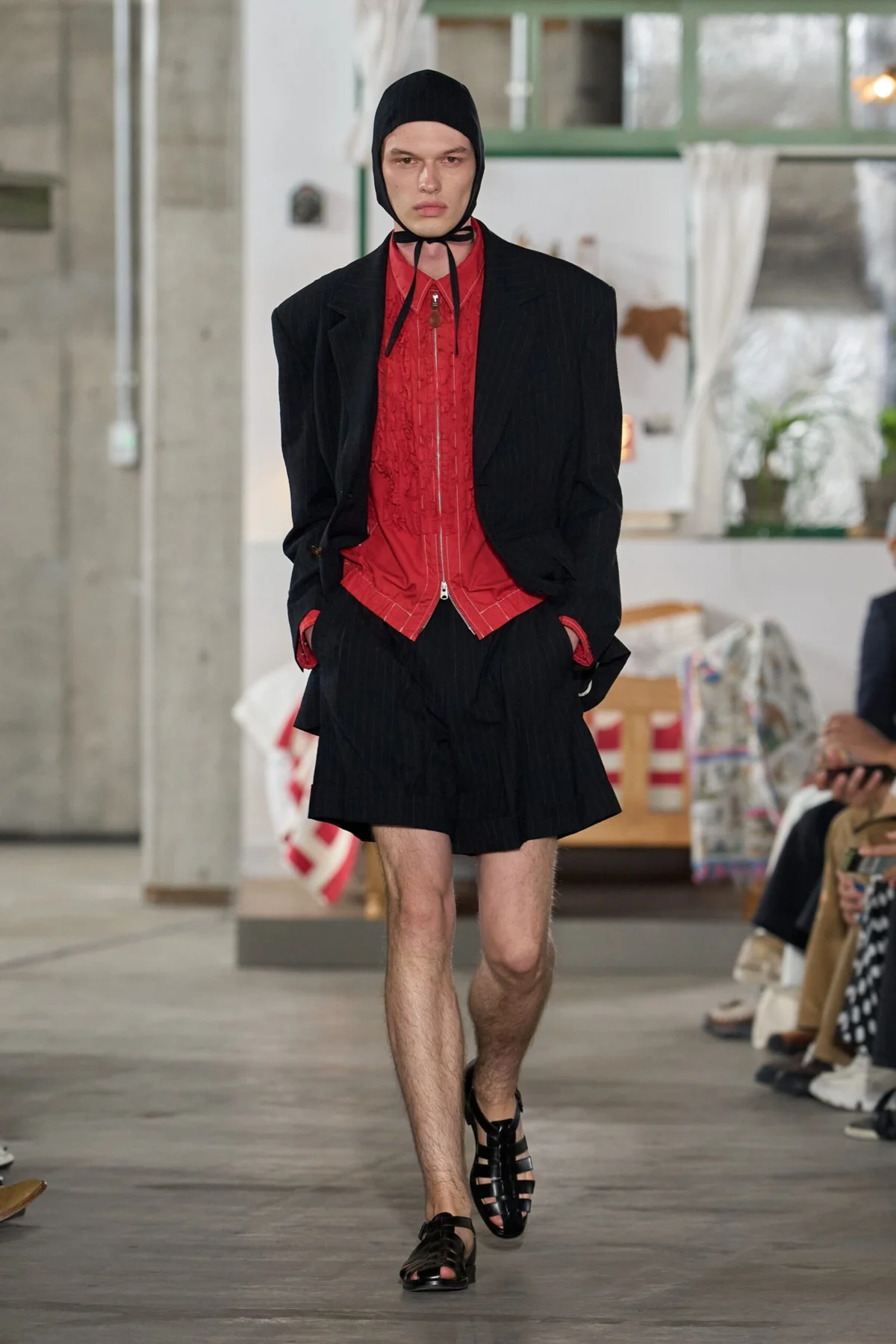
Tokyo Fashion Week, often a barometer of the global fashion zeitgeist, this season presented a landscape that, while perhaps more discreet than in previous iterations, was undeniably punctuated by moments of significant impact. Amidst a schedule featuring numerous designers showcasing off-calendar, Khoki, a brand rapidly cultivating a dedicated following within the menswear sphere, injected a palpable surge of excitement with its third runway presentation. This pivotal event was made possible through the strategic support of Rakuten’s ByR initiative, a program designed to foster and amplify emerging fashion talent in Japan. The show, held in a vast, industrial concrete warehouse overlooking the expansive Tokyo Bay, transcended a mere presentation of garments, transforming into an immersive narrative that deeply resonated with the brand’s core identity and designer Koki Abe’s personal history.
A Homage to Childhood and Craftsmanship
The meticulously curated show space served as a profound invocation of Koki Abe’s formative years. Replicas of rooms from his family home in Yamanashi were painstakingly recreated, adorned with an eclectic array of household items and bric-a-brac. These artifacts, a blend of genuine childhood mementos and precisely chosen props, offered a tangible connection to Abe’s past. Antiques, cherished toys, and even humble house slippers lined the entrance, creating an immediate sense of intimacy and lived experience. A crumpled T-shirt in a laundry basket further underscored the authentic, lived-in atmosphere. The exterior wall of the venue was transformed into a faithful reproduction of the flower shop operated by Abe’s mother, a poignant tribute to his familial roots and the environment that shaped his creative sensibilities. "The whole production team visited [my home]," Abe explained, detailing the dedication to authenticity, "and we recreated the layout, like how things were arranged on the tables, exactly as they were." This commitment to verisimilitude not only provided a unique backdrop but also served as a powerful visual metaphor for the brand’s grounding in personal narrative and tangible heritage.
Evolving Design Language: Familiarity Reimagined
The collection itself demonstrated a sophisticated evolution of Khoki’s established design language. Familiar motifs from previous seasons were revisited and reinterpreted with subtle yet impactful innovations. Knee-length shorts, a recurring silhouette, were elevated with precisely laser-cut hems, offering a clean, modern finish. The brand’s signature gray pinstripe tailoring saw a significant expansion in volume, with exaggerated shoulders lending a powerful, architectural quality to the garments. Relaxed-fit jeans, a staple in contemporary wardrobes, were reimagined with strategic cut-outs that artfully revealed glimpses of leopard print and delicate broderie anglaise, injecting an element of playful surprise and textural contrast. Geometric prints, previously confined to shirts, now adorned a striking paneled wrap skirt, which was expertly combined with rich brown leather, showcasing a more integrated and versatile application of the brand’s visual vocabulary. This deliberate layering and refinement of existing design elements address a past critique of Khoki’s direction feeling somewhat vague or difficult to categorize. As the brand consistently builds upon its foundational aesthetic each season, its unique position within the fashion landscape becomes increasingly defined and compelling.
The Fusion of Commercial Acumen and Whimsical Fantasy
Khoki’s latest collection masterfully balances commercial viability with an undeniable sense of fun and fantasy, a duality that forms the core of its magnetic appeal. The patchwork jackets featured in looks 10 and 19, for instance, are poised to become highly sought-after best-sellers, demonstrating a keen understanding of market trends and consumer desires. Furthermore, the collection notably expanded its reach into womenswear, signaling a strategic move to broaden its customer base and solidify its presence in a more comprehensive fashion market. However, it is the brand’s consistent ability to infuse its creations with an element of joy and imaginative flair that truly sets it apart. This is evident in the anachronistic and androgynous flourishes that pepper the collection. Ruffled shirts, intricately fitted corset jackets paired with opulent velvet opera gloves, and a doublet-style camouflage garment embellished with gleaming gold buttons and glittering trims all contribute to a theatrical and undeniably captivating aesthetic.
Theatrical Inspiration and Unexpected Collaborations
Designer Koki Abe elaborated on the inspirations behind these theatrical elements, stating, "I’ve been collecting vintage stage costumes as a personal hobby, and I thought adding them would make the show more interesting and theatrical, and give it some spice." This personal passion directly informed the collection’s presentation, leading to innovative pairings that challenged conventional menswear norms. "So we put together looks that combined things like corsets, even though it’s menswear, and pieces inspired by military stage costumes," Abe continued. The integration of these historical and performative elements created a rich tapestry of visual references. Tights and catsuits were adorned with prints designed to evoke the appearance of antique floral wallpaper, a deliberate nod to the domestic interiors that inspired the show’s setting and perhaps a subtle reference to the William Morris book displayed in one of the recreated rooms. In a particularly charming and unexpected collaboration, a leather-collared workwear jacket featured an image of Disney’s beloved character, Dumbo. This inclusion speaks to a broader cultural dialogue, blending high fashion with accessible, universally recognized imagery.
A Maturing Brand with Enduring Charm
Khoki, while demonstrating a clear maturation in its design approach and commercial strategy, has successfully retained its characteristic blend of youthful exuberance and whimsical charm. The brand has unequivocally reasserted its position as a significant player to watch within the global fashion conversation. The atmosphere following the show was one of palpable celebration, as attendees mingled and reflected on the collection’s impact. This sense of collective enjoyment and recognition of Khoki’s creative vision was amplified by a subtle yet powerful detail on the back of the Dumbo-emblazoned jacket. Beneath the image of the iconic flying elephant, the words of encouragement spoken by Timothy Q. Mouse as Dumbo achieves flight were emblazoned: "You’re Makin’ History." This poignant inscription served as a fitting summation of the brand’s journey and its ambitious trajectory, encapsulating a spirit of progress, aspiration, and the enduring power of belief in one’s own vision.
Context of Tokyo Fashion Week and Rakuten’s ByR Initiative
This year’s Tokyo Fashion Week, which typically takes place in March and October, has seen a notable shift in presentation formats, with many established and emerging designers opting for digital showcases or private appointments in response to evolving industry demands and logistical considerations. The official schedule, while still a cornerstone of the event, has become more fluid, allowing for greater flexibility and individual expression. In this dynamic environment, Khoki’s physical runway show, supported by Rakuten’s ByR initiative, offered a vital moment of tangible engagement and collective experience for the fashion community.
Rakuten’s ByR initiative, launched with the explicit aim of nurturing and promoting Japanese fashion designers, plays a crucial role in bridging the gap between emerging talent and wider market access. By providing financial support, marketing expertise, and crucial industry connections, ByR empowers brands like Khoki to realize ambitious projects such as large-scale runway presentations. This partnership underscores Rakuten’s commitment to fostering innovation within Japan’s creative industries and its understanding of the power of fashion to drive cultural and economic impact. The success of Khoki’s show is a testament to the efficacy of such targeted support systems in elevating promising designers onto a more prominent global stage.
Broader Implications for Menswear and Fashion Narratives
Khoki’s approach to menswear extends beyond mere garment construction; it is a sophisticated exercise in storytelling and identity construction. The brand’s willingness to incorporate traditionally feminine elements like corsetry and opera gloves, alongside military-inspired silhouettes and whimsical Disney motifs, challenges rigid gender binaries and opens up new avenues for self-expression within menswear. This blurring of boundaries is reflective of a broader trend in contemporary fashion, where individuality and personal narrative are increasingly valued over strict adherence to predefined categories.
The success of this collection suggests a growing appetite for fashion that is not only aesthetically compelling but also emotionally resonant. By grounding his designs in personal history and infusing them with elements of fantasy and theatricality, Koki Abe has crafted a brand that speaks to a desire for authenticity and escapism. The implications for the fashion industry are significant: brands that can successfully weave compelling narratives and connect with consumers on a deeper, more personal level are likely to achieve greater longevity and influence. Khoki’s ability to achieve this balance, while remaining commercially astute, positions it as a leader in this evolving landscape. The brand’s trajectory indicates a future where fashion is not just about what you wear, but the story you tell through it.
