

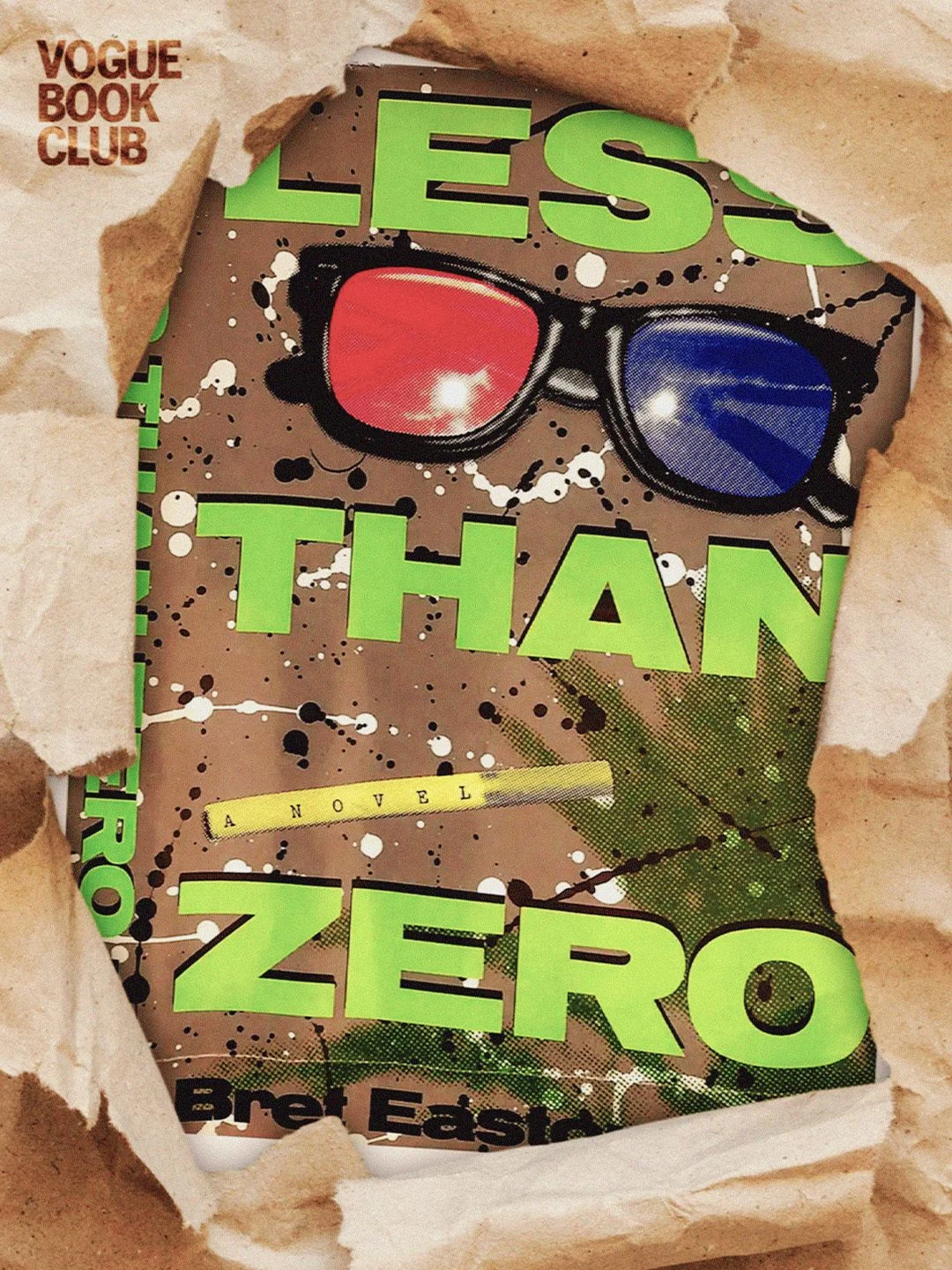
Vogue’s esteemed Book Club has officially commenced its third installment, embarking on a literary journey that evokes the iconic imagery of Ray-Bans, the melancholic strains of Elvis Costello, and a palpable sense of unease on the Los Angeles freeways. This season, the magazine has selected Bret Easton Ellis’s seminal first novel, Less Than Zero, a work that, upon its explosive release in 1986, solidified Ellis’s position as a provocative voice in contemporary literature. At the tender age of 21, while still an undergraduate at Bennington College, Ellis penned this chilling and haunting portrait of his Los Angeles teenage existence. The novel’s signature declarative and hypnotic prose, heavily influenced by literary titans Joan Didion and Ernest Hemingway – two figures Ellis openly admired – delved into themes of emotional detachment, the pervasive presence of drugs and parties, the insular world of affluent youth, and the pursuit of fleeting, often meaningless, sexual encounters.
The selection of Less Than Zero by Vogue’s Book Club underscores the enduring cultural significance of the novel, which has continued to resonate with readers and critics for nearly four decades. Its unflinching depiction of a generation adrift in a landscape of material excess and emotional vacuity struck a nerve upon its initial publication and continues to offer a disquieting yet mesmerizing lens through which to examine a specific stratum of American society.
The Genesis of a Literary Phenomenon
Bret Easton Ellis’s entry into the literary world with Less Than Zero was nothing short of a seismic event. Published in 1986 by Simon & Schuster, the novel was an immediate sensation, capturing the zeitgeist of a particular West Coast milieu. Ellis, a native of the San Fernando Valley, drew heavily from his own experiences and observations of the affluent, often jaded, youth culture of Los Angeles. The novel’s raw, unvarnished portrayal of a generation seemingly devoid of emotional depth, engaged in a cycle of drug use, hedonistic parties, and superficial relationships, was both shocking and compelling.
The literary influences cited by Ellis – Joan Didion’s precise and observational prose, and Ernest Hemingway’s stark, declarative style – are palpable in Less Than Zero. Didion’s keen eye for the cultural undercurrents of California and Hemingway’s mastery of conveying profound emotion through minimalist language are masterfully blended by Ellis to create a unique narrative voice that is both detached and deeply impactful. The novel’s opening line, "People are afraid to merge on freeways in Los Angeles," has become an iconic encapsulation of the book’s central themes of isolation, anxiety, and the inherent difficulties of connection in a sprawling, impersonal urban landscape.
A Disquieting Portrait of Los Angeles
Despite its often bleak subject matter, Less Than Zero possesses a mesmerizing specificity that grounds its narrative. The novel meticulously details the locales that defined this particular Los Angeles subculture: casual meetups at the classic Du-par’s restaurant, gatherings at the opulent Galleria, lavish parties in the exclusive Holmby Hills neighborhood, and escapist drives along the iconic Wilshire Boulevard out to the stark beauty of Palm Springs. Ellis’s keen observational skills extend to the minutiae of pop culture, with specific brand names of cars, the music playing on the radio, and the fashion choices of his characters all meticulously cataloged. This attention to detail creates a vivid and immersive experience for the reader, allowing them to step directly into the world Ellis depicts.
The narrative centers on Clay, a privileged college student who returns to Los Angeles from an unnamed New Hampshire college for Christmas break. His four-week sojourn is intended as a period of reconnection with friends, a necessary breakup with his on-again, off-again girlfriend Blair, and an attempt to understand the increasingly troubling trajectory of his friend Julian. The unfolding events reveal a landscape saturated with ennui, where youthful exuberance has curdled into a profound sense of aimlessness and moral ambiguity. The superficiality of their lives is underscored by the underlying currents of desperation and a haunting lack of genuine connection.
Critical Acclaim and Cultural Impact
The critical reception of Less Than Zero was immediate and, at times, polarized. The New York Times’s formidable book critic, Michiko Kakutani, famously described the novel as "one of the most disturbing novels I’ve read in a long time." This sentiment, while acknowledging the book’s unsettling nature, also spoke to its power and ability to provoke strong reactions. The novel’s unflinching portrayal of a disaffected youth culture, set against the backdrop of sun-drenched Southern California, struck a chord with a generation grappling with its own identity and place in the world.
Less Than Zero quickly became a bestseller, propelling Bret Easton Ellis to a level of celebrity that was inextricably linked to the very lifestyle he depicted. This early success paved the way for a prolific career, during which Ellis continued to explore similar themes of consumerism, violence, and the dark underbelly of American society in subsequent novels such as The Rules of Attraction, American Psycho (a novel whose controversial content led to its initial cancellation by a publisher before being picked up by another and achieving cult status), Glamorama, and Lunar Park.
In 2023, Ellis revisited the thematic territory of his debut with The Shards, a novel that explored similar themes of memory, trauma, and the lingering specter of adolescence in 1980s Los Angeles. The buzz surrounding The Shards has been amplified by the announcement of a forthcoming adaptation by Ryan Murphy for FX, starring Kaia Gerber and Homer Gere, slated for an August release. This renewed interest in Ellis’s early work, particularly Less Than Zero, demonstrates the enduring legacy of his narrative vision.
A Master of Satire and Social Commentary
Ellis’s enduring appeal lies in his skill as a sly satirist. His detached, almost clinical, observation of California’s darker side remains as potent and relevant today as it was when Less Than Zero was first published. The novel’s keen insights into the anxieties and excesses of a particular cultural moment have cemented its status as a literary touchstone. The opening sentence, "People are afraid to merge on freeways in Los Angeles," serves as a powerful metaphor for the larger societal disconnects and the challenges of navigating complex relationships and identities in a rapidly changing world.
Vogue’s Book Club initiative, which aims to engage its readership with significant works of literature, provides a platform for a deeper exploration of Less Than Zero‘s enduring themes. The club’s engagement with the novel encourages a contemporary re-examination of its narrative and its impact on literary and cultural discourse.
Reading Guide and Engagement
Vogue has provided a structured reading guide for its Book Club members, facilitating a communal reading experience. The guide, based on the 1998 Vintage Contemporaries edition of Less Than Zero, outlines specific reading periods:
- July 30 – August 6: Pages 9 (beginning with "People are afraid…") to page 118 (ending with "…and we drive to After Hours."). This section likely sets the scene, introduces key characters and their initial predicaments, and establishes the pervasive atmosphere of the novel.
- August 7 – August 13: Pages 119 (beginning with "The girl I’m sitting next to…") to the end of the novel. This concluding segment would encompass the narrative’s climax and resolution, delving deeper into the characters’ fates and the overarching implications of their experiences.
This structured approach encourages active participation and discussion, allowing members to delve into the nuances of Ellis’s prose and the complexities of his characters over a defined period. The code Vogue15, offering a 15% discount at Bookshop.org, further incentivizes engagement with the selected title and supports independent bookstores. The accompanying directive to follow along with stories on the Vogue app suggests a multi-platform approach to literary engagement, fostering a vibrant online community around the book.
Broader Implications and Enduring Relevance
The selection of Less Than Zero for Vogue’s Book Club speaks to the novel’s enduring relevance in contemporary society. While rooted in the specifics of 1980s Los Angeles, the themes of alienation, the pursuit of superficial pleasures, the impact of wealth and privilege, and the struggle for genuine connection continue to resonate with readers across generations. In an era increasingly dominated by digital interactions and curated online personas, Ellis’s unflinching portrayal of human vulnerability and existential unease offers a stark counterpoint.
The novel’s continued examination of the psychological toll of excessive materialism and the search for meaning in a culture often perceived as superficial provides fertile ground for contemporary analysis. As society grapples with issues of mental health, social inequality, and the impact of consumer culture, Less Than Zero serves as a powerful literary artifact, prompting reflection on the timeless human condition. Vogue’s decision to spotlight this foundational work by Bret Easton Ellis not only celebrates a significant piece of literary history but also invites a timely conversation about the enduring power of literature to illuminate the complexities of our world. The "afraid to merge" sentiment, so vividly captured in the novel’s opening, remains a potent metaphor for the challenges of navigating personal and societal relationships in the modern age.
