

Paris Fashion Week, typically a spectacle of glittering runways and coveted front-row seats, witnessed a profound shift in its opening days as French designer Marine Serre unveiled a groundbreaking collaboration with the iconic Louvre Museum. Eschewing a traditional runway show, Serre presented five extraordinary creations born from a year-long dialogue with the venerable institution, demonstrating a profound connection between artistic heritage and contemporary haute couture. This partnership, announced amidst the fervor of Paris Fashion Week, signals a potent convergence of art, history, and sustainable design, challenging conventional notions of value and creativity in the fashion industry.
A Fusion of Icons: Serre and the Louvre
The collaboration between Marine Serre, a designer celebrated for her signature crescent moon motif and her pioneering use of upcycled materials, and the Louvre, a global beacon of art and culture, represents a significant moment in contemporary fashion. The initial discussions, which commenced approximately a year ago, have culminated in a collection that not only showcases Serre’s distinctive imaginative prowess but also underscores her unwavering commitment to resourcefulness and artistic reinvention. These five pieces are not merely garments; they are tangible testaments to the transformative power of vision and dedication, proving that art can emerge from the most unexpected sources.
The collection’s genesis lies in Serre’s philosophy that true value in art and fashion is not dictated by the cost of materials, but by the time, intention, and meditative process invested in their creation. "What I am known for, and what is typical for Marine Serre, is to create couture from things that have no value," Serre explained in a statement following the reveal. "And that’s also the link I like between what I do and painting: it’s not the paint that costs a lot, but rather the time that you pass through painting. Here, we spent a lot of meditative time in the atelier." This sentiment directly echoes the dedication of masters like Leonardo da Vinci, whose meticulous approach to rendering the drapery of the Mona Lisa, for instance, took years to perfect, a detail Serre herself referenced.
Masterpieces Born from the Unexpected
Each of the five creations is a testament to Serre’s ability to imbue discarded or overlooked materials with an artistic soul. The collection features a black gown entirely adorned with nearly 500 small, unused makeup brush heads, forming a texture that uncannily resembles hairy fish scales. This piece, a bold statement on reimagining the mundane, transforms a beauty tool into a luxurious surface.
Another standout is a bustier minidress meticulously crafted from smashed paint tubes. This intricate garment, a vibrant tapestry of fragmented color, represents a staggering 240 hours of dedicated labor, highlighting the immense craftsmanship involved in Serre’s upcycling process. The fusion of artistic debris and wearable art is a recurring theme, demonstrating how discarded remnants of creative endeavors can be reborn into something entirely new and beautiful.
Further pushing the boundaries of material innovation, Serre presented a dress constructed from the backs of watch faces, ingeniously strung together to create a form of metallic chainmail. This piece not only speaks to the passage of time but also to the intricate mechanics and aesthetics of timekeeping devices, reimagined as a protective and decorative armor.
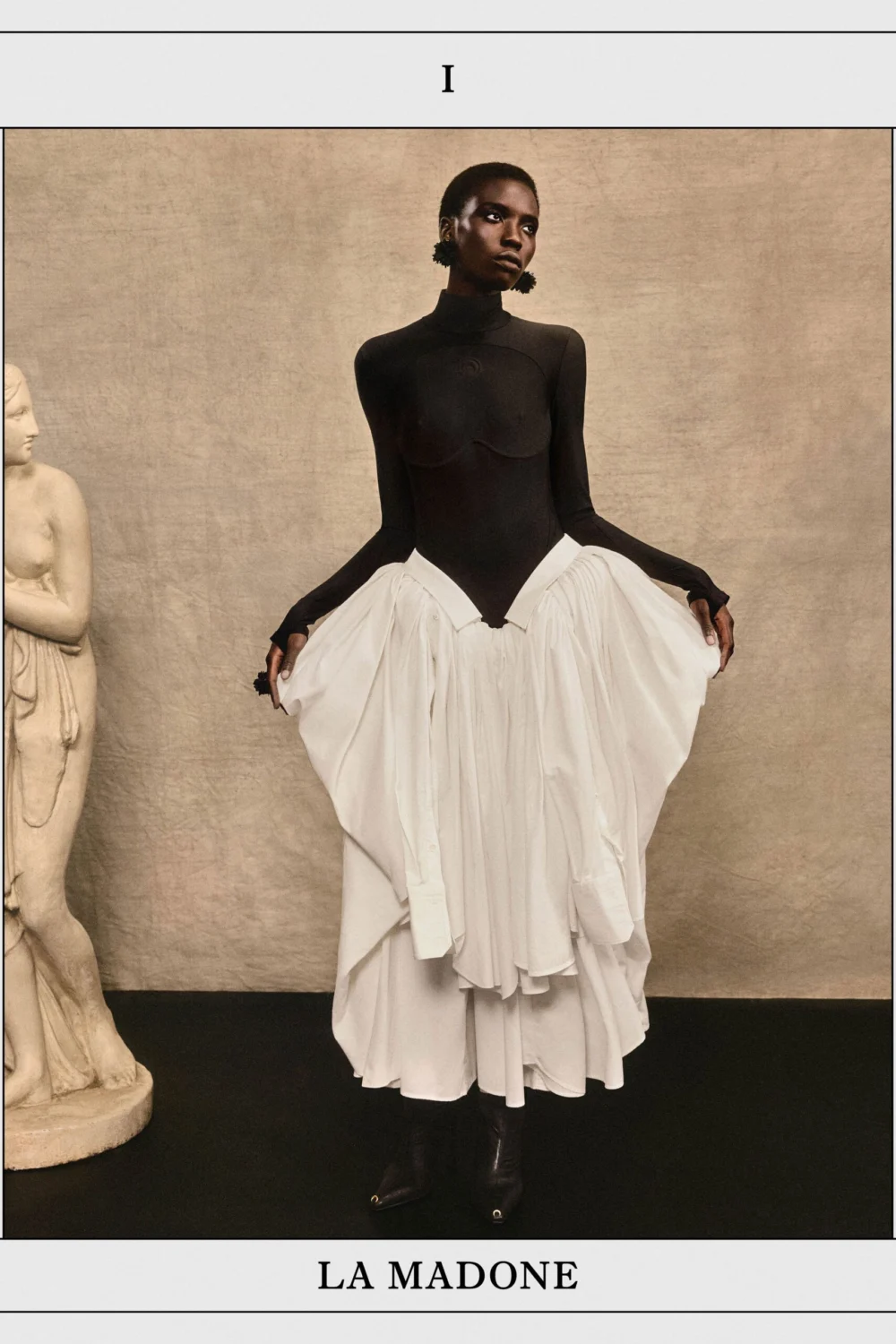
A particularly evocative piece, titled the "Flemish Painter’s Dress," offers a contemporary reinterpretation of historical silhouettes. It masterfully splices a sleek, black scuba-style top with a voluminous pouf skirt fashioned from an assembly of painter’s shirts. This design juxtaposes modern utilitarian fabric with the rustic charm and textures of traditional artist attire, creating a dialogue between past and present sartorial sensibilities.
The pièce de résistance, the "La Joconde dress," is a breathtaking wearable puzzle. Each component of this monumental garment was individually moistened and meticulously embroidered with color-corresponding thread. After an astounding 420 hours of dedicated work, the individual pieces were seamlessly integrated, forming a cohesive and wearable silhouette. The precision required to ensure these elements dovetailed perfectly is a testament to Serre’s technical mastery, making it a fitting tribute to the enigmatic smile of the Mona Lisa herself. The profound artistic resonance of these creations also aligns thematically with the Met Gala’s recent "Fashion is Art" theme, underscoring the evolving dialogue between these two powerful cultural forces.
The Grace of Time: A Philosophy of Timelessness
The overarching theme of Serre’s main collection, "The Grace of Time," is deeply intertwined with the Louvre collaboration. This collection explores what imbues clothing with a sense of enduring relevance and timeless appeal. The accompanying lookbook amplifies this concept, presenting each individual as a character within classical tableaux, their poses and styling reminiscent of renowned portraiture. Yet, within these artistic compositions, the clothing itself is resolutely contemporary.
Examples include a tank top seamlessly integrated with an open shirt, creating a layered trompe-l’œil effect. Another notable piece is a black top featuring a dimensional portrait collar, which Serre describes as an "aura," adding a sculptural element that elevates the garment beyond mere apparel. A commercial interpretation of the Flemish dress also features, where the skirt’s voluminous silhouette is achieved by building up layers of T-shirts around the waist, offering a more accessible, yet still artful, rendition of the couture concept.
The lookbook is further enriched with imagery of fruits, flowers, and even domestic animals, evoking the still-life tradition and the domesticity often depicted in classical art. Amidst these artistic flourishes, the wardrobe offerings are abundant. A leather ensemble showcases embossed moons, a nod to Serre’s signature motif, complemented by a faux fur "shawl" that elegantly drapes over the shoulders. A denim jacket is reimagined with historical sleeves and corset seams, blending classic tailoring with modern denim. Artful tapestries are paneled into denim pieces, with each iteration offering unique variations, emphasizing the individuality of handcrafted elements. Serre’s signature jersey fabric is ingeniously repurposed into pompom cuffs on a little black dress, which features sheer incrustations, a design dubbed "La Bourgeoise."
One particularly striking portrait, titled "La Providence," showcases draped mesh in Serre’s signature monogram and an inky blue hue. The slinky dress traces the lower bust line, resembling a bodice without any restrictive constriction, a testament to Serre’s commitment to both aesthetic beauty and wearability.
Beyond Materiality: The Enduring Impact of Design
Marine Serre’s approach transcends mere aesthetics; it is a profound commentary on value, sustainability, and the very definition of art. "It’s really important to make beautiful pieces that a woman recognizes herself in, but it’s far more complicated to do a new thing in ready-to-wear than in couture," Serre acknowledged, underscoring the immense effort invested in this collection. She drew a parallel with Leonardo da Vinci’s protracted efforts in depicting the Mona Lisa’s attire, a process that spanned decades and involved meticulous adjustments to reflect the sartorial nuances of the era.
"Five hundred years later and nine years into her brand, Serre is thinking of the long arc of her clothing beyond her material ingenuity," the article notes. This forward-thinking perspective is crucial. Serre’s ambition is to create pieces that possess an inherent "temporality," garments that retain their relevance and aesthetic appeal for years to come. "I am trying to have no temporality in what I’m doing. Like, imagine this in five years, it will still work," she stated. "If you are a good designer, that’s what you should want." This philosophy positions Serre not just as a fashion designer, but as an artist dedicated to creating enduring works that resonate across time.
The implications of this Louvre collaboration are far-reaching. It elevates upcycled fashion from a niche movement to a recognized form of high art, deserving of the same reverence as traditional artistic mediums. It challenges the ephemeral nature of fast fashion and promotes a more conscious, sustainable approach to consumption. Furthermore, it highlights the Louvre’s commitment to engaging with contemporary culture and art forms, bridging the gap between historical masterpieces and modern creative expression.
Context and Data: The Growing Influence of Sustainable Fashion
The fashion industry is undergoing a significant transformation, with sustainability emerging as a paramount concern for consumers and brands alike. According to a 2023 report by Statista, the global ethical fashion market was valued at approximately $7.5 billion in 2022 and is projected to grow to over $10 billion by 2027, indicating a strong consumer demand for environmentally and socially responsible products. Marine Serre has been a vanguard in this movement, with her brand consistently incorporating upcycled materials since its inception. Her signature crescent moon logo, often found on repurposed fabrics, has become a symbol of this commitment.
The Louvre, as one of the world’s largest and most visited museums, attracts millions of visitors annually, providing an unparalleled platform for artistic and cultural discourse. Its partnership with a contemporary designer like Serre signifies a deliberate effort to broaden its engagement and demonstrate the relevance of art in all its forms. This collaboration can be seen as part of a larger trend in the cultural sector, where institutions are increasingly seeking to connect with contemporary artists and designers to foster new audiences and explore innovative forms of expression.
Chronology of a Collaboration
- Approximately One Year Prior to Paris Fashion Week: Initial conversations commence between Marine Serre and representatives from the Louvre Museum. These discussions lay the groundwork for a potential collaboration centered on art, fashion, and heritage.
- Throughout the Year: Serre and her atelier engage in a deep creative process, conceptualizing and developing five distinct couture pieces. This period is characterized by extensive research, material sourcing (primarily upcycled elements), and meticulous craftsmanship, often involving hundreds of hours of dedicated work per garment.
- Leading Up to Paris Fashion Week: The collaboration culminates in the finalization of the five pieces. Serre decides to forgo a traditional runway show in favor of a more intimate and impactful reveal of these unique creations, emphasizing their artistic merit.
- During Paris Fashion Week: The five collaborative pieces are unveiled, alongside Serre’s main collection, "The Grace of Time." The announcement generates significant buzz within the fashion industry and broader cultural circles, highlighting the innovative partnership.
Official Responses and Industry Reactions (Inferred)
While direct quotes from Louvre officials specifically regarding this collaboration were not immediately available in the provided text, the act of partnering with a contemporary designer of Serre’s caliber suggests a strong endorsement from the museum’s leadership. Museums globally are increasingly recognizing the power of fashion as an art form and a vehicle for cultural dialogue. This collaboration likely stems from a shared vision of promoting creativity, sustainability, and the enduring power of artistic expression.
Industry reactions, as evidenced by the attention garnered by Serre’s announcement, have been overwhelmingly positive. Fashion critics and commentators have lauded the designer’s visionary approach and the Louvre’s progressive stance. The partnership is seen as a landmark event, setting a precedent for future collaborations between cultural institutions and fashion houses. This move reinforces the growing recognition of fashion design as a legitimate and significant artistic discipline.
Broader Impact and Implications
The Marine Serre x Louvre collaboration carries significant implications for the future of fashion and art.
- Elevating Upcycled Fashion: By associating with the Louvre, Serre’s upcycled creations are legitimized as high art, potentially inspiring more designers to embrace sustainable practices and encouraging consumers to view pre-loved or repurposed materials with greater appreciation.
- Redefining Value in Art: The partnership challenges the traditional metrics of value in art and fashion, emphasizing skill, concept, and time invested over the intrinsic cost of materials. This philosophical shift can influence how art is created, consumed, and appreciated.
- Bridging Cultural Divides: The collaboration successfully bridges the historical reverence of the Louvre with the cutting-edge innovation of contemporary fashion, demonstrating that these seemingly disparate worlds can coexist and enrich each other.
- Inspiring Future Generations: This partnership serves as a powerful inspiration for aspiring designers and artists, showing them that creativity can flourish through unconventional means and that artistic expression knows no bounds, even within prestigious institutions.
- Promoting Conscious Consumption: In an era grappling with environmental concerns, this collaboration offers a compelling narrative for conscious consumption. It showcases how creativity and responsibility can go hand-in-hand, encouraging a more mindful approach to fashion and material usage.
Marine Serre’s collaboration with the Louvre is more than just a fashion collection; it is a cultural statement, a testament to artistic ingenuity, and a hopeful glimpse into a future where art, sustainability, and fashion converge to create enduring beauty. The five pieces stand as powerful examples of how discarded materials, when imbued with vision and meticulous craftsmanship, can transcend their origins to become masterpieces, echoing the timeless allure of art that resides within the Louvre’s hallowed halls.
