

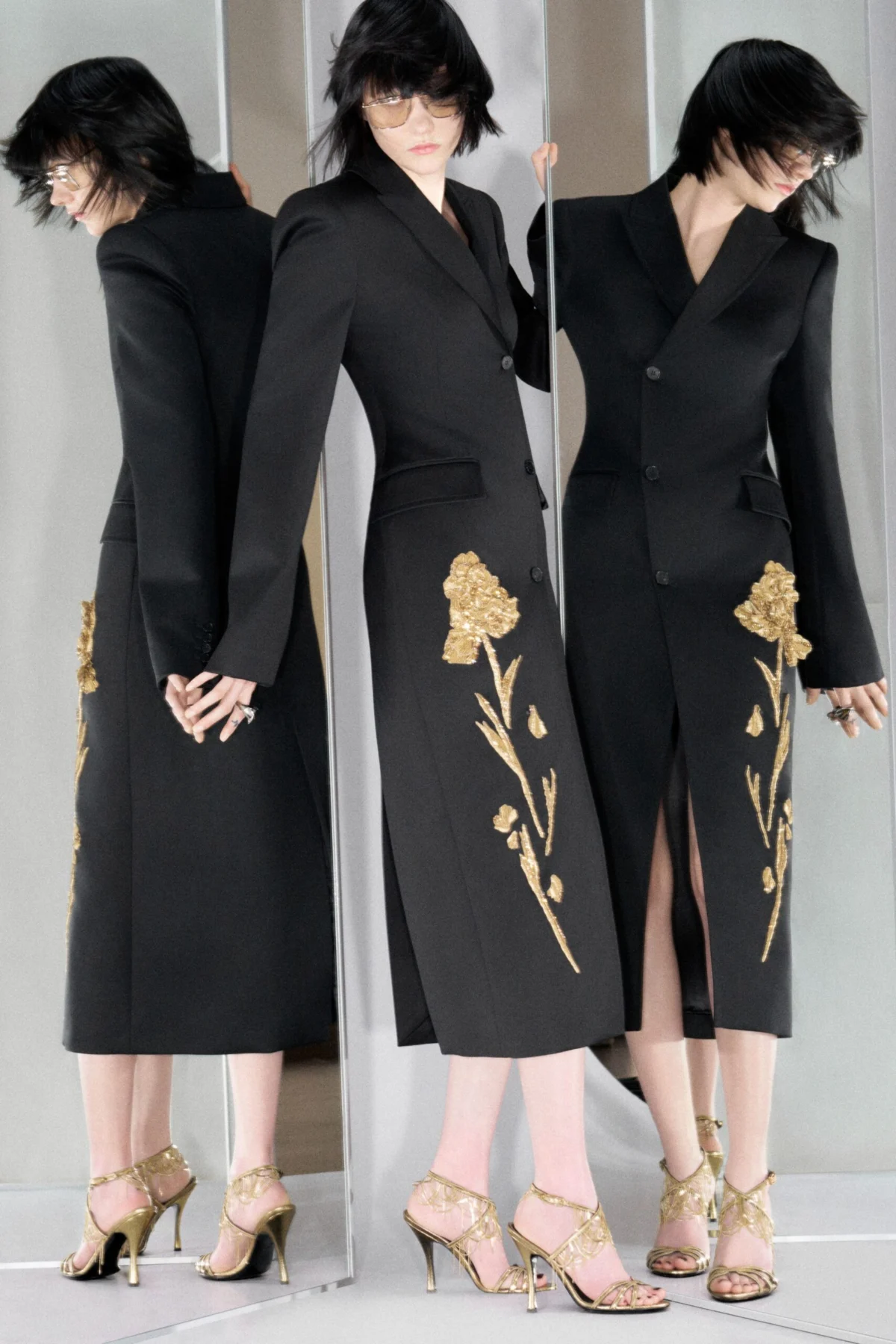
In the charged interregnum following the departure of Creative Director Seán McGirr and prior to the installation of his successor, Alexander McQueen is undertaking a profound period of introspection. The house’s Pre-Fall collection, meticulously crafted by the in-house studio team, serves as a potent mirror, reflecting upon the foundational codes that have defined McQueen’s legacy. This collection is not merely an interim offering; it is a deliberate exploration of the brand’s DNA, a testament to the individual specialisms within the studio, and a strategic endeavor to ensure a coherently connected vision for the future. The studio’s approach underscores a commitment to preserving the brand’s distinct identity while laying the groundwork for its next chapter, a critical juncture for any heritage luxury house.
The overarching objective of this collection, encompassing both womenswear and menswear, was to imbue sophistication with a deliberate undercurrent of visceral twists and visual misdirection. This duality is a hallmark of the McQueen ethos, a constant dance between the refined and the disruptive. The initial impression of opulence, particularly in the glossy croc leather of trousers, was a masterful illusion. In womenswear, these were paired with a sky-blue jacket, creating a striking contrast. For menswear, a matching black set offered a more monochromatic, yet equally impactful, statement. Upon closer inspection, the perceived exotic skins were revealed to be denim treated with a sophisticated raised pigment print, a clever subversion of material expectations that speaks to McQueen’s long-standing fascination with challenging conventional luxury. This technique, while visually arresting, also offers a more sustainable approach compared to traditional exotic leather sourcing, aligning with a growing trend in the luxury sector towards responsible material innovation.
Menswear saw a nuanced reinterpretation of classic tailoring. A gray checked suit, at first glance, presented a relaxed formality. Its asymmetric lapel and lighter internal construction offered a departure from rigid sartorial norms, while a frogged shirt underneath added a touch of historical military-inspired detailing. This juxtaposition of modern ease with historical references is a recurring theme in McQueen’s collections, drawing from the brand’s rich archive. Similarly, womenswear embraced a subtle nod to British countrywear. A subtly snake-patterned brown wool jacquard suit featured an integrated leather-strapped harness cinched just below the bust. This element, while undeniably avant-garde, provided a powerful silhouette, highlighting the female form in a manner that is both empowering and elegant. The harness, a recurring motif in McQueen’s work, often signifies a controlled strength and a reclaiming of traditional feminine adornment.
Further pushing the boundaries of fabrication and form, a Prince of Wales check kilt, rendered in an unexpectedly light fabrication, presented a trailing-wrap, flat-fronted silhouette with intricate pleating at the back. This unexpected lightness for such a traditionally weighty pattern speaks to a desire for modern wearability. The collection’s finale, a full-skirted strapless dress, was a masterclass in material manipulation. Fashioned from a specially developed black lace, the fabric was lacquered to achieve a sheeny surface flash, a testament to the studio’s innovative textile development. This technique, while visually striking, also implies a labor-intensive process, reflecting the high-craftsmanship associated with the brand. Complementing these dramatic silhouettes, golden viscose suiting shimmered, offering a more luminous and fluid alternative, hinting at a broader spectrum of eveningwear possibilities within the McQueen universe.
The exploration of knitwear in this Pre-Fall collection delved into the archives, drawing inspiration from Alexander McQueen’s seminal 1994 "Banshee" collection. The tangled skeins of spider lace, a motif that evokes both fragility and an almost gothic allure, were reinterpreted. In this iteration, they appeared as a fine openwork jacquard crafted from cotton and backed with silk. This reinterpretation demonstrates a keen understanding of how to translate iconic designs for contemporary sensibilities, maintaining the spirit of the original while adapting it to new material realities. The use of cotton backed with silk suggests a focus on luxurious comfort and a refined drape.
A closely fitted dress in shades of metallic jacquard showcased another archival reference. This design was based on a laser-cut lace piece from the house’s Spring 2012 collection. The dress featured a striking grille of serrated-edged rib cage cutouts on the back, a bold and anatomically inspired detail that is quintessentially McQueen. This particular design highlights the brand’s ongoing dialogue with its own history, demonstrating how past innovations can be revisited and reimagined to create new and compelling narratives. The precision of the laser-cut technique, when applied to such intricate patterns, speaks to the advanced technological capabilities now available to luxury houses, allowing for the creation of complex and delicate structures.
The pervasive influence of corsetry, a foundational element in the McQueen aesthetic, was subtly echoed throughout the collection. This was evident in the finely drawn lacing meticulously applied to boots and pumps, adding a touch of fetishistic allure and structural detail to footwear. Sharply chiseled men’s formal shoes featured gently tarnished and spackled metal hardware, imbuing them with a sense of lived-in luxury and a departure from the pristine finish often associated with formal footwear.
On women’s pumps, additional spathes of almost patently glossy leather were a standout feature. These were expertly worked with metal threads, allowing for their shape to be manipulated, ingeniously resembling calla lilies. This botanical inspiration, rendered in such a luxurious and unconventional manner, showcases McQueen’s ability to find beauty in unexpected forms. The calla lily motif extended beyond footwear, appearing in embroidery and print. It graced skirts and shirting in vibrant pink against a graduated red ground, adorned the sleeves of a biker jacket, and was subtly integrated through the blinds of a fitted dress. This latter garment, a particularly striking example, featured a harness structure from which strips of sliced leather were slung, creating a dynamic and almost sculptural effect that further emphasized the deconstructed yet controlled aesthetic.
The strategic importance of this Pre-Fall collection cannot be overstated. In the absence of a singular creative director, the studio team has effectively demonstrated its collective vision and deep understanding of the McQueen brand. This period of transition, often fraught with uncertainty for established fashion houses, has been navigated with a focus on core strengths and a commitment to continuity. The success of this collection lies in its ability to be both a retrospective and a forward-looking statement. It honors the brand’s rich heritage while subtly hinting at potential new directions, a delicate balance that is crucial for sustained relevance in the competitive luxury market.
The financial implications for Alexander McQueen are also significant. Pre-collections, while often overshadowed by the main seasonal shows, are increasingly vital revenue streams. They provide an opportunity for clients to purchase key pieces earlier in the year and often represent a more accessible entry point into the brand’s aesthetic. A well-received Pre-Fall collection can bolster sales figures and solidify brand loyalty, especially during a period of leadership change. The emphasis on craftsmanship, innovative materials, and the reinterpretation of iconic designs suggests a strategy aimed at reinforcing the brand’s premium positioning and attracting a discerning clientele.
Industry analysts have noted that such studio-led collections can offer a valuable litmus test for brand identity. Without the singular vision of a named designer, the collective input of the studio team can reveal the enduring strengths of the house’s design language. The McQueen studio’s ability to weave together diverse inspirations, from archival pieces to botanical forms and material illusions, suggests a robust internal creative dialogue. This introspection is a critical step in ensuring that the brand’s future direction, under its new creative leadership, will be built upon a solid foundation of its established identity, rather than a radical departure. The collection’s emphasis on sophisticated yet disruptive design, combined with meticulous craftsmanship and innovative material use, positions Alexander McQueen to continue its trajectory as a leading force in the global luxury fashion landscape. The studio’s nuanced approach offers a compelling narrative of resilience and creative continuity, reassuring stakeholders and setting a promising stage for the brand’s next chapter.
