

The instructional strategy of "mirroring," defined as copying someone with the explicit intention of understanding their actions, has long been recognized as a best practice in teaching and learning across various disciplines. Recently highlighted within the snowsports community, this fundamental human capacity, rooted in ancient evolutionary mechanisms, is being embraced by instructors worldwide to foster deeper understanding, build trust, and enhance skill acquisition on the slopes. From international symposia to local training sessions, mirroring is proving to be a powerful, research-backed tool for both educators and students alike, providing invaluable insights into performance and promoting a more connected learning environment.
The Foundational Science of Mirroring: From Evolution to Education
At its core, the human capacity to learn by observing and imitating others is a testament to millions of years of evolutionary development. This deep-seated ability is not merely mimicry but a sophisticated mechanism for empathy and understanding. Neuroscientific research points to a phenomenon known as motor resonance, which is the ability to instinctively match observed actions. This capacity dates back over 100 million years, evident in many vertebrates. For instance, dog packs synchronize their movements – speed, turning, stopping, and changes in pace – demonstrating a primitive form of motor resonance. Similarly, young songbirds learn complex vocalizations by meticulously listening to and imitating their parents.
Among primates, this observational learning gained significant sophistication tens of millions of years ago. Examples abound, from chimpanzees learning the intricate process of "termite fishing" – using tools to extract termites from mounds – to bonobos engaging in complex chasing games and social greetings that require nuanced understanding of another’s intentions and movements.
The pinnacle of this evolutionary journey likely emerged within our own genus, Homo, with the development of intentional teaching. This advanced form of instruction became essential for skills too complex to be acquired through mere observation. The production of sophisticated stone tools, for example, required purposeful demonstration, guided practice, and direct feedback – the hallmarks of teaching. This marked a significant leap, where the act of guiding another’s learning became a conscious, deliberate strategy for cultural and technological transmission.
Modern psychological theories, such as Albert Bandura’s Social Learning Theory, align seamlessly with these evolutionary insights. Bandura’s work emphasizes that learning occurs within a social context, where individuals learn from one another through observation, imitation, and modeling. These contemporary theories can be viewed as descriptions of human psychological capacities that are profoundly grounded in these ancient, biological mechanisms. The act of mirroring, therefore, taps into a primal learning pathway that facilitates not just skill transfer but also social cohesion and empathetic understanding, crucial elements in any effective learning environment.
Interski 2023: A Global Showcase for Pedagogical Innovation in Levi, Finland
Interski, the biennial congress of the International Ski Instructors Association (ISIA), serves as the premier global forum for snowsports education. Held every four years at various international locations, it brings together national demonstration teams and instructors from around the world to share the latest methodologies, technical developments, and pedagogical approaches. The 2023 event, hosted in the picturesque Arctic landscape of Levi, Finland, from March 26 to March 31, was no exception, drawing hundreds of delegates eager to exchange knowledge and push the boundaries of snowsports instruction.
One of the standout sessions at Interski 2023 featured the Czech Republic National Team, who presented on brain-based learning – an educational philosophy that aligns instructional strategies with neuroscientific evidence of how the brain acquires, processes, and retains information. This approach emphasizes creating optimal learning conditions by understanding the brain’s natural functions.
During their practical on-snow session, participants, a diverse group of approximately 40 international instructors, were guided through an innovative exercise designed to demonstrate the power of mirroring. The initial instruction was simple yet profound: form a circle and, through eye contact alone, identify a partner. The ensuing minute was marked by an "awkward silence with uncomfortable, darting eyes," as described by attendee Angelo Ross, a journalist from the Eastern Alpine and Children’s Examiner. Yet, within this brief period, connections were forged through subtle non-verbal cues, leading to the formation of partnerships. This initial step underscored the innate human ability to communicate and connect without words, laying the groundwork for trust.
Ross, representing the PSIA-AASI (Professional Ski Instructors of America and American Association of Snowboard Instructors), partnered with Angela Cesnik from the Australian National Team (APSI). After a quick introduction and a shared chuckle over their nearly identical names, they faced each other, about two feet apart, and were again instructed to decide, non-verbally, who would lead the upcoming activity. Without a single spoken word, Angela implicitly assumed the role of leader.
The leaders were then tasked with performing a 60-second pantomime of their morning bathroom routine, while followers were instructed to reproduce these movements exactly, acting as a mirror image. This "reflective mirroring" required complex coordination, demanding that if Angela "brushed her teeth" with her right hand, Ross had to use his left, and if she turned to her left, he turned to his right. The scene was described as "comical to say the least," with 40 strangers emulating private morning rituals, from oral hygiene to applying deodorant. Yet, beneath the humor, a profound connection was established. Participants found themselves giggling, determining the level of personal detail they would reveal, and, crucially, connecting on a deeper, more human level. This exercise, often perceived as a mere "icebreaker," quickly transcended its superficiality, fostering rapid rapport and trust among strangers.
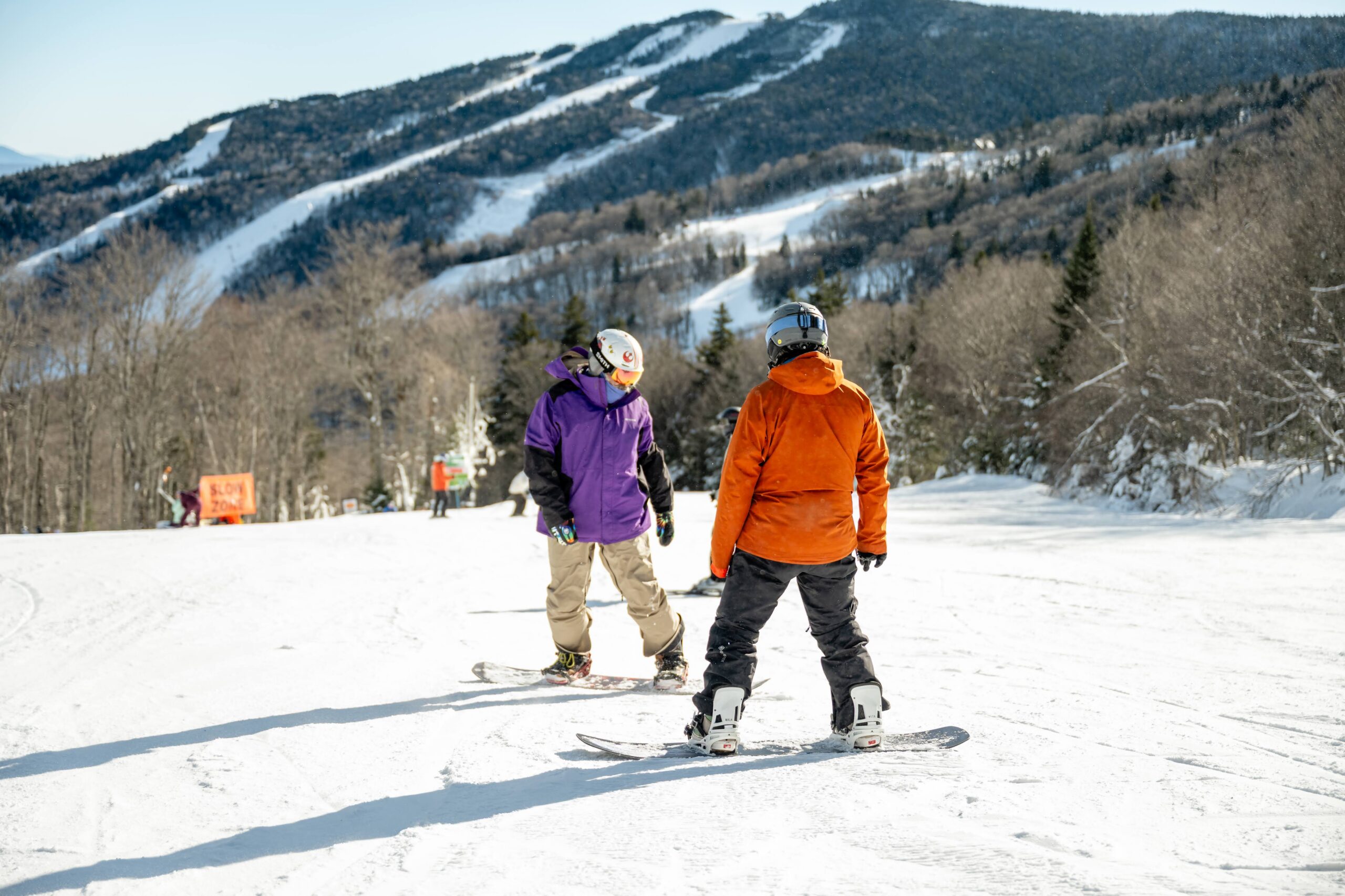
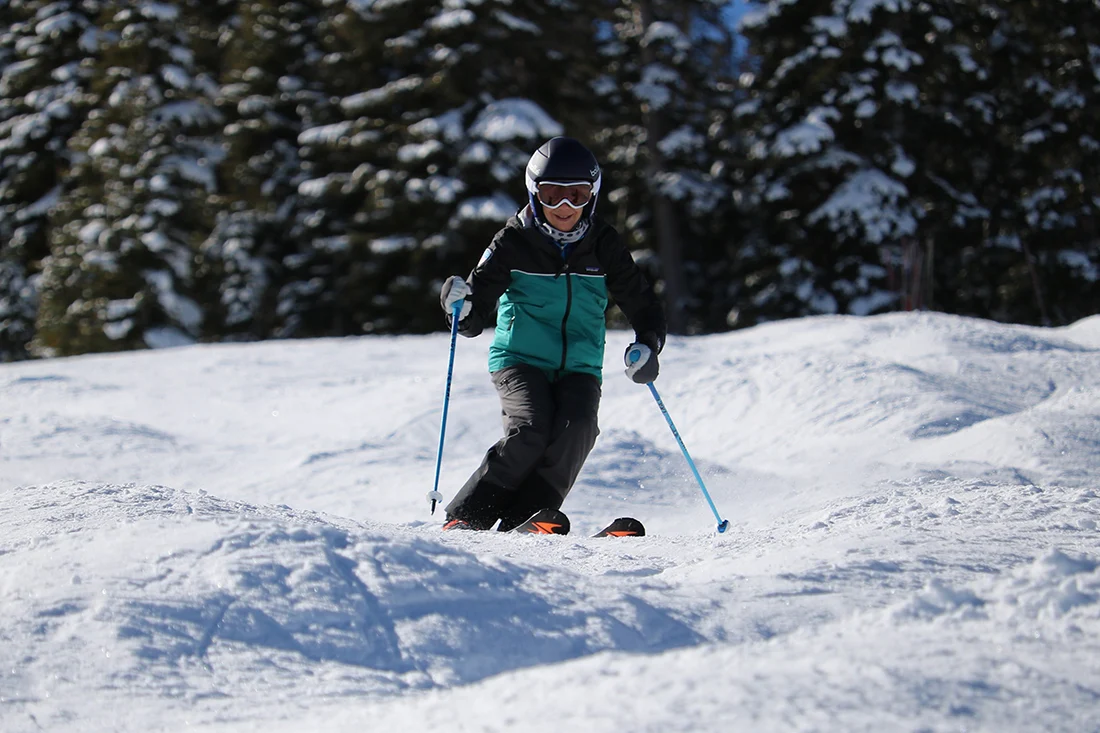
The exercise then transitioned to tandem mirroring on skis. Participants were instructed to ski in the same direction, with the original leader making predictable medium-radius turns. The follower was to position their body, limbs, poles, helmet, and skis to precisely copy the leader. At a predetermined stopping point, the follower described how mirroring altered their technical performance, providing immediate, visceral feedback. The roles were then reversed. This direct, experiential learning fostered not only technical understanding but also facilitated rich discussions during subsequent lift rides. Ross and Cesnik, despite living on opposite sides of the globe and having just met, delved into similarities and differences in their skiing techniques, the impact on performance, and even broader topics like PSIA-AASI and APSI values and global politics. This "high-impact experience in a short amount of time" underscored the efficiency and depth of connection mirroring could achieve.
The practical on-snow session was complemented by an indoor session where Czech researchers elucidated the brain-based science behind their methodologies. They explained how mirroring demonstrably facilitates trust, empathy, and understanding – key components for effective learning and group cohesion. This scientific validation reinforced the intuitive power of the exercises, providing instructors with a robust theoretical framework for their practical application.
A Legacy of Observation: Ellen Post Foster and the American Skiing Experience
The concept of mirroring is not new to snowsports instruction, even if its scientific underpinnings are continually being refined. In the United States, legends like Ellen Post Foster have long exemplified its practical application. Foster’s impact on American skiing and the PSIA-AASI cannot be overstated. Her illustrious career includes being the 1973 Junior National Champion of Exhibition Skiing, excelling in aerials, ballet, moguls, and combined freestyle competitions in 1975. A distinguished alumna of the 1980 and 1984 PSIA National Demonstration Teams, she is also a Class of 2016 U.S. Ski & Snowboard Hall of Famer and a 2021 Colorado Snowsports Museum Hall of Famer, in addition to being a prolific snowsports author.
Foster’s teaching philosophy is deeply rooted in understanding the student through observation. Angelo Ross recounts an experience skiing with Foster, where her subtle approach to observation became evident. "She’s small, rigged for silent running, and has exceedingly nimble touch," Ross describes, noting her ability to seemingly disappear and reappear. During one outing, after Ross thought they had become separated, Foster informed him she had been deliberately following him, specifically to understand his skiing. She then respectfully sought his permission to provide feedback based on her observations, which Ross eagerly accepted and continues to integrate.
This anecdote perfectly illustrates the essence of mirroring from an instructor’s perspective: observing a student’s movements not just to identify flaws, but to understand their mechanics, intentions, and even their challenges from their own physical perspective. As a co-author of the current Teaching Snowsports Manual – a foundational text for PSIA-AASI instructors – Ellen Post Foster has ensured that "following students" is explicitly recognized and mentioned multiple times as a crucial teaching skill. This emphasizes that effective teaching involves more than just demonstrating the "right" way; it requires an empathetic engagement with the student’s current performance state.
Integrating Mirroring into Modern Snowsports Instruction
Inspired by the Interski experience, instructors are actively incorporating mirroring into their teaching strategies, creating more impactful learning environments. Angelo Ross himself has successfully implemented these techniques in various training settings. Last November, at the Rocky Mountain Telemark Education Staff Training, he adapted the Czech team’s format, starting with an indoor session to foster connection among partners, which then transitioned to an outdoor session requiring meticulous observation and honest feedback.
In December, a modified on-snow version was used with a group of National Ski Patrol leaders at the Outdoor Emergency Transportation Conference at Killington, Vermont. This application focused on facilitating partner observation and subsequent discussions about the applicability of various movement patterns in different circumstances, particularly relevant for patrol work where adaptability is key.
Feedback from both these sessions has been overwhelmingly positive, consistently highlighting themes of "connecting quickly," "developing trust," and "deep learning." These results underscore the strategy’s effectiveness in rapidly building rapport and facilitating profound insights into movement dynamics and technical performance.
The Multifaceted Benefits and Broader Implications
The integration of mirroring into snowsports instruction offers a multitude of benefits, extending beyond mere technical skill acquisition:
- Enhanced Understanding and Empathy: Mirroring students provides instructors with invaluable insights into their students’ understanding and performance. By physically replicating their movements, instructors gain a kinesthetic appreciation of the student’s challenges, enabling more targeted and empathetic feedback.
- Improved Communication and Trust: When instructors mirror students, it signals respect and a genuine desire to understand, fostering a deeper sense of trust and open communication. Conversely, having students mirror the instructor encourages precise observation and direct feedback, accelerating skill development.
- Challenging the "One-Right-Way" Mentality: Synchronized skiing and riding activities, particularly tandem mirroring, challenge the rigid notion that there is only one correct way to perform a movement. By experiencing varied movement patterns through mirroring peers, students and instructors alike sharpen their observational skills and develop a broader technical understanding, recognizing the value of adaptability and diverse approaches.
- Increased Engagement and Camaraderie: Incorporating mirroring into common "Follow Me" activities can significantly increase student interest. It transforms a simple exercise into a dynamic exploration of movement patterns, fostering group camaraderie as students take turns leading and mirroring. This can easily evolve into structured games and experiments, aligning with best practices in teaching and learning and PSIA-AASI fundamentals.
- Alignment with Modern Pedagogy: Mirroring aligns perfectly with contemporary educational trends that emphasize experiential learning, student-centered approaches, and the development of critical thinking and self-awareness. It moves beyond rote instruction, encouraging active participation and reflective practice.
In conclusion, mirroring is far more than a simple teaching trick; it is a time-tested, research-backed instructional strategy that taps into the fundamental fabric of human learning. From its evolutionary origins as a survival mechanism to its sophisticated application in brain-based learning and expert instruction, mirroring helps instructors and students alike evolve their understanding, performance, and teaching of snowsports. By embracing this powerful tool, the snowsports community can continue to foster environments that are not only effective for skill development but also deeply engaging, empathetic, and ultimately, more human.
