

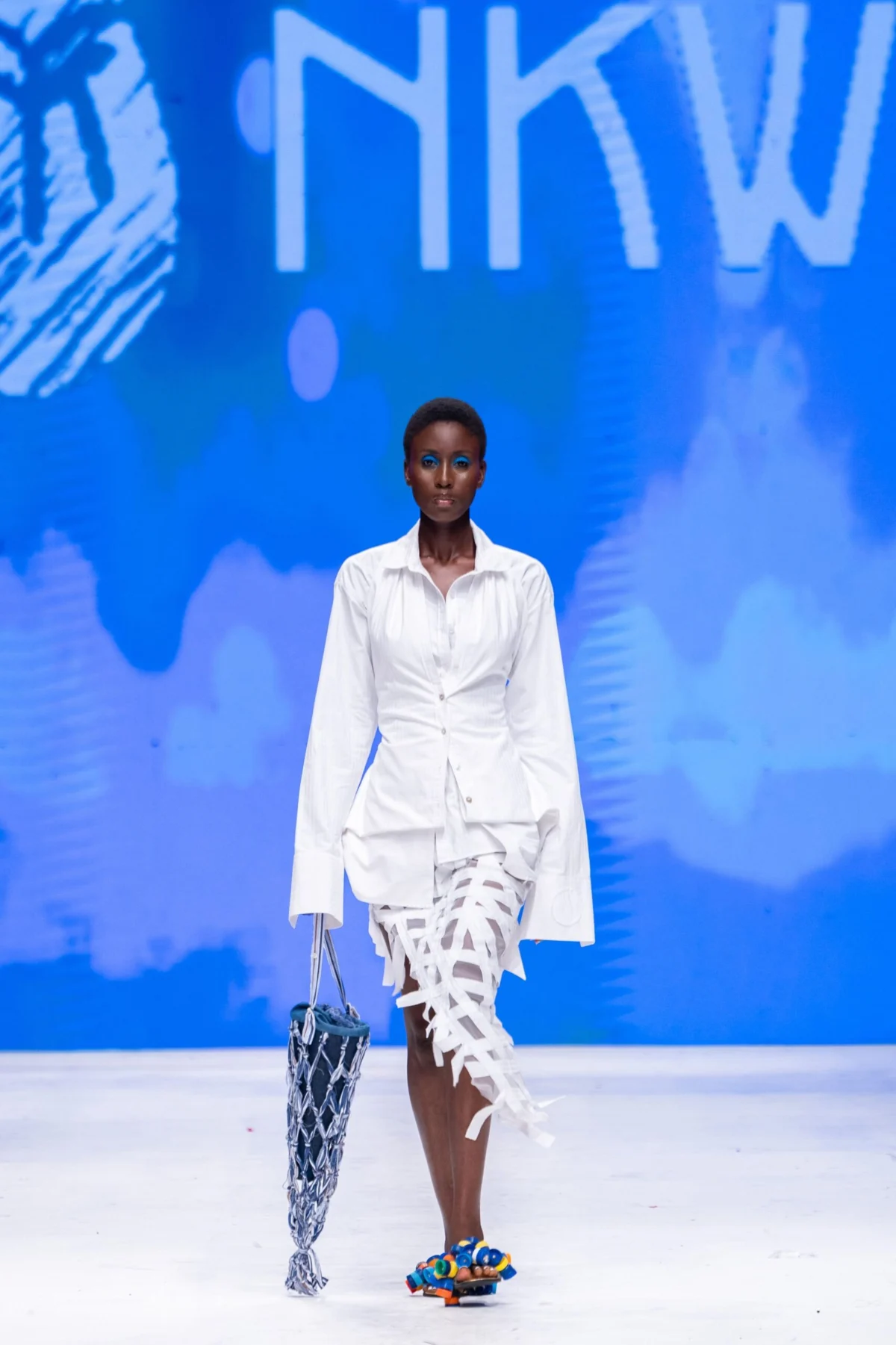
For the Spring 2027 season, designer Nkwo Onwuka unveiled a collection that is as profound in its philosophical underpinnings as it is captivating in its aesthetic. Titled "Journey to Less," the collection draws direct inspiration from a remarkable 40-day road trip undertaken by Onwuka’s nephew, traversing 13 countries from Amsterdam to her ancestral village in Southeastern Nigeria. This epic journey, a physical manifestation of movement and exploration, served as the fertile ground from which Onwuka cultivated a powerful vision for sustainable fashion, one that prioritizes systems, waste reduction, and a radical reimagining of our relationship with upcycled materials.
"The collection, titled Journey to Less, is all about systems," stated Onwuka, articulating the core philosophy that guided her creative process. Her overarching ambition is to engineer and implement sustainable solutions that not only minimize waste but also fundamentally alter how consumers engage with upcycled fashion. This vision extends beyond mere aesthetics, aiming to establish frameworks where individuals can transform their unwanted garments into entirely new designs and silhouettes. Furthermore, Onwuka envisions an institutional model that fosters innovation, such as the groundbreaking reengineering of denim to mimic the tactile and visual qualities of knitwear. She succinctly termed this paradigm shift: "Reverse retail. You send your old things to us and we make it into something new. We’re just trying to get people to use what’s in their wardrobes instead of throwing it away and it goes to landfill." This concept represents a significant departure from traditional consumption patterns, proposing a circular economy model that empowers both the designer and the consumer in a collaborative effort towards sustainability.
The runway presentation showcased a compelling narrative through its meticulously crafted garments. Upcycled denim, a cornerstone material, was artfully transformed into an array of dresses and skirts, demonstrating the versatility and potential of pre-loved textiles. A significant portion of the collection featured indigo pieces, a testament to Onwuka’s commitment to local craftsmanship, with these garments being dyed using traditional Nigerian dyeing pits. This practice not only imbues the fabric with unique character but also supports indigenous artisanal techniques. Blazers were given a new lease on life through repurposing, while shirts adorned with intricate lattice details drew a direct visual parallel to the mapping systems employed during her nephew’s extensive travels. Beyond these conceptual pieces, Onwuka also focused on integrating more commercially viable designs into the collection. "We need to take it in a direction that makes sense to everyone, not just [feature] pieces that are so artisanal that you’re too scared to wear them," she explained, highlighting her strategic approach to making sustainable fashion accessible and desirable to a broader audience. This balance between avant-garde innovation and marketability is crucial for the widespread adoption of ethical fashion practices.
A recurring motif throughout the collection was the introduction of a new brand emblem. This emblem, a stylized representation of a desert bug, carries profound symbolic weight. This creature is renowned for its remarkable ability to extract moisture from the air and convert it into usable water, a survival mechanism that allows it to thrive in the most arid and challenging environments. "It’s living in the harshest environment, but finds a way to survive from nothing. And I feel like this is also our story," Onwuka remarked, drawing a powerful analogy between the resilience of this desert dweller and the enduring spirit of humanity, particularly in the face of environmental and societal challenges. This emblem serves as a potent reminder of the potential for innovation and adaptation, even when resources appear scarce.
The Genesis of "Journey to Less": A Narrative of Connection and Consciousness
The inspiration behind Nkwo Onwuka’s Spring 2027 collection, "Journey to Less," is deeply personal, rooted in the physical and metaphorical voyage of her nephew. His ambitious 40-day road trip, commencing in Amsterdam and culminating in his ancestral village in Southeastern Nigeria, spanned 13 diverse countries. This odyssey was not merely a physical transit but a profound exploration of landscapes, cultures, and logistical systems. For Onwuka, this journey became a powerful metaphor for the path towards a more sustainable future in fashion. The sheer scale of the trip, its meticulous planning, and the inherent challenges of navigating vast distances resonated with her ongoing commitment to creating fashion systems that are both innovative and environmentally responsible.
The concept of "systems" that Onwuka emphasizes is not abstract. It is a direct response to the global fashion industry’s significant environmental footprint. The United Nations Environment Programme (UNEP) estimates that the fashion industry is responsible for 8-10% of global carbon emissions, more than all international flights and maritime shipping combined. Furthermore, textile dyeing is the second-largest polluter of water globally. Onwuka’s "Journey to Less" is a direct counter-narrative to this unsustainable trajectory, proposing a model where the end-of-life of a garment is not an endpoint but a new beginning.
Reverse Retail: Redefining Consumer Engagement with Fashion
Onwuka’s proposed "reverse retail" model is a groundbreaking concept designed to disrupt the linear "take-make-dispose" cycle prevalent in the fashion industry. By inviting consumers to send their unwanted garments back to the brand, Onwuka aims to intercept clothing before it reaches landfills. This initiative not only provides a tangible solution for textile waste but also fosters a deeper connection between the consumer and the garment. It transforms the act of disposal into an act of participation in a creative and sustainable process.
The logistics of such a system, while complex, are not insurmountable. Brands could establish dedicated collection points, partner with postal services for mail-in programs, or even integrate collection into the purchasing of new items. The economic model would likely involve a tiered system, where the value of the returned garment could translate into discounts on future purchases or be directly factored into the cost of the upcycled creation. This incentivizes participation and makes the sustainable choice economically viable for consumers. Data from the Ellen MacArthur Foundation suggests that extending the active life of clothing by just three years could reduce its carbon, water, and waste footprints by around 20-30%. Onwuka’s "reverse retail" directly addresses this potential for longevity and reuse.
Innovation in Materials: Denim Reimagined and Indigo’s Enduring Appeal
The collection’s innovative use of materials is a testament to Onwuka’s commitment to pushing the boundaries of sustainable fashion. The transformation of upcycled denim into knitwear-like textures is a particularly striking example of material reengineering. This process likely involves advanced techniques such as shredding, re-spinning, and specialized weaving or knitting methods to achieve a completely new tactile and visual experience from a familiar material. This not only diverts waste but also creates garments with unique properties and aesthetics that can rival conventionally produced textiles.
The emphasis on locally dyed indigo pieces further highlights Onwuka’s dedication to preserving traditional craftsmanship and supporting local economies. Indigo dyeing, with its rich history and distinctive color palette, is an art form in itself. By utilizing Nigeria’s dyeing pits, Onwuka connects her contemporary designs to a heritage practice, imbuing the collection with a sense of cultural authenticity and grounding. This approach also minimizes the environmental impact associated with mass-produced dyes and transportation. The global market for indigo dyes, while significant, is increasingly under scrutiny for its environmental impact, making Onwuka’s traditional methods a more responsible alternative.
The Desert Bug Emblem: A Symbol of Resilience and Hope
The choice of the desert bug as the brand’s new emblem is a powerful and poignant one. This creature’s extraordinary ability to extract moisture from the arid air serves as a potent metaphor for innovation and survival in challenging circumstances. In a world grappling with climate change and resource scarcity, the desert bug embodies the spirit of ingenuity and adaptation. Onwuka’s statement, "It’s living in the harshest environment, but finds a way to survive from nothing. And I feel like this is also our story," resonates deeply. It speaks to the human capacity for resilience, the ability to find solutions and thrive even when faced with seemingly insurmountable obstacles.
This emblem can be interpreted as a symbol of hope for the fashion industry itself. As it confronts its environmental legacy, the industry must learn to "extract moisture from the air" – to innovate and find sustainable solutions where none seem apparent. The desert bug represents the potential for transformation and the enduring power of nature’s design. Its presence on the garments serves as a constant reminder of these vital principles.
Towards Commercial Viability: Balancing Artistry and Accessibility
Onwuka’s strategic inclusion of "more commercial pieces" is a crucial element in the broader adoption of sustainable fashion. While artisanal and avant-garde designs push creative boundaries, their accessibility to the average consumer can be limited. By consciously designing pieces that are both innovative and wearable, Onwuka aims to bridge this gap. Her statement, "We need to take it in a direction that makes sense to everyone, not just [feature] pieces that are so artisanal that you’re too scared to wear them," underscores a pragmatic approach to sustainability.
This balancing act is essential for driving systemic change. When sustainable fashion is perceived as both desirable and practical, it becomes more than a niche movement; it becomes a mainstream choice. The fashion industry is a multi-trillion-dollar global market, and for true sustainability to take root, it must permeate all levels of production and consumption. Onwuka’s collection, by demonstrating the possibility of creating beautiful, innovative, and commercially viable garments from upcycled materials, offers a compelling blueprint for the future. The growth of the second-hand clothing market, projected to reach $77 billion by 2025 according to ThredUp, indicates a growing consumer appetite for more sustainable and affordable fashion options, a trend that Onwuka’s "reverse retail" model can further capitalize on.
Broader Implications: A Paradigm Shift in Fashion Consumption
Nkwo Onwuka’s "Journey to Less" collection for Spring 2027 is more than just a series of garments; it is a manifesto for a new era in fashion. By centering her design philosophy on "systems," "reverse retail," and innovative material reengineering, Onwuka is challenging the fundamental tenets of the industry. Her work offers a tangible and inspiring vision of a future where fashion is not only aesthetically compelling but also environmentally responsible and socially conscious.
The implications of this approach are far-reaching. It encourages a shift in consumer mindset, moving away from a culture of disposability towards one of conscious consumption and active participation in the lifecycle of garments. It also presents a compelling business model for designers and brands seeking to align their practices with evolving ethical standards and growing consumer demand for sustainability. The success of "Journey to Less" could serve as a catalyst, inspiring further innovation and widespread adoption of circular economy principles within the global fashion landscape. As the world increasingly recognizes the urgency of addressing environmental challenges, designers like Nkwo Onwuka are paving the way for a more sustainable and resilient future for fashion. Her journey, inspired by her nephew’s odyssey, is a powerful testament to the transformative potential of thoughtful design and a commitment to systemic change.
