

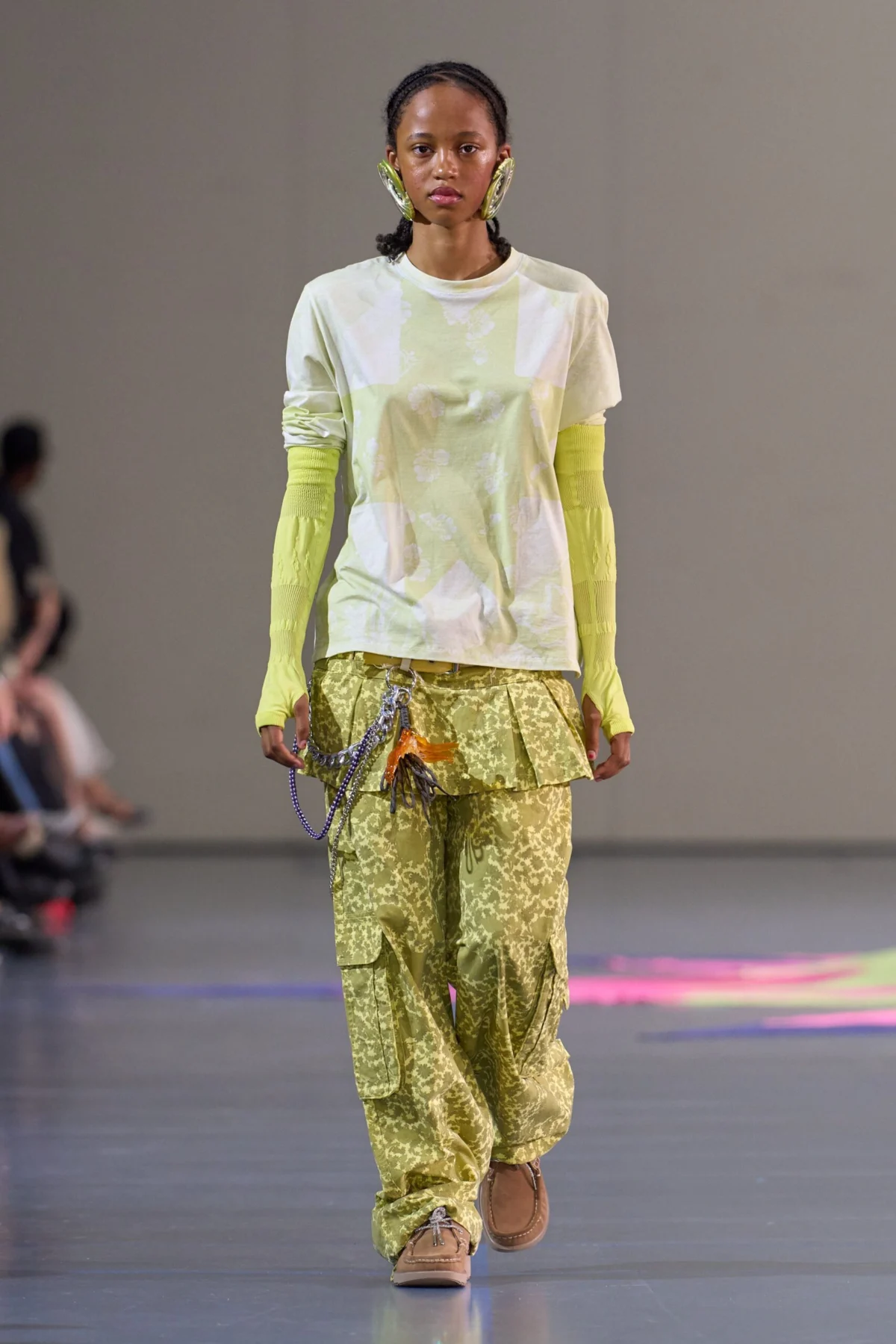
Copenhagen Fashion Week’s Spring/Summer 2027 season unfolded with Paolina Russo presenting a collection that masterfully wove together a tapestry of contrasting influences, drawing inspiration from a childhood spent between the comforting embrace of a grandmother’s home and the electrifying allure of late-night skate park adventures. This season’s narrative saw the Paolina Russo heroine shed the academic setting of the previous year’s French Embassy sojourn and retreat to a more intimate, yet equally formative, environment: her grandmother’s house. This transition provided fertile ground for a collection that celebrates the inherent duality of youth, where innocence and rebellion, tradition and modernity, coexist and, ultimately, merge.
The Dual Narrative: From Chintz to Concrete
The collection’s conceptual foundation is rooted in a potent dichotomy. By day, the Paolina Russo muse embodies the role of a doting granddaughter, enveloped in the soft, familiar textures of her grandmother’s abode. This domestic sphere is brought to life through a palette dominated by chintzy florals, rendered in fabrics that evoke a sense of comforting nostalgia. Complementing these floral motifs are "Lone Star" quilts, a symbol of traditional American craftsmanship, presented in patchwork styles that speak to heritage and storytelling. This aspect of the collection evokes a sense of groundedness, a connection to familial roots and the gentle rhythms of a bygone era.
However, as twilight descends, a transformation occurs. The muse sheds her daytime persona and embarks on nocturnal escapades to the local skate park. This is where the collection’s angsty rebellion and potent teen spirit take center stage. The juxtaposition of the idyllic daytime setting with the gritty, energetic atmosphere of the skate park creates a compelling tension that underpins the entire collection. As co-founder Paolina Russo articulated, "She has this secret life, driven by a desire to find herself." This internal quest for identity, a universal adolescent experience, serves as the driving force behind the collection’s thematic coherence.
Aesthetic Fusion: Quilts Meet Cargo Green
The sartorial manifestation of this dual narrative is where the true innovation of the Paolina Russo Spring/Summer 2027 collection lies. As the summer progresses, the aesthetic seamlessly blends these disparate worlds. Garments appear that are both familiar and unexpectedly subversive. A prim pea coat, a classic sartorial staple, is reimagined with clashing ditsy floral prints, injecting a dose of playful discord into its otherwise conventional silhouette. The color palette further amplifies this tension; a hazy cargo green lends an urban, utilitarian edge to these traditionally feminine motifs.
The brand’s signature laser print jeans have also undergone a significant evolution. Borrowing geometric shapes directly from traditional quilting patterns, these denim staples are transformed into wearable art pieces that bridge the gap between craft and contemporary fashion. Folksy wooden buttons, a nod to the grandmother’s domestic world, are now laced with psychedelic rainbow embroidery thread, a vibrant infusion of rebellious energy. This deliberate fusion of seemingly incompatible elements—the pastoral and the rebellious, the handcrafted and the technologically advanced—is a hallmark of Paolina Russo’s design philosophy.
Co-founder Lucile Guilmard elaborated on this creative process, stating, "It’s a fantasy, because it’s not necessarily what we’re living today, but it’s a story we lived before, growing up in small towns. There’s an element of nostalgia and shared memories." This statement highlights the collection’s deep connection to personal histories and collective experiences, particularly those associated with rural or suburban childhoods where such dualities often existed. The brand taps into a universal longing for simpler times while simultaneously acknowledging the complex realities of growing up and forging an individual identity.
Accessories as Artefacts of Memory and Rebellion
The spirit of nostalgia and playful rebellion extends prominently to the collection’s accessories, which act as tangible artefacts of memory and youthful defiance. The designers drew inspiration from their own childhood, reimagining the iconic Japanese spinning top toy, Beyblade, as striking earrings. Crafted by artist Yuma Burgess, these melted plastic creations hang like avant-garde Neolithic medallions, rendered in vibrant bubblegum pink and acid green. Their unexpected presence serves as a potent reminder of past playtimes and the enduring power of childhood imagination.
Further blurring the lines between the mundane and the extraordinary, jewelry designer Florence Tétier transformed discarded skateboard wheels into substantial necklaces. These robust pieces are adorned with plastic cutlery, artfully melted into trippy neon flowers, creating a visually arresting juxtaposition of industrial waste and delicate artistry. The brand’s ubiquitous skater girl belt chains also made a significant appearance, their jangling chains adorned with an assortment of keys and found objects, further emphasizing a sense of personal curation and spontaneous rebellion.
Footwear, a crucial element in defining a collection’s character, saw a collaboration with show sponsor Ecco. The brand’s classic Joke shoes were elevated through a generous application of bedazzled rhinestone laces, a flamboyant yet fitting embellishment that speaks to the collection’s maximalist tendencies and its embrace of playful excess. These collaborations and reinterpretations of everyday objects underscore Paolina Russo’s commitment to finding beauty and meaning in the unexpected, transforming the familiar into the extraordinary.
Community as Catalyst: An Open-Door Spectacle
Paolina Russo’s ethos is deeply intertwined with its community, a principle powerfully demonstrated at the Spring/Summer 2027 show. In a move that defied industry norms, the designers opened their doors to hundreds of fans, inviting them to share in the experience. This inclusive approach extended beyond the initial industry-focused presentation, with an even larger contingent of fans welcomed for a second showing. This deliberate act of democratizing fashion underscores the brand’s belief in its clothing as more than just garments; they are presented as "a uniform for belonging," as Russo eloquently put it. Guilmard reinforced this sentiment, stating, "Everyone is welcome."
This commitment to community building was palpable throughout the event. Alongside the runway presentation, the designers orchestrated a vibrant battle of the bands, a testament to their embrace of subcultures and artistic expression. On one side stood pink-haired synth-pop singer Grace Ives, a childhood friend of Russo’s and a burgeoning artist poised for mainstream success, having recently opened for Olivia Rodrigo. On the other side was Copenhagen-based band Haloplus+, whose music served as an auditory backdrop during the collection’s creative development, further cementing the fusion of diverse artistic influences. This multi-sensory approach transformed the fashion show into a holistic cultural experience, celebrating music, art, and fashion in equal measure.
Sustainability as a Guiding Principle: Beyond the Runway
Beyond the spectacle and the sartorial storytelling, Paolina Russo’s presence at Copenhagen Fashion Week (CPHFW) highlighted significant advancements in the brand’s commitment to sustainability. Since securing the Zalando Visionary Award in 2023, the brand has embraced Copenhagen as a de facto second home and has aligned its operational principles with CPHFW’s stringent minimum sustainability standards. This season marked a significant milestone: for the first time, Paolina Russo surpassed its target of at least 50% mono-material garments, achieving an impressive 77%.
This dedication to material innovation is particularly evident in the brand’s highly successful lenticular knitwear. A perennial bestseller, this unique fabric, known for its optical illusion effects, has been reimagined for the new season in T-shirts, skirts, and capri leggings, now crafted from 100% Oekotex-certified cotton. This achievement represents a substantial leap forward in the brand’s eco-conscious journey. "We’re really proud of that," Russo stated, emphasizing the collaborative effort involved. "We developed it with our manufacturers. They are extremely creative craftspeople who know the fibers and how to achieve the best results." This acknowledgment of the crucial role played by manufacturing partners in achieving sustainability goals is a testament to the brand’s holistic approach.
The implications of Paolina Russo’s sustained commitment to sustainability within the fashion industry are far-reaching. As consumers increasingly demand transparency and ethical practices, brands that prioritize eco-friendly materials and responsible production processes are not only meeting current market expectations but are also shaping the future of fashion. By demonstrating that high-fashion aesthetics and robust sustainability can coexist, Paolina Russo provides a compelling model for aspiring designers and established brands alike. Their success at CPHFW, both creatively and ethically, reinforces the city’s position as a global leader in driving positive change within the fashion landscape. The brand’s narrative, of a rebellious spirit finding its voice through a fusion of past and present, is further amplified by its dedication to a more responsible and conscious future for the industry.
