

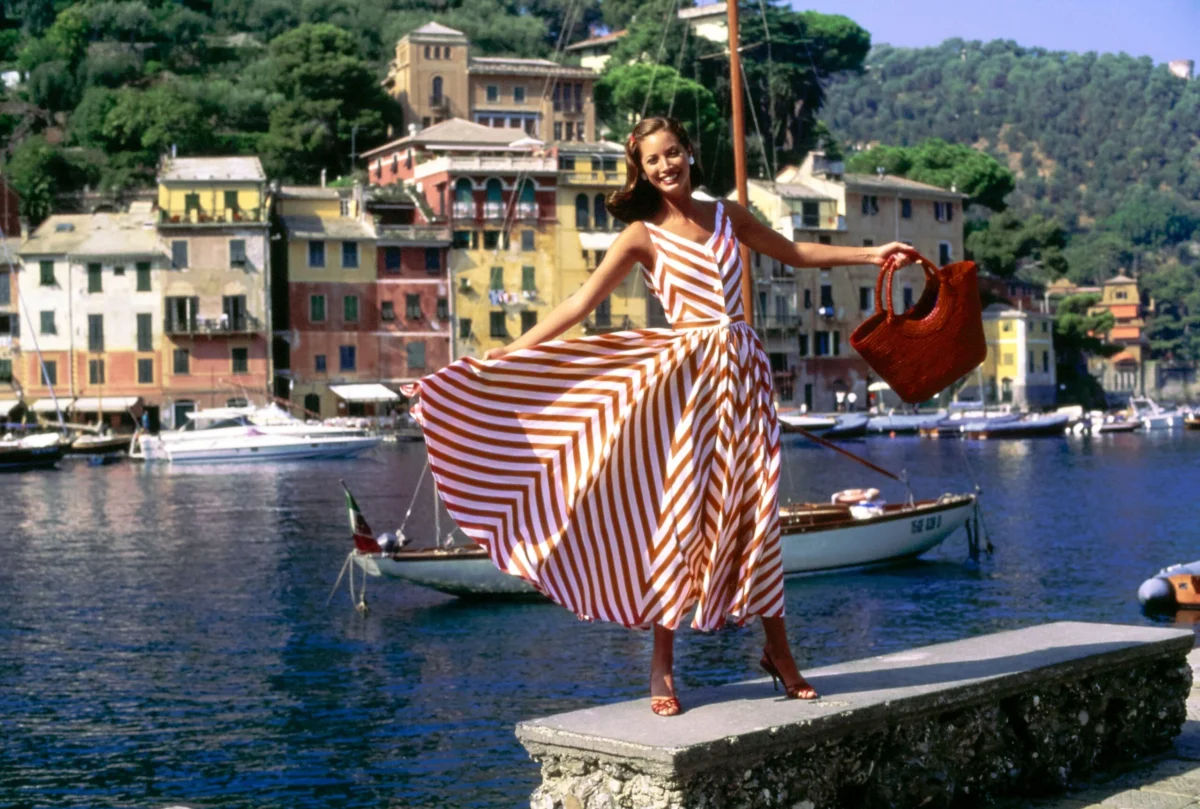
In December 1992, Vogue magazine transported its readers to the picturesque Italian Riviera with a visual essay titled "Postcard from Portofino," captured through the lens of renowned photographer Arthur Elgort. This iconic editorial, featured in the magazine’s holiday issue, offered a glimpse into a timeless vision of resort dressing, perfectly attuned to the sun-drenched charm of its namesake destination. The article presented a curated selection of apparel that embodied the effortless elegance and romantic allure synonymous with Portofino, a secluded haven on the Ligurian coast. Elgort’s masterful photography, a hallmark of his career, showcased a wardrobe designed for a warmer climate, emphasizing crisp capris, elegantly tied tops, and flowing sundresses that brushed the ankle. This aesthetic championed a "prettier, more romantic feeling" in resort wear, a sentiment that continues to resonate in fashion discourse.
The Enduring Allure of Portofino: A Historical Perspective
Portofino, a small fishing village nestled on the Italian Riviera, has long been a beacon of exclusivity and refined leisure. Its origins trace back to ancient Roman times, though its modern identity as a glamorous destination began to crystallize in the mid-20th century. By the 1990s, when Elgort’s Vogue feature was published, Portofino had firmly established itself as a playground for the international elite, attracting celebrities, royalty, and discerning travelers seeking its unparalleled beauty and serene atmosphere. The harbor, with its pastel-hued buildings cascading down to the water, framed by lush Mediterranean vegetation, provided an idyllic backdrop. The economic landscape of the region, heavily reliant on tourism and luxury goods, was well-positioned to cater to this affluent clientele. The average daily expenditure for a tourist in the Liguria region in the early 1990s, while not precisely recorded for Portofino specifically, was estimated to be significantly higher than the national average, reflecting the premium nature of the destination. This exclusivity, coupled with its breathtaking scenery, made Portofino a natural muse for fashion editorials aiming to capture the essence of aspirational travel.
Arthur Elgort’s Vision: Capturing the Spirit of Riviera Style
Arthur Elgort, a photographer celebrated for his ability to infuse his images with a sense of spontaneity and naturalism, was the ideal artist to interpret the spirit of Portofino for Vogue. His work often eschewed the overtly staged for a more dynamic and lived-in feel, even within the context of high fashion. For "Postcard from Portofino," Elgort likely employed his signature blend of natural light and candid composition to highlight the interplay between the fashion and the environment. The December 1992 issue, a period when fashion photography was embracing a more relaxed yet sophisticated aesthetic, provided a fertile ground for Elgort’s approach. The editorial’s emphasis on "crisp clean capris, midriff-tied tops, and simple sundresses" reflected a growing trend towards understated luxury and practical yet stylish holiday wear. This was a departure from more opulent or overtly formal resort wear that might have dominated previous eras. The choice of these specific garments was not arbitrary; capri pants, popularized in the 1950s and 60s, evoked a sense of vintage glamour and casual chic. Midriff-tied tops, a more contemporary element for the early 90s, suggested a youthful, uninhibited spirit. Sundresses, always a staple of warm-weather wardrobes, were elevated by the descriptor "simple" and the notion that they "float right down to the ankle," implying a fluid, ethereal quality.
The Evolution of Resort Dressing: From Practicality to Romanticism
The fashion presented in "Postcard from Portofino" can be understood within the broader context of evolving resort wear trends. Historically, resort wear originated from the practical needs of individuals traveling to warmer climates during winter months. Early resort collections focused on lightweight fabrics, sun protection, and ease of movement. However, as travel became more accessible and leisure pursuits more varied, resort wear transformed into a distinct category of fashion, blending functionality with aspirational style. By the late 20th century, resort wear had become a significant segment of the fashion industry, with designers dedicating entire collections to pieces suitable for holidays and warmer seasons. The early 1990s witnessed a shift towards a more relaxed and less ostentatious form of luxury. The "prettier, more romantic feeling" mentioned in the article signaled a move away from the power dressing of the 1980s towards styles that emphasized femininity, comfort, and a connection to nature. This aesthetic resonated with a desire for escape and rejuvenation, themes intrinsically linked to vacationing. The rise of global travel, facilitated by advancements in transportation and a growing middle class with disposable income, meant that the concept of a "getaway wardrobe" was becoming increasingly relevant to a wider audience. Data from travel industry reports of the era indicate a steady increase in international leisure travel, underscoring the market for fashion that catered to these experiences.
The Significance of the Vogue Archive and Nostalgia in Fashion
The decision by Vogue to revisit and promote its archives, as evidenced by the invitation to sign up for a "Nostalgia newsletter," speaks volumes about the enduring influence of past fashion moments. The fashion industry is characterized by cycles of trends, with designers and consumers constantly looking to historical periods for inspiration. The December 1992 issue of Vogue, featuring Elgort’s work, represents a specific point in time that captured a particular mood and aesthetic. The continued relevance of such editorials suggests that the values they espoused – timeless style, effortless elegance, and the romanticism of travel – remain desirable. Re-publishing these images allows for a contemporary re-evaluation of fashion history, demonstrating how certain styles transcend their original context and continue to inform present-day design. The archive serves as a repository of cultural and aesthetic shifts, offering insights into the societal values and aspirations of different eras. The "Postcard from Portofino" editorial, in this regard, is more than just a collection of clothing; it is a cultural artifact that encapsulates a particular vision of leisure and style that continues to hold sway.
Broader Implications: The Enduring Appeal of Mediterranean Aesthetics
The "Postcard from Portofino" editorial, even decades after its initial publication, highlights the persistent appeal of Mediterranean aesthetics in fashion and lifestyle. The combination of natural beauty, sophisticated leisure, and a relaxed yet elegant approach to dressing is a perennial source of inspiration. The specific elements of the wardrobe featured – clean lines, natural fabrics, and flowing silhouettes – are foundational to many contemporary resort collections. This enduring appeal can be attributed to several factors. Firstly, the Mediterranean region embodies a sense of idyllic escape, a dreamlike quality that resonates with consumers seeking a respite from daily routines. Secondly, the inherent functionality of the featured garments makes them practical for warm weather, aligning with the increasing emphasis on versatile and comfortable clothing in modern wardrobes. Furthermore, the romantic undertones of the aesthetic, characterized by a connection to nature and a celebration of simple pleasures, tap into a deep-seated human desire for beauty and tranquility. The success of brands that consistently draw inspiration from coastal European styles, from the South of France to the Italian coast, is a testament to this ongoing fascination. Analysis of global fashion retail trends reveals a consistent demand for "coastal chic" or "Riviera-inspired" collections, particularly during spring and summer seasons, indicating a sustained market interest in this sartorial language. The editorial’s message of dressing for a destination, embracing the local ambiance through personal style, remains a powerful and influential concept in contemporary fashion consumption. The ease with which Elgort captured the essence of Portofino and translated it into a compelling fashion narrative underscores the profound connection between place, style, and aspiration, a connection that Vogue‘s archives continue to illuminate.
