

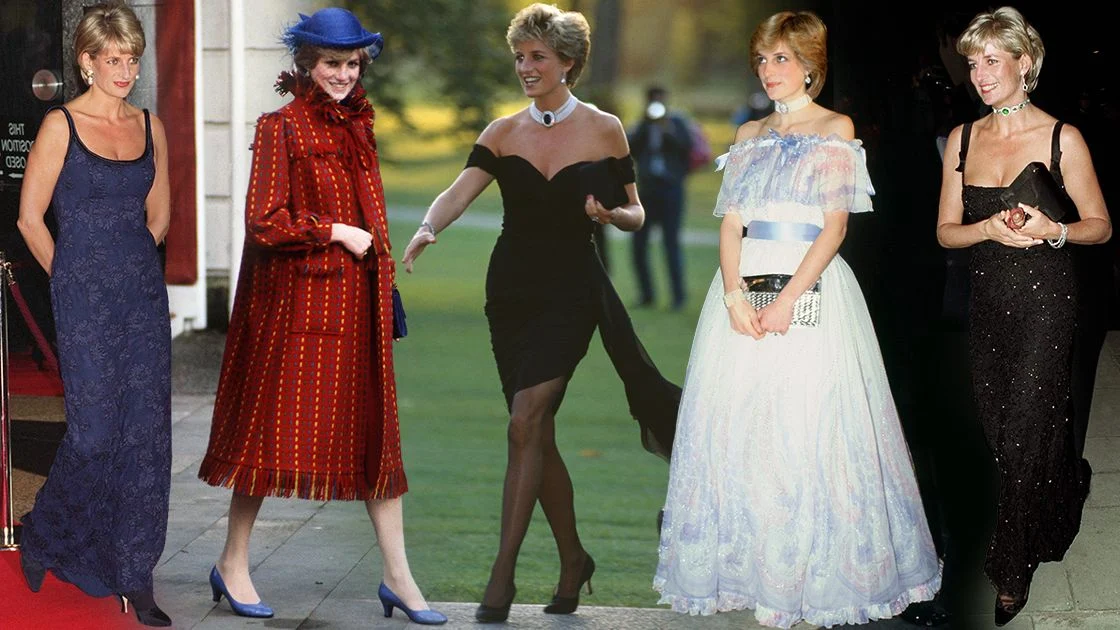
Princess Diana’s fashion journey remains an indelible chapter in the annals of style, a testament to her unique ability to navigate evolving trends while retaining a distinct personal voice. Decades following her untimely passing, the Princess of Wales’s sartorial choices continue to exert a profound influence on the global fashion landscape. Today, on what would have been her 63rd birthday, Diana stands as an enduring icon, celebrated not only for her significant philanthropic endeavors but also for her remarkably expressive personal style. Her outfits are so iconic that many are instantly recognizable by name and carry with them distinct narratives, solidifying their status as some of the most discussed ensembles in history. From the potent symbolism of “the revenge dress” to the glamorous allure of “the Travolta dress,” and the timeless romance of her David and Elizabeth Emanuel-designed wedding gown, each of these garments represents a pivotal moment in pop culture, etched into collective memory.
The Genesis of an Icon: From Sloane Ranger to Royal Muse
Diana Spencer’s emergence onto the public stage in the 1980s coincided with a period of dramatic sartorial shifts. The era was characterized by bold silhouettes, notably the pervasive influence of broad shoulder pads and the often voluminous, less-defined lines of suits. For anyone navigating the fashion currents of the 1980s, this presented a unique challenge, but for a member of the British Royal Family, the constraints were particularly pronounced. While contemporary royals possess the latitude to embrace haute couture from designers like Alexander McQueen and Givenchy, and occasionally experiment with more daring aesthetics, a foundational set of sartorial protocols has historically governed royal wardrobes. These unwritten rules, which traditionally discouraged overly short hemlines, bare legs, and plunging necklines, were arguably enforced with greater stringency during Diana’s tenure.
Despite these limitations, Diana demonstrated an exceptional talent for curating a wardrobe that felt intrinsically her own. In her pre-royal years, her style was firmly rooted in the “Sloane Ranger” aesthetic, a distinctly British look characterized by preppy sweater vests, charmingly printed midi-dresses, and practical equestrian boots. This laid-back yet polished sensibility reflected her upbringing and early life. Upon her transition into royal life and subsequent marriage to Prince Charles, Diana’s wardrobe underwent a significant transformation. She began to cultivate relationships with trusted designers who would become instrumental in shaping her public image. Key among these were Catherine Walker, Anya Hindmarch, and Murray Arbeid, whose expertise in crafting exquisite, custom-made pieces allowed Diana to present a sophisticated and regal presence. This period marked the beginning of a deliberate evolution, where traditional royal expectations met Diana’s burgeoning personal flair.
Statement Gowns and Fairytale Moments: Crafting a Royal Image
Statement-making gowns became a signature element of Princess Diana’s public persona. Whether gracing the audience at a performance of Andrew Lloyd Webber’s The Phantom of the Opera in a breathtaking strapless navy ball gown by Murray Arbeid, adorned with shimmering silver stars, or attending a society gala in Melbourne during the 1988 Australian tour with Prince Charles, she consistently embodied the idealized image of a princess. Her choice of a striking Catherine Walker taffeta gown with a beautifully gathered skirt for the Melbourne event further underscored her ability to captivate with her attire, even as her personal life navigated complex challenges that often stood in stark contrast to the fairytale narrative her public image suggested. These carefully chosen ensembles were more than just clothing; they were powerful tools of communication, projecting grace, elegance, and a touch of accessible glamour to a global audience.
Breaking Free: The Post-Royal Style Renaissance
It is particularly noteworthy that Princess Diana’s personal style truly blossomed once she began to experience a degree of liberation from the more rigid royal protocols. Following her separation from Prince Charles in 1992, a new chapter unfolded, granting her a wider array of stylistic choices and attracting the attention of numerous designers eager to collaborate with her. The “Shy Di” who once sought refuge behind oversized sweaters was replaced by a confident and self-assured woman who embraced a more daring and contemporary fashion sensibility. This transformative period saw her boldly don a slinky Dior slip dress for the Met Gala in 1996, a daring move that signaled a significant departure from her earlier public appearances. The same year, she captivated at the Heart Foundation Ball in a form-fitting turquoise Versace gown, a vibrant and modern choice that underscored her evolving confidence. This era, marked by her increased autonomy and self-possession, is widely regarded as her most stylistically adventurous and arguably her most impactful.
Data and Chronology of Diana’s Style Evolution:
- Early Years (Pre-1981): Characterized by "Sloane Ranger" staples – tweed skirts, pussy-bow blouses, V-neck sweaters, and riding boots. This period reflects a more conservative, understated, and youthful fashion sensibility.
- Early Royal Years (1981-1985): A gradual shift towards more formal attire, often featuring ruffled blouses, midi-length skirts, and demure dresses. Designers like Caroline Charles and Victor Edelstein were prominent. The influence of 1980s trends began to appear, such as broader shoulders, albeit in a more restrained manner.
- Mid-Royal Years (1986-1992): This period saw Diana embracing more sophisticated and glamorous evening wear. Catherine Walker became a crucial designer, creating elegant gowns. She began experimenting with bolder colors and more form-fitting silhouettes. The "black sheep" sweater by Joanna Osborne is a notable example of her embracing more playful knitwear.
- The "Revenge Dress" Moment (1994): Diana wore a black, off-the-shoulder Christina Stambolian dress to a Vanity Fair party, coinciding with Prince Charles’s televised interview admitting his adultery. This outfit became a potent symbol of her resilience and independence.
- Post-Separation and Freedom (1993-1997): This was Diana’s most fashion-forward era. She embraced designers like Versace, Chanel, and Dior. Her wardrobe featured slip dresses, shorter hemlines, more daring necklines, and a pronounced embrace of modern, chic styles. Her appearance at the Met Gala in a Dior slip dress is a prime example. She also championed more casual, yet stylish, ensembles for her humanitarian work.
- Legacy and Influence (Post-1997 to Present): Diana’s style continues to inspire. Kate Middleton, the Princess of Wales, frequently references Diana’s fashion choices, particularly her habit of re-wearing beloved pieces and opting for elegant, accessible designs. Fashion historians and style bloggers regularly analyze her iconic looks, and her influence can be seen in contemporary trends that echo her signature styles.
A Lasting Legacy: Influence on Current Royals and Beyond
The enduring impact of Princess Diana’s style is undeniable. Contemporary members of the Royal Family, most notably Kate Middleton, the Princess of Wales, frequently draw inspiration from Diana’s fashion choices. Middleton’s penchant for re-wearing favorite outfits multiple times, a habit Diana often employed, is a direct homage to her mother-in-law’s sustainable and practical approach to dressing. This resonates with a growing global consciousness around fashion and its environmental impact. Furthermore, millions of people who fondly remember Diana have incorporated lessons from her wardrobe into their daily lives, adopting elements of her elegance, her ability to mix high and low fashion, and her knack for making a statement with thoughtful style. Through these ongoing tributes and analyses of her iconic photographs, Princess Diana’s fashion influence continues to thrive, demonstrating a remarkable longevity that transcends time and trends.
The Broader Impact: Fashion as a Tool of Empowerment
Princess Diana’s sartorial evolution serves as a compelling case study in how fashion can be utilized as a tool for self-expression and empowerment, particularly for women in the public eye. Her journey from the somewhat constrained, albeit elegant, styles of her early royal years to the confident and contemporary choices of her later life illustrates a personal growth that was mirrored in her wardrobe. The “revenge dress,” for instance, was not merely a stylish garment; it was a powerful statement of defiance and self-assertion at a moment of significant personal upheaval. Her willingness to embrace more modern designers and bolder silhouettes after her separation from Prince Charles signaled a reclaiming of her identity and a declaration of independence.
This transformation has had a ripple effect, influencing not only how royals present themselves but also how women, in general, perceive the role of fashion in their lives. Diana demonstrated that clothing could be both a reflection of personal style and a vehicle for conveying messages of strength, resilience, and individuality. Her legacy encourages a nuanced understanding of fashion, moving beyond mere aesthetics to recognize its potential as a form of personal agency and a powerful means of communication on a global stage. The continued fascination with her wardrobe, the recurring motifs in contemporary fashion inspired by her looks, and the ongoing analysis of her style choices all attest to her profound and lasting impact on the world of fashion and beyond.
