

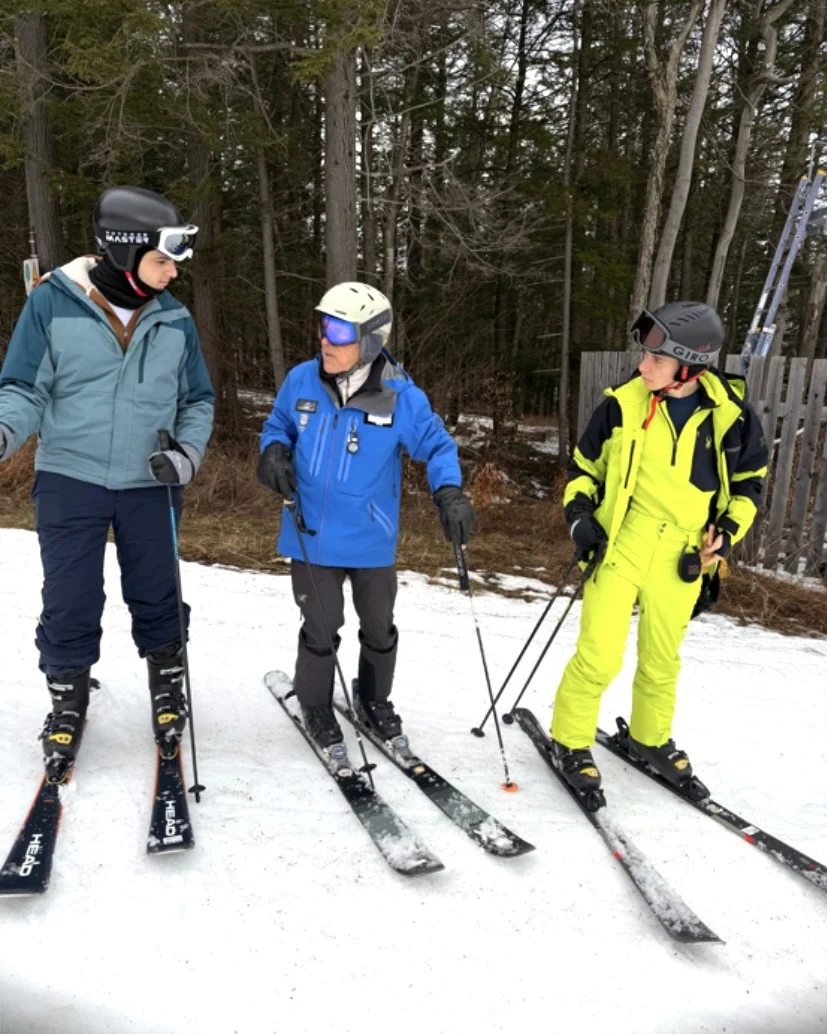
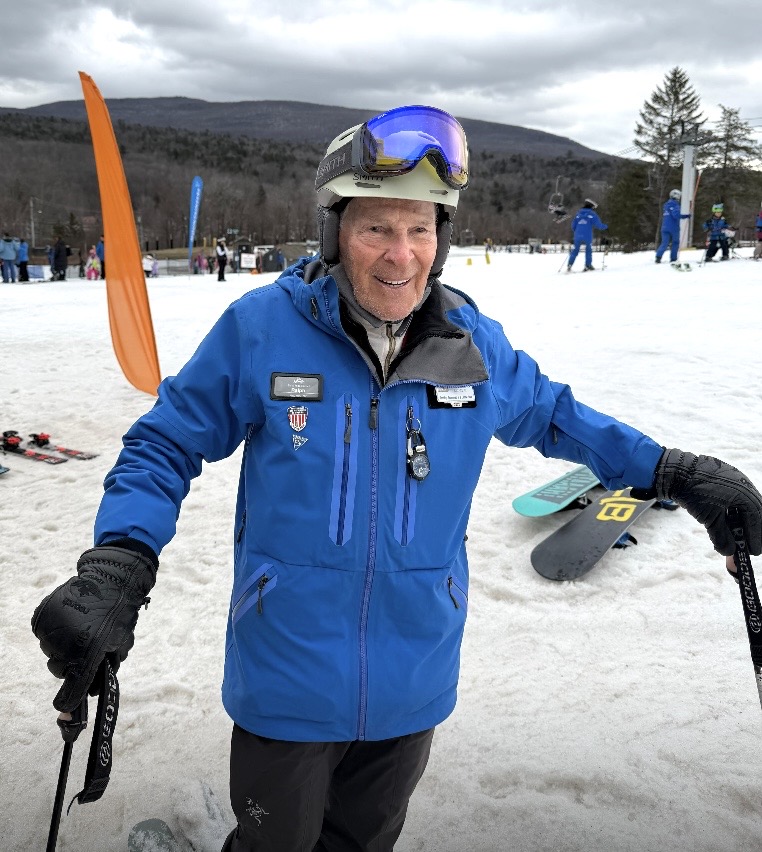
On a frigid morning in Spring 2026, as a piercing shot of wind swirled snow across the Otis Quad’s unloading ramp at New York’s Hunter Mountain, the mercury plummeted to -5°F, with biting wind chill making it feel like an arctic -30°F. While most guests sought refuge and warmth within the lodge, jostling for coveted spots near the fireplace, 95-year-old Ralph Perlberger stood ready, skis squeaking on the cold, dry snow, embodying a philosophy of embracing every snow condition and weather challenge. Accompanied by his wife, Carol, and two fellow ski instructor friends, David Raindorf and Steve Cohen, Perlberger was preparing for another run, a testament to his unwavering dedication and remarkable vitality. Leslie Surprenant, an Alpine Level II and Children’s Specialist 1 instructor at Hunter Mountain, observed this scene, introducing Perlberger to her weekly women’s clinic group, highlighting his exceptional grit and spirit.
A Celebration of Longevity and Dedication on the Slopes
The occasion was not just another day on the mountain; it was Ralph Perlberger’s 95th birthday. As Surprenant announced the milestone, a chorus of "Happy Birthday" erupted, muffled by frozen face masks, a unique serenade to a man who truly lives life to the fullest. Perlberger, beaming, accepted the well wishes before gracefully leading the group down West Side Glide, an intermediate trail that winds through a pristine landscape of pines and hemlocks. His presence on the slopes, particularly under such challenging conditions, serves as a powerful inspiration within the skiing community.
Victoria Mercado, the senior manager of Hunter Mountain’s Ski and Ride School, articulated the sentiment shared by many: “Ralph is an inspiration. He’s not only skiing, but teaching! Skiing and riding keep you young. When I watch Ralph ski, I can’t believe he’s 95. His energy, skill, and passion on the mountain defy his age. It’s an absolute pleasure to work alongside him.” This admiration is echoed by his peers. David Raindorf, a close friend and colleague, once remarked to Surprenant, "When I grow up, I want to be Ralph," while Steve Cohen added, "Ralph is my idol." These statements underscore Perlberger’s profound influence, not merely as an elder figure but as an active, vital participant in the sport he loves, challenging conventional notions of aging and athleticism.
Hunter Mountain, a prominent ski resort in the Catskill Mountains of New York, is renowned for its diverse terrain and vibrant ski culture. The Professional Ski Instructors of America (PSIA) Eastern/Education Foundation, the official publication of which, SnowPro, featured Perlberger’s story in its Spring 2026 issue, certifies instructors across various disciplines. Perlberger, a PSIA Level II Alpine Instructor, exemplifies the highest standards of teaching and passion, continuing to contribute significantly to the development of new skiers even in his tenth decade. His commitment to the sport for 24 seasons at Hunter Mountain is a rare achievement, setting a benchmark for longevity and sustained excellence in the field.
From Amsterdam to Auschwitz and Beyond: A Journey of Unyielding Hope
Ralph Perlberger’s story is not solely defined by his remarkable achievements on the ski slopes; it is profoundly shaped by an early life marked by unimaginable hardship and an indomitable will to survive. Born in Amsterdam, Netherlands, Perlberger’s childhood was shattered by the outbreak of World War II. In 1940, as Nazi forces launched their devastating invasion of the Netherlands on May 10th, his father, having traveled to New York City to arrange the family’s immigration, was abruptly separated from them. This fateful timing left 8-year-old Ralph, his mother, and two older brothers trapped in a country rapidly falling under totalitarian rule.
The persecution of Jewish citizens in the Netherlands escalated rapidly following the invasion. Within a year, the Perlberger family was forcibly removed from their home in Amsterdam. Their first destination was Westerbork transit camp in the northeastern Netherlands, a site that served as a crucial waypoint for the Nazi regime’s systematic extermination program. Established initially as a refugee camp for German Jews fleeing Nazi persecution, Westerbork was transformed into a transit camp in 1942, from which over 100,000 Jews, Roma, and Sinti were deported to extermination camps like Auschwitz and Sobibor. The conditions were harsh, designed to dehumanize and break the spirit of its prisoners.
In February 1944, the Perlbergers faced another harrowing transfer, packed into railroad cattle cars and transported to the Bergen-Belsen concentration camp in Germany. Bergen-Belsen, while initially not an extermination camp, became infamous for its horrific conditions, rampant disease, and staggering death toll, particularly in the final months of the war. Ralph endured the camp’s brutality, suffering from both typhus and typhoid fever, illnesses that claimed countless lives. Despite the starvation, disease, and constant threat of death, Perlberger held onto an astonishing conviction that he and his family would survive. He attributes this profound sense of security and hope to the strength and resilience instilled in him by his parents. In a testament to youthful optimism, he even believed he would one day share his extraordinary experiences as a compelling story with his friends once the war concluded.
Meanwhile, Ralph’s father in New York City faced agonizing uncertainty, unaware of his family’s fate for years. The end of the war brought a glimmer of hope and eventually, the astonishing news that his family had survived. They were located in the Russian-occupied village of Tröbitz, Germany, having arrived there via what became known as the "Lost Transport." This was one of three trains, carrying approximately 7,500 Jewish prisoners, intended by the Nazis for a prisoner exchange with the Western Allies. However, due to the chaotic collapse of the Third Reich, widespread destruction of railway tracks, and constant rerouting, the "Lost Transport" journeyed aimlessly for two weeks. It never reached its intended destination, finally halting on a destroyed bridge over the Elster River, just outside Tröbitz. On April 23, 1945, Soviet troops liberated the train’s emaciated and critically ill prisoners. Hundreds had already perished from typhus and hunger during the arduous journey.
For five months following their liberation, while the family’s visa applications for the United States were being processed, Ralph’s father provided vital support, sending Red Cross packages filled with food and hygiene products – a lifeline that underscored his relentless effort to reunite his family. Finally, in February 1946, Ralph, his mother, and his two brothers immigrated to the United States, making their new home in New York City. Ralph quickly adapted, learning English and excelling in school, while his father, having endured years of separation and uncertainty, slowly reconnected with his resilient family, beginning the arduous process of healing and rebuilding their lives.
A Passion Ignited: From Stanford Slopes to PSIA Instructor
Ralph Perlberger’s profound love for skiing began decades after his liberation, while he was pursuing a degree in economics at Stanford University. During a winter break, his father, keen to introduce his sons to new experiences in their adopted country, sent Ralph and his two older brothers to Sun Valley, Idaho. This iconic resort, known for its pioneering role in American skiing, captivated young Ralph. He was instantly "hooked," embracing every opportunity to ski, even as he navigated the demanding academic environment of Harvard Law School, where he later earned his law degree. Skiing became a consistent thread through his professional life, offering both challenge and solace.
For decades, Perlberger enjoyed recreational skiing, refining his skills across various prestigious destinations, including the challenging slopes of Taos, the renowned resorts of Europe, and eventually, the familiar terrain of Hunter Mountain. His extensive personal experience laid a strong foundation for what would become his second career. In 2002, at the remarkable age of 75, an advertisement caught his eye: for $85, he could participate in a weekend of instructor training and candidate selection at Hunter. If selected as a candidate, a second weekend of training and final selection would be free. Driven by a desire to share his passion, Perlberger pursued this opportunity with characteristic determination. He was among those chosen to become an instructor, a testament to his innate ability and enduring love for the sport, though he readily admits he realized he still had much to learn about the art of teaching.
Today, Ralph Perlberger is a certified PSIA Level II Alpine Instructor, a significant achievement that signifies a high level of skiing proficiency and teaching expertise. He attributes some of his most valuable technical insights to fellow ski instructor and PSIA alpine examiner Charlie Knopp, whose concise yet impactful advice — “Lift your inside hip!” — became a cornerstone of his own technique and teaching methodology. This simple instruction, often overlooked by intermediate skiers, is critical for achieving proper angulation and pressure distribution in a turn, leading to greater control and efficiency.
The Art of Instruction: Ralph’s Enduring Legacy at Hunter Mountain
Within Hunter’s ski and ride school community, Ralph Perlberger is not just an instructor; he is a revered figure, a mentor, and a living legend. Colleagues express both awe and deep appreciation for his contributions. Luca Arrigoni, a member of the Eastern Alpine Development Team, shared a particularly poignant reflection: “Ralph has a special place in my heart. I shadowed him as a new instructor and was inspired by his patient, gentle, and knowledgeable way with beginners. He still proudly wears the Hunter uniform, which shows his love for, and dedication to, the sport and teaching.” This speaks to Perlberger’s consistent professionalism and his embodiment of the values central to PSIA and the Hunter Mountain ethos.
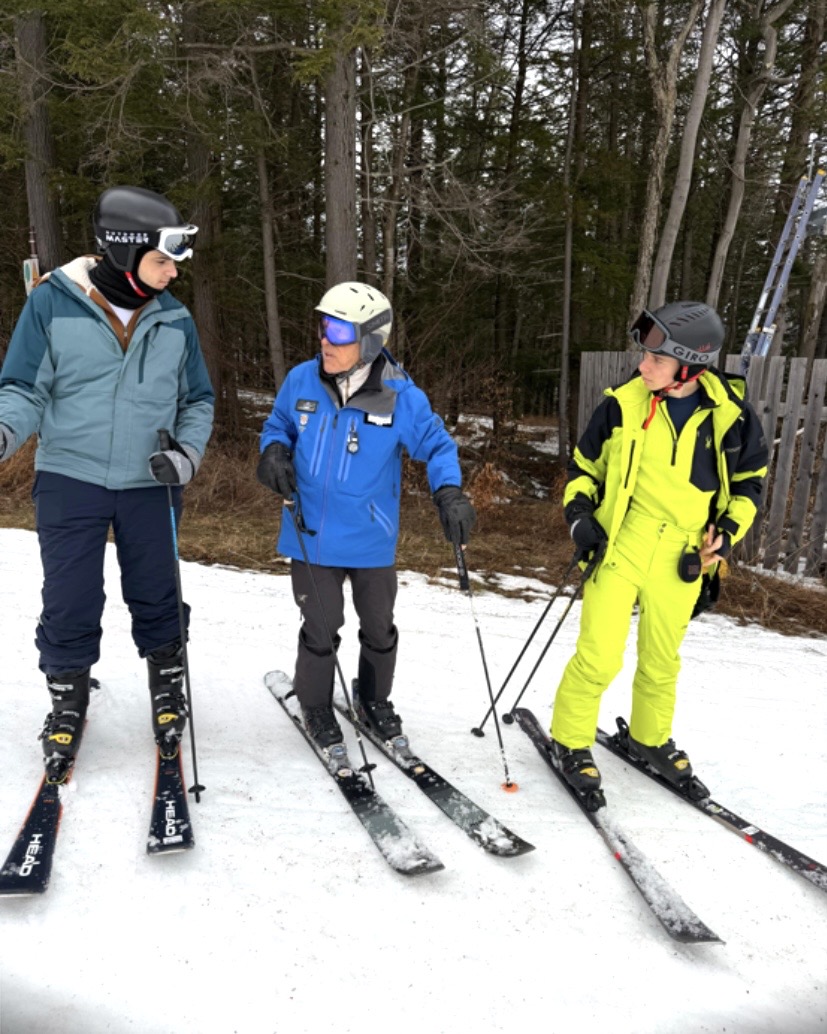
Perlberger particularly enjoys coaching adult intermediate skiers, a demographic often struggling to progress beyond a certain plateau. He often begins by asking students to describe how they initiate their turns. A common response, he notes, is “I don’t know. I just turn.” This highlights a fundamental lack of understanding of biomechanics and technique. Perlberger observes that many intermediate skiers rely primarily on leg rotation on flat skis, a method that is inefficient and limits control. He meticulously coaches his students on foundational principles: maintaining their center of mass (CM) over their base of support (BOS), effectively directing pressure to their outside skis, and controlling edge angles. These elements are critical for fluid, powerful, and safe skiing.
A key component of his teaching involves encouraging skiers to actively feel their shins against the tongue of their boots throughout all phases of a turn. This constant shin-boot contact is a tactile cue that helps skiers maintain an optimal forward stance, ensuring proper pressure on the front of the ski and better control. When he observes skiers leaning back—a common habit that leads to fatigue and loss of control—he prompts them to stop and notice the sensation in their quads. Most report feeling “tired” or “burning,” confirming the inefficiency of a backseat posture. He then gently reminds them to shift their weight forward, re-establishing shin contact. Through these patient, practical, and highly effective methods, Perlberger consistently witnesses improvement, fosters enjoyment, and receives heartfelt thanks from every student he teaches.
The age range of Hunter Mountain’s ski instructors spans an impressive eight decades, a testament to the sport’s appeal across generations. To the youngest instructors entering the profession, Ralph Perlberger offers succinct yet profound advice: “Keep at it and don’t give up! Don’t let anything stop you. Ski in all conditions and all weather.” This mantra, forged in the crucible of his own life experiences, encapsulates his philosophy of resilience and perseverance.
Beyond the Slopes: A Symbol of Longevity and the Human Spirit
Ralph Perlberger’s continued presence and active role as a ski instructor at 95 offers significant implications for understanding human longevity, physical activity, and mental fortitude. His story provides compelling evidence that age is not necessarily a barrier to high-level physical and intellectual engagement. In an era where active aging is increasingly recognized as vital for public health, Perlberger stands as a living testament to the benefits of lifelong physical activity, demonstrating how sports can sustain vitality well into advanced years. Research consistently shows that engaging in complex motor activities like skiing helps maintain cognitive function, balance, and muscle strength, all crucial for healthy aging.
Furthermore, Perlberger’s ability to not only ski but also to teach demanding technical skills underscores the remarkable adaptability of the human brain and body. His rigorous mental engagement in problem-solving and communication during lessons keeps his mind sharp, while the physical demands of skiing provide continuous cardiovascular and muscular benefits. His example serves as a powerful counter-narrative to stereotypes of decline in old age, instead presenting a vibrant image of sustained contribution and purpose.
The broader impact of individuals like Ralph Perlberger extends beyond the immediate skiing community. He symbolizes the triumph of the human spirit over adversity. His survival of the Holocaust and his subsequent embrace of a joyful and active life represent an enduring message of hope and resilience. This historical context enriches his narrative, lending an even deeper significance to his current achievements. His "never give up" attitude on the slopes is a direct echo of the unyielding hope that sustained him through unimaginable suffering.
Having recently completed his 24th season of instructing, Ralph Perlberger has no plans of slowing down or abandoning what he loves. He often muses, “Maybe someone above is watching over me,” a nod to the serendipity and good fortune that have graced his later life. He consistently draws inspiration from the legendary Baseball Hall of Famer Satchel Paige, who famously advised, “Don’t look back; something might be gaining on you.” For the thousands of skiers who frequent Hunter Mountain, that "something" might just be Ralph Perlberger, skiing effortlessly down the slope, a beacon of enduring passion, resilience, and the sheer joy of life. His legacy is not just etched in the snow, but in the hearts and minds of all who have the privilege to witness his extraordinary spirit.
