

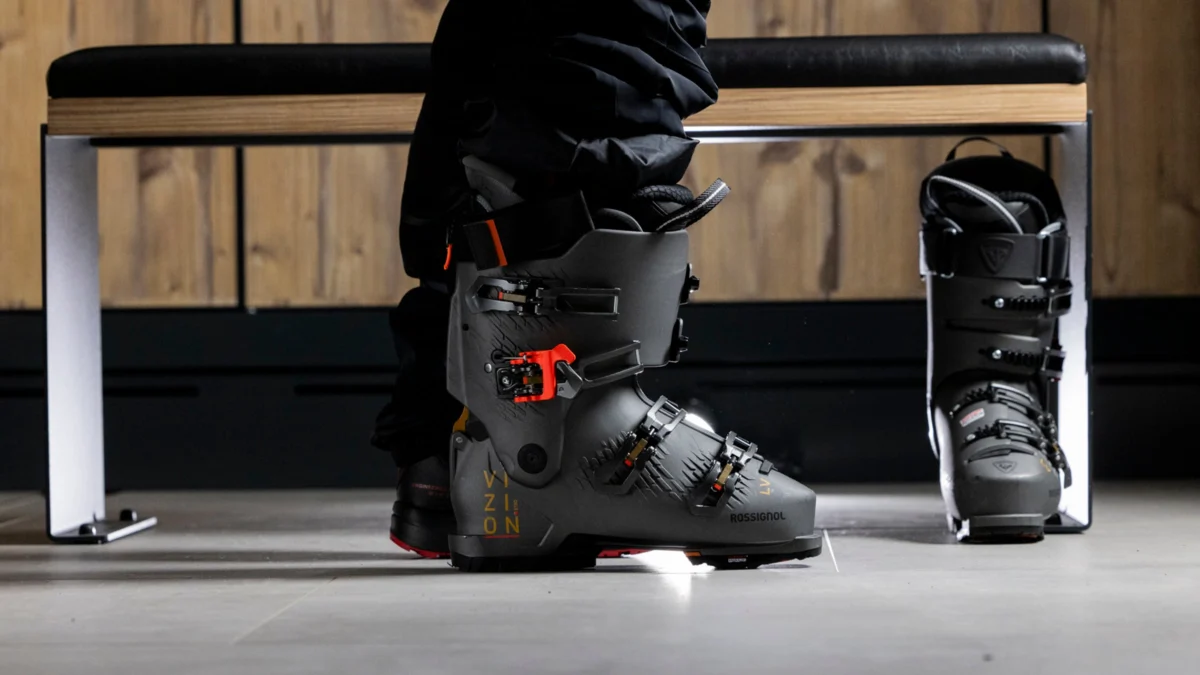
The global alpine equipment market has long grappled with a fundamental contradiction in ski boot design: the trade-off between the structural rigidity required for high-performance downhill control and the flexibility needed for ease of entry. For decades, advanced skiers have accepted the physical struggle of "wrestling" into stiff, four-buckle polyurethane shells as a necessary precursor to a day on the slopes. However, with the release of the 2026 Rossignol Vizion 4B Pro 120 MV, the industry is witnessing a significant shift in this paradigm. By integrating a sophisticated dual-opening cuff mechanism that allows for hands-free entry without compromising the lateral stiffness of a 120-flex rating, Rossignol has introduced a product that targets both the performance-oriented enthusiast and the comfort-seeking recreationalist.
The Engineering Behind the Vizion Series
At the core of the Rossignol Vizion 4B Pro 120 MV is a mechanical innovation designed to eliminate the friction points common in traditional overlap boot constructions. Standard alpine boots utilize a "wrap" design where layers of thick plastic must be pried apart to allow the foot to enter. In cold temperatures, the molecular density of these plastics increases, making the material significantly more resistant to deformation.
The Vizion series bypasses this issue through a unique cuff architecture. The boot features a spine and cuff assembly that can hinge both forward and rearward. This movement is activated by a specific, color-coded buckle system. When disengaged, the rear of the boot drops back, creating a wide aperture that allows the foot to slide in vertically—a movement Rossignol describes as "hands-free." Once the foot is seated, the skier simply steps down, and the cuff snaps back into a performance-ready vertical position.
The "MV" designation stands for Medium Volume, referring to the 100-millimeter last. In the world of boot fitting, the last is the width of the boot at the forefoot. A 100mm last is widely considered the "goldilocks" width, providing enough room for comfort for the average foot while remaining snug enough for precise energy transmission to the ski’s edges.
Technical Specifications and Pricing
The 2026 Vizion 4B Pro 120 MV enters the market with a premium MSRP of $800, positioning it in the upper echelon of all-mountain footwear. The specifications reflect a commitment to high-level alpine standards:
- Size Range: 24.5 to 31.5 (covering the majority of adult male and unisex sizing).
- Flex Rating: 120 (intended for advanced to expert skiers or heavier individuals who require more resistance).
- Last Width: 100 mm (Medium Volume).
- Construction: High-grade Polyurethane (PU) for consistent flex across varying temperatures.
- Liner: Heat-moldable Thinsulate™ Stretch insulated liner for thermal retention and customized fit.
While the 120 flex model is the flagship for performance, Rossignol has expanded the Vizion line to include a 100 flex version, catering to intermediate skiers or those who prefer a more forgiving feel. This tiered approach suggests a strategy to capture a broad segment of the market, from the "weekend warrior" to the seasoned local professional.
Two Years of Field Testing: A Chronology of Development
The path to the 2026 release was paved by an extensive two-season testing phase. Beginning in the winter of 2024, Rossignol distributed prototypes to a select group of gear testers, professional instructors, and industry analysts. The goal was to determine if a boot with so many moving parts could maintain the structural integrity required for high-speed carving and variable terrain.
During the first season of testing (2024-2025), feedback focused on the "Step-In" technology. Initial reports indicated that while the entry was indeed revolutionary, there were concerns regarding the "apres" mode—a setting where the boot remains loose for walking. Testers noted that the ability to walk comfortably from the parking lot to the lodge without the typical "ski boot clunk" was a game-changer for user experience.
In the second season (2025-2026), the focus shifted to durability. Engineers refined the buckle hinges and the tension of the rear spine to ensure that the "hands-free" mechanism would not degrade after hundreds of cycles of entry and exit. The final version, now hitting retail shelves, represents the culmination of these refinements. The consensus among testers is that the Vizion 4B Pro 120 MV skis with the same precision as the best-selling MV boots in the industry, such as the Rossignol Alltrack or the Lange Shadow, but with a significantly lower "barrier to entry."
Market Context and Competitive Landscape
The introduction of the Vizion comes at a time when "convenience tech" is becoming a major driver in the outdoor industry. For years, the only alternative to the traditional four-buckle boot was the "rear-entry" boot—a design popular in the 1980s that eventually fell out of favor due to poor heel hold and lack of performance.
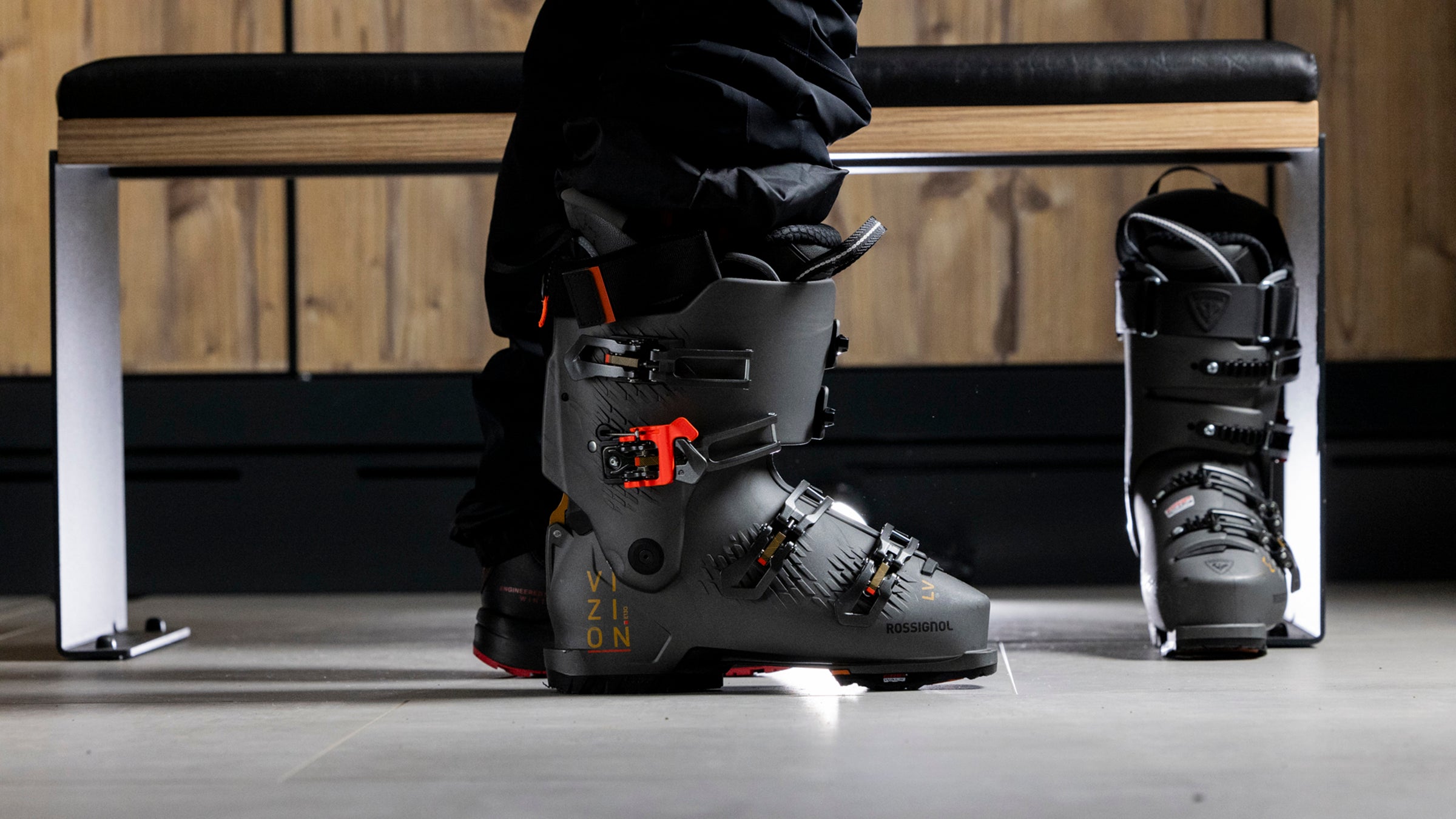
In recent years, brands like Nordica have attempted to revive this concept with the HF (Hands-Free) series. However, many of these modern rear-entry boots have been limited to lower flex ratings (usually 85 to 110), making them unsuitable for aggressive experts. Rossignol’s Vizion is a direct response to this gap in the market. By maintaining the four-buckle aesthetic and the 120-flex stiffness, Rossignol is signaling that convenience no longer requires a sacrifice in power.
Industry analysts suggest that the $800 price point, while high, is justified by the dual-utility of the boot. It functions as both a high-performance alpine tool and an ergonomic piece of footwear that reduces physical strain on the skier before they even reach the chairlift.
Official Responses and Design Philosophy
While Rossignol executives have maintained a focus on the technical merits of the boot, the underlying philosophy is one of "frictionless skiing." In internal design documents, the project was reportedly referred to as a solution for the "parking lot problem."
"We recognized that the most stressful part of a ski day often happens before the first run," noted a source close to the design team. "By applying advanced kinematics to the cuff, we’ve created a boot that respects the biomechanics of the human foot. You shouldn’t have to be an athlete just to put your shoes on."
The inclusion of the "apres" walk feature further emphasizes this philosophy. By allowing the cuff to hinge back further than a traditional walk mode, the Vizion enables a more natural gait. This is particularly beneficial for resort skiers who may need to navigate stairs, shuttles, and slippery lodge floors.
Broader Implications for the Ski Industry
The release of the Vizion 4B Pro 120 MV has implications that extend beyond mere gear reviews. It represents a move toward greater accessibility within the sport. As the skiing demographic ages, issues such as reduced back mobility, arthritis, or general loss of hand strength can make traditional boots a deterrent to continuing the sport.
By providing a high-performance boot that requires minimal physical force to put on, Rossignol is effectively extending the "skiing lifespan" of older participants. Furthermore, the technology lowers the intimidation factor for newcomers who find the complexity of traditional gear overwhelming.
However, the boot is not without its minor criticisms. Field testers have noted that while the entry is hands-free, the process of buckling the cuff can occasionally be "tricky." Because the cuff is designed to move in multiple directions, aligning the teeth of the buckles requires a bit more finesse than a static shell. Nevertheless, this is widely viewed as a minor trade-off for the overall ease of use.
Conclusion: The Future of Alpine Footwear
As the 2026 season approaches, the Rossignol Vizion 4B Pro 120 MV stands as a benchmark for how mechanical innovation can solve long-standing ergonomic issues in sports equipment. It successfully bridges the gap between the comfort of rental-style gear and the uncompromising power of a race-bred boot.
Whether this "hands-free" trend will become the new standard across all brands remains to be seen, but the initial reception suggests that the market is hungry for products that prioritize the user’s physical well-being without diminishing the thrill of the descent. For the consumer, the Vizion offers a compelling proposition: the ability to focus less on the gear and more on the mountain. With a robust build, a proven testing record, and a design that tackles the "one thing every skier hates," Rossignol may have very well set the trajectory for the next decade of ski boot evolution.
