

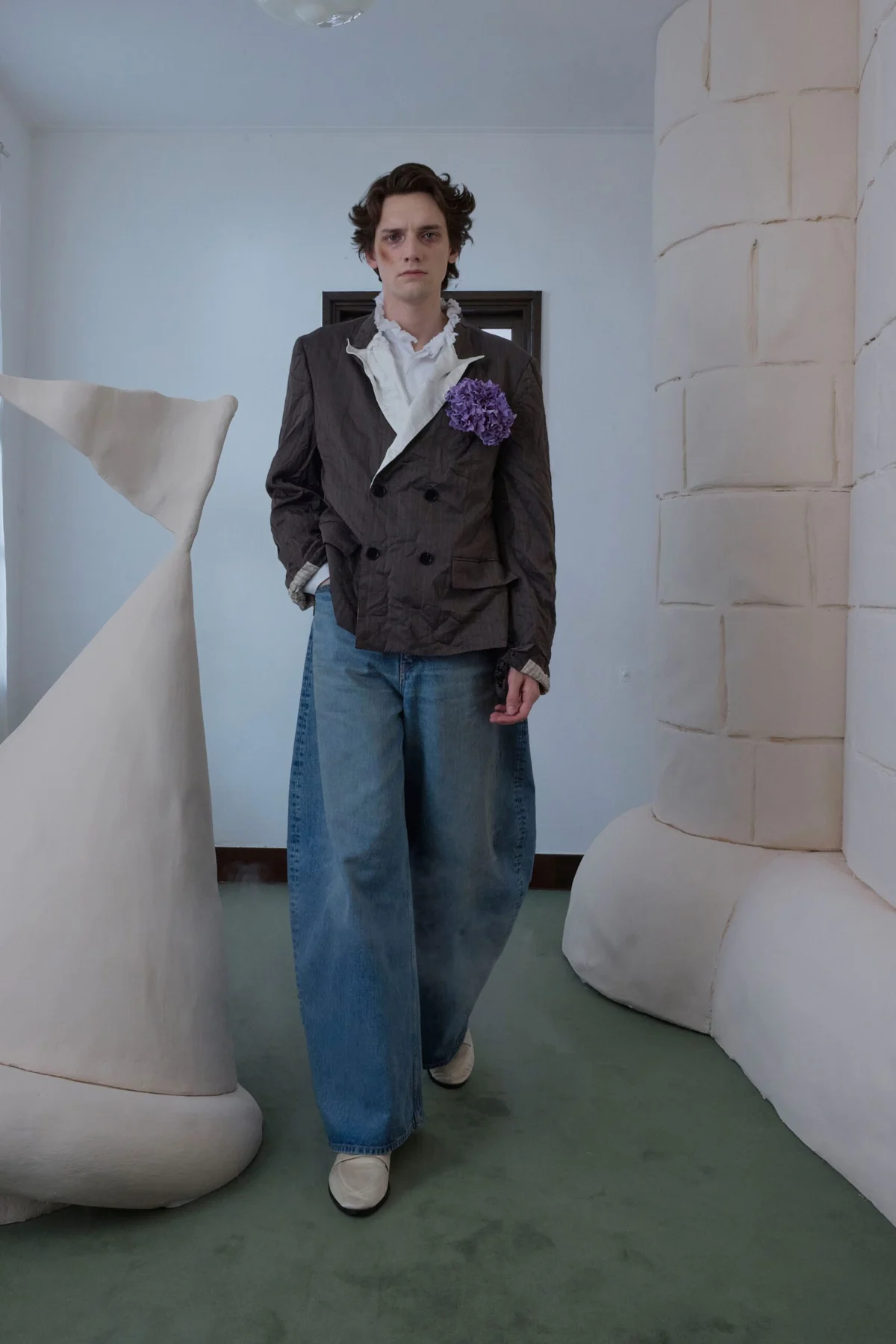
Shinpei Goto, the visionary 34-year-old designer behind the acclaimed Japanese menswear label MASU, has long been celebrated for his ability to encapsulate a generation’s aesthetic with his signature blend of androgynous edge and undeniable cuteness – a style often described as "soft boy swag." However, his latest collection, unveiled amidst the bustling fashion landscape of Tokyo, delves into a more profound and introspective territory, grappling with the age-old hero-villain dichotomy and its complex implications for masculinity. This collection marks a significant evolution for Goto, reflecting a personal journey that has reshaped his artistic perspective and redefined the symbolic language of MASU.
A Shift in Perspective: From Righteousness to Ambiguity
The genesis of this introspective collection, as revealed by Goto during a candid showroom walkthrough in Tokyo, stems from a period of intense personal reflection that coincided with the winding down of his previous season and the nascent stages of planning for the current one. "Just as the previous season wrapped up and I was gearing up for the next one, I went through some personal stuff that really shifted my perspective," Goto shared. This personal upheaval cast a new light on recurring motifs in his work, particularly the angels and kawaii cherubs that have become a hallmark of the MASU aesthetic. Previously interpreted as symbols of unadulterated righteousness, these figures now, in Goto’s evolving vision, possessed a more ambiguous, even sinister, undertone. "I used to treat them as symbols of righteousness, but I realized that those same figures can look like demons," he explained, articulating a newfound appreciation for the inherent duality present in seemingly benevolent imagery.
This exploration of duality is not merely an abstract artistic concept; it is deeply rooted in Goto’s personal experiences and sartorial history. The collection prominently features denim pieces that are direct replicas of jeans Goto himself has worn for years, meticulously recreated and adorned with MASU’s signature diamanté embellishments. This personal connection lends an authenticity and gravitas to the garments, transforming them from mere fashion items into wearable narratives.
Another poignant element is the reimagining of a tuxedo worn at his wedding. Forgotten and relegated to the back of his closet, this garment is resurrected in the collection as an intentionally rumpled replica, its lapels appearing deliberately wilted. This deconstructed approach to formal wear suggests a subversion of traditional masculine attire, hinting at a weariness with rigid societal expectations or perhaps a poignant reflection on the passage of time and the imperfections that accompany life’s significant moments.
Furthermore, a beloved Ivy League-style argyle sweater has been transformed into a frayed masterpiece. The V-neck of the sweater now forms a heart within the diamond pattern, while the surrounding twinkling threads appear to be unraveling. This detail is particularly evocative, suggesting a vulnerability and an emotional core that is both beautiful and fragile, mirroring the internal struggles Goto has been navigating.
Unpacking the Symbols: From Tablecloths to Cowboys
The collection’s thematic depth is further illuminated through its innovative use of everyday objects as design inspiration. A checkered tablecloth, imbued with the warmth and joy of a birthday celebration, has been ingeniously translated into a series of gingham shirts and skirts. These pieces are artfully styled with dusty pink loafers and an array of gold and silver jewelry, notably featuring bitten apple charms. These charms serve as a clear and sophisticated nod to the biblical narrative of forbidden fruit and the tree of knowledge, further underscoring the collection’s exploration of temptation, consequence, and the inherent complexities of human nature.
The influence of cowboy culture is also palpable, manifesting in the inclusion of suede tasseled capes and handbags. Goto himself elaborated on this choice, stating, "Cowboys are a perfect example of that duality. To some, they’re heroes, but to others they’re invaders, so I used that idea as a metaphor that a single character can embody both sides of the coin." This statement encapsulates the central thesis of the collection: that heroism and villainy are not mutually exclusive but can coexist within a single entity or individual, depending on perspective and context. The romanticized image of the lone cowboy, a figure often associated with rugged individualism and moral rectitude, is here juxtaposed with the historical reality of their role as colonizers and agents of change, highlighting the multifaceted nature of historical narratives and individual identities.
The Duality of Man: A Fashionable Exorcism
Shinpei Goto’s latest offering for MASU is, at its core, an exploration of the duality of man. While this theme is a well-trodden path in literature, philosophy, and art, Goto manages to imbue it with fresh relevance and emotional resonance. He achieves this by interrogating the very symbols that have come to define the MASU brand, re-framing them from new and unexpected angles. The collection is, in essence, a personal exorcism of these ingrained symbols, allowing them to be viewed and understood through the lens of lived experience and emotional complexity.
The collection’s success lies not only in its thematic depth but also in its inherent wearability and progressive aesthetic. Goto continues to excel at creating menswear that, despite drawing heavily on nostalgia and personal memory, feels undeniably contemporary and forward-thinking. The inclusion of "male vulnerability" as a design element, coupled with the striking visual of sparkling jeans, suggests a broader societal shift towards embracing a more nuanced and emotionally expressive form of masculinity. This collection argues that such vulnerability, far from being a weakness, can be a powerful force for good, fostering connection, empathy, and authentic self-expression.
Context and Reception: A Growing Force in Global Fashion
The presentation of MASU’s latest collection took place within the vibrant and competitive Japanese fashion week calendar, a significant platform for designers to showcase their work to a global audience. Tokyo Fashion Week, officially known as Rakuten Fashion Week TOKYO, has been increasingly recognized for its innovative designers and unique blend of established heritage brands and emerging avant-garde talents. Goto and MASU have steadily built a reputation for their distinct point of view, attracting a dedicated following both domestically and internationally.
While specific attendance figures for individual shows are not typically released, the showrooms and presentations during fashion weeks are crucial for buyers, press, and influencers. The positive reception from industry insiders, as evidenced by the descriptions of the collection’s emotional resonance and aesthetic appeal, suggests that MASU is solidifying its position as a significant player in the contemporary menswear landscape. The brand’s ability to blend commercial appeal with artistic integrity is a key factor in its growing influence.
Broader Implications: Redefining Masculinity in the 21st Century
Shinpei Goto’s exploration of the hero-villain dichotomy in MASU’s latest collection carries broader implications for the ongoing discourse surrounding masculinity in the 21st century. As traditional notions of male identity are increasingly being challenged and re-examined, designers like Goto are at the forefront of offering alternative narratives. By acknowledging and embracing the complexities and contradictions inherent in human nature, and by translating these into tangible, wearable art, he is contributing to a more inclusive and authentic understanding of what it means to be a man today.
The collection’s emphasis on vulnerability, the blurring of gendered lines through its androgynous designs, and the embrace of personal history as a source of creative inspiration all speak to a desire for more genuine and multifaceted expressions of self. The "soft boy swag" that initially defined MASU’s appeal is now being infused with a deeper emotional intelligence, suggesting that true style encompasses not just outward appearance but also inner resilience and the courage to confront one’s own complexities.
The fashion industry, often a mirror of societal trends, is increasingly moving towards brands that champion authenticity and emotional depth. MASU’s trajectory, from its initial "cute but edgy" appeal to its current profound exploration of human nature, exemplifies this evolution. The success of such collections signals a growing consumer appetite for fashion that not only looks good but also feels meaningful and speaks to the contemporary human experience. Shinpei Goto’s work with MASU is not just about clothes; it is about crafting a narrative that resonates with the evolving understanding of identity, particularly within the context of modern masculinity. The collection serves as a compelling reminder that true strength often lies not in outward bravado, but in the introspective courage to embrace one’s own inherent dualities.
