

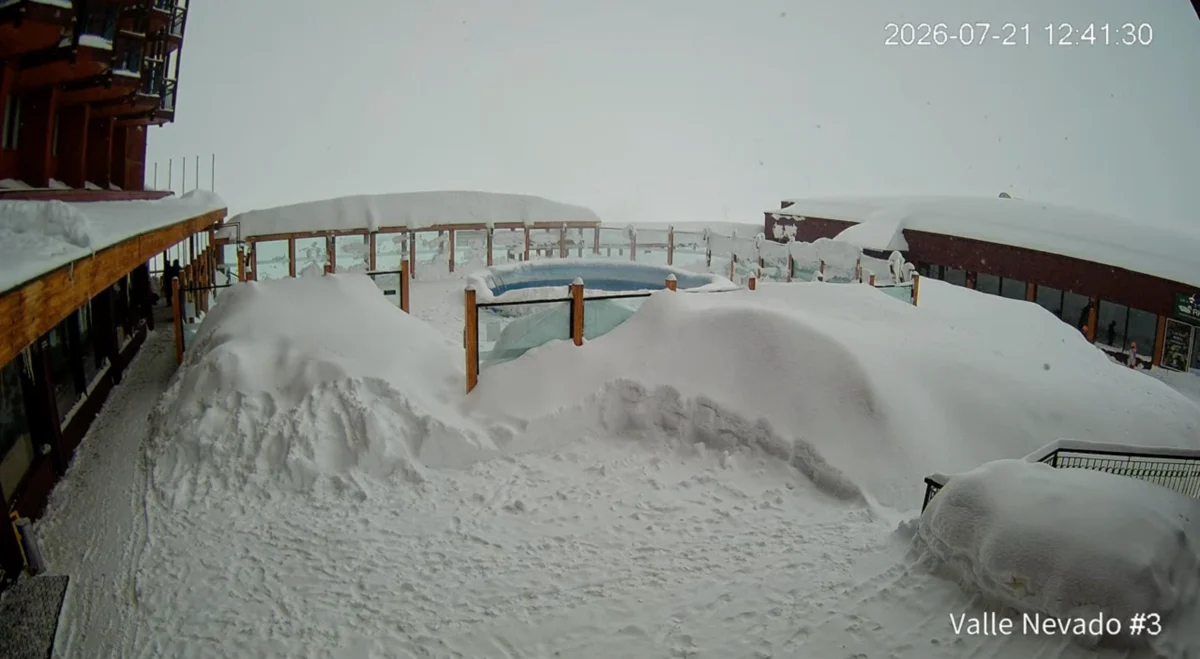
While the Northern Hemisphere swelters in summer heat and mountain biking trails see peak activity, the Chilean Andes are experiencing an unprecedented winter, with Ski Portillo emerging as the epicenter of a historic snowfall event. The iconic high-altitude resort, renowned for its challenging terrain and distinctive yellow hotel, has been inundated by over 23 feet of snow, prompting management to announce a significant extension of its operating season through October 12, 2026. This extraordinary turn of events follows a late start to the season and marks one of the most remarkable winters in recent memory for the Southern Hemisphere’s ski industry, drawing attention from winter sports enthusiasts globally.
An Unrelenting Deluge: The Record-Setting Snowfall
The 2026 winter season at Ski Portillo began with a degree of uncertainty, as early July saw a slower-than-usual accumulation of snow. However, this initial trepidation quickly transformed into awe as the weather pattern dramatically shifted. Beginning mid-July, a series of powerful atmospheric rivers, moisture-laden currents originating from the Pacific Ocean, began to relentlessly impact the central Chilean Andes. These systems, characterized by their immense capacity to transport water vapor, unleashed prodigious amounts of snow, transforming the rugged Andean landscape into a pristine, deep-powder paradise.
In a single, intense seven-day period during mid-July, the resort recorded an astonishing accumulation exceeding 15 feet (approximately 4.5 meters) of fresh snow. This monumental dump not only revitalized the slopes but also presented significant logistical challenges. The infamous winding highway from Santiago, a critical artery for accessing the resort, was forced into temporary closures due to the sheer volume of snow and heightened avalanche risk. Road crews worked tirelessly to clear the route, often facing whiteout conditions and the constant threat of new slides. To date, the cumulative snowfall at Portillo has surpassed 23 feet (over 7 meters), a figure that places this winter among the most snow-laden in the resort’s storied history. This depth is not merely a statistical anomaly; it represents a profound transformation of the resort’s operational landscape, burying structures, altering skiable terrain, and demanding extraordinary efforts in snow management and avalanche control.
Portillo’s Legacy: A Jewel in the Andes
Ski Portillo holds a unique and revered place in the world of winter sports. Established in 1949, it stands as South America’s oldest ski resort, a testament to enduring vision and a commitment to alpine excellence. Perched at an elevation of approximately 2,880 meters (9,450 feet) above sea level, nestled beside the stunning Inca Lake, Portillo is known for its dramatic scenery, challenging steeps, and an intimate, all-inclusive resort experience centered around its iconic bright yellow hotel. Unlike many modern ski destinations, Portillo offers a more traditional, communal atmosphere, often attracting professional ski racers for summer training and a loyal clientele who return year after year. Its rich history includes hosting the 1966 FIS Alpine World Ski Championships, a remarkable feat for a resort of its size and remote location, further cementing its legendary status. The "Yellow Hotel" itself is more than just lodging; it’s a landmark, an integral part of the Portillo experience, and its current state, partially buried under record snow, serves as a vivid visual testament to the intensity of this winter.
The resort’s unique position in a high-alpine cirque makes it particularly susceptible to intense snowfall from Pacific storms, yet the scale of the current accumulation has surprised even seasoned veterans. The sheer volume of snow requires continuous, meticulous work from the resort’s dedicated team, including extensive avalanche mitigation efforts, piste grooming, and the physical excavation of chairlift towers, buildings, and access points.
The Science Behind the Storms: Atmospheric Rivers and Andean Weather

The exceptional snowfall at Portillo is largely attributable to the recurring impact of atmospheric rivers. These phenomena are long, narrow corridors of concentrated moisture in the atmosphere, often described as "rivers in the sky." They are capable of transporting vast quantities of water vapor, equivalent to the average flow of major rivers like the Mississippi. When these atmospheric rivers make landfall and collide with significant mountain ranges, such as the Andes, the moist air is forced upwards, cools, and condenses, leading to intense precipitation – in this case, primarily snow due to Portillo’s high elevation.
The variability of precipitation in the central Chilean Andes is influenced by several large-scale climate patterns, including the El Niño-Southern Oscillation (ENSO). While the specific interaction of current climate conditions with the intensity and frequency of atmospheric rivers is a subject of ongoing scientific study, what is clear is that this winter’s pattern has been exceptionally potent. The consistent barrage of moisture-laden systems, one after another, allowed for minimal breaks in snowfall, leading to the rapid and significant accumulation observed. This robust snowpack is a welcome sight for a region that has experienced periods of drought in recent years, though the immediate scale of this event presents its own set of challenges and opportunities.
Navigating the Challenges: Operations Amidst the Deluge
Managing a resort under such extreme conditions is a monumental undertaking. The "late start" to the season in early July meant that teams were already working against the clock to prepare slopes and facilities. The subsequent onslaught of over 23 feet of snow, particularly the 15 feet in one week, stretched resources and personnel to their limits.
Road access, crucial for guests and supplies, became a primary concern. The iconic, switchback-laden international highway connecting Santiago to Portillo (and eventually Argentina) is known for its dramatic ascent and susceptibility to winter closures. With such heavy snowfall, the risk of avalanches dramatically increased, necessitating proactive avalanche control measures, often involving explosives, to ensure the safety of travelers and resort staff. Resort teams worked around the clock, deploying specialized snow-clearing equipment to keep the vital artery open, albeit with intermittent closures that created temporary isolations.
Within the resort itself, the operational challenges were equally daunting. Chairlifts had to be dug out, some towers buried to their platforms. Buildings, including the lower levels of the Yellow Hotel, required constant snow removal to prevent structural stress and maintain access. Ski patrols faced complex terrain assessment, while snow safety teams managed unprecedented snow depths and stability issues. Despite these hurdles, the Portillo team, renowned for its resilience and expertise in extreme alpine environments, has successfully maintained operations, prioritizing guest safety and an exceptional ski experience.
Economic Boon and Community Impact
The historic snowfall and extended season represent a significant economic boost for Ski Portillo and the surrounding regional economy. Following a relatively subdued start to the winter, the announcement of the extension through October 12, 2026, has generated immense excitement within the global ski community. This translates directly into increased bookings, extended employment for resort staff, and a ripple effect across local businesses, including transportation services, suppliers, and other tourism-related enterprises.
A spokesperson for Ski Portillo, in an inferred statement, might emphasize the profound positive impact: "This extraordinary winter has not only delivered unparalleled ski conditions but also a vital economic stimulus. After a challenging start, the sheer volume of snow has allowed us to extend our season well into October, providing additional weeks of employment for our dedicated team and supporting the many local businesses that rely on the winter tourism industry. We are thrilled to welcome guests for what promises to be an unforgettable extended spring skiing experience."

Local communities along the highway and in nearby towns often see increased demand for goods and services when the resort is thriving. The extended season means more revenue, potentially higher wages, and greater stability for many families whose livelihoods are intrinsically linked to Portillo’s success. It also serves as a powerful marketing tool, showcasing the resort’s ability to deliver world-class conditions even when other Southern Hemisphere resorts might be winding down.
Lock In Your Late-Season Lap: An Unprecedented Opportunity
Originally, Ski Portillo had planned to conclude its 2026 operating season on September 26. However, the current, colossal snowpack has fundamentally altered this timeline. The decision to extend operations through October 12, 2026, opens up an exceptional opportunity for skiers and snowboarders to experience incredible spring conditions deep into what would typically be mid-autumn in the Southern Hemisphere. This extended period promises stable, sun-drenched days with ample soft snow, ideal for cruising wide-open slopes and exploring high-alpine terrain that will remain pristine for weeks.
To incentivize late-season bookings and allow more enthusiasts to take advantage of these unprecedented conditions, Portillo is reportedly offering special packages, incentives, and lodging discounts. These offers are designed to encourage both domestic and international travelers to "lock in their late-season lap" and experience what many anticipate will be some of the best spring skiing conditions in years. For those accustomed to the Northern Hemisphere’s winter, this offers a unique chance to chase winter well beyond its conventional boundaries, indulging in October powder turns or slushy spring corn under the Andean sun. The extended season allows for a rare confluence of factors: deep snow, usually associated with mid-winter, combined with the longer daylight hours and milder temperatures typical of spring.
Broader Implications and the Future Outlook
The historic winter at Ski Portillo serves as a potent reminder of the dramatic variability inherent in mountain climates. While individual events like this cannot be directly attributed to long-term climate change without extensive scientific analysis, they fit within a broader pattern of increasingly extreme weather phenomena observed globally. Some years bring drought, others, like 2026, bring an overwhelming abundance of snow.
For the Southern Hemisphere ski industry, this winter provides a significant boost, particularly following seasons that have seen varying snowfalls across different regions. Portillo’s success stands out and could draw more attention to the Chilean Andes as a premier winter destination. The longevity of the snowpack also has ecological implications, contributing to glacier mass balance (though likely a minor offset against long-term retreat) and providing crucial water resources for downstream communities and ecosystems as it melts throughout the spring and summer.
As the season progresses towards its new closing date, the focus will shift from managing overwhelming snowfall to preserving the quality of the snowpack and ensuring continued operational excellence. This historic winter at Ski Portillo will undoubtedly be etched into the resort’s annals, a testament to the raw power of nature and the enduring allure of the Andean mountains. For skiers around the globe, it represents a remarkable opportunity to extend the joy of winter into what is, for many, already the heart of autumn.
