

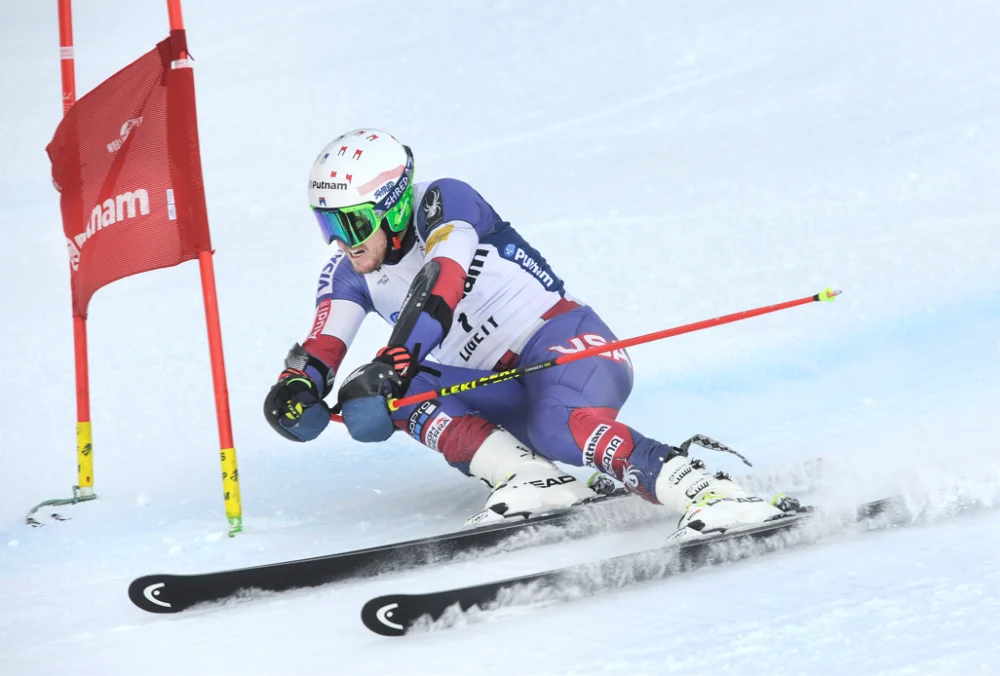
Ted Ligety, an American alpine ski racer, etched his name into the annals of ski history not merely through his remarkable collection of medals and titles but by fundamentally reshaping the understanding and execution of Giant Slalom (GS). His distinctive, ultra-aggressive carving technique, which earned him the moniker "Mr. GS," transcended conventional wisdom, pushing the boundaries of what was thought possible on skis and offering profound lessons for both elite competitors and ski instructors alike. This deep dive explores the mechanics behind Ligety’s gold-medal turns, the physical and technical demands of his style, and the enduring implications for the sport and its pedagogy.
A Career Defined by Dominance and Innovation
Ligety’s journey to the pinnacle of alpine skiing began to capture global attention at the 2006 Winter Olympics in Turin, Italy. Then a relatively unknown 21-year-old, Ligety delivered a stunning performance in the men’s combined event. Pushing out of the starting gate for his second slalom run, his revolutionary approach to carving became immediately apparent. Announcers and experts were astounded by the extreme angles he could achieve, laying his skis flat against the snow with an unprecedented degree of inclination, arcing precisely through turn after turn. This audacious display propelled him into first place, securing an unexpected Olympic gold medal and signaling the arrival of a new force in ski racing.
The Turin gold was just the prologue. Weeks later, Ligety claimed his inaugural World Cup victory in Giant Slalom, a discipline he would come to dominate with an almost unparalleled consistency. Over a distinguished 14-year career on the U.S. Ski Team, he amassed an astounding 24 World Cup Giant Slalom wins, a record for an American male skier in a single discipline. His mastery culminated in a second Olympic gold medal in GS at the 2014 Sochi (Russia) Olympics and an impressive five World Cup GS Championship titles, cementing his legacy and earning him the apt nickname, "Mr. GS." Beyond the raw statistics, Ligety’s true impact lay in how he achieved these victories, redefining the sport’s technical benchmarks.
The Anatomy of the "Ligety Lean": Physics and Biomechanics
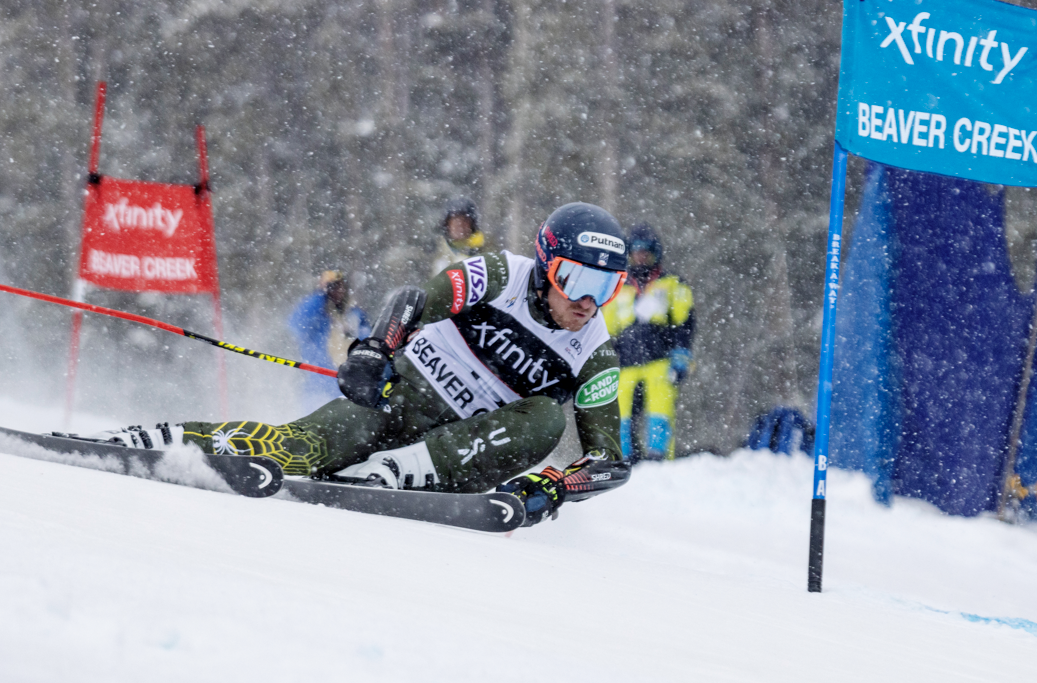
Witnessing Ligety ski in person was, for many, a thrilling and revelatory experience. Kevin Jordan, a PSIA (Professional Ski Instructors of America) Alpine Team member and children’s program supervisor at Aspen Snowmass Ski and Snowboard School, vividly recalls his amazement. "What was interesting to me was that Ted would literally fall down as he approached the rollers," Jordan recounted. "Think of a hard boot carving snowboarder who lays it over. When they are on their toeside edge, they can be so inclined that it looks like they are falling on the snow. This is what Ted did." Jordan’s observation highlights the extreme angles Ligety achieved, where his hips would drag over terrain features, a phenomenon Ligety himself acknowledged, explaining, "You’ve got to. It is the only way I can stand back up."
This extreme inclination is not merely a stylistic flourish but a direct application of physics, particularly the principles governing centripetal force in a turn. To carve a clean, high-speed turn, a skier must generate enough centripetal force to counteract the centrifugal force pulling them outwards. This force is primarily achieved by inclining the body and the skis into the turn. The faster a skier travels and the tighter the desired turn radius, the greater the angle of inclination required. Ligety’s remarkable speed tolerance and acute sensation for preserving momentum unlocked this principle to an unprecedented degree. As Joshua Fogg, a PSIA Alpine Team member and training director for Aspen Snowmass Ski and Snowboard School, explains, "The faster you go, the further you can lean over." For most skiers attempting such extreme angles without the requisite speed, compensatory movements—like the inside ski diverging or both skis pivoting—would occur, resulting in a loss of edge hold and control. Ligety, however, consistently operated at a velocity that allowed him to maintain perfect balance through these deep inclinations.
Biomechanically, Ligety’s technique demanded exceptional strength and mobility. Fogg points out the angle of Ligety’s inside upper leg, which appears "like he’s doing a really deep pistol squat, and he doesn’t lose his body positioning in that." This extreme flexion of the inside knee, bringing it close to the chest, creates a significant "long leg/short leg" differential, enabling the outside ski to be highly edged while the inside ski remains engaged but less pressured. This position requires immense hip, knee, and ankle mobility, coupled with core strength to maintain stability against the powerful forces at play. Without this mobility, achieving such high edge angles while maintaining balance is exceedingly difficult, often leading to instability or premature loss of edge grip.
Redefining Giant Slalom: A Blend of Precision and Aggression
Sasha Rearick, a PSIA-certified Level III alpine instructor and former head coach of the U.S. Men’s Alpine Team during Ligety’s dominant years, underscored the transformative nature of his skiing. "He could carve a clean turn better than any other athlete I’ve worked with," Rearick stated. "Seeing him redefine GS was amazing. He was incredibly creative in how he approached the line — finding a way to ski on a clean edge while being direct and fast."
Historically, GS skiing often presented a trade-off: skiers could either execute a clean, fully carved turn, which might be too round and thus slower, or take a more direct, faster line that often involved some degree of skidding or scrubbing speed. Ligety found the elusive "perfect balance." His genius lay in his ability to maintain a clean, powerful edge through the entire turn, minimizing friction and maximizing speed, while simultaneously taking the most direct line down the fall line. This combination allowed him to carry unparalleled speed from turn to turn, setting him apart from his competitors.
The evolution of ski equipment during Ligety’s career also played a crucial role in enabling his style. Advances in ski design, particularly stiffer tails and deeper sidecuts, provided the tools for more aggressive carving. Ligety, however, was not merely a beneficiary of these advancements; he was an innovator who pushed their limits. His technique demonstrated the full potential of modern GS skis, influencing manufacturers and subsequent generations of racers. He was instrumental in demonstrating how to leverage the ski’s sidecut to create powerful, high-angle turns, maximizing the ski’s performance capabilities.
The Critical Role of Equipment Alignment and Mental Fortitude
Beyond natural talent and physical prowess, Ligety’s success was also rooted in meticulous equipment setup. Joshua Fogg highlights the importance of "perfect boot alignment" – both fore/aft and lateral – in maintaining balance when skis are on a huge edge angle. "If your lateral alignment isn’t very accurate, it gets in the way of being balanced while you’re leaning over," Fogg explains.
Boot canting, the process of adjusting the angle of the boot sole relative to the ski, is crucial for correcting anatomical variations. For individuals who are bowlegged, their skis tend to engage too early on the outside edge, while knock-kneed individuals might find their skis skidding away. By ensuring the lower leg is perpendicular to the ski’s topsheet, canting optimizes edge engagement and pressure distribution, allowing for precise control at extreme angles. While Ligety likely started with good natural alignment, the fine-tuning of his boots would have been paramount to his ability to exploit the full range of his body’s capabilities.
Furthermore, Ligety’s mental game was as finely tuned as his physical one. Fogg notes that Ligety "doesn’t get freaked out by speed." This high tolerance for velocity, combined with an unwavering focus on momentum preservation, allowed him to push the limits without succumbing to fear or hesitation. This psychological edge enabled him to commit fully to his aggressive lines, trusting his equipment and technique even at speeds that would unnerve most.
Lessons for the Instructor: Bridging the "Ideal" and the "Real"
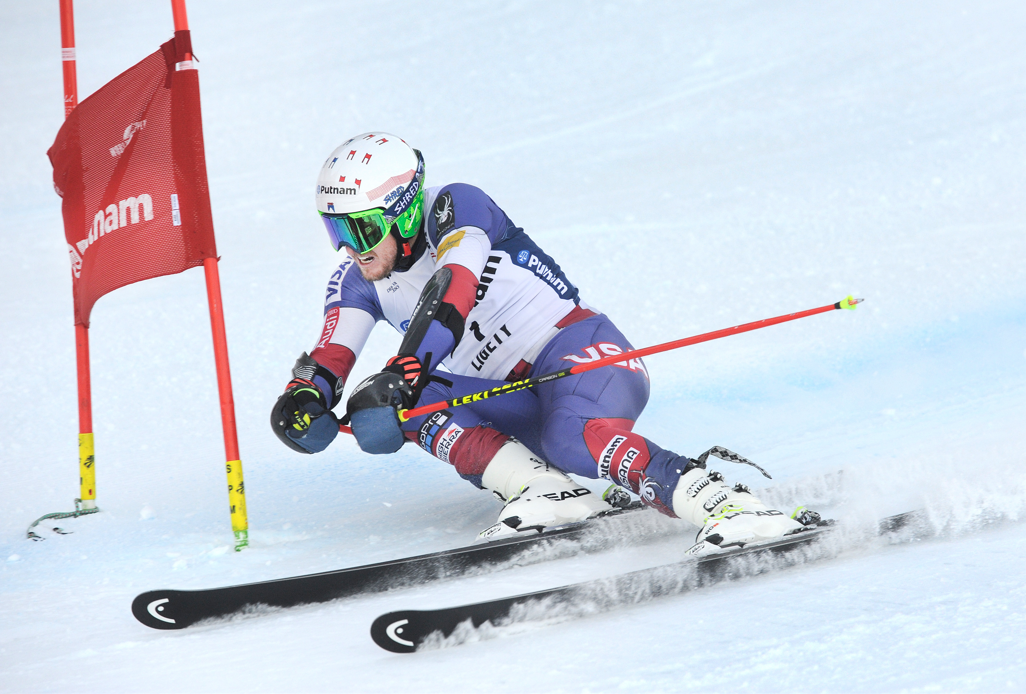
The question naturally arises: Is Ted Ligety’s technique a realistic ideal for the average recreational skier or even an aspiring instructor? While replicating his extreme angles and speeds is inconceivable for most, his skiing offers invaluable principles that can be distilled and applied across all levels of instruction.
One of the most significant takeaways, according to Fogg, is Ligety’s approach to speed control and turn initiation. "Ted releases a turn sooner than most ski instructors, and he’s not constantly gaining speed as he goes," Fogg observes. Ligety also demonstrated "more equal weight foot-to-foot than most before he releases his edges." This allows him to get up to a certain speed and then maintain it as consistently as possible throughout the run.
Fogg illustrates this concept with a compelling analogy: "Imagine you are on a bus and can only stand. The driver hits the accelerator, then the brake, and you’re constantly getting lurched, and you have to hold on to maintain your balance. If the driver is smooth and goes one speed, you can walk around the bus without holding on." The ability to ski with consistent speed, rather than accelerating and decelerating constantly, profoundly enhances balance and reduces the physical and mental effort required. This "speed control," as Fogg terms it, is a gift he wishes he could bestow upon every ski instructor, as it frees up attention for anticipating upcoming terrain and refining movements.
For ski instructors, Ligety’s example reinforces several core principles:
- Momentum Management: Emphasize maintaining consistent momentum through the turn rather than constantly scrubbing speed. This encourages smoother, more balanced skiing.
- Early Turn Release: Teach students to initiate the new turn earlier, allowing for a more deliberate and controlled transition, much like Ligety’s proactive approach.
- Balance and Centering: Highlight the importance of a strong, balanced stance and even pressure distribution across both skis before engaging the new edge.
- Inclination vs. Angulation: While extreme inclination like Ligety’s is speed-dependent, understanding the concept of inclining the body into the turn (rather than just angulating at the joints) is fundamental for effective carving at any speed.
- Equipment Optimization: Educate students about the importance of properly fitted and aligned boots and skis, explaining how these factors can significantly impact performance and comfort.
- Physical Preparedness: Encourage the development of strength and flexibility, particularly in the hips and core, to enhance mobility and control on the slopes.
Ligety’s Enduring Legacy
Ted Ligety’s career marks a pivotal chapter in alpine ski racing. He wasn’t just a winner; he was an architect of a new way to ski Giant Slalom, combining raw power with surgical precision. His "Ligety Lean" inspired a generation of racers and forced coaches and technicians to re-evaluate established techniques. While the average skier may never achieve his Olympic glory or carve at his extreme angles, the underlying principles of his mastery – speed management, precise edge control, optimal alignment, and a deep understanding of snow physics – remain universally applicable.
His legacy extends beyond the racecourse, serving as a powerful case study for ski instructors. By deconstructing his gold-medal turns, professionals can glean advanced insights into biomechanics and physics, translating these complex concepts into accessible lessons that empower students to enhance their own performance, foster greater confidence, and ultimately, experience the profound joy of truly mastering the art of skiing. Ted Ligety, "Mr. GS," truly left an indelible mark, demonstrating that innovation, even in a sport steeped in tradition, can redefine the boundaries of possibility.
