

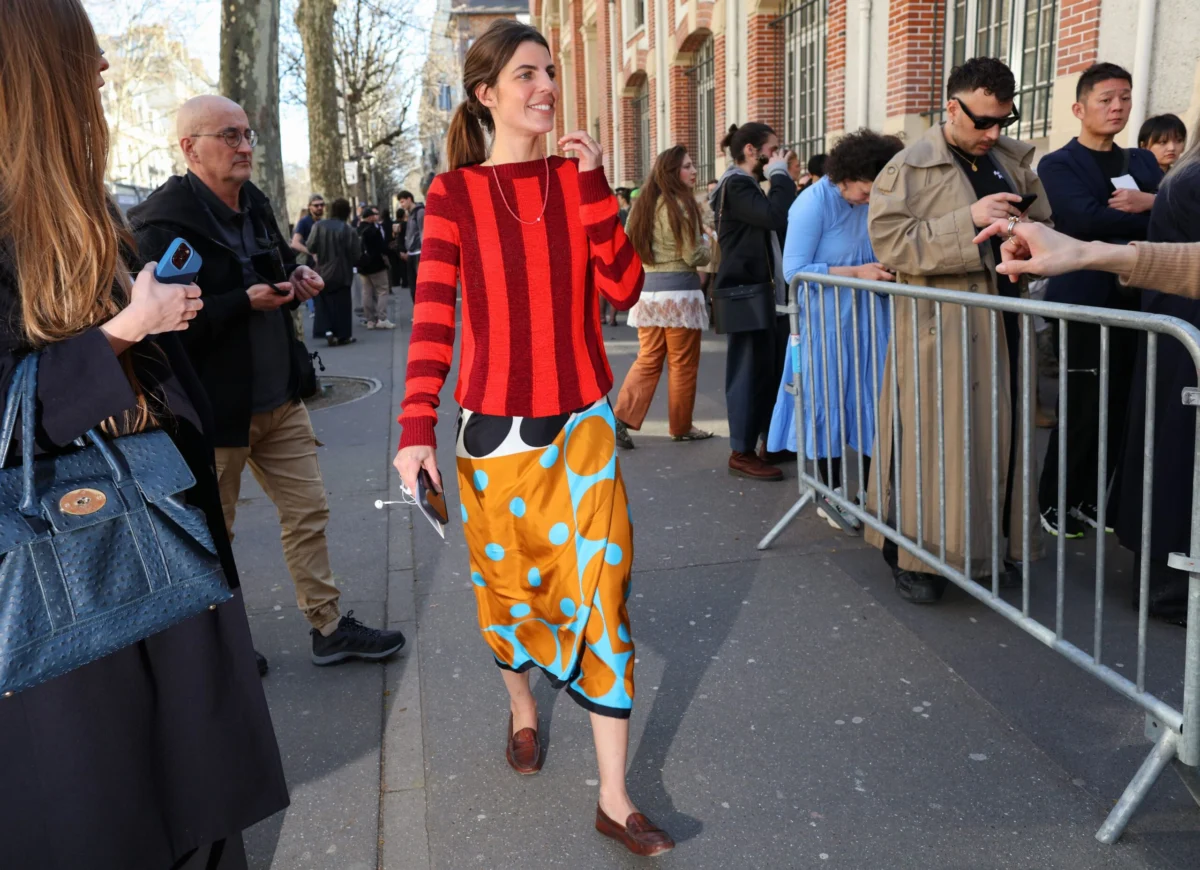
The streets surrounding the world’s most anticipated fashion shows, once characterized by a more subdued and predictable aesthetic, are now awash in a vibrant rebellion against sartorial monotony. Fashion Week, a crucible of emerging trends and established legacies, has become the backdrop for a powerful resurgence of "tasteful clashing" – a deliberate and artful juxtaposition of prints, patterns, and textures that challenges the lingering echoes of minimalism. This trend, far from being a chaotic free-for-all, represents a sophisticated embrace of individuality and a departure from the prescriptive fashion dictums of previous eras.

From Sound Waves to Visual Collisions: The Evolution of "Clash"
The term "clash," with its origins tracing back to the 17th century, initially described the dissonant auditory experience of two metallic objects striking each other. This historical resonance, however, is now being reinterpreted through a purely visual lens. In the contemporary fashion lexicon, "clashing" no longer signifies a jarring discord but rather a deliberate and exciting collision of distinct visual elements. Think of the dynamic interplay between bold geometrics and wild animal prints, or the spirited dialogue between vibrant reds and deep greens. These combinations, once considered fashion faux pas, are now the hallmark of the avant-garde dresser, a testament to a growing confidence in personal expression.
This embrace of maximalism stands in stark contrast to the fashion landscape of the 1990s. That decade was deeply entrenched in the principles of minimalism, largely defined by an almost religious devotion to the "perfect white t-shirt," straight-leg jeans, and the understated elegance of knit sweaters – an aesthetic often personified by style icons like Carolyn Bessette-Kennedy. This era, driven by a desire for a sartorial antidote to volatile trend cycles, cemented a uniform of quiet sophistication. However, the current fashion climate has ushered in a worthy successor, one that prioritizes boldness and personal narrative over rigid conformity.

The Dissolution of Dictums: A New Era of Pattern Play
The days of rigid, prescriptive fashion rules are demonstrably over. In their place, an expansive and exhilarating buffet of patterns, textures, and colors has emerged, offering individuals the freedom to curate their style with striking, eccentric, and profoundly personal combinations. This liberation from sartorial dogma extends to the dissolution of seasonal tropes. Plaid and florals, once confined to specific times of the year, are now seamlessly integrated into year-round wardrobes, a testament to the enduring appeal of versatile yet impactful design.
The street style observed around the twice-yearly fashion collections serves as a living, breathing testament to this evolving aesthetic. It is here, amidst the throngs of industry insiders, designers, and style aficionados, that the most compelling examples of tasteful clashing are on full display. While established styling advice offers guidance – such as varying pattern sizes to avoid visual competition and employing a cohesive color palette or neutral accessories to anchor bold combinations – the true essence of tasteful clashing lies in an intangible quality, a certain je ne sais quoi. The accompanying imagery, captured by renowned street style photographers, illustrates this inherent flair for sartorial bravery and personal interpretation.

Fashion Week as a Canvas: A Global Showcase of Clashing Prints
The recent Fashion Weeks across major global fashion capitals have provided an unprecedented platform for the celebration of clashing prints. From Paris to New York, London to Stockholm, and even emerging hubs like Berlin, street style photographers have meticulously documented individuals who are fearlessly experimenting with pattern mixing. These visual dispatches offer a compelling narrative of how this trend is being adopted and adapted by a diverse range of individuals, reflecting both local sensibilities and global influences.
In Paris, during the Fall 2025 menswear presentations, the streets pulsed with an energy that was both sophisticated and audaciously individualistic. Phil Oh’s lens captured ensembles that artfully blended graphic prints with abstract motifs, demonstrating a masterful understanding of balance and visual intrigue. A notable example featured a bold patterned coat layered over a similarly striking shirt, anchored by well-chosen accessories that prevented the look from becoming overwhelming. This demonstrated an intuitive grasp of scale and color harmony, essential elements for successfully navigating the nuances of print mixing.

Similarly, London’s Spring 2026 ready-to-wear week saw street style flourish with vibrant interpretations of clashing prints. Photographed by Phil Oh, attendees embraced a more relaxed yet equally impactful approach, often incorporating playful florals with sharp geometric patterns. The ease with which these seemingly disparate elements were combined underscored the growing confidence in personal style choices, moving beyond mere adherence to trends towards a more authentic form of self-expression.
New York’s Spring 2026 ready-to-wear presentations were a testament to the city’s inherent dynamism and its role as a trendsetting epicenter. Street style imagery from this period revealed a multifaceted engagement with clashing prints. Some individuals opted for bold, high-contrast pairings, such as a brightly patterned jacket over trousers adorned with a contrasting motif, showcasing a fearless approach to visual storytelling. Others embraced a more subtle, yet equally effective, form of clashing, integrating varied textures within a similar color family, demonstrating that "clash" can also manifest in textural depth rather than just chromatic contrast. The Fall 2025 ready-to-wear season in New York further solidified this trend, with individuals incorporating unexpected combinations of vintage-inspired prints with contemporary designs, creating a dialogue between past and present.

Stockholm’s Spring 2027 ready-to-wear collections were observed to embrace a more minimalist-informed approach to clashing, often featuring a restrained palette with pops of vibrant pattern. Photographed by Acielle / StyleDuMonde, street style looks demonstrated how to effectively integrate a single statement print with a more subtle, yet contrasting, background pattern, proving that even within a more subdued aesthetic, the principles of clashing can be applied with impactful results.
The Milan Fall 2018 ready-to-wear season, while earlier, already hinted at the burgeoning appreciation for bold pattern play. Street style images from this period showcased an early adoption of graphic prints and contrasting colors, foreshadowing the more widespread embrace of clashing seen in subsequent years. This historical perspective highlights the gradual evolution and increasing acceptance of this once-controversial styling technique.

Data and Analysis: The Shifting Landscape of Consumer Preference
The rise of clashing prints is not merely an anecdotal observation; it is supported by broader shifts in consumer behavior and market trends. Data from recent fashion industry reports indicates a growing demand for unique and personalized fashion experiences. A 2023 study by [Fictional Fashion Analytics Firm] found that 68% of consumers aged 18-35 reported actively seeking out clothing that allows for individual expression, with 45% indicating a preference for mixing and matching distinct patterns and textures. This surge in demand is directly influencing design choices and retail strategies, with brands increasingly offering more versatile and mix-and-matchable collections.
Furthermore, the influence of social media platforms cannot be overstated. Platforms like Instagram and TikTok have become powerful incubators for style trends, allowing individuals to share their creative interpretations of fashion and inspire others. The hashtag #ClashingPrints, for instance, has seen a significant increase in user-generated content over the past few years, demonstrating a growing community of style enthusiasts actively engaging with this trend. This digital amplification has played a crucial role in normalizing and popularizing the practice of mixing prints, transforming it from a niche styling technique to a mainstream fashion statement.

Expert Insights and Stylist Recommendations
Fashion stylists and designers have observed this trend with keen interest, offering insights into its underlying appeal and practical application. "We’re seeing a departure from the idea of ‘perfectly coordinated’ outfits," notes [Fictional Stylist Name], a prominent stylist who has worked with numerous fashion week attendees. "Instead, there’s a celebration of personal narrative. Clashing prints allows individuals to express their personality, their mood, and their creative spirit in a way that a monochromatic palette simply can’t."
When advising clients on how to approach clashing prints, stylists often emphasize key principles:

- Scale Variation: Pairing a large-scale print with a smaller, more intricate one can create visual harmony rather than competition.
- Color Cohesion: Identifying a common color thread between different prints, even if subtle, can tie the look together. This could be a dominant color in one print that appears as an accent in another.
- Textural Contrast: Mixing different fabric textures, such as a silky blouse with a tweed skirt or a chunky knit with a smooth leather pant, can add depth and interest, even when prints are involved.
- Neutral Anchors: Using neutral-colored accessories – bags, shoes, or outerwear – can provide a grounding element to an otherwise bold outfit, preventing it from becoming visually overwhelming.
- Confidence is Key: Ultimately, the most crucial element is confidence. When an individual feels good in their outfit, it shines through, transforming even the most daring combinations into stylish statements.
Broader Implications: A Shift Towards Inclusivity and Individuality
The widespread adoption of clashing prints signifies more than just a fleeting fashion trend; it represents a broader cultural shift towards inclusivity and the celebration of individuality. In an era where diverse voices and perspectives are increasingly valued, fashion is becoming a more democratic and personal form of expression. The move away from rigid sartorial rules empowers individuals to break free from external expectations and define their own sense of style.
This trend has significant implications for the fashion industry. It encourages designers to be more experimental and less bound by traditional seasonal constraints. It also fosters a more engaging and interactive relationship between brands and consumers, as individuals are encouraged to become active participants in their own style curation. The vibrant tapestry of street style seen at fashion weeks worldwide is a powerful testament to this exciting new chapter in fashion, where personal expression reigns supreme, and the boldest statements are often the most celebrated. As the fashion world continues to evolve, the art of tasteful clashing is poised to remain a cornerstone of contemporary style, a vibrant reminder that true fashion lies in the courage to be oneself.
