

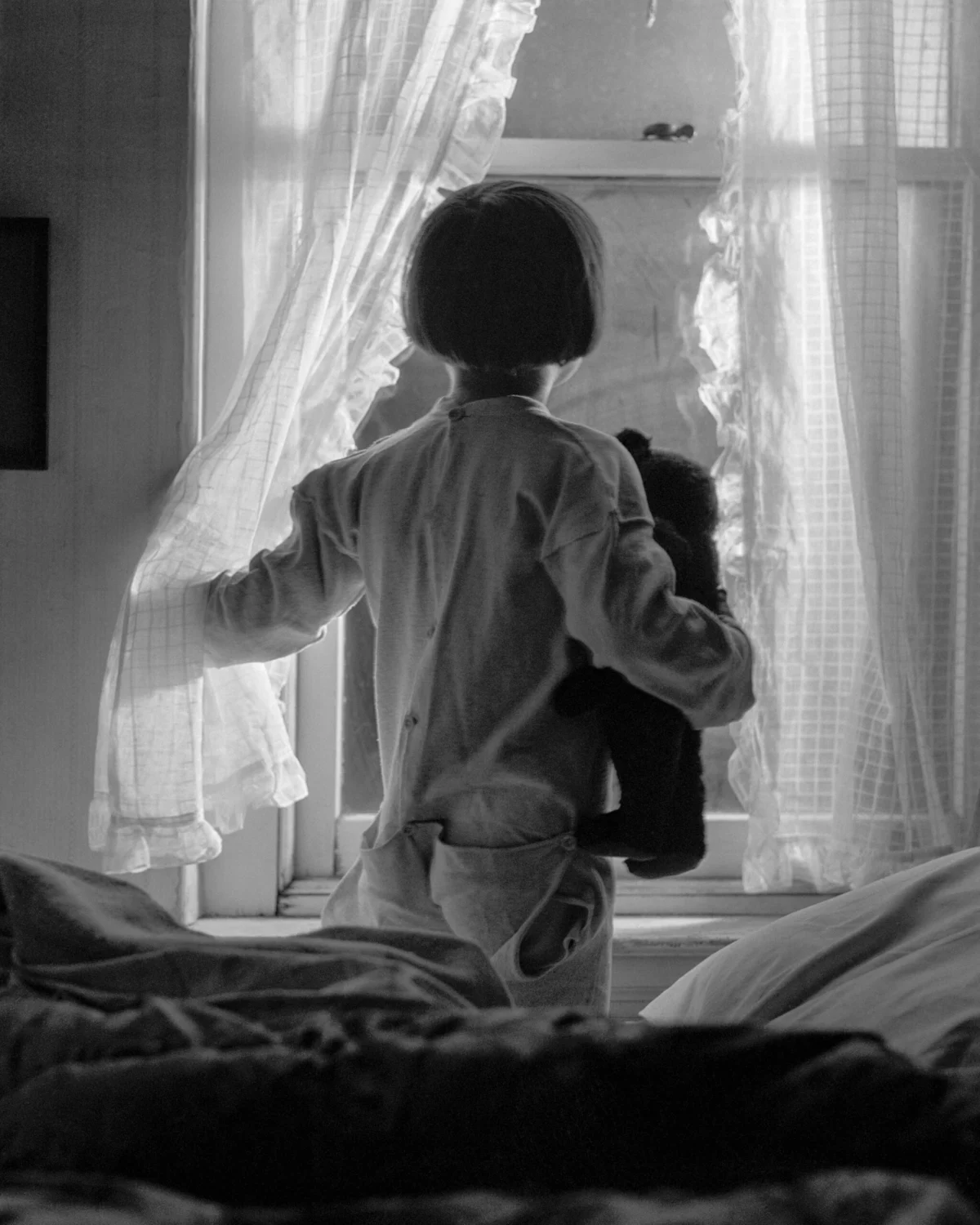
The first time Leucas visited, Canada in January was a stark tableau of cold and darkness. Yet, that initial encounter was marked by shared warmth and simple joys. Leucas, a dear friend, adeptly navigated the Canadian chill by layering clothing and, in a particularly heartwarming moment, shared the gift of ice skating with my eight-year-old daughter, Rose. The memory of sharing butter tarts by the water remains a vivid postcard from a time before our lives were irrevocably changed.
Nine months later, Leucas returned. This visit, however, was a stark contrast to the first. Arriving in Toronto from Los Angeles with only a few hours’ notice, the days that followed were a blur of quiet intensity. While Leucas provided unwavering support, tending to my one-year-old son, Calvin, my focus was consumed by coordinating Rose’s escalating medical crisis. The silences between us were not born of distance, but of the overwhelming demands of a medical emergency unfolding in real-time.
The seismic shift in our lives began subtly, with seizure-like movements that rapidly escalated into a terrifying cascade of neurological decline. Rose’s typically bright eyes, once windows to a vibrant spirit, became unfocused, dilated, and wild. Within hours, she lost fundamental abilities: control over her bodily functions, speech, the capacity to walk, sleep, and even eat. My husband, David, eventually moved with her to the basement, a space that became the epicenter of her prolonged suffering, marked by hours of agonizing cries as new and relentless neurological symptoms emerged.
The Unfolding Crisis: From Benign Virus to PANS Diagnosis
Weeks prior, our family had contracted what we believed to be a common, benign virus. Unbeknownst to us, this infection had triggered a severe inflammatory response in a critical region of Rose’s brain: the basal ganglia. This inflammation was the root cause of her devastating symptoms. After a week of sleepless nights punctuated by three emergency room visits, Rose was formally diagnosed with PANS (Pediatric Acute-onset Neuropsychiatric Syndrome). PANS is a complex autoimmune disorder where the immune system mistakenly attacks specific areas of the brain responsible for impulse control, motor function, and emotional regulation.
At the time of Leucas’s urgent summons, the diagnosis remained elusive. All we knew was that Rose’s life hung in the balance, and our immediate priority was to ensure her safety while simultaneously caring for our younger son, Calvin. Leucas’s arrival that same evening was a beacon of much-needed support.
The Dual Narratives: Navigating Crisis and Friendship
The arduous journey of securing Rose the specialized care she requires has become the dominant narrative of the past year. However, a parallel story has unfolded, one that examines the profound impact of this prolonged crisis on my friendships.
My life has always been defined by a deep appreciation for connection. As a child, my weekends were a whirlwind of sleepovers and playdates. In my teenage years, hours were spent in deep conversation with friends, the cordless phone a constant companion. I’ve often struggled to articulate the intensity of these bonds to my husband, a more introverted soul who cherishes a small, decades-long circle of friends. The shared nicknames, the whispered secrets, the impromptu meetings, the exchange of clothes, and the meticulously folded notes all speak to a language of friendship that transcends the everyday. Even during a study abroad experience at St. Andrews, my living space was adorned with posters chronicling the inside jokes and shared experiences with flatmates from across the globe. Our Thursdays were for dancing, and our Fridays were for cozy nights in, watching Robert Redford films and sharing bags of cookies.
I thrive on both the thrill of new connections and the comforting embrace of long-standing friendships. The effervescent joy of sharing laughter over a glass of wine is a cherished experience. I find immense pleasure in the intricate details of my friends’ lives. This inherent love for connection makes the recent difficulty in sharing the profound details of my own life all the more perplexing.
For a year now, Rose has been critically ill. Her absence from school and social life is absolute; she has not seen a friend since September 2025. In the initial three months of her illness, even the gentle touch of a hand on her back was unbearable. Progress, though slow and incremental, is being made. She is gradually regaining the ability to dress herself and is embarking on the challenging process of re-learning to read. My husband has been granted government-funded leave to care for our critically ill child. This spring, a stark realization dawned: I had not ventured beyond my immediate neighborhood in six months. How does one convey the sheer totality of this life-altering transformation?
The Spectrum of Support: From Lifelines to Distant Shores
In many ways, friends have been my anchors during this turbulent period. Leucas’s immediate response, flying across the country, was a testament to their unwavering loyalty. My sister followed, providing crucial support. My friend Jane has consistently ensured our family is fed through countless DoorDash deliveries, and my writing group also contributed meals. Others have offered financial assistance, enabling us to order additional meals. I have been the fortunate recipient of profound devotion from both new acquaintances and lifelong companions. These individuals continue to reach out, offering encouragement regardless of the grim updates I provide. Yet, even these invaluable relationships have been subtly altered. A growing uncertainty about what to say, how to bridge the chasm created by my family’s profound losses, has emerged. The challenges and triumphs of their own lives often seem to recede in the shadow of our family’s ongoing darkness.
Then there are those who have receded. New acquaintances, perhaps seeking to avoid what they perceive as drama, have distanced themselves. Older friends, after an initial outpouring of concern, gradually ceased their check-ins after a few weeks. A few individuals, paradoxically, continue to inquire about every aspect of our lives except for Rose. In moments of profound loneliness, I’ve grappled with the question of whether the psychiatric manifestations of her illness, including the documented risk of pediatric suicide associated with PANS, contribute to this withdrawal. Does such profound misfortune carry a perceived contagion, as if it might somehow infect those who once saw their own familial routines reflected in ours?
This is not an accusation of abandonment; I recognize my own failings as a friend over the past year. Prior to this crisis, my thoughts were frequently occupied by my friends – I would meticulously track the developments in their careers, relationships, and the health of their families. Now, my focus is almost exclusively consumed by my immediate family. Birthdays are forgotten. The vacations, illnesses, or personal conflicts of others fade into an unremembered haze. While I am acutely aware that countless individuals are navigating their own pain, losses, and arduous challenges daily, my exhaustion is so profound that there is simply no emotional bandwidth left for those outside my immediate household.
The Emergence of New Communities and Shared Purpose
Conversely, I have found myself forging new, intensely meaningful connections with other parents of children with PANS, with the dedicated physicians who treat these complex cases, and with the tenacious advocates who champion their cause. PANS is inherently cruel, but it is compounded by a systemic injustice that amplifies the suffering: families endure years of agonizing waits for an accurate diagnosis, insurance providers frequently deny access to the most effective treatments, and the tens of thousands of children affected by this condition have an alarmingly limited pool of medical specialists to turn to.
The institutional lag between groundbreaking research and its clinical application is demonstrably harming children, and once witnessed, this reality is impossible to ignore. When I am not consumed by the immediate need to ensure my children’s survival, my energy is channeled into writing, developing a podcast, speaking with advocacy organizations, and delving into medical journals. There is a profound solace in encountering individuals who have also witnessed this systemic atrocity firsthand. The gift of sharing the intricate details of our experiences without the added burden of articulating the sheer magnitude of their awfulness is immeasurable.
Furthermore, there is a pervasive feeling that anyone who has experienced a profound crisis will undoubtedly recognize. Prior to this ordeal, our family’s life generally orbited the same sun as other families with young children. The rhythm of life was marked by predictable milestones: the acquisition of new winter boots, the rush to secure the best summer camp spots, the joyous accumulation of Halloween candy, and the routine of tick checks. Now, the year has lost its structure. The temporal distinctions between seasons have blurred, and the difference between a random Thursday and a significant holiday like Thanksgiving has evaporated.
A Changed Perspective: Redefining Friendship in the Face of Adversity
As our days meld into an indistinguishable continuum, a new rigidity has taken root within me. I understand that not everyone can possess the same fervent conviction in fighting PANS as I do, but I still yearn for that shared passion. I have adopted the zeal of a recent convert: Join me in this crucial work, or, in essence, I’ll see you around.
The past year has fundamentally reshaped nearly every facet of my being – from my worldview and self-perception to, for the first time in my 43 years, my understanding and experience of friendship. I hold onto the hope that a day will arrive soon when I can once again share laughter with friends over a bottle of Sancerre and a shared plate of radishes and lemon bars. This longing is not solely born of missing those cherished moments, but also because achieving that normalcy will signify that my daughter is finally on the path to recovery and well-being.
