

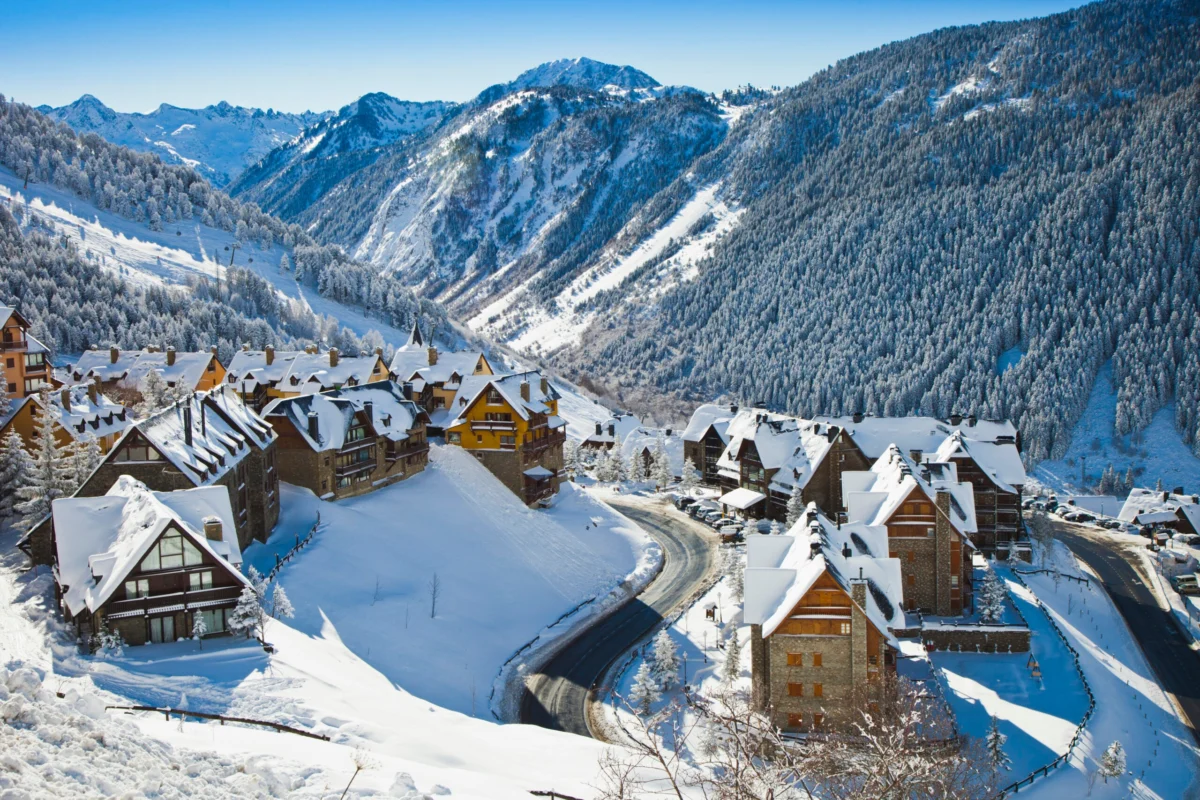
While the Alps have long held a monopoly on the global imagination regarding European winter sports, a significant shift in traveler preferences is bringing the Pyrenees into sharper focus for the 2026-2027 season. Running approximately 300 miles along the sovereign border of France and Spain, and encompassing the microstate of Andorra, the Pyrenees offer a starkly different proposition than the polished, high-altitude resorts of Chamonix, St. Anton, or Zermatt. For decades, this range has remained a secondary consideration for international tourists, yet its unique blend of lower price points, shorter queues, and a Mediterranean-influenced culture is positioning it as a strategic alternative to the increasingly overcrowded Alpine corridor.
The Great Divide: Reimagining European Winter Tourism
The Pyrenean skiing experience is defined by its "unpolished" nature, a characteristic that is increasingly viewed as an asset rather than a drawback in an era of hyper-commercialized tourism. Unlike the sprawling, interconnected "mega-resorts" of the French Alps, Pyrenean ski areas are often smaller, family-run, or community-centric. This lack of industrial-scale polish manifests in nostalgic infrastructure, such as vintage T-bars and classic double chairs, which contribute to a sense of solitude that is becoming rare in the more famous European massifs.
The range provides a geographical and cultural bridge between the Atlantic Ocean and the Mediterranean Sea. This positioning allows for a diverse set of winter activities that extend beyond the slopes. Travelers frequently cite the ability to transition from high-altitude powder skiing in the morning to seaside activities or world-class gastronomy in cities like Barcelona or San Sebastián within a few hours. This versatility is a primary driver in the region’s rising popularity among North American and Northern European travelers seeking a multi-faceted winter itinerary.
A Chronology of Pyrenean Ski Development
The development of skiing in the Pyrenees followed a distinct timeline compared to the Alps. While the 1924 Winter Olympics in Chamonix catalyzed Alpine infrastructure, the Pyrenees remained largely pastoral until the mid-20th century.
- Early 20th Century: Skiing was primarily a means of transport for border patrols and local shepherds. Small-scale clubs began to form in areas like Font-Romeu and Cauterets.
- 1960s–1970s: A wave of investment led to the creation of purpose-built resorts. Baqueira-Beret was founded in 1964, eventually becoming the flagship luxury destination of the Spanish Pyrenees, frequented by the Spanish royal family.
- 1990s–2000s: Modernization of lift systems began in Andorra and the larger Spanish resorts, though many French side resorts maintained their rustic, "mom-and-pop" charm.
- 2020–Present: A post-pandemic surge in "authentic" and "off-the-beaten-path" travel has led to a revitalization of smaller Pyrenean villages. Modern digital nomadism and improved rail links from Paris and Madrid have made the region more accessible to a global audience.
Comparative Economic Analysis: The Value Proposition
One of the most compelling arguments for the Pyrenees is the economic disparity between it and its Alpine counterparts. In an era of significant inflation within the global travel sector, the Pyrenees have maintained a price structure reminiscent of the 1990s.
According to recent tourism data, a standard one-day lift ticket in premium Alpine resorts like Courchevel or Verbier can exceed $100. In contrast, many Pyrenean resorts offer daily passes for approximately $50. In smaller French resorts such as Piau Engaly or the Cauterets area, dynamic pricing during shoulder seasons can see rates drop as low as $30. Even at Baqueira-Beret, the region’s most prestigious resort, prices remain competitive with mid-tier North American hills, rarely exceeding $90.

The savings extend to secondary costs. Accommodation in Pyrenean "Gîtes" or local mountain hostels is significantly lower than Alpine chalets. Furthermore, the cost of dining—often centered around local tapas, grilled meats, and regional wines—offers a higher value-to-quality ratio than the high-altitude, butter-and-cheese-heavy cuisine of the Northern Alps.
Geographical Diversity and Climatic Profile
The Pyrenees are divided into three distinct climatic zones: the Atlantic (Western), the Central (High Pyrenees), and the Mediterranean (Eastern). This variety ensures that even if one sector is experiencing a dry spell, another is likely receiving precipitation.
- The Western Pyrenees: Influenced by the Atlantic, this region receives heavy, damp snow but offers the unique "ski-to-surf" lifestyle. Resorts like Gourette and La Pierre Saint-Martin are within a two-hour drive of the Basque coastline.
- The Central Pyrenees: This is where the highest peaks reside, including the Maladeta Massif and Monte Perdido. The terrain here is rugged, featuring glaciers and steep couloirs that attract serious ski tourers and mountaineers.
- The Eastern Pyrenees: Closer to the Mediterranean, these resorts, such as Font-Romeu and those in the Cerdanya valley, enjoy significantly more sunshine. The "corn" snow conditions in the spring are among the best in Europe.
Recent meteorological shifts have also shown that while the Alps occasionally suffer from "rain-to-the-top" events due to their northern latitude and specific valley orientations, the Pyrenees’ southern latitude is often compensated by the "Pyrenean effect," where moisture from the Bay of Biscay hits the cold air of the high peaks, resulting in massive, sudden snowfalls.
The Gastronomic Shift: A Mediterranean Winter Palette
A significant draw for modern travelers is the region’s culinary identity. While Alpine food is often criticized for its lack of variety—focusing heavily on fondue, raclette, and potatoes—the Pyrenees offer a diverse Mediterranean palette.
In the Spanish Pyrenees, particularly in Catalonia and Aragon, the diet is rich in roasted vegetables, fire-caramelized spring onions (calçots), and pan tumaca (tomato bread). The French side contributes high-quality cured meats, such as the black pig ham of Bigorre, and world-renowned cheeses like Ossau-Iraty.
The proximity to San Sebastián, which holds one of the world’s highest densities of Michelin stars per capita, means that a ski trip can easily be combined with some of the most sophisticated dining experiences on the planet. This cultural richness provides a "lifestyle" component to the ski trip that is often missing from isolated Alpine resorts.
Technical Backcountry Infrastructure and Safety
For the advanced skier, the Pyrenees offer a backcountry playground that is less regulated and less crowded than the Alps. The Maladeta Massif, home to Aneto (the highest peak in the range at 11,168 feet), provides classic mountaineering objectives.

However, experts warn that the Pyrenees require a high level of self-sufficiency. The Sierra del Cadí, located relatively close to Barcelona, features 50-degree chutes that demand expert-level avalanche awareness and technical skill. Unlike the highly managed "off-piste" zones of the Alps, the Pyrenean backcountry remains wild. Local guides emphasize that while the terrain is accessible, the maritime influence can lead to rapid snowpack transitions, making local knowledge essential for safety.
Industry Perspectives and Official Responses
Tourism boards in both France and Spain have begun to lean into the "authentic" branding of the Pyrenees. A spokesperson for Turisme de Catalunya recently noted that the region is not trying to compete with the Alps on a scale of infrastructure. Instead, the focus is on "sustainable, low-impact tourism that preserves the linguistic and cultural heritage of the mountain valleys."
Similarly, French tourism officials have highlighted the "slow travel" aspect of the Pyrenees. By promoting train travel from Paris to the foothills of the mountains (Lourdes or Pau), they are targeting an environmentally conscious demographic that finds the glitz of the Trois Vallées or St. Moritz out of touch with contemporary values.
Future Implications: Climate Resilience and Market Expansion
As the ski industry grapples with the realities of climate change, the Pyrenees face both challenges and opportunities. Their lower average altitude compared to the Swiss Alps makes them vulnerable to shorter seasons. However, their investment in high-efficiency snowmaking and their pivot toward "four-season" mountain tourism—including mountain biking and hiking—is providing a roadmap for economic resilience.
The expansion of direct flight routes from major international hubs to Barcelona, Toulouse, and Biarritz has lowered the barrier to entry for the "weekend warrior" and the international tourist alike. As the Alps reach a saturation point in terms of both pricing and physical capacity, the Pyrenees stand ready to absorb the overflow, offering a soulful, affordable, and culturally vibrant alternative.
Ultimately, the Pyrenees represent a return to the roots of skiing: a sport defined by exploration, local character, and a connection to the landscape. For the traveler willing to trade a high-speed heated bubble chair for a rusty T-bar and a plate of world-class tapas, the Pyrenees are no longer Europe’s best-kept secret—they are its most compelling winter destination.
