

Published August 20, 2026 02:37 PM
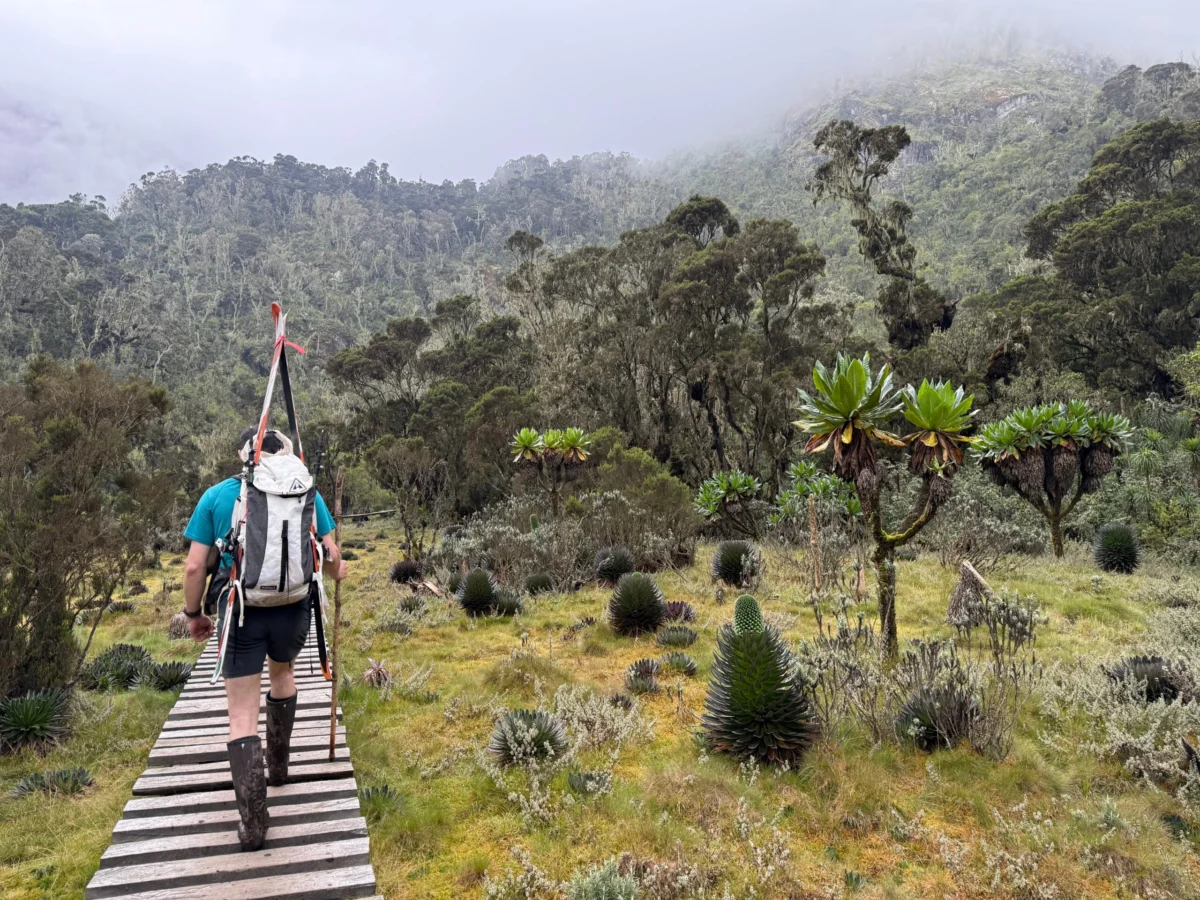
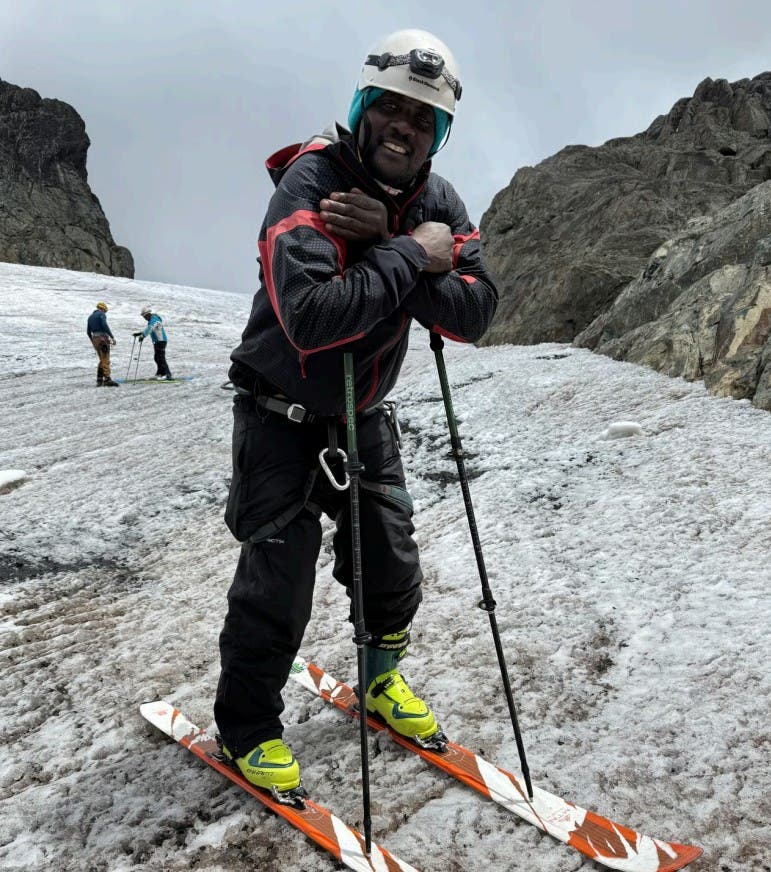
Edison Kule’s neon green Dynafits click into place after a grueling five-day bushwhack through endemic cloud forests and heather. He begins his descent, turn by turn, down one of Africa’s last intact equatorial glaciers, a majestic frozen testament straddling the Democratic Republic of Congo’s vast green jungles and Uganda. Below, the towering Rwenzori peaks shimmer faintly in the morning haze, a breathtaking panorama that belies a critical environmental mission. What appears to be another daring quest for the remote and untouched is, in fact, a ski expedition with profound implications for the communities below, striving to avert their disappearance in the face of escalating climate change.
This ambitious undertaking is spearheaded by Ski Club Uganda (SCU), an organization that has transformed from an obscure relic of British mountaineering culture into a vibrant movement. Its recent revival is fueled by a new generation of young adventurers not only seeking the craziest powder they can find but also driven by a desire to leave a positive legacy. Partnering with local guides like Kule and Brian Kilabama of Rwenzori Trekking Services (RTS), alongside esteemed scientists from Penn State University and Makerere University, SCU has galvanized international skiers, students, and volunteers. Their efforts have transformed a humble local tree nursery into a powerful engine for change, simultaneously supporting the rise of the first generation of Ugandan skiers, such as Kule, who now ski the very mountains he once guided tours on.
The journey to this unique equatorial snowscape began with a series of flights, a layover in Brussels, a brief stopover in Kigali, and a demanding 10-hour drive from Kampala, culminating in the unloading of skis in Kilembe, Uganda. The arduous travel was compounded by the necessity of taking malaria medication and the infamous "African massage" of the unpaved roads, a reality our driver had humorously foreshadowed. The sheer audacity of flying across the globe to ski in a country situated directly on the equator might seem perplexing, perhaps even to the lowland gorillas observing the scene. Yet, the purpose was far more significant than a mere sporting endeavor.
The expedition’s core objective was twofold: to plant 1,500 trees along the Kilembe riverbanks and subsequently to ski the Rwenzori glaciers. While the author, recovering from ACL surgery, was unable to join the ski team on the peaks, their role in Kilembe was no less vital, assisting with the logistical and culinary needs of the nearly 50 Ugandan, American, and European volunteers. In the heart of Kilembe, amid the comforting aroma of bubbling yellow curry and the cheerful strains of Katy Perry, a unique camaraderie formed.
Edison Kule, the chief mountain guide with Rwenzori Trekking Services, embodied the spirit of this expedition. As he passed a freshly made chapati, his pride was palpable. “I happen to be the first Ugandan preparing to ski this mountain tomorrow, and I’m looking forward to it,” Kule shared with a serene smile above his well-trimmed mustache. His long history with the Rwenzori is evident: “It’s a shame that I lost count, but I remember [summiting] 100 times… after 100 times, I lost count.” This intimate knowledge of the mountains underscores his crucial role in both guiding and conservation efforts.
The Local Hero and a Changing Landscape
Edison Kule hails from the indigenous Bakonzo people, whose ancestral lands are intricately linked with the Rwenzori Mountains. He grew up in a neighboring village, and in the 15 years since he began his guiding career as a young man, the mountain and the communities nestled at its feet have undergone dramatic transformations.
Kilembe, once a bustling hub of mining activity, resonated with the daily rumble of excavators and the metallic clinking of machinery. It was a place where the fathers and sons of the village ventured into some of the world’s richest copper and cobalt reserves. Today, the breezy mountain town offers a tranquil respite from the dusty, hotter plains of nearby Kasese. It is a community now nestled below terraced foothills, along the banks of the rushing Nyamwamba River. Children in uniforms, fresh from morning mass, stream towards school, the air occasionally filled with the scent of smoldering yam. The decline of Kilembe Mines has undeniably slowed the pace of life in its namesake town.
“I like being at home helping my wife with the farm. I like farming,” Kule remarked, reflecting a sentiment shared by many Bakonzo whose livelihoods depend on subsistence agriculture, cultivating crops like bananas and yams. Some also grow coffee, which they sell to markets downstream. “I also like listening to gospel music,” he added. For Kule, a sense of gratitude permeates his perspective: “I feel proud, I think I am one of the lucky Bakonzo around this mountain.”
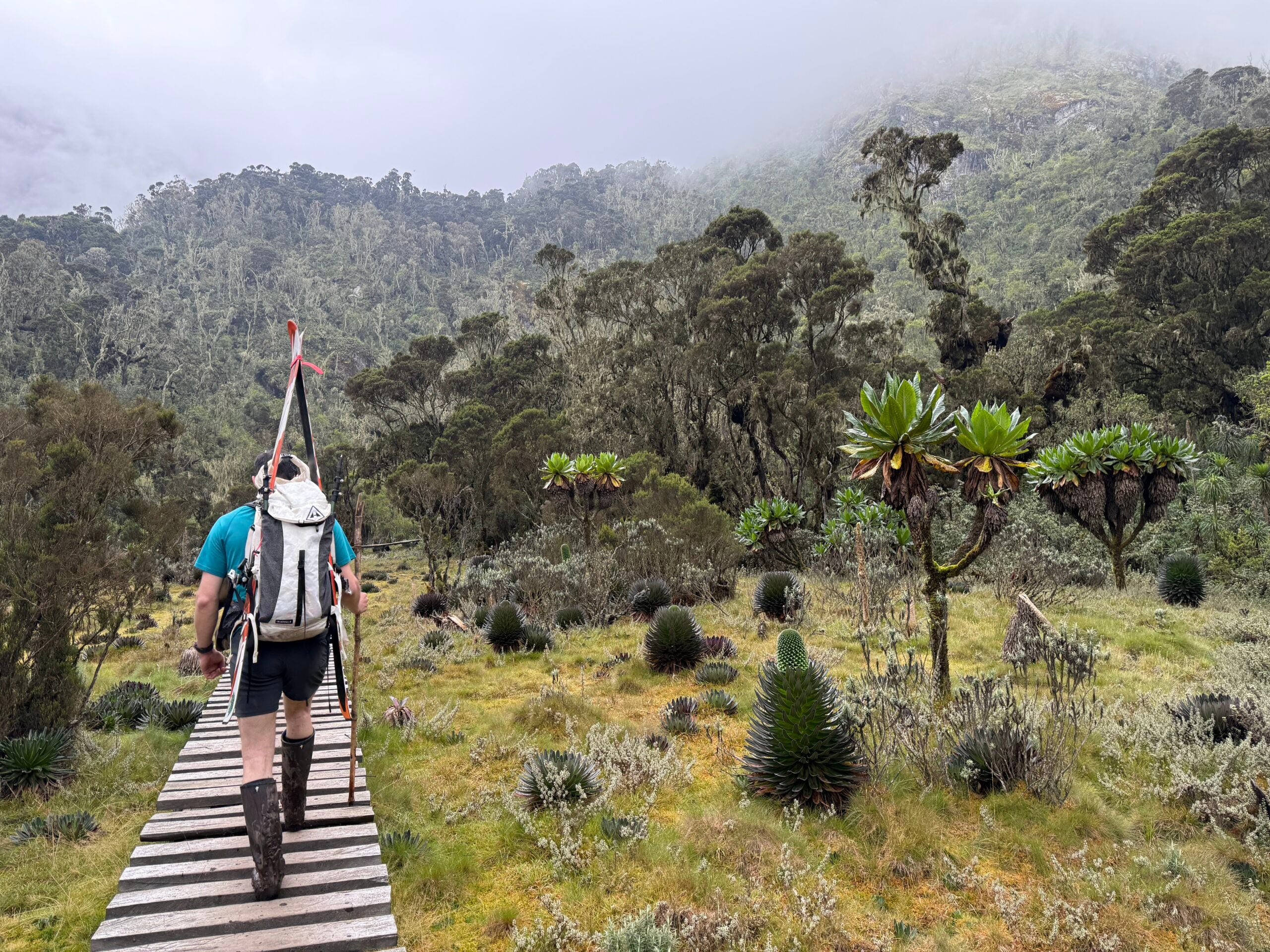
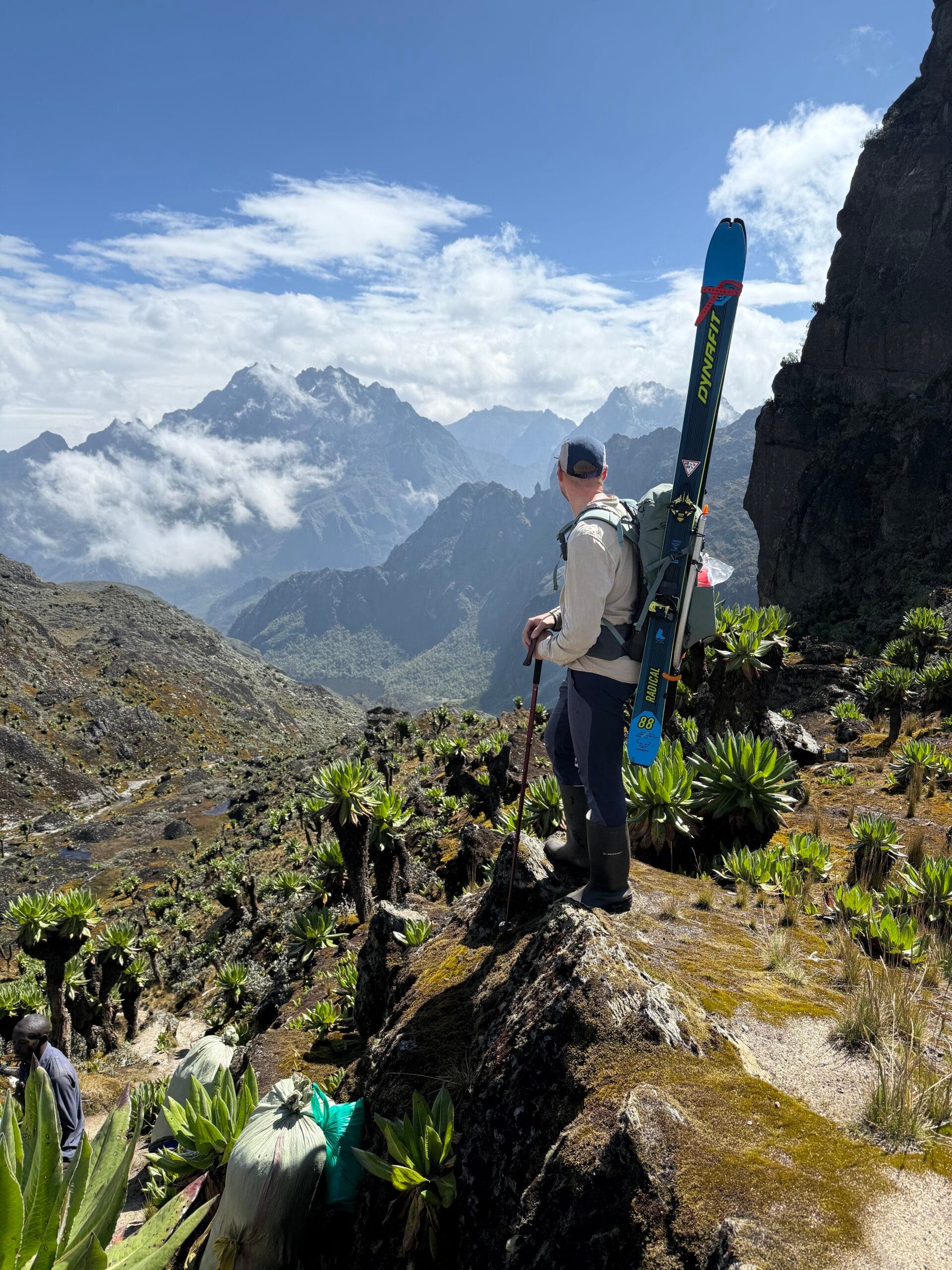
Kule, supported by a team of porters, cooks, and assistant guides, leads arduous eight-day expeditions to Margherita Peak, soaring to an elevation of 5,109 meters (16,762 feet). This climb involves traversing through mist-laden montane jungles, dense bamboo groves, past thundering waterfalls, and across otherworldly plateaus adorned with unique flora like lobelia, senecio, and the ubiquitous heather. The ultimate reward at the summit is the breathtaking sight of the Stanley and Margherita glaciers – two vast, matte grey tongues of ice clinging tenaciously to the black volcanic rock. During the rainy season, these glaciers can be blanketed in fresh powder, offering a rare and fleeting spectacle.
Skiing on the Equator: A Fleeting Phenomenon
The Rwenzori glaciers present a unique skiing experience, particularly during the wet season when overnight blizzards can transform the ice caps into glistening powder fields. At dawn, a delicate balance of humidity and temperature often creates optimal conditions for exhilarating descents. The upper Margherita Glacier, though steep and offering thrilling hop turns through fresh snow, is relatively short, spanning only a few hundred meters. By midday, the equatorial sun intensifies, turning the snow into a challenging, heavy slush akin to "white cement." Below this, the flatter Stanley Glacier provides opportunities for additional vertical gain, especially for those equipped with climbing skins. All these glacial activities occur at high altitudes, exceeding 4,500 meters (14,500 feet). However, the Earth’s denser atmosphere at the equator can mitigate some of the expected altitude-related challenges.
Individuals who successfully ski the Rwenzori glaciers become honorary members of Ski Club Uganda. “I would encourage my fellow Ugandans to try it,” Kule urged. “Come out. Then the rest will be fine.” Despite this encouragement, skiing the Rwenzori glaciers remains an exceptionally rare pursuit. In recorded history, fewer than 30 individuals have undertaken this feat, with the earliest known attempts dating back to British mountaineers in the 1950s. Today, "muzungus" (Swahili for foreigners) from various nations visit the Rwenzori Mountains, engaging local guides to explore the park’s unique ecosystems and conquer its formidable peaks.
The Fast-Disappearing Glaciers and a Shifting Identity
The grim reality is that these iconic ice caps, much like those on Mount Kilimanjaro, are on a trajectory of rapid melting, with projections suggesting their disappearance within the next few years, possibly by 2030. “We have to adapt to other things because it’s only the glacier that will go,” Kule stated with a somber tone. “The mountain will still be there. So, we can still do something like rock climbing.”
While climate change undeniably alters the nature of mountaineering in the Rwenzoris, a more profound question looms: how will a snowless mountain redefine the identity of the Bakonzo people?
“To the life of the Bakonzo, it is a very big threat, because the Bakonzo have all their beliefs on this mountain,” Kule explained, his gaze sweeping across the smoky confines of the base camp kitchen. “Apart from calling themselves Bakonzo, they are abanya Rwenzori [people from the land of snow].” He paused, a moment of deep reflection evident. “For us the Bakonzo, we don’t call this mountain Rwenzori, we call it the mountain of snow,” Kule elaborated. “Meaning when the snow is off their mountain, the Bakonzo will have nothing to say about their mountain.” This linguistic and spiritual connection highlights the deep cultural significance of the glaciers to the Bakonzo identity. The loss of snow represents not just an environmental catastrophe but an existential threat to their heritage and self-perception.
The current El Niño phenomenon serves as a stark reminder of the thousands of glaciers that disappear annually worldwide, disproportionately impacting indigenous communities whose cultural and ecological survival is intrinsically linked to these frozen landscapes.
Fear the River: An Existential Threat from Flooding
Beyond the erosion of their cultural identity, the Bakonzo face an even more immediate and existential threat: catastrophic flooding. As the monsoon season approaches in November, the Nyamwamba River, which flows through Kilembe, transforms from a languid stream into a raging torrent. The intensity of these monsoon rains, however, is increasingly unpredictable and severe.
The devastating flood of 2020 serves as a chilling testament to this danger. An unstoppable wave of copper-brown floodwater, carrying boulders the size of cars, swept through the village, claiming numerous lives and destroying thousands of homes. The scars of this disaster are still visible, with rusting carcasses of once-vibrant homes deteriorating amidst grazing goats and scattered boulders, a poignant reminder of nature’s destructive power. Every autumn, as thunder cracks above the towering Rwenzoris, the village collectively holds its breath, bracing for the potential onslaught.
“There is nothing we have not managed to do here,” asserted Brian Kilabama, a long-time friend of Kule and manager of Rwenzori Trekking Services (RTS). He smoothed a crease in his striped polo shirt, his feet sinking into well-worn Havaianas. Approximately five years prior, Kule, Kilabama, and Australian-born John Hunwick of RTS initiated a critical conservation project: a tree nursery dedicated to cultivating indigenous trees for reforestation efforts in the riparian zones between Kilembe and the river. The survival of these trees offers a crucial buffer, a green shield with the potential to mitigate the destructive force of flash floods and impede the movement of large boulders.
Kule’s role as a mountain guide has been instrumental in promoting adventure tourism that, in turn, has catalyzed the growth of the tree nursery and attracted international researchers. “We started talking with skiers, and that’s where it all clicked. We saw an opportunity,” Kule explained, highlighting the synergistic relationship between tourism and conservation.
The Art of Giving Back: Reclaiming Identity Through Action
While foreign mountain tourism can invigorate the local economy and foster cultural exchange, it has historically failed to adequately address the imminent, existential risk of flooding faced by the region. Kule, Kilabama, Hunwick, and SCU are actively changing this paradigm.
Through their collaborative project, the phrase "earn your turns" takes on a profound new meaning. The initiative is attracting a different caliber of adventurer, including Ugandans from Kampala, who participate in tree-planting initiatives before embarking on their ski descents of the Rwenzori peaks. This ethos prioritizes "giving before taking," aiming to restore the Bakonzo identity as one intrinsically connected to the misty "Mountains of the Moon" and the dense forests that once provided them with protection.
The experience of engaging with the natural environment in the Rwenzoris offers a transformative perspective. “In the mountains, if you can take time and sit alone somewhere at some point and you meditate upon yourself, you feel a changed man,” Kule reflected.
As the author sits in the shade cast by dark banana leaves, observing the rusting tin roofs of Kilembe, a sense of hopeful uncertainty prevails. The question of whether they will have the opportunity to ski equatorial Africa’s last powder stash before it vanishes forever lingers. However, the collective efforts of the SCU, local guides, scientists, and dedicated volunteers have ignited a powerful sense of hope, demonstrating that even in the face of unprecedented environmental challenges, proactive action and community engagement can forge a path toward a more resilient future. The future of the Rwenzori, its glaciers, and the Bakonzo people, while precarious, is being shaped by a new generation committed to conservation and a profound understanding of the interconnectedness of humanity and nature.
