

Japan Fashion Week Organization (JFWO) is at a critical juncture this season as Rakuten Fashion Week Tokyo grapples with its role as a launchpad for emerging designers. The perennial question facing the event is how to sustain its relevance and reap the rewards when its most prominent talents increasingly venture beyond its established calendar, opting for international showcases or alternative presentation formats. This year’s Spring/Summer 2027 (SS27) season highlighted this trend, with a notable number of designers either shifting their schedules or choosing lookbook presentations over traditional runway shows.
Despite this "off-schedule exodus," Tokyo Fashion Week remains a vital platform for discovering nascent talent. A combination of prestigious awards and a renewed international outreach strategy continues to introduce new designers into the fashion week ecosystem. However, the departure of established names presents a clear challenge, prompting the JFWO to strategically pivot and embrace a more international outlook to maintain the week’s dynamism and allure.
The Shifting Tides of Local Talent
The SS27 edition of Rakuten Fashion Week Tokyo featured 27 shows across six days. However, a significant number of Tokyo’s most recognized domestic designers were conspicuously absent from the main schedule. Many opted for lookbook shoots or held their presentations earlier in the season, often to align with the men’s fashion week schedule or to be closer to the pre-summer buying season in Paris. This strategic timing allows designers to maximize their visibility and engagement with international buyers and press who converge on global fashion capitals.
"A lot of emerging designers now prefer to show outside of Tokyo Fashion Week timing-wise, and they are also trying to show in Paris," stated Kaoru Imajo, director of JFWO. This sentiment was echoed by Viviano, a brand that has historically been a fixture on the Tokyo schedule. For SS27, Viviano opted for a lookbook presentation instead of a runway show. The brand’s recent expansion into the Los Angeles market, including securing PR representation and dressing high-profile celebrities like Lady Gaga, Bad Bunny, and Hudson Williams, has amplified its global profile. This increased international attention has, in turn, diminished the exclusive draw of Tokyo Fashion Week for such established brands.
.jpg)
"If you are a really young brand and you need attention, it’s a good thing [to show at Tokyo Fashion Week]," a representative from Viviano commented, "but for us, once you reach a point, maybe it’s not as important to be on schedule." This statement encapsulates the evolving ambitions of successful Japanese designers who leverage Tokyo as a stepping stone to a broader global market.
Despite this trend, some designers continue to find value in the Tokyo platform. Knitwear brand Pillings, by Ryota Murakami, remained on schedule and was a standout performer of the week. Murakami expanded his offerings beyond knitwear to include linen suiting and sporty separates, showcasing the brand’s growing versatility. Pillings, owned by The Sazaby League (which also operates Ron Herman Japan), has garnered international acclaim, including a shortlist for the LVMH Prize last year. With over 25 international stockists, including prominent retailers like Dover Street Market in London and New York, and Andreas Murkudis in Berlin, Pillings is poised for further global expansion. Murakami plans to present a showroom at Paris Fashion Week at the end of September, aiming to secure additional stockists.
"It made sense for us to show in Tokyo before going to Paris," Murakami explained, hinting that this might be his last participation in Tokyo Fashion Week. He added, "We haven’t decided on the presentation method for the next season, and I don’t think we’re in a position to do a full runway show in Paris just yet, but I’m thinking I’d like to take on some more challenges." His forward-looking statement underscores the continuous pursuit of growth and innovation that characterizes many contemporary fashion labels.
Embracing an International Spectrum
In response to the growing number of domestic designers seeking international exposure, JFWO has strategically increased its focus on showcasing international talent. This initiative serves a dual purpose: to fill the void left by departing local designers and to inject fresh perspectives and commercial opportunities into the week. For the SS27 season, nine out of the 27 scheduled shows featured designers from outside Japan, representing a diverse range of countries including France, Spain, Thailand, Taiwan, the Philippines, Canada, and China.
"It’s a way for us to keep the week more exciting," stated Kaoru Imajo of JFWO, noting the particularly positive reception from Japanese journalists and buyers. This influx of international designers not only diversifies the offerings but also creates a more dynamic and globally relevant fashion week.

For these visiting designers, Tokyo Fashion Week represents a significant business opportunity. The partnership with RUN x Andam, a Paris-based showroom, continued this season, bringing seven European designers to Tokyo. This collaboration aims to introduce these designers to the Japanese market and foster new business relationships. Frederic Maus, CEO of WSN Group, which operates RUN, highlighted the importance of this initiative: "It means a lot for us, and it gets a real response. For [designers] that have never been to Japan, it’s a huge experience for them that helps [establish] them in Asia." WSN Group is actively planning further collaborations and events with JFWO, signaling a deepening commitment to the Japanese market.
Among the designers featured by RUN x Andam were Sonia Carrasco and Anthony Calydon, both of whom held on-schedule events. Their presence in Tokyo provided valuable face-time with local fashion enthusiasts and potential stockists. Sonia Carrasco, whose deconstructed tailoring collections have found a strong following in Japan, expressed her gratitude: "Japan, in terms of fashion, they always love to discover something new. They were the first market that supported me since the beginning, and they are still supporting us now, so it’s a pleasure to be here." This sentiment underscores the loyal and discerning nature of the Japanese fashion consumer.
While the current weak yen presents a challenge for Japanese retailers looking to purchase imported brands, experts remain optimistic about the market’s inherent strength. "Fashion is always challenging, but everywhere here there are shops, even more than in Europe," Maus observed. "Wholesale is still really strong, and so Japan is a major opportunity. It’s a different market with its own codes, but once you deal with that, Japan is a fantastic place. The way [retailers] tell the story, that’s something I think we need to reinvent in Europe." This highlights the unique retail strategies and storytelling employed by Japanese businesses, which offer valuable lessons for international markets.
A Magnet for Global Buyers and Creative Expression
JFWO’s sustained efforts to attract international attention to Tokyo Fashion Week include inviting key buyers and press from renowned global outlets. This season, 16 overseas guests attended, including representatives from 10 Corso Como Seoul, ShowStudio, and Tessabit, a prestigious luxury boutique in Lake Como. FWRD’s buyer, Luna, attended for the first time and found the event’s manageable scale particularly appealing. "It’s definitely much smaller and calmer than other fashion weeks," Luna commented. "You’re less likely to be pulled around, which can cloud your thoughts when you’re buying." This more intimate setting allows for focused engagement with designers and collections.
Alessandra Della Morte, a global retail development consultant, noted that Tokyo Fashion Week has experienced a resurgence in excitement in recent years. "It’s not just more creativity from the Japanese designers that has helped. Factors like the weak Japanese yen [make Japanese brands more attractive to buyers], and Japanese brands now have more experience engaging with international wholesale," she explained. "As such, the pool of brands showing here in Tokyo represents a valuable offering." This confluence of economic factors and increased industry experience has positioned Tokyo as an increasingly attractive market for both designers and buyers.

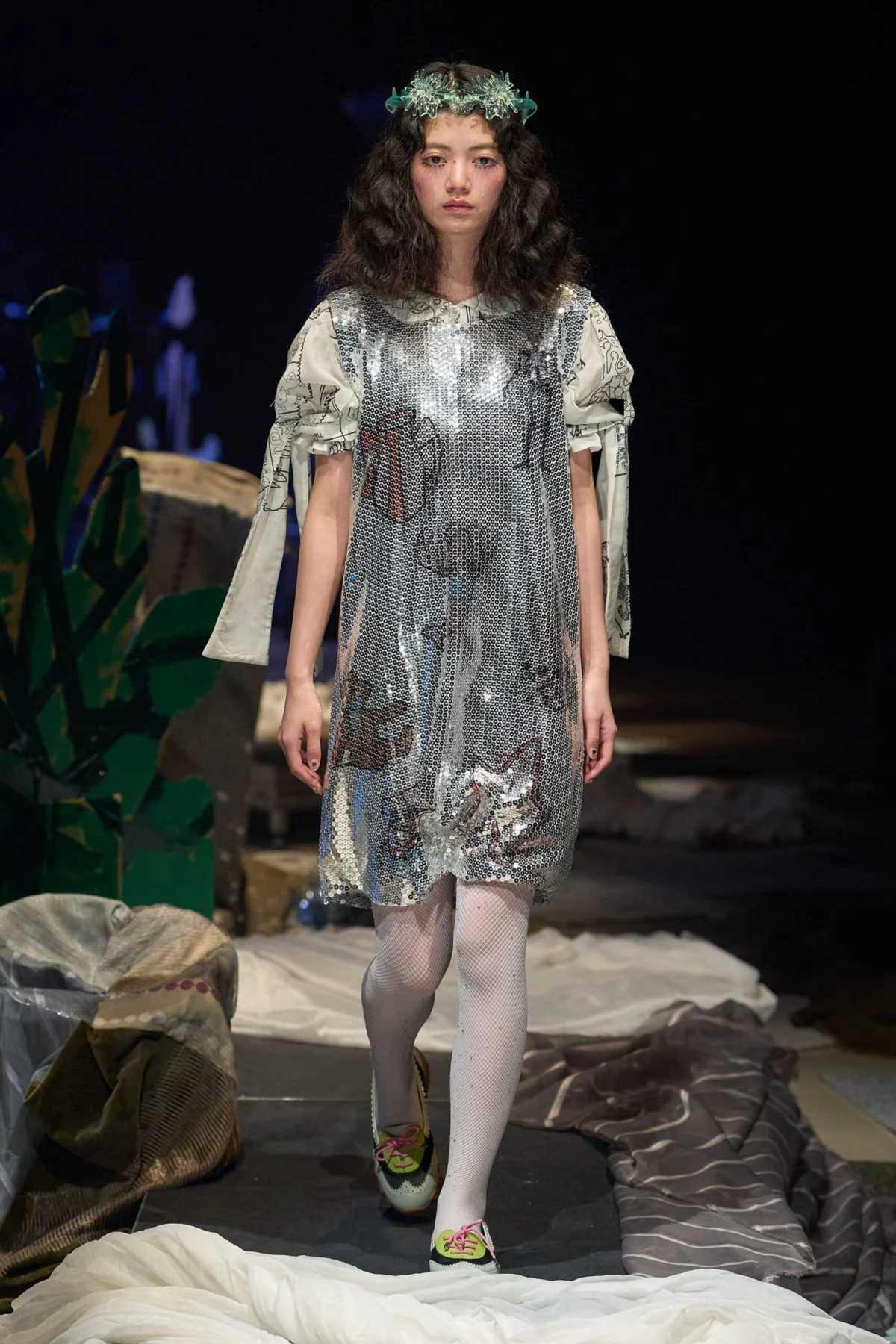
Beyond commercial appeal, Tokyo Fashion Week continues to be a fertile ground for creative expression and immersive experiences. Designers are increasingly opting for innovative installations that transport attendees to different realms. Yusho Kobayashi, known for his whimsical designs that have been embraced by figures like Elle Fanning and K-pop group ILLIT, constructed a DIY cardboard set that evoked an underwater world. Yoshio Kubo presented a sporty collection for runners amidst a striking installation featuring a large ger (a traditional Mongolian tent) at the center of the runway.
"In Europe at the shows you usually find a common thread, but you don’t see that as much here and it’s more diverse, which is super interesting," observed FWRD’s Luna. "It’s more about self-expression, and going back to the true root of personal style." This diversity and emphasis on individual expression are key differentiators of Tokyo Fashion Week, offering a refreshing alternative to the more trend-driven environments of other fashion capitals.
A significant highlight of the week was the collection by Khoki, a design collective rapidly building a cult following in menswear. Supported by Rakuten’s ByR initiative, which champions both global and local designers, Khoki’s show was held in a vast warehouse in Tokyo Bay. The set design was a meticulous replica of designer Koki Abe’s family home in Yamanashi, adding a deeply personal and nostalgic dimension to the presentation.
"Khoki is already very well represented here in the retail scene here in Japan, and I think he has good potential to grow further," commented Della Morte. Luna added, "A lot of Khoki’s techniques and deconstruction are pretty unique for what we’re buying and seeing. I think it’s serving a nice white space that we have for our market." This suggests that Khoki’s distinct aesthetic and innovative approach fill a specific niche in the current retail landscape, appealing to buyers seeking unique and forward-thinking designs.
Koki Abe expressed optimism about the show’s potential to broaden his brand’s reach. "I think [holding this show] will help us reach demographics we hadn’t been able to connect with previously," he stated. "I’m really looking forward to the possibilities that will open up from here." His anticipation reflects the transformative power of a well-executed fashion week presentation in stimulating business growth and expanding market access.

Cultivating Future Fashion Icons
The conclusion of Tokyo Fashion Week was marked by the announcement of two significant awards designed to nurture and support emerging Japanese fashion talent. The Fashion Prize of Tokyo, an award that facilitates a winning domestic designer’s show in Paris, has previously recognized luminaries such as Auralee, Mame Kurogouchi, and Doublet. This year, the prestigious honor was bestowed upon Tanaka, a denim-focused brand helmed by designer Sayori Tanaka, who previously led the global design team at Uniqlo. Tanaka is slated to present her collection during Paris Fashion Week’s FW27 season.
The primary mechanism for integrating new talent into the fashion week system is the Tokyo Fashion Award. "The award brings us eight designers every year, which is good, because they will all show during the FW27 season," explained Imajo. The eight recipients of this year’s award will receive financial support for a runway show in Tokyo next season and will also participate in a joint showroom during Paris Fashion Week, aiming to capture the attention of international buyers.
Among the distinguished recipients of the Tokyo Fashion Award are Midorikawa, celebrated for its artisanal menswear, and Kenta Orimi, whose eponymous label, Orimi, draws inspiration from Harajuku’s vibrant fashion subcultures. The award also recognized Gurtwein, an edgy womenswear brand by Teruhiro Hasegawa, and Jianying “Wing” Lai, a design duo who honed their skills under Riccardo Tisci at Givenchy and Burberry. For their upcoming show, the duo aims to foster a deeper connection with their customer base.
"When I was working at Givenchy, I aspired to stage a massive show, but selling here in Japan has changed my perspective," shared Hasegawa. "I’ve had customers drive three hours just to get to a different store because an item was sold out at their local shop. Hearing stories like that made me feel that rather than a large spectacle, it might be more meaningful to hold a show where there’s a form of connection between the audience and us." This reflection underscores a shift in perspective, prioritizing authentic engagement and customer relationships over sheer scale and spectacle.
As Tokyo Fashion Week continues to evolve, its ability to adapt to the changing ambitions of its designers and the global fashion landscape will be paramount. By strategically integrating international talent and providing robust support for emerging local designers, the JFWO aims to ensure that Tokyo remains a relevant and dynamic force in the international fashion calendar, fostering a new generation of designers ready to make their mark on the world stage.
