

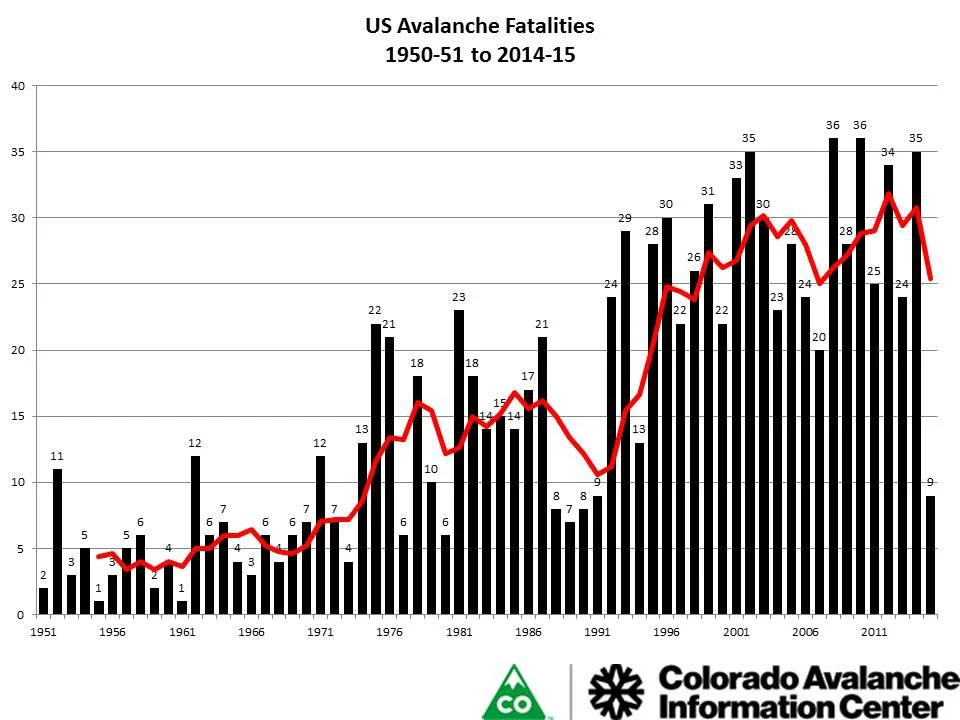
As the 2014-2015 winter season draws to a close this April, national safety organizations and meteorological agencies are reporting a significant and encouraging decline in avalanche-related deaths across the United States. According to data finalized by the Colorado Avalanche Information Center (CAIC) and the United States Forest Service avalanche centers, the current season has seen nine confirmed fatalities. This figure represents the lowest annual death toll attributed to snow slides since 1991, a statistic that stands in stark contrast to the rapidly increasing number of outdoor enthusiasts venturing into the backcountry.
While experts emphasize that any loss of life is a tragedy, the single-digit fatality rate for the 2014-2015 period marks a notable departure from the trends observed over the last quarter-century. The decline is being attributed to a complex intersection of unusual transcontinental weather patterns, a lack of significant snowfall in historically high-risk regions, and an aggressive expansion of public safety education initiatives.
Meteorological Factors and the "Snow Drought" of 2014-2015
A primary driver behind the decrease in avalanche incidents this season was the unconventional weather behavior observed across the Western United States. For much of the winter, the West Coast experienced what meteorologists termed a "snow drought." An exceptionally strong and persistent high-pressure ridge off the Pacific coast diverted the jet stream, resulting in record-breaking warmth and significantly below-average precipitation for the Sierra Nevada and the Cascade Range.
In California and Oregon, many ski resorts and backcountry access points remained closed or saw minimal activity due to the lack of a viable snowpack. Because avalanches require a specific combination of terrain, weather, and a "slab" of accumulated snow, the absence of heavy snowfall naturally limited the opportunities for large-scale slides. In regions where snow did fall, such as the interior Rockies, unseasonably warm temperatures often helped stabilize the snowpack more quickly than in colder, more volatile years.
Further inland, states like Colorado, Utah, and Montana experienced "warm" winters relative to historical averages. While these regions did see periodic heavy snowfall, the higher temperatures facilitated faster "rounding" of snow crystals, a process that increases the strength of the bonds between snow layers. In a typical cold winter, the formation of "facets"—weak, sugar-like crystals—often creates a precarious foundation for future storms. The 2014-2015 season saw fewer of these persistent weak layers, which are historically responsible for the majority of deep-slab avalanche fatalities.
Historical Context and the 1991 Benchmark
To understand the significance of the nine fatalities recorded this season, one must look at the historical data provided by the U.S. Avalanche Accident Database. Since the early 1990s, the United States has generally seen an upward trend in avalanche accidents, corresponding with the explosion in popularity of backcountry skiing, splitboarding, and snowmobiling.
The year 1991 was the last time the country saw fewer than ten fatalities in a single season. Since then, the average has climbed steadily. In the late 2000s and early 2010s, several seasons saw death tolls exceeding 30 individuals. For instance, the 2007-2008 season remains one of the deadliest on record, characterized by a particularly unstable continental snowpack.
The fact that the 2014-2015 season returned to a level not seen in 24 years is viewed by safety officials as a statistical outlier, but also as a testament to the efficacy of modern forecasting. Despite the low numbers this year, the five-year moving average for avalanche fatalities in the U.S. remains relatively stable, hovering between 25 and 30 deaths per year. This stability is significant because it suggests that even as the number of people in the backcountry grows exponentially, the rate of fatal accidents is not growing at the same pace.
The Impact of Education and Real-Time Forecasting
Beyond the weather, the role of human intervention cannot be overlooked. The Forest Service avalanche centers and the Colorado Avalanche Information Center (CAIC) have spent the last decade revolutionizing how safety information is disseminated. Spencer Logan, a prominent researcher with the CAIC, has been instrumental in maintaining the national accident database, which allows experts to identify patterns in human behavior and snowpack failure.
Public outreach programs such as "Know Before You Go" (KBYG) have targeted younger demographics and entry-level backcountry users, emphasizing five key pillars: get the gear, get the training, get the forecast, get the picture, and get out of harm’s way.
The 2014-2015 season saw a record number of users accessing daily avalanche bulletins via mobile apps and social media. These bulletins provide regional danger ratings based on the North American Public Avalanche Danger Scale, ranging from "Low" to "Extreme." By providing high-resolution, localized data, forecasting centers have enabled recreationists to make more informed decisions about which slopes to avoid.
Furthermore, the professionalization of avalanche education—standardized by organizations like the American Institute for Avalanche Research and Education (AIARE)—has created a more disciplined community of backcountry users. More skiers and riders are now equipped with essential rescue gear, including digital transceivers, collapsible probes, and lightweight shovels, and more importantly, they are seeking the training necessary to use them effectively.
Regional Analysis: Colorado and the Intermountain West
Colorado typically leads the nation in avalanche fatalities due to its "continental" snowpack, which is notoriously thin and prone to structural weaknesses. However, even in Colorado, the 2014-2015 season was remarkably quiet compared to previous years.
In the Pacific Northwest, the story was dominated by the lack of snow. Washington and British Columbia, which often deal with "maritime" snowpack issues—large storms followed by rapid warming—saw fewer incidents simply because the high-elevation snow totals were at historic lows. This led to a decrease in "high-consequence" terrain being skiable, which in turn reduced the exposure of the general public to avalanche paths.
In the Intermountain regions of Utah and Wyoming, the season was characterized by "spiky" danger. There were periods of high instability following specific storm cycles, but these were often followed by long periods of high pressure and clear skies, which allowed the snowpack to settle and gain strength.
The Growing Backcountry Population and the "Safety Paradox"
One of the most compelling aspects of the 2014-2015 data is the divergence between participation and accidents. Industry reports from the SnowSports Industries America (SIA) indicate that sales of backcountry-specific equipment—such as touring bindings, skins, and avalanche airbags—have seen double-digit growth annually for the past 15 years.
In previous decades, a "low" fatality year might have been explained by low participation. Today, however, trailheads in places like Teton Pass, Wyoming, or Berthoud Pass, Colorado, are more crowded than ever. This creates a "safety paradox": as more people enter the backcountry, the potential for "human-triggered" avalanches increases. The fact that fatalities remained at nine this season suggests that the "safety culture" within the community is becoming more ingrained.
However, experts warn against complacency. A single low-fatality year does not indicate that the backcountry has become inherently safer. Instead, it suggests a "perfect storm" of favorable weather conditions and successful public messaging that may not be replicated in the 2015-2016 season.
Broader Implications and Future Challenges
The 2014-2015 season provides a valuable case study for researchers. It highlights how sensitive avalanche fatality rates are to climate variability. As global weather patterns become more erratic, avalanche centers are bracing for "extreme" winters that could feature both record-breaking droughts and record-breaking snowfall.
The challenge for the future lies in maintaining the downward trend in fatalities as technology makes it easier for inexperienced users to access "extreme" terrain. The rise of high-performance snowmobiles and "sidecountry" access (backcountry terrain accessible from ski resorts) continues to put pressure on search and rescue resources.
Official responses from the CAIC and partner organizations emphasize that while they celebrate the low numbers of the 2014-2015 season, their mission remains focused on the long-term moving average. The goal is to decouple the growth of the sport from the growth of the death toll.
As the snow melts and the 2014-2015 season officially enters the record books, the focus shifts to the southern hemisphere and the upcoming 2015-2016 North American winter. Safety officials urge the public to remember that the "avalanche season" is never truly over in high-altitude environments, where spring snowstorms can still create lethal conditions on high peaks well into June and July.
The nine lives lost this year serve as a somber reminder of the inherent risks of mountain travel. However, the broader data suggests a path forward where education, better technology, and informed decision-making can continue to mitigate the dangers of the winter wilderness. The success of the 2014-2015 season is a milestone in public safety, but for the professionals at the Forest Service and the CAIC, it is merely a baseline for the work yet to come.
