

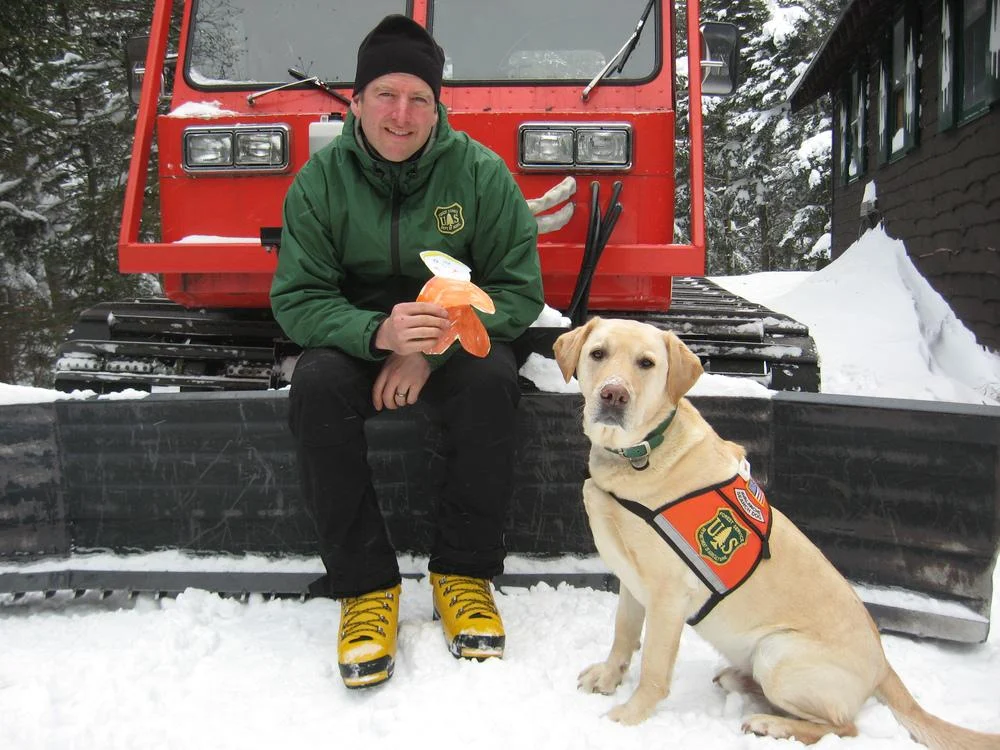
The Mount Washington Avalanche Center (MWAC) and the broader New England outdoor community are mourning the loss of Cutler, a specialized avalanche search and rescue dog who served the White Mountain National Forest for over a decade. Cutler, a fixture of the Tuckerman Ravine and Huntington Ravine regions, passed away at the age of 14, marking the end of a career that spanned 11 years of active duty. During his tenure, Cutler became a cornerstone of the United States Forest Service’s safety operations on Mount Washington, a peak notorious for some of the most extreme weather conditions and high-consequence avalanche terrain in the United States. His passing represents the loss of a vital operational asset and a beloved public figure who bridged the gap between professional snow rangers and the thousands of recreationalists who visit the Presidential Range each winter.
A Career Defined by Service and Skill
Cutler’s career was defined by an extraordinary commitment to the safety of the White Mountain National Forest. Serving for 11 years, Cutler spent approximately 80% of his life as a working dog, a duration that far exceeds the average career length for most search and rescue (SAR) canines. His primary area of operation was the Mount Washington Avalanche Center, based in the White Mountain National Forest of New Hampshire. Mount Washington, standing at 6,288 feet, is the highest peak in the Northeastern United States and is frequently cited as the "Home of the World’s Worst Weather."
In this high-stakes environment, Cutler worked alongside Chris Joosen, the longtime Director of the Mount Washington Avalanche Center. Together, they navigated the complexities of avalanche mitigation, search operations, and public safety. Cutler’s role was multifaceted; while his primary training was in live-scent detection for buried victims, his presence on the mountain served as a constant reminder of the inherent risks of winter alpine recreation. The operational demands on Mount Washington are unique; unlike many Western ski resorts where avalanche control is managed within closed boundaries, Mount Washington is a backcountry environment where the Snow Rangers manage public safety through education, forecasting, and emergency response.
The Role of the Avalanche Canine in Search and Rescue
To understand the magnitude of Cutler’s contribution, one must examine the critical role that avalanche dogs play in mountain safety. While modern technology, such as Avalanche Transceivers (beacons), RECCO reflectors, and probes, has significantly improved the chances of survival for buried victims, canines remain one of the most efficient tools in a search and rescue kit.
An avalanche dog’s nose is capable of detecting human scent through several feet of packed snow. According to search and rescue data, a single trained avalanche dog can search a one-hectare area (approximately 2.5 acres) in approximately 30 minutes. In contrast, it would take a "probe line" of 20 human rescuers roughly four hours to cover the same amount of ground with the same degree of thoroughness. In the context of an avalanche burial, where the survival rate drops precipitously after the first 15 to 30 minutes due to asphyxiation, the speed of a canine like Cutler is often the difference between a rescue and a recovery operation.
Cutler underwent rigorous training to maintain his certifications. Avalanche dogs must be desensitized to the roar of snowmobiles, the thrum of helicopter rotors, and the chaos of a busy rescue scene. They must also possess the physical stamina to traverse deep snow, navigate icy slopes, and work in sub-zero temperatures with wind chills that frequently drop below -40 degrees Fahrenheit on the Mount Washington summit.
A Timeline of a Working Life
Cutler’s journey began as a puppy selected specifically for his "drive"—the innate desire to work and be rewarded—which is essential for SAR work. By the time he was a young adult, he was fully integrated into the Mount Washington Snow Ranger team.
- Initial Training (Years 1-2): Cutler focused on basic obedience and scent association. This involved "hide and seek" games that gradually evolved into finding human subjects buried in deep snow pits.
- Certification (Year 3): After proving his proficiency in various snow conditions and terrains, Cutler became an official asset of the Mount Washington Avalanche Center.
- Operational Peak (Years 4-10): During this period, Cutler was a daily presence in Tuckerman Ravine. He participated in drills, monitored snowpack stability with the rangers, and was on standby for every reported slide in the Presidential Range.
- Public Relations and Education (Throughout Tenure): Beyond his SAR capabilities, Cutler became the face of avalanche safety. He participated in hundreds of public demonstrations, school programs, and safety briefings.
- Retirement and Passing (Year 11-14): Cutler transitioned into a less physically demanding role as he aged, eventually retiring to live out his final years with Chris Joosen. He passed away peacefully at age 14, surrounded by those who worked alongside him.
Impact on Public Relations and Safety Education
While Cutler’s tactical skills were invaluable, his most lasting impact may have been his role as a "safety ambassador." The Mount Washington Snow Rangers are tasked with the difficult job of enforcing safety protocols and educating a diverse group of visitors, ranging from elite mountaineers to casual tourists. At times, the message of caution can be met with resistance or indifference.
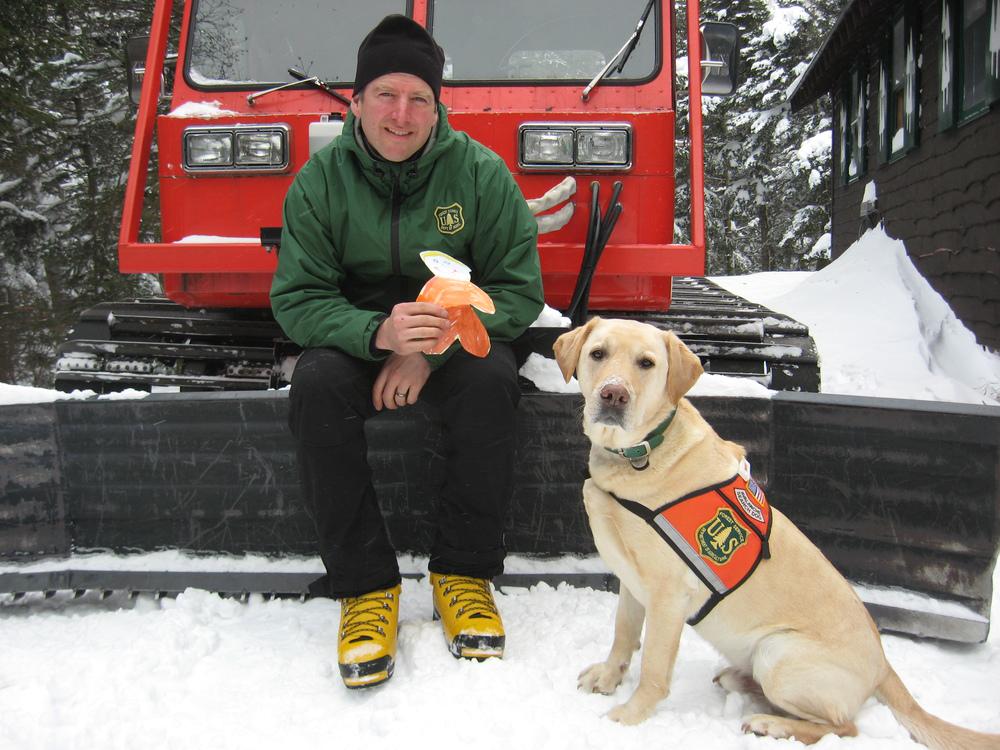
Cutler served as a social bridge. As Chris Joosen noted in his reflections on Cutler’s life, the dog had a unique ability to attract people and break down barriers. Visitors who might have been intimidated by a uniformed ranger were often drawn to Cutler. This interaction provided the Snow Rangers with a "teachable moment." While visitors petted Cutler, the rangers could discuss the day’s avalanche advisory, check if the hikers had proper gear (shovels, probes, and beacons), and provide advice on safe travel routes.
This "soft power" approach to public safety is a recognized strategy in modern land management. By humanizing the rescue service, Cutler helped foster a culture of cooperation and mutual respect between the Forest Service and the public. His presence at the Hermit Lake HoJo’s (the ranger station at the base of Tuckerman Ravine) was a staple of the Mount Washington experience for a generation of skiers and climbers.
The Harsh Realities of Mount Washington
The environment in which Cutler worked is among the most unforgiving in the world. The Presidential Range is characterized by "fetch," where prevailing westerly winds blow snow off the vast plateaus and deposit it into leeward ravines like Tuckerman and Huntington. This process, known as wind-loading, can create massive, unstable snow slabs in a matter of hours.
The Mount Washington Avalanche Center is responsible for issuing daily advisories for this terrain. The data gathered by rangers—and supported by the presence of dogs like Cutler—is vital for the thousands of "spring skiers" who flock to the ravine in April and May. Even during these popular months, the risk of "icefall," "crevasses," and "wet snow avalanches" remains high. Cutler’s career coincided with a period of increasing recreational use of the backcountry, making his role in education and rapid response more critical than ever.
Official Responses and Community Legacy
The news of Cutler’s passing prompted a significant outpouring of support from the mountaineering community. Chris Joosen, who served as Cutler’s handler and companion, shared a poignant tribute through the MWAC blog, detailing the bond between a working dog and a handler. Joosen emphasized that Cutler was more than a tool; he was a partner who shared in the hardships and triumphs of mountain life.
Official statements from the White Mountain National Forest community highlighted Cutler’s "unwavering dedication" and his role in "making the mountains a safer place." Colleagues described him as a dog with a remarkable work ethic who never tired of the cold or the climb.
The legacy of Cutler continues through the ongoing canine program at the Mount Washington Avalanche Center. The success of his 11-year career has reinforced the value of maintaining a resident avalanche dog at the center. His life serves as a case study in the effectiveness of integrating working animals into federal land management and emergency services.
Broader Implications for Avalanche Safety Programs
Cutler’s life and career underscore several broader trends in search and rescue and mountain safety:
- The Longevity of Working Dogs: Cutler’s 11 years of service highlight the advancements in veterinary sports medicine and the careful management of working dogs, allowing them to remain operational for longer periods.
- The Integration of PR and SAR: The dual-role of the avalanche dog—as both a rescuer and an educator—is now a standard model for many mountain rescue organizations worldwide.
- The Resilience of Local Programs: Despite the availability of high-tech regional search assets, having a "local" dog stationed on the mountain ensures the fastest possible response time, which is the most critical factor in avalanche survival.
As the Mount Washington Avalanche Center moves forward, the memory of Cutler remains a benchmark for future canine units. He was a creature of the wind and snow, a guardian of the ravines, and a friend to the thousands who walk the trails of the White Mountains. His contribution to the safety and culture of Mount Washington is a testament to the profound impact a single dedicated animal can have on an entire community. The trails of Tuckerman Ravine will feel a little emptier without him, but the lessons he helped teach and the lives he helped protect will endure for seasons to come.
