

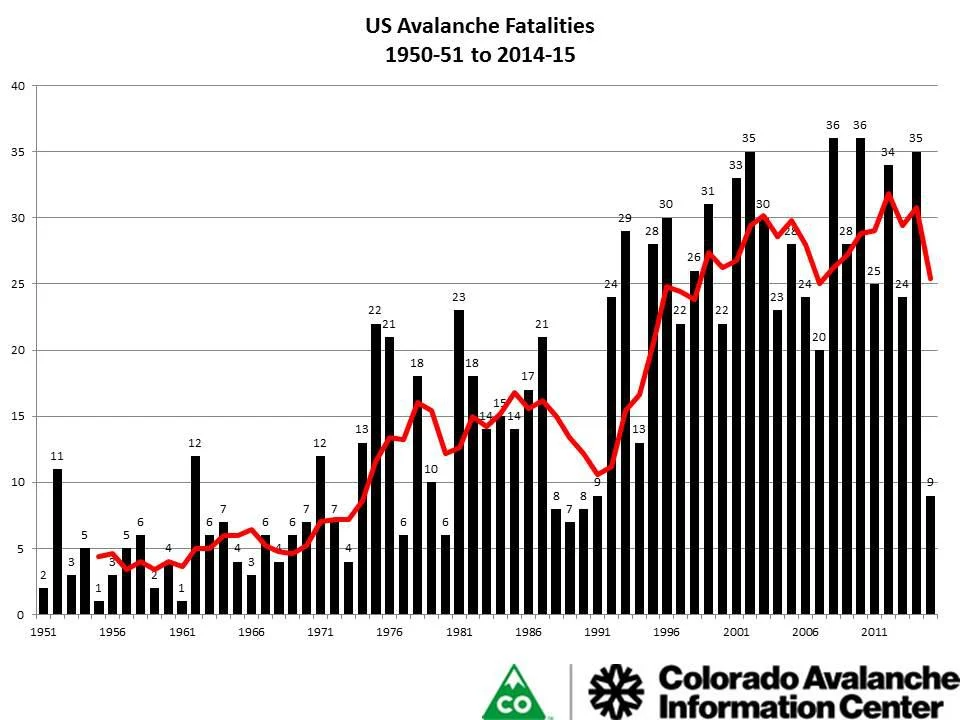
As the 2014-2015 avalanche season draws to a formal close at the end of April, preliminary data from across the United States indicates a significant and encouraging decline in winter backcountry fatalities. According to figures maintained by the Colorado Avalanche Information Center (CAIC) and the United States Forest Service, the current season has seen nine recorded avalanche fatalities. This figure represents the lowest annual death toll since the 1990-1991 season, marking a twenty-four-year low in mountain-related accidents of this nature. While safety experts and regional forecasters maintain that even a single fatality is a tragedy, the sharp decrease from previous years offers a moment of reflection for the outdoor industry, meteorologists, and safety educators alike.
The decline in fatalities comes at a time when participation in backcountry winter sports—including alpine touring, splitboarding, and mountain snowmobiling—is reaching historic heights. Despite the increasing number of individuals venturing into unmanaged terrain, the statistical trend for the 2014-2015 season suggests a convergence of favorable climatological conditions and more effective public safety outreach. However, experts caution that this year’s low numbers may be an anomaly driven by specific weather patterns rather than a permanent shift in the inherent risks of mountain travel.
Climatological Influences: The Impact of a Low-Snow Year
A primary driver behind the reduction in avalanche accidents this season is the unusual weather pattern that dominated the North American continent throughout the winter. The West Coast, particularly the Sierra Nevada in California and the Cascade Range in Washington and Oregon, experienced a historic "snow drought." Characterized by record-low snowpack and unusually high freezing levels, many traditional backcountry zones remained inaccessible or lacked the sufficient snow depth required to produce large-scale slides.
In California, the snowpack reached its lowest levels in recorded history, with the April 1 snow water equivalent measured at just 5 percent of the long-term average. This lack of "fuel" for avalanches meant that many high-risk slopes never developed the deep, unstable layers that typically claim lives in the Pacific regions. Furthermore, warmer temperatures across the Intermountain West and the Rocky Mountains contributed to a more stable snowpack in areas that are traditionally prone to persistent weak layers. While the interior regions, including Colorado, Utah, and Montana, did see significant snowfall events, the warm cycles helped to "heal" the snowpack more rapidly than in colder, more continental winters.
The relationship between snow depth and safety is complex. While a thin snowpack can sometimes be more dangerous due to the formation of faceted "sugar snow" at the base, the 2014-2015 season was defined by such extreme lack of snow in certain regions that the exposure time for backcountry users was naturally curtailed. In essence, many enthusiasts were forced to stay on groomed trails or avoid the mountains entirely, reducing the statistical probability of an encounter with a slide.
Institutional Efforts and Public Education
Beyond the weather, the role of institutional safety programs cannot be understated. The United States Forest Service (USFS) avalanche centers and the Colorado Avalanche Information Center (CAIC) have significantly expanded their digital footprint and outreach capabilities over the last decade. The 2014-2015 season saw a more streamlined and accessible delivery of daily avalanche bulletins, which provide critical data on slope stability and risk levels.
Public education campaigns, such as "Know Before You Go," have been instrumental in shifting the culture of the backcountry community. These programs emphasize five key pillars: get the gear, get the training, get the forecast, get the picture, and get out of harm’s way. By standardizing the language of risk and making it digestible for the average recreationist, safety centers have successfully reached a broader demographic than in previous decades.
The CAIC, which maintains the national database for avalanche accidents, has been particularly active in utilizing social media and mobile applications to disseminate real-time warnings. Spencer Logan, a lead researcher at the CAIC, has emphasized the importance of high-quality data in preventing future accidents. The ability of the public to see detailed accounts of "near misses" and accidents allows for a community-wide learning process that was not possible during the previous low-fatality record of 1991.
Historical Comparisons and Long-Term Trends
To understand the significance of nine fatalities, one must look at the broader historical context of the last quarter-century. During the 1990-1991 season, the US also recorded nine deaths. In the years following, however, the numbers generally trended upward as the popularity of high-performance gear allowed more people to access steeper and more remote terrain. The deadliest year on record was the 2007-2008 season, which saw 36 fatalities.
Despite the occasional spike in deaths, the five-year moving average for avalanche fatalities in the United States has remained remarkably stable. For the past 15 years, that average has fluctuated between 25 and 30 deaths per year. When adjusted for the exponential growth in backcountry users, the "per capita" risk of dying in an avalanche has actually decreased. This stabilization suggests that even as more people enter the wilderness, they are doing so with better information and better equipment than their predecessors.
The 2014-2015 season stands out as a significant deviation from this 25-30 person average. While the final count for the year will not be official until the remaining spring snow melts, the current data represents a 60 to 70 percent reduction from the standard annual toll. This decline is viewed by safety officials as a "statistical gift," providing a reprieve that allows agencies to focus on long-term strategy rather than immediate crisis management.
The Growth of Backcountry Participation
The stability of the five-year average is particularly impressive when viewed against the backdrop of the outdoor industry’s growth. Industry reports from the SnowSports Industries America (SIA) indicate that sales of alpine touring (AT) boots, splitboards, and climbing skins have seen double-digit growth nearly every year for the past decade. The shift away from traditional resort skiing toward "human-powered" recreation has put thousands of additional people into avalanche terrain daily.
This surge in participation is driven by several factors:
- Technological Advancement: Modern AT gear is lighter and more functional, making the uphill climb less of a barrier for the average skier.
- Resort Crowds and Pricing: Increasing lift ticket prices and crowded slopes have pushed enthusiasts to seek the solitude of the backcountry.
- Social Media: Platforms like Instagram and YouTube have glamorized "untouched powder," drawing less experienced individuals into potentially dangerous areas.
The fact that fatalities have not risen in tandem with these participation rates is a testament to the efficacy of the modern avalanche safety infrastructure. The 2014-2015 season serves as a benchmark for what is possible when environmental factors and human preparation align.
Regional Breakdown and Specific Incidents
While the national number was low, the fatalities that did occur were concentrated in the interior mountains where snowpack was more substantial than on the coast. Colorado, which traditionally leads the nation in avalanche deaths due to its weak, continental snowpack, saw a handful of incidents that served as sobering reminders of the danger.
In January and February of 2015, several incidents involved experienced backcountry travelers, highlighting the fact that even those with significant training can fall victim to "human factors"—the psychological traps that lead people to ignore warning signs. These include the "expert halo," where a group follows a leader blindly, or "social proof," where people assume a slope is safe because they see other tracks on it.
The timeline of the 2014-2015 season showed a cluster of activity in late mid-winter. December was relatively quiet due to a slow start to the snow season, while late January saw a spike in activity following several heavy storms in the Rockies. The spring months, which can often be deadly due to wet-slide cycles, remained relatively calm as the snowpack transitioned to a more stable "corn" snow regime earlier than usual.
The Role of Safety Technology
In addition to education and forecasting, the 2014-2015 season benefited from the continued maturation of safety technology. The use of avalanche transceivers (beacons), probes, and shovels is now considered the "bare minimum" for backcountry travel. Furthermore, the adoption of avalanche airbags—backpacks that inflate to keep the wearer near the surface of a slide—has reached a critical mass in the market.
While no piece of equipment can guarantee survival, the increased prevalence of these tools has likely contributed to a higher number of "successful" outcomes in incidents that did not result in fatalities. The CAIC and other organizations continue to track "incidents without injury," which provide valuable data on how gear performs in real-world scenarios.
Future Implications and the Path Forward
As the mountain community looks toward the 2015-2016 season, the primary concern among experts is complacency. There is a risk that the low fatality count of 2014-2015 could lead newcomers to believe that the backcountry is safer than it actually is. Forecasters are quick to point out that the nine deaths recorded this year were as much a result of "luck" with the weather as they were a result of human skill.
"The low numbers are a win for the community, but we must be careful not to draw the wrong conclusions," noted one regional forecaster. "If we have a heavy snow year next year with a cold, weak base, we could see these numbers jump back up to 30 or higher very quickly. The mountains don’t care about last year’s statistics."
The 2014-2015 season will likely be studied for years as a unique intersection of climate change, recreational trends, and public health communication. It proves that a combination of informed citizens and proactive government agencies can mitigate the risks of a volatile natural environment. Moving forward, the challenge for the Forest Service and the CAIC will be to maintain this level of safety as the snow eventually returns to the West Coast and the number of backcountry users continues its upward trajectory.
In conclusion, the 2014-2015 avalanche season stands as a historic outlier. With only nine lives lost, it is a year that will be remembered for its quiet slopes and the effective collaboration of the avalanche safety community. As the final snow patches melt into the spring runoff, the focus shifts to preparation for the next cycle, with the hope that the lessons learned during this low-fatality year will continue to save lives in the winters to come.
