

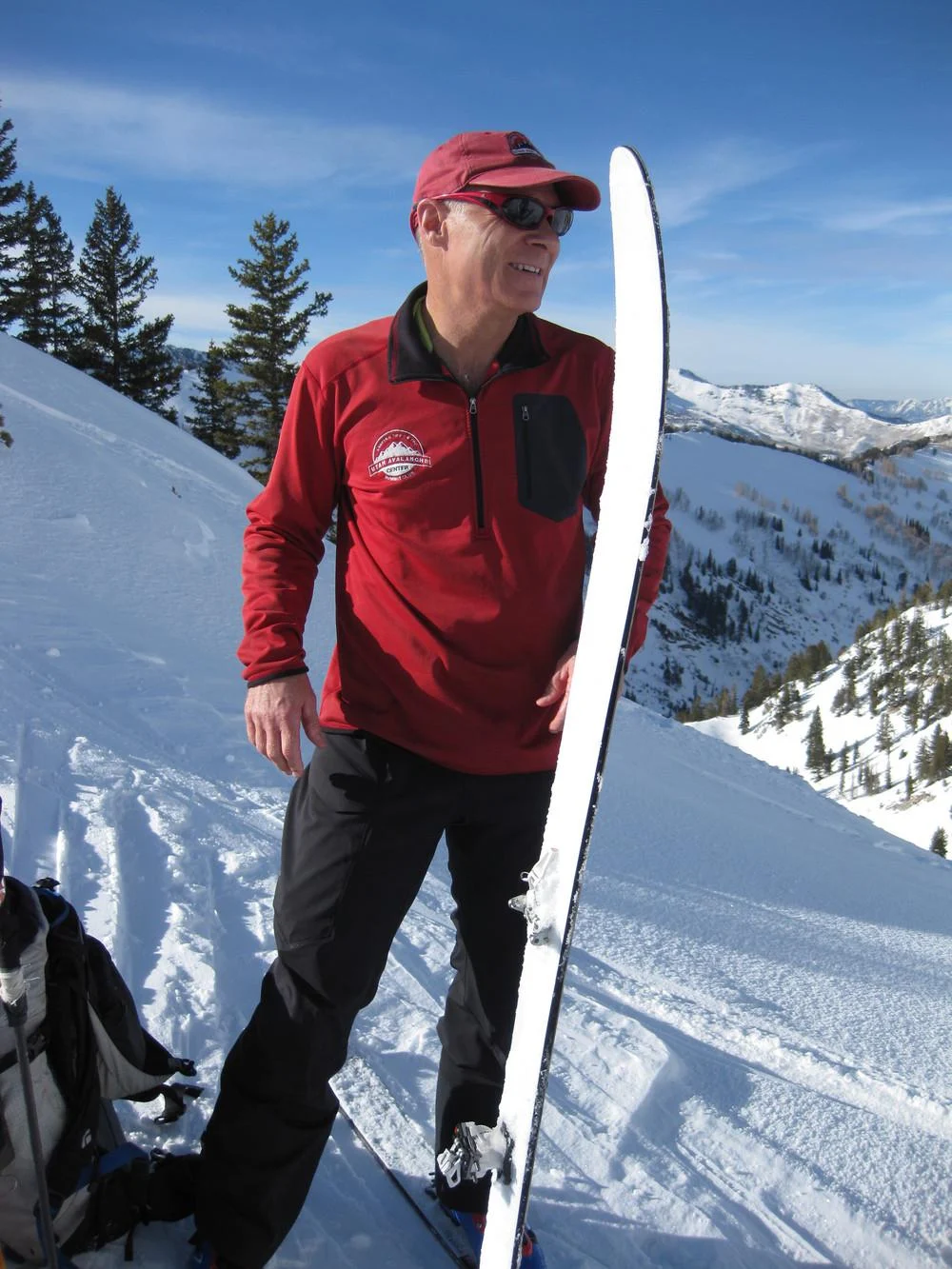
The Utah Avalanche Center (UAC) has officially confirmed that Bruce Tremper, the organization’s director for nearly three decades, will retire from the U.S. Forest Service at the conclusion of August. Tremper, whose career has spanned the formative years of modern avalanche science, leaves behind a legacy that has fundamentally reshaped how public safety information is disseminated to winter recreationists. His departure marks the end of an era for the Wasatch backcountry community, where he has been a fixture since the mid-1980s. Following a comprehensive search, the UAC also announced that Mark Staples, a veteran forecaster from the Gallatin National Forest Avalanche Center, has been selected to lead the organization into its next chapter.
A Career Defined by Innovation and Education
Bruce Tremper’s tenure as Director of the Utah Avalanche Center began in 1986, a period when avalanche forecasting was still in its relative infancy regarding public outreach. Over the subsequent 29 years, Tremper oversaw the transition of the UAC from a small, localized operation into an internationally recognized leader in snow safety. His influence extended far beyond the borders of Utah, affecting the protocols and educational standards of the avalanche industry across North America and Europe.
Tremper’s journey into the world of snow science began in Montana, where he pursued a Master of Science degree at Montana State University. Studying under the tutelage of Dr. John Montagne, a pioneer in the field, Tremper developed a deep academic foundation in the mechanical properties of snow and the structural dynamics of mountain snowpacks. He quickly translated this academic rigor into practical application, serving as a member of the avalanche control teams at Bridger Bowl and Big Sky Resort. These early roles provided him with the hands-on experience necessary to understand the nuances of high-consequence terrain and the logistical challenges of mitigation work.
Before arriving in Utah, Tremper refined his forecasting skills at the Alaska Avalanche Center. Working alongside industry luminaries such as Doug Fesler, Jill Fredston, and Jim Woodmency, he navigated the complex maritime snowpacks of the Chugach and Talkeetna ranges. This period was critical in shaping his philosophy on risk communication, as the vast, remote nature of Alaska’s backcountry required clear, actionable information for a diverse range of users.
Revolutionizing Public Safety Communications
When Tremper assumed the directorship of the UAC in 1986, the primary method for delivering avalanche advisories was via recorded telephone messages. These "hotlines" were limited by time and technology, often providing only a general sense of danger levels. Recognizing the limitations of this format, Tremper became a driving force behind the digitalization of avalanche safety.
Under his leadership, the UAC became a pioneer in internet-based products. Tremper was instrumental in the introduction of graphic-rich advisories that utilized icons to represent different "avalanche problems"—a categorization system that simplified complex snow science for the layperson. By breaking down hazards into specific categories such as "wind slab," "persistent weak layer," or "wet snow," the UAC allowed backcountry skiers, snowboarders, and snowmobilers to make more informed decisions based on the specific type of danger present.
This shift from a single "danger rating" to a more nuanced "problem-based" advisory is now a standard practice among forecasting centers globally. Tremper’s commitment to clarity ensured that the UAC’s products remained relevant as the number of backcountry users in the Wasatch Range exploded over the decades.
National Contributions and the 2002 Winter Olympics
Beyond the daily operations of the UAC, Tremper’s contributions to the field of avalanche safety are extensive. He served as the editor for The Avalanche Review for six years, a professional journal that serves as a vital platform for the exchange of ideas among researchers and practitioners. His written work, most notably the book Staying Alive in Avalanche Terrain, has become the definitive text for backcountry education, utilized by both amateur enthusiasts and professional guides worldwide.
One of the most significant milestones of his career was his role as the head of backcountry avalanche safety during the 2002 Salt Lake City Winter Olympics. The logistical complexity of securing the vast mountainous areas surrounding Olympic venues required unprecedented coordination between federal, state, and private entities. Tremper’s leadership during this high-stakes period was widely praised, ensuring the safety of athletes, spectators, and staff while maintaining the integrity of the surrounding wilderness.
Tremper was also a key member of the working group that developed the Conceptual Model of Avalanche Danger in 2010. This model, and the associated North American Public Avalanche Danger Scale, provided a unified framework for forecasting that has since been adopted by every major avalanche center in the United States and Canada. By standardizing the language of risk, Tremper helped reduce confusion for recreationalists who travel between different mountain ranges.

Chronology of Leadership and Organizational Growth
The evolution of the Utah Avalanche Center under Tremper can be viewed through a timeline of strategic growth and professionalization:
- 1986: Bruce Tremper is appointed Director of the UAC, inheriting a system reliant on analog communication.
- Early 1990s: Expansion of the forecasting team to cover a broader geographical area of the Wasatch and Uinta Mountains.
- 1990s – 2000s: Shift to web-based advisories, incorporating early digital photography and snowpit profiles into daily reports.
- 2002: Leadership of the Olympic Backcountry Safety program, showcasing the UAC’s capabilities on a global stage.
- 2003: Publication of Staying Alive in Avalanche Terrain, which standardized educational curriculum for the public.
- 2010: Implementation of the North American Public Avalanche Danger Scale, a project Tremper co-authored.
- 2015: Announcement of retirement and the transition of leadership to Mark Staples.
Supporting Data: The Rising Demand for Avalanche Forecasting
The necessity of the work performed by the UAC has grown in tandem with the popularity of winter backcountry sports. Data from the Outdoor Industry Association and the U.S. Forest Service indicate a steady increase in backcountry participation over the last two decades. In the Wasatch Range specifically, the proximity of a major metropolitan area to high-alpine terrain creates a unique set of challenges.
According to historical incident data, the Wasatch Mountains are among the most heavily used backcountry areas in the world. The UAC’s role in providing daily advisories is credited with keeping fatality rates relatively low despite the surge in user numbers. For instance, while the number of backcountry skiers and splitboarders has increased by an estimated 300% in certain Utah corridors since the early 2000s, the number of annual fatalities has not seen a corresponding linear increase, highlighting the effectiveness of the education and forecasting initiatives spearheaded by Tremper.
Official Responses and the Transition to Mark Staples
The announcement of Tremper’s retirement has drawn reactions from across the meteorological and snow science communities. Colleagues have noted his "unwavering commitment to public safety" and his ability to remain calm and objective during high-stress winter cycles. The U.S. Forest Service expressed gratitude for his decades of service, noting that his work has undoubtedly saved countless lives.
To ensure a seamless transition, the UAC has hired Mark Staples to take over as Director. Staples brings a robust background in both engineering and field forecasting. Like Tremper, Staples earned a Master of Science degree in Engineering from Montana State University, where he focused on snow avalanche research. His professional experience includes time as a ski patroller and snow safety officer at Big Sky Ski Area, as well as eight seasons as a backcountry forecaster at the Gallatin National Forest Avalanche Center in Bozeman, Montana.
Staples is well-regarded for his technical expertise and his ability to communicate complex snowpack structures to the public. Having worked on several special projects for the National Avalanche Center, Staples is uniquely positioned to maintain the UAC’s status as a premier forecasting hub.
Broader Impact and Future Implications for the UAC
The departure of Bruce Tremper occurs at a time when the avalanche industry faces new challenges. Climate change is increasingly affecting snowpack stability, leading to more frequent "unusual" weather events and rain-on-snow cycles that complicate traditional forecasting models. Furthermore, the continued technological advancement of backcountry gear has allowed more people to access steeper and more remote terrain, increasing the potential for high-consequence accidents.
Mark Staples will inherit an organization that is not only a forecasting center but also a massive educational engine. The UAC’s "Know Before You Go" program, which Tremper helped champion, has reached hundreds of thousands of students and outdoor enthusiasts. Maintaining the momentum of these outreach programs will be a primary focus for the new director.
The UAC’s future will likely involve further integration of "crowdsourced" data, utilizing mobile applications and social media to gather real-time observations from the public to supplement professional forecasts. As the organization transitions from Tremper’s leadership to Staples’, the core mission remains unchanged: to provide the public with the information and education necessary to navigate avalanche terrain safely.
Bruce Tremper’s retirement does not signal a complete exit from the field. He has expressed intentions to continue teaching at the National Avalanche School and working on various snow safety projects. His presence in the Wasatch will remain, though perhaps more frequently as a recreationalist enjoying the snow he spent nearly 30 years analyzing. As Mark Staples takes the helm, the foundation laid by Tremper ensures that the Utah Avalanche Center remains a vital pillar of the mountain community.
