

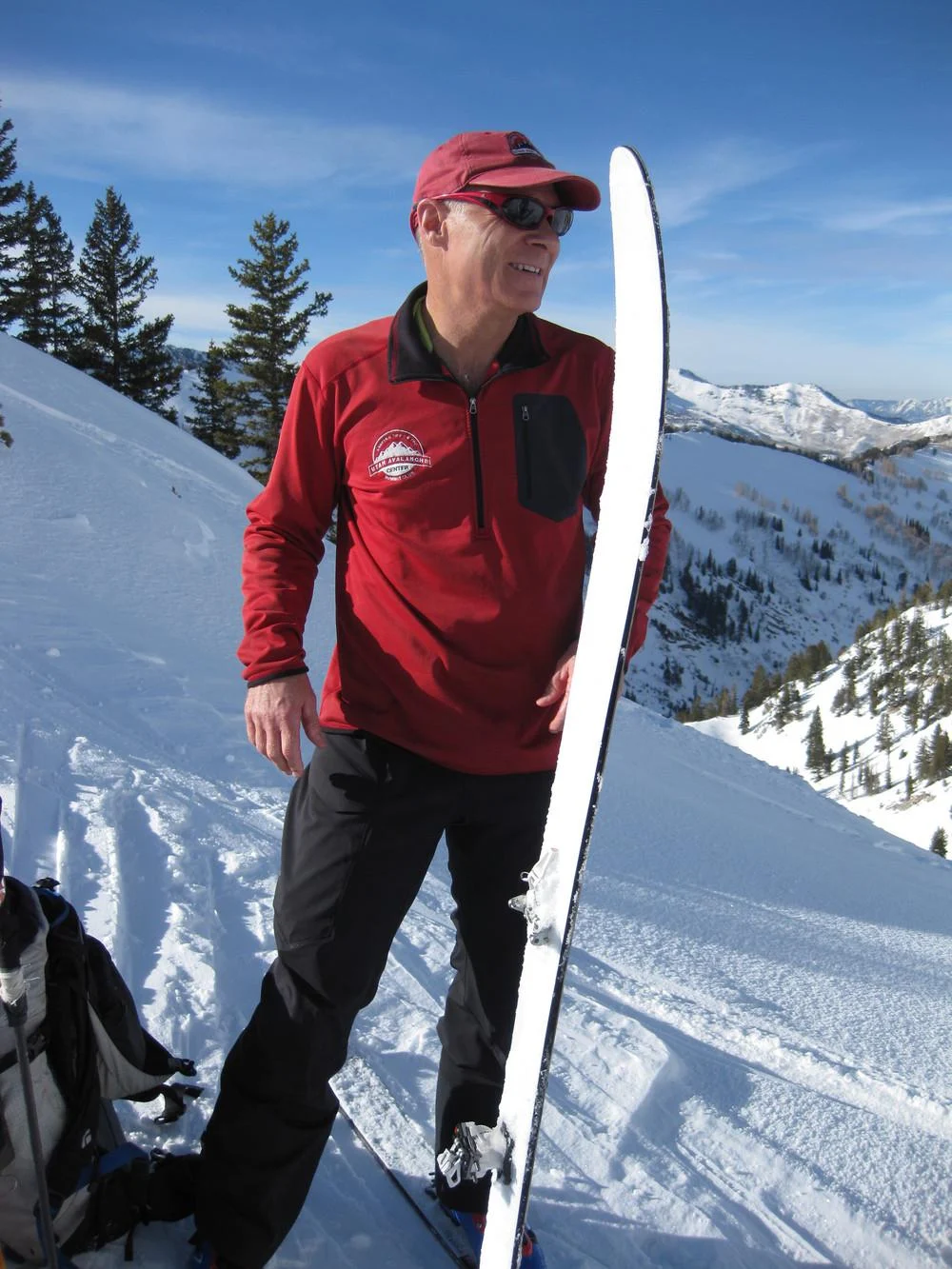
The landscape of North American avalanche safety is set to undergo a significant leadership transition as the United States Forest Service (USFS) confirms the retirement of Bruce Tremper, the long-standing Director of the Utah Avalanche Center (UAC). After 29 years at the helm of one of the world’s most prominent avalanche forecasting agencies, Tremper will officially step down at the end of August. In a concurrent announcement, the Forest Service named Mark Staples, a veteran forecaster from the Gallatin National Forest Avalanche Center, as the incoming Director. This transition marks the end of an era for the Wasatch Range and the beginning of a new chapter for an organization that has become a global benchmark for winter safety and public education.
The Tremper Legacy: Nearly Three Decades of Leadership
Bruce Tremper’s tenure as Director of the UAC began in 1986, a period when avalanche forecasting was in its relative infancy regarding public outreach. Over the nearly three decades that followed, Tremper became the face of avalanche safety not only in Utah but across the international snow science community. His retirement from the Forest Service concludes a career defined by a relentless pursuit of clarity in public safety messaging and a deep commitment to the backcountry community.
Under Tremper’s leadership, the UAC evolved from a small regional office into a multifaceted organization that serves hundreds of thousands of winter recreationists annually. His work was characterized by a rare ability to bridge the gap between complex atmospheric science and the practical needs of the average skier, snowboarder, or snowmobiler. While Tremper often joked about the administrative burdens that kept him indoors, his field work in the legendary Wasatch powder remained a cornerstone of his professional identity and a primary source of the data that fueled the UAC’s daily advisories.
Educational Foundations and Early Professional Milestones
Tremper’s journey into the world of snow science began in the mountains of Montana. He pursued a Master of Science degree at Montana State University, a premier institution for avalanche research, where he studied under the tutelage of the renowned Dr. John Montagne. This academic foundation provided the rigorous scientific framework necessary for a career in hazard mitigation.
Before taking the lead at the UAC, Tremper gained extensive practical experience in both the private and public sectors. He worked in avalanche control and snow safety at Bridger Bowl and Big Sky Resort in Montana, where he mastered the use of explosives and terrain management. His career then took him to the Alaska Avalanche Center, where he collaborated with legendary figures in the field, including Doug Fesler, Jill Fredston, and Jim Woodmency. These early years in the maritime snowpacks of Alaska and the intermountain ranges of Montana provided Tremper with a diverse understanding of snow mechanics that would later prove invaluable in the complex terrain of the Wasatch.
Innovation in Public Safety Communication
One of Tremper’s most significant contributions to the industry was his role in modernizing how avalanche information is disseminated to the public. When he first became Director in 1986, avalanche advisories were primarily delivered via recorded telephone messages. These "hotlines" were limited in scope and accessibility.
As the digital age dawned, Tremper and the UAC were at the forefront of the transition to internet-based products. They were among the first to move beyond simple text-based forecasts, introducing visual icons and the "Avalanche Problem" framework. This system, which identifies specific types of instability—such as wind slabs, persistent weak layers, or wet snow—allowed recreationists to move beyond a simple "danger rating" and understand the specific nature of the risk they faced. This methodology has since been adopted by forecasting centers worldwide.
The 2002 Winter Olympics and Global Recognition
The 2002 Salt Lake City Winter Olympics represented a pinnacle in Tremper’s career. Tasked with overseeing backcountry avalanche safety for the Games, Tremper was responsible for ensuring that the influx of international visitors and media remained safe in the high-stakes environment of the Wasatch. The success of the safety program during the Olympics brought global attention to the UAC’s methods and solidified Tremper’s reputation as a world-class manager of mountain hazards.
Beyond his operational duties, Tremper was a prolific communicator. He served as the editor of The Avalanche Review for six years and authored two seminal works: Staying Alive in Avalanche Terrain and Avalanche Essentials. These books are widely considered the "gold standard" for backcountry education, translated into multiple languages and used as primary texts for avalanche courses globally. His ability to distill life-saving information into engaging, readable prose has been credited with saving countless lives.

Chronology of a Career in Snow Science
The trajectory of Bruce Tremper’s career mirrors the professionalization of the avalanche industry in the United States:
- Late 1970s – Early 1980s: Academic training at Montana State University and early field work at Bridger Bowl and Big Sky.
- Mid-1980s: Research and forecasting at the Alaska Avalanche Center, focusing on high-latitude snowpacks.
- 1986: Appointed Director of the Utah Avalanche Center.
- 1990s: Leads the transition from analog phone-in reports to early digital information systems.
- 2002: Manages backcountry safety for the Salt Lake City Winter Olympics.
- 2004: Publishes the first edition of Staying Alive in Avalanche Terrain, revolutionizing recreational education.
- 2010: Serves as a key member of the working group that developed the Conceptual Model of Avalanche Danger and the modernized North American Avalanche Danger Scale.
- 2015: Announces retirement from the Forest Service, passing the mantle to Mark Staples.
Strategic Transition: Welcoming Mark Staples
The appointment of Mark Staples as the new Director of the UAC follows an extensive search for a candidate capable of maintaining the center’s high standards. Staples comes to the position with a pedigree that aligns closely with the UAC’s mission of science-based public safety.
Staples’ background is rooted in the same Montana snow science tradition that produced Tremper. He holds a Master of Science degree in Engineering from Montana State University, where his research focused on the mechanical properties of snow and avalanche triggers. His professional experience includes time as a ski patroller and snow safety officer at Big Sky Resort, as well as significant contributions to the National Avalanche Center on specialized research projects.
Most recently, Staples spent eight seasons as a backcountry avalanche forecaster at the Gallatin National Forest Avalanche Center in Bozeman. His work there involved managing a complex intermountain snowpack and engaging with a highly active backcountry community, experience that translates directly to the challenges of the Wasatch. Staples is widely respected for his technical expertise and his ability to communicate risk to the public, making him the logical successor to continue Tremper’s work.
Analysis of Implications for the Utah Backcountry
The departure of Bruce Tremper and the arrival of Mark Staples comes at a critical time for the Utah backcountry. The Wasatch Range has seen an exponential increase in winter recreation over the last decade. Data from the USFS and outdoor industry groups suggest that backcountry skiing, splitboarding, and snowmobiling are among the fastest-growing segments of winter sports. This surge in participation places increased pressure on forecasting agencies to provide accurate, real-time data to a diverse user base ranging from novices to elite professionals.
The transition also highlights the importance of the partnership between the Forest Service and the non-profit wing of the Utah Avalanche Center. While the Director is a federal employee, the UAC operates as a unique public-private partnership. This model has allowed the center to remain agile, adopting new technologies and educational platforms faster than a traditional government bureaucracy might allow.
Future Outlook and Continuing Contributions
While Tremper is retiring from his official capacity with the Forest Service, his influence on the field is far from over. He has indicated plans to continue teaching, writing, and contributing to avalanche safety projects. His departure from the daily forecasting grind will likely allow him more time to focus on the broader philosophical and scientific questions facing the industry, such as the psychology of human factor errors in avalanche terrain.
Mark Staples inherits a robust organization with a dedicated staff and a supportive community. His challenge will be to maintain the high level of trust the UAC has built with the public while navigating the impacts of climate change on snowpack stability and the continued technological evolution of mountain safety.
As the summer ends and the first snows of the 2015-2016 season approach, the Wasatch community prepares to bid farewell to a leader who has defined the modern era of avalanche safety. The legacy of Bruce Tremper is etched into the very maps and advisories that backcountry travelers use every day, ensuring that while he may be spending more time skiing for pleasure, his work continues to protect those who follow in his tracks.
