

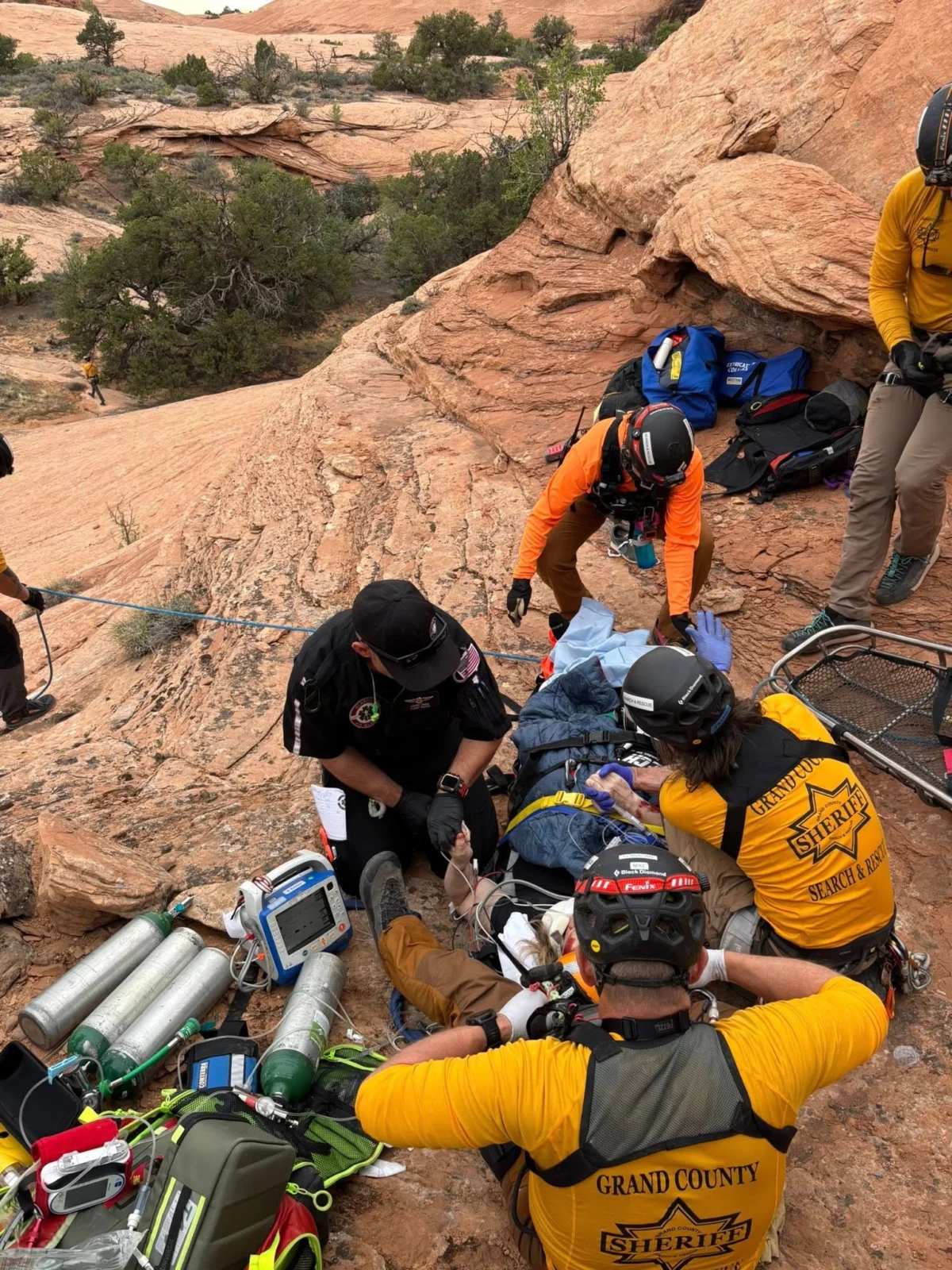
What began as a quintessential spring break off-highway vehicle (OHV) excursion into the rugged and iconic Pritchett Canyon near Moab, Utah, nearly culminated in tragedy on April 10, when a family’s search for hidden arches turned into a harrowing race against time following a severe fall suffered by one parent. This incident, unfolding in one of Utah’s most challenging backcountry environments, serves as a stark reminder of the inherent dangers of wilderness exploration and underscores the critical role of advanced technology and highly skilled rescue teams in remote operations.
The Unforgiving Landscape of Pritchett Canyon
Pritchett Canyon, a mere five miles from the bustling outdoor recreation hub of Moab, is renowned among off-road enthusiasts and hikers alike for its formidable terrain and breathtaking geological formations. However, its proximity to civilization belies its truly remote and unforgiving nature. The route, characterized by steep slickrock ascents, treacherous ledges, and deep chasms, typically demands upwards of three hours to traverse even by experienced OHV operators, let alone on foot. This geological tapestry, while beautiful, presents a deceptive challenge; what appear to be gentle slopes can abruptly transition into vertical cliffs, offering a razor-thin margin for error. The canyon’s deeply incised structure also creates significant dead zones for cellular service, rendering traditional communication methods unreliable or entirely useless in an emergency.
The area around Cummings Arch, where the accident occurred, is particularly isolated. This remoteness amplifies the stakes in any emergency, transforming minutes into critical hours and placing immense pressure on both victims and rescuers. The region’s geological makeup, predominantly Navajo Sandstone, contributes to its unique beauty but also to its inherent hazards, with slickrock surfaces becoming perilous when wet or when footing is compromised. According to the Bureau of Land Management (BLM), which manages much of the public lands around Moab, incidents requiring search and rescue (SAR) are unfortunately not uncommon, often involving falls, heat-related illnesses, or vehicle accidents due to the challenging environment.
A Catastrophic Fall and the Immediate Aftermath
The family of four had ventured into the canyon with the intention of exploring its hidden wonders, a common pursuit for visitors to the Moab area. During their hike, the group temporarily split, a decision that tragically preceded the accident. One adult, whose identity has not been released, lost their footing in an unobserved moment. The initial slip was unwitnessed, but a sudden scream pierced the canyon’s silence, alerting the rest of the family to the unfolding disaster. The victim plummeted approximately 80 feet vertically before enduring an additional 50-foot "bouncing tumble" down a steep slickrock gully. This type of fall, combining a free-fall with subsequent impacts, suggests a high likelihood of severe, life-threatening injuries.

The immediate aftermath was one of shock and urgent concern. Faced with a critically injured family member in a deep canyon devoid of cellular connectivity, the family’s situation was dire. Their quick thinking and preparedness, however, proved to be a pivotal factor in the subsequent rescue.
The Lifeline of Satellite Communication
In a testament to the life-saving potential of modern technology, the family utilized the satellite SOS function on their iPhone. This feature, increasingly common in newer smartphone models, allows users to send emergency messages and location data via satellite networks even when outside traditional cellular or Wi-Fi range. The text message, containing crucial details about the incident and the precise GPS coordinates, was successfully transmitted to 911 dispatchers. This technological intervention likely saved a life that afternoon, drastically reducing the time it would have taken for rescuers to be alerted and to pinpoint the exact location of the accident. Without this capability, the family would have faced the daunting and time-consuming task of attempting to self-extract or send another family member out of the canyon to seek help, potentially delaying the rescue by many hours, which could have had fatal consequences given the nature of the injuries.
The growing integration of satellite communication capabilities into consumer devices like smartphones represents a paradigm shift in backcountry safety. Historically, dedicated satellite messengers or personal locator beacons (PLBs) were essential for remote communication. While these devices remain vital, the widespread adoption of smartphones with built-in satellite SOS functions means that more people are inadvertently carrying a life-saving tool into the wilderness, even if they haven’t explicitly planned for it. This incident powerfully illustrates the practical impact of this technological advancement in bridging the communication gap in remote areas.
Grand County SAR Mobilizes: A Complex Technical Rescue
Upon receiving the satellite SOS alert, Grand County Sheriff’s Search and Rescue (GCSAR) and Emergency Medical Services (EMS) immediately initiated a comprehensive, multi-layered response. The severity of the reported injuries – including open fractures and potential internal trauma – dictated the need for an expedited and highly specialized operation. Within five minutes of the alert, a medical helicopter was en route to the scene, demonstrating the rapid deployment capabilities of local emergency services.
The rescue itself quickly evolved into a technical masterclass, requiring the coordinated efforts of numerous specialists and a wide array of resources. Grand County SAR, a volunteer-based organization known for its expertise in high-angle and remote rescues, faced a formidable challenge. The victim’s position, at the bottom of a steep gully following an 80-foot vertical fall and a 50-foot tumble, necessitated a complex rope rescue system. This involved rigging anchor points, deploying specialized ropes, and carefully lowering rescue personnel to the victim’s location to provide initial medical stabilization.

The incident commander for GCSAR, who spoke generally about the complexities of such rescues, noted, "Each remote rescue in Moab presents its own unique set of challenges, from the rugged terrain to environmental factors. Our volunteers train extensively for these exact scenarios, focusing on efficiency and safety in high-stakes situations." The team’s immediate priorities included assessing the victim’s condition, stabilizing any life-threatening injuries, and packaging them securely for extraction.
The Critical Role of Aerial Medical Evacuation
Given the severe nature of the victim’s injuries, a rapid medical evacuation was paramount. The medical helicopter, arriving quickly on the scene, played an indispensable role. In cases of severe trauma, time is of the essence, often referred to as the "golden hour" – the critical period following an injury during which there is the highest likelihood that prompt medical treatment will prevent death. The helicopter was able to perform a hoist operation, a highly specialized maneuver where a rescuer is lowered to the ground to secure the patient, who is then lifted into the hovering aircraft. This method is crucial in areas inaccessible by foot or ground vehicles, such as the deep canyons of Pritchett.
The swift aerial extraction minimized the victim’s exposure to the elements and significantly shortened the transport time to a trauma center, thereby improving the chances of a positive outcome. Without the helicopter, a ground evacuation of a patient with such severe injuries from this remote location would have been an incredibly arduous and time-consuming undertaking, potentially extending the rescue by many hours and risking further complications.
Overcoming Communication Barriers with Advanced Technology
One of the significant hurdles encountered during the operation was maintaining reliable communication within the deep confines of Pritchett Canyon. While the medical helicopter pilots could establish line-of-sight radio communication, ground teams struggled. The canyon walls often block traditional radio signals, creating isolated pockets where coordination becomes difficult. This is a common problem in remote, rugged topography, particularly in areas like Moab known for its deep canyons and towering rock formations.
To bridge this critical communication gap, a mobile Starlink unit was flown into the area. Starlink, SpaceX’s satellite internet constellation, provides high-speed, low-latency broadband internet access to remote and rural locations globally. By deploying a mobile Starlink terminal, rescue teams were able to establish a robust internet connection, facilitating real-time coordination between the ground teams at the accident scene and the Emergency Operations Center (EOC). This enabled seamless data exchange, tactical updates, and resource management, transforming what could have been a fragmented and prolonged effort into a more cohesive and efficient operation. This innovative use of satellite internet technology highlights its increasing utility beyond consumer applications, proving invaluable in emergency response scenarios where conventional infrastructure is absent.

Lessons in Backcountry Preparedness and Modern SAR
This incident serves as a powerful case study in the evolving landscape of backcountry safety and emergency response. The confluence of individual preparedness, cutting-edge technology, and the unwavering dedication of search and rescue professionals prevented a tragic outcome. Officials involved in the rescue operation emphasized several key takeaways.
Firstly, the availability and judicious use of personal satellite communication devices are no longer mere conveniences but vital safety tools for anyone venturing into remote areas. Whether it’s a dedicated satellite messenger, a PLB, or a smartphone with satellite SOS capabilities, having a reliable means to call for help when out of cellular range can be the difference between life and death. GCSAR reports an increasing number of rescues initiated by these devices, underscoring their growing importance.
Secondly, the incident highlights the immense value of highly trained and equipped volunteer SAR organizations like Grand County SAR. These teams operate in challenging conditions, often putting themselves at risk to save others. Their expertise in technical rope rescues, wilderness medicine, and remote operations is indispensable for regions like Moab, which attract millions of outdoor enthusiasts annually.
Finally, the seamless integration of advanced technologies, from medical helicopters to satellite internet, dramatically improves the efficiency and effectiveness of modern SAR missions. This operation, which could have easily stretched into a 12-hour ordeal requiring extensive manual carry-outs, was significantly expedited, illustrating how technology enables faster patient access, better medical intervention, and more coordinated logistics.
The Deceptive Beauty and Inherent Dangers of Moab
Moab’s breathtaking landscapes, with their iconic red rock formations, vast canyons, and hidden arches, draw adventurers from around the globe. However, this natural beauty masks inherent dangers. The region’s terrain is notorious for its deceptive nature; what appears to be a gentle incline can quickly give way to a sheer drop-off. Erosion, slick surfaces, loose rock, and unpredictable weather conditions all contribute to a challenging environment where vigilance is paramount.

Grand County Sheriff’s Search and Rescue often reminds visitors that the margin for error in Moab’s backcountry is razor-thin. Whether one is an experienced climber scouting a new route, an OHV enthusiast tackling a challenging trail, or a family enjoying a hike, maintaining focus and exercising extreme caution is crucial. A momentary lapse in concentration, a misstep, or an underestimation of the terrain’s difficulty can have severe consequences.
A Call for Vigilance in the Wild
The successful rescue in Pritchett Canyon is a testament to the resilience of the human spirit, the power of technological innovation, and the dedication of emergency responders. While the victim faces a challenging recovery journey, the outcome could have been far grimmer without the rapid response and sophisticated capabilities brought to bear.
This event serves as a critical reminder for all who venture into the wilderness:
- Prepare Thoroughly: Research your route, understand the terrain, and check weather conditions.
- Carry Essential Gear: This includes adequate water, food, first-aid supplies, navigation tools (map, compass, GPS), and headlamps.
- Communicate: Inform someone of your itinerary and expected return time.
- Invest in Satellite Communication: A satellite messenger or a smartphone with SOS capabilities can be a life-saver in areas without cell service.
- Know Your Limits: Do not attempt routes or activities beyond your skill level or physical capabilities.
- Stay Vigilant: Always pay attention to your surroundings, especially in areas with steep drop-offs or loose footing.
The Grand County Sheriff’s Search and Rescue team’s ability to remain locked in during such a high-stakes moment is a testament to their continuous training and selfless dedication to public safety. As Moab continues to attract adventurers, the partnership between responsible recreation, technological advancement, and the readiness of emergency services will remain vital in ensuring that explorations of its wild beauty end in cherished memories, not tragic headlines. The community extends its best wishes to the family for the victim’s full recovery and reiterates the call for everyone to stay sharp and safe in the great outdoors.
