

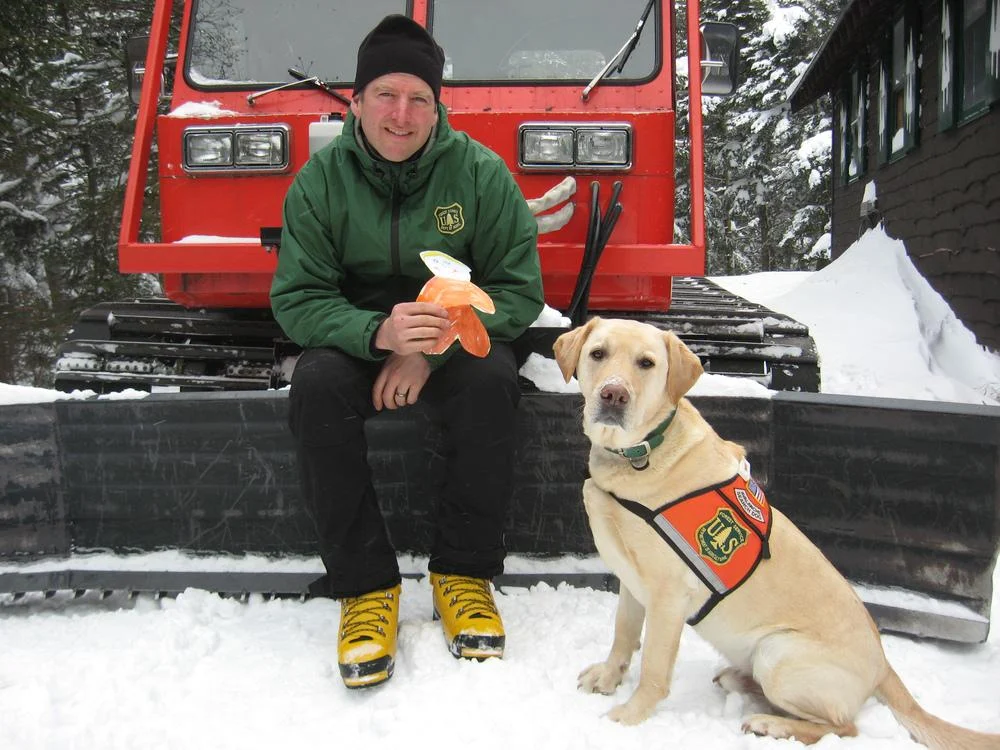
The alpine community is mourning the loss of Cutler, a highly respected avalanche rescue dog who dedicated 11 years of his life to ensuring the safety of visitors to Mount Washington and the surrounding White Mountain National Forest. Cutler, a key member of the Mount Washington Avalanche Center (MWAC) team, passed away recently, leaving behind a legacy of unwavering dedication and invaluable service. His tenure with MWAC, which spanned nearly 80% of his life, saw him actively participate in countless operations and play a crucial role in avalanche education and public outreach.
A Life Dedicated to Safety
Cutler’s commitment to public safety was extraordinary. For over a decade, he was a constant presence on the formidable slopes of Mount Washington, a peak notorious for its extreme weather and challenging avalanche conditions. Working alongside the skilled professionals of the Mount Washington Avalanche Center, Cutler’s keen senses and tireless energy were instrumental in search and rescue efforts. His ability to detect buried victims under snow, even in the most difficult circumstances, undoubtedly saved lives and provided immense comfort to those in distress.
The Mount Washington Avalanche Center, a joint venture between the U.S. Forest Service and the Mount Washington Observatory, relies heavily on specialized equipment and highly trained personnel to monitor snowpack stability and forecast avalanche danger. The inclusion of an avalanche dog like Cutler represents a critical enhancement to their operational capabilities. These canine partners are trained from a young age to identify the scent of humans buried beneath snow, a skill that can significantly reduce search times in critical rescue scenarios. Cutler’s success in this demanding role underscores the importance of these animals in modern avalanche safety protocols.
A Decade of Service: A Chronology of Dedication
Cutler’s service began approximately 11 years prior to his recent passing. During this extensive period, he became an integral part of the MWAC team, forging a deep bond with his handler and the entire organization. His operational timeline was marked by consistent participation in training exercises, avalanche mitigation efforts, and actual rescue missions.
The harsh winter months in New Hampshire are when avalanche risks are at their peak. Cutler would have been actively deployed during these periods, often facing treacherous weather conditions that would deter most humans. His dedication meant he was on call and ready to respond whenever the need arose, from early morning patrols to late-night emergency calls. His presence on Mount Washington was not confined to the immediate aftermath of an avalanche; he was also a vital part of proactive safety measures, including assisting Snow Rangers in assessing snowpack stability and identifying hazardous areas.
His public relations work, as noted by MWAC, was equally significant. Avalanche dogs are not only invaluable rescue tools but also powerful ambassadors for avalanche safety. Cutler’s amiable nature and his ability to interact with the public allowed the Mount Washington Snow Rangers to connect with a wider audience. Through demonstrations and educational events, Cutler helped to demystify the science of avalanches and impart crucial safety knowledge to hikers, skiers, and snowboarders venturing into the backcountry. This aspect of his work contributed to a more informed and safety-conscious community.
The Impact of an Avalanche Dog: Supporting Data and Context
Mount Washington is renowned for its extreme weather, often referred to as the "Home of the World’s Worst Weather." Its summit experiences hurricane-force winds, heavy snowfall, and rapidly changing conditions, making it a high-risk environment for winter recreation. The potential for avalanche activity is significant, particularly in areas like Tuckerman Ravine and Huntington Ravine, which are popular destinations for backcountry enthusiasts.
According to data from the Mount Washington Avalanche Center, the number of avalanche incidents reported in the region can vary significantly year to year, influenced by snowfall patterns, temperature fluctuations, and human activity. However, even a single avalanche can have devastating consequences. The ability to locate and extricate a buried victim quickly is paramount. Studies in avalanche rescue have consistently shown that survival rates decrease dramatically with every minute a person remains buried. This is where the specialized skills of an avalanche dog like Cutler become indispensable.
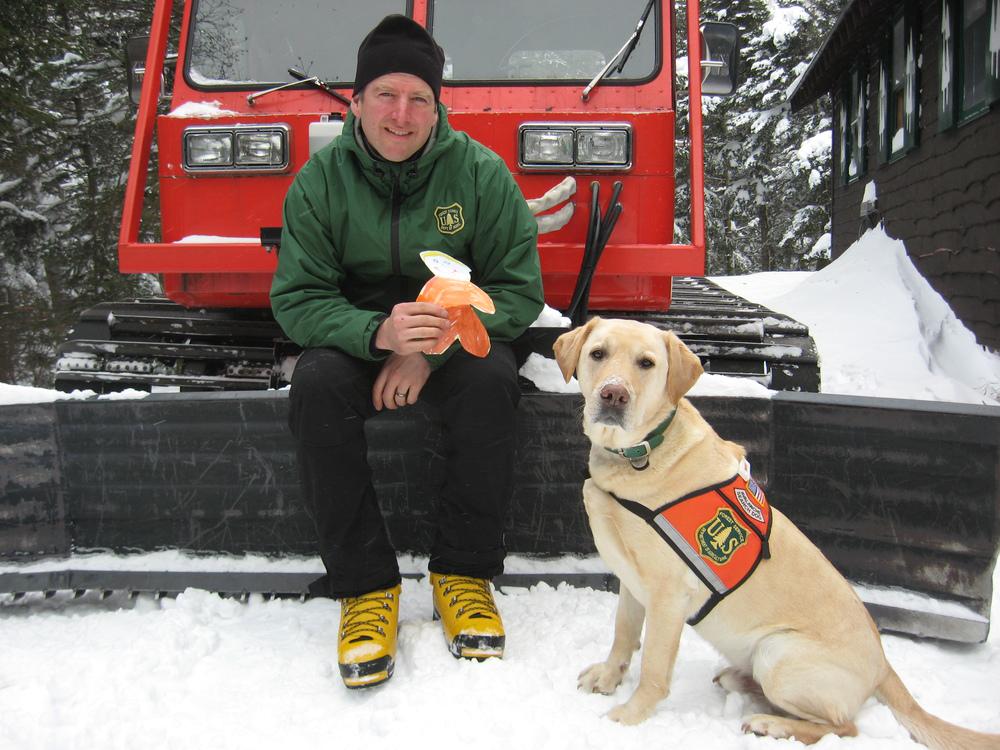
The effectiveness of avalanche dogs is well-documented. In controlled studies and real-world scenarios, these canines can locate buried subjects far more rapidly than human search teams alone. Their ability to cover large areas and pinpoint specific scents under snow provides a critical advantage in time-sensitive rescue operations. Cutler’s 11 years of service represent a substantial contribution to the safety infrastructure of Mount Washington, a period during which he likely participated in numerous training exercises and potentially played a role in averting tragedies.
A Fond Farewell: Tributes and Reflections
The passing of Cutler has been met with heartfelt tributes from those who knew him and benefited from his service. Chris Joosen, the Director of the Mount Washington Avalanche Center, has shared a poignant blog post and photo album dedicated to Cutler, offering a personal and comprehensive look at the dog’s life and contributions. This detailed account serves as a testament to Cutler’s unwavering dedication and the profound impact he had on the MWAC team and the broader community.
In his tribute, Joosen likely highlights Cutler’s personality, his enthusiasm for his work, and the special bond he shared with his handler. Avalanche dogs are not just tools; they are beloved members of the team, often considered family. The emotional toll of losing such a dedicated companion and colleague is significant. Joosen’s extended reflection underscores the depth of appreciation the MWAC team held for Cutler.
The blog post and photo album serve as a vital historical record of Cutler’s career. They likely showcase images of Cutler in action, perhaps during training exercises in Tuckerman Ravine or alongside Joosen on a mission. These visuals, combined with Joosen’s narrative, offer a tangible connection to Cutler’s legacy and allow others to share in the remembrance of his service. The fact that Joosen dedicated significant time and effort to creating this tribute speaks volumes about Cutler’s importance.
Broader Implications for Avalanche Safety and Canine Partnerships
The loss of Cutler is a poignant reminder of the vital role that specialized canine units play in search and rescue operations, particularly in high-risk environments like mountainous regions prone to avalanches. His dedicated service highlights the effectiveness of integrating highly trained animals into emergency response protocols.
The partnership between humans and dogs in avalanche rescue is a sophisticated endeavor, requiring extensive training for both the animal and its handler. This training is rigorous and ongoing, ensuring that the dog maintains its scent detection skills and obedience under stressful conditions. The success of teams like the one at Mount Washington Avalanche Center is a testament to the investment in these programs and the dedication of the individuals involved.
Cutler’s story also emphasizes the importance of public awareness and education regarding avalanche safety. By engaging with the public, avalanche dogs and their handlers can effectively communicate the dangers of the backcountry and promote responsible behavior. This outreach is crucial in preventing incidents before they occur.
The legacy of Cutler will undoubtedly continue to inspire future generations of avalanche dogs and their handlers. His decade of service on Mount Washington stands as a powerful example of courage, dedication, and the unique capabilities that canine partners bring to the critical mission of saving lives. The Mount Washington Avalanche Center, and the entire alpine community, will remember Cutler not just as a rescue dog, but as a true hero who made their mountains a safer place for all. His passing leaves a void, but his contributions will not be forgotten.
