

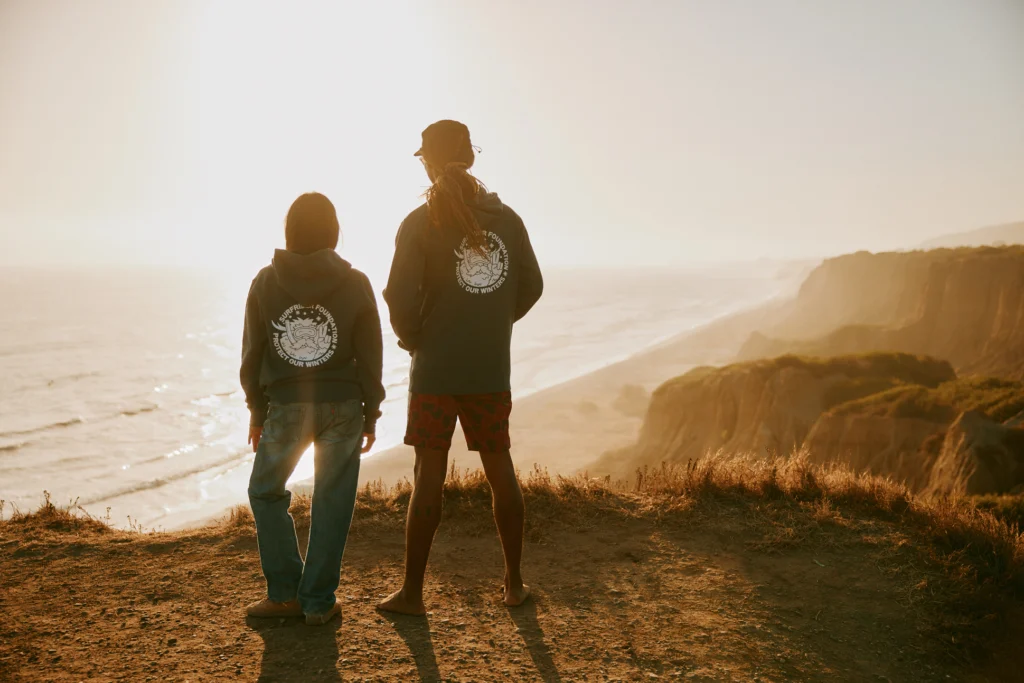
The intersection of high-altitude snowpack and coastal marine ecosystems has long been recognized by ecologists as a singular, continuous cycle, yet in the realm of public advocacy, these landscapes are often treated as distinct silos. To bridge this gap, the climate advocacy organization Protect Our Winters (POW) and the Surfrider Foundation have announced a strategic partnership centered on the "Ridge to Reef" collection. This initiative features the work of California-based artist Dominic McLeod, the founder of Dom Fish Designs, and aims to leverage visual storytelling to mobilize the "Outdoor State"—a demographic of outdoor enthusiasts that contributes significantly to the national economy—against escalating environmental threats, specifically offshore oil and gas drilling.
The collaboration represents a sophisticated approach to environmentalism, moving beyond traditional policy papers to engage the public through cultural resonance and shared lifestyle values. By highlighting the "cross-pollination" between winter sports and surf culture, the organizations seek to create a unified front for conservation that spans from mountain summits to the ocean floor.
The Convergence of Mountain and Maritime Conservation
The "Ridge to Reef" initiative is predicated on the scientific reality that terrestrial and marine environments are inextricably linked. For many outdoor enthusiasts, the transition between seasons is marked by a shift in medium rather than a shift in philosophy; the pursuit of powder in the winter often gives way to the pursuit of swells in the summer. However, these environments currently face shared threats from industrial extraction and climate instability.
A primary driver of this partnership is the opposition to new offshore oil and gas drilling proposals. According to recent environmental assessments, expanded drilling operations pose significant risks to marine biodiversity, coastal economies, and the global climate. The Surfrider Foundation, which has spent decades defending the nation’s coastlines, notes that offshore drilling contributes to ocean acidification and the destruction of sensitive habitats. Concurrently, Protect Our Winters highlights how the carbon emissions resulting from such projects accelerate the melting of glaciers and the reduction of seasonal snowpack, directly threatening the winter sports industry.
By uniting these two constituencies, POW and the Surfrider Foundation are addressing a unified "Outdoor State." According to data from the U.S. Bureau of Economic Analysis (BEA), the outdoor recreation economy accounted for approximately $1.1 trillion in gross economic output in 2022, representing 2.2% of the U.S. Gross Domestic Product (GDP). This economic powerhouse provides a formidable platform for advocacy, suggesting that the protection of these landscapes is not merely an aesthetic or moral concern, but a significant economic necessity.
The Philosophy of Cross-Pollination: Dominic McLeod and Dom Fish Designs
Central to the "Ridge to Reef" collection is the artistic vision of Dominic McLeod. Raised in Ojai, California, McLeod’s upbringing provided a unique vantage point where the Topatopa Mountains and the Pacific Ocean are in constant visual and physical dialogue. This geographic proximity shaped a worldview that rejects the compartmentalization of nature.
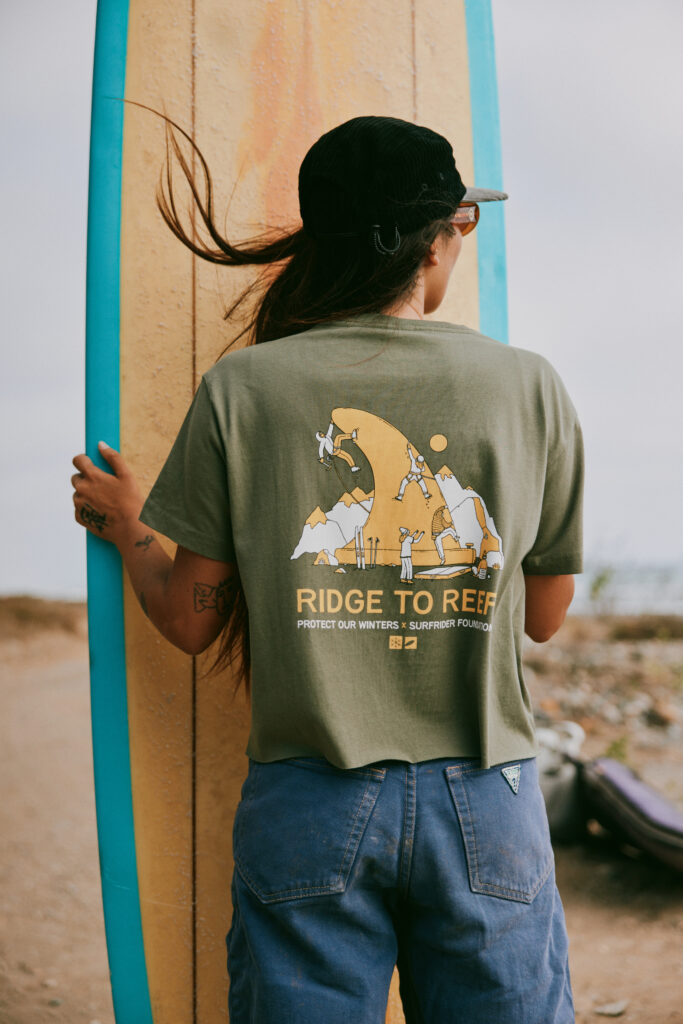
McLeod’s artistic journey began in a traditional classroom setting, where he illustrated characters for peers, eventually evolving into a professional practice focused on capturing the "grit and humor" of outdoor culture. His work for the "Ridge to Reef" collection utilizes what he calls "cross-pollination"—the blending of symbols from disparate sports to highlight their shared essence. One notable design features a surfboard fin integrated with a mountain climbing scene, a visual metaphor for the fluidity of the outdoor experience.
The artist’s philosophy was further solidified following a significant ankle injury that prevented him from surfing for nearly a year. During this hiatus, McLeod turned to bike packing, an experience that reinforced his belief that enthusiasts should not limit themselves to a single discipline. This "cross-pollination" extends to advocacy as well. McLeod posits that environmentalism should be inclusive rather than exclusionary, arguing that individuals do not need to be "perfect" to contribute to the movement. This pragmatic approach—acknowledging that one can drive a gas-powered vehicle to a trailhead while still advocating for systemic change—aims to lower the barrier to entry for climate activism.
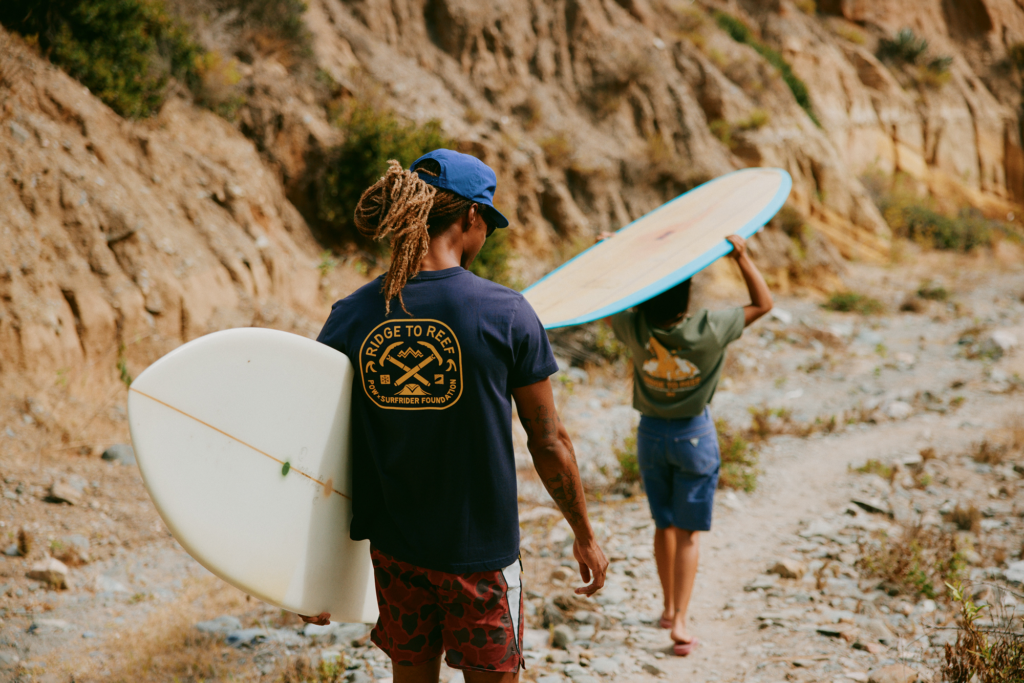
The Ecological Continuity of the Ridge-to-Reef Model
From a scientific perspective, the "Ridge to Reef" concept is more than a marketing slogan; it describes the hydrological and biological connectivity of the planet. Mountains serve as the world’s "water towers," capturing snow that eventually melts and flows through watersheds into the ocean. This flow carries nutrients essential for coastal estuaries and marine life.
However, this cycle is increasingly disrupted. Research indicates that rising global temperatures have led to a "snow-to-rain" transition in many mountain ranges, resulting in earlier runoff and decreased summer streamflows. This not only affects inland ecosystems and winter recreation but also alters the salinity and temperature of coastal waters, impacting everything from kelp forests to coral reefs.
The partnership between POW and Surfrider emphasizes that the defense of the ocean begins at the headwaters. By protecting public lands from extractive industries, advocates are simultaneously protecting the water quality and ecological health of the coast. The "Ridge to Reef" collection serves as a visual reminder of this continuity, urging supporters to view conservation through a holistic lens.
Legislative Challenges: Addressing Offshore Drilling and Resource Extraction
The timing of the "Ridge to Reef" launch coincides with critical legislative and regulatory windows regarding energy extraction on public lands and waters. The 2024-2029 National Outer Continental Shelf Oil and Gas Leasing Program has been a point of contention for environmental groups, who argue that any new leases are incompatible with international climate goals.
The Surfrider Foundation has long been a lead advocate in the "Protect Our Coast" movement, successfully lobbying for moratoria on drilling in various regions. Similarly, Protect Our Winters has focused on mobilizing the snow sports community to influence federal land management policies. The collaboration allows both organizations to pool their resources and reach a broader demographic of voters and donors.
A key component of the campaign is the "action over apathy" ethos. The organizations emphasize that 100% of the proceeds from the "Ridge to Reef" collection will be directed toward advocacy efforts. These funds are used to support legal challenges against drilling permits, fund scientific research on climate impacts, and facilitate grassroots organizing in key districts.
The History of Advocacy: From Cape Cod to Global Movements
The partnership between POW and the Surfrider Foundation is rooted in a shared history of grassroots activism. Jeremy Jones, the professional snowboarder who founded Protect Our Winters in 2007, cites the Surfrider Foundation as a primary inspiration. Growing up as a surfer on Cape Cod, Jones was influenced by the Surfrider decals he saw on the vehicles of older surfers—a symbol of a community that took responsibility for its playground.
Jones became a member of the Surfrider Foundation at age 14, a decision that informed his later work in the winter sports industry. He observed that while the surf community had a well-established advocacy infrastructure, the snow sports community lacked a similar unified voice. This led to the creation of POW, which has since grown into a global organization representing professional athletes, scientists, and industry leaders.
This historical connection underscores the synergy between the two groups. Both organizations were founded by individuals who recognized that the landscapes providing their livelihood and joy were under threat. By coming full circle with the "Ridge to Reef" collection, they are reinforcing the idea that the "protector" mentality is a fundamental aspect of being an outdoor enthusiast.
Economic Influence and the ‘Outdoor State’
One of the most significant shifts in modern environmentalism is the recognition of the outdoor recreation industry as a major economic driver. For decades, the narrative was often framed as "economy versus environment." However, the data provided by the BEA and organizations like the Outdoor Industry Association (OIA) has flipped this script.
The outdoor recreation economy is larger than the pharmaceutical and motor vehicle manufacturing industries in the United States. It supports over 5 million jobs and contributes to the economic stability of rural communities that have transitioned away from extractive industries like mining and logging.
The "Ridge to Reef" campaign taps into this economic identity. By framing conservation as the protection of a trillion-dollar industry, POW and Surfrider are able to engage with policymakers on both sides of the aisle. They argue that protecting public lands and waters is a "pro-business" stance that ensures the long-term viability of the American economy.
Bridging the Gap Between Lifestyle and Activism
The "Ridge to Reef" collection, while featuring artistic apparel and gear, is fundamentally a tool for cultural shift. Dominic McLeod’s designs are intended to be conversation starters, bridging the gap between a casual hobbyist and a dedicated advocate.
"You don’t have to be a mathematician or a climate scientist to contribute," McLeod noted during the project’s launch. "You just have to be willing to use the skills you do have." This sentiment reflects a broader trend in climate communication that moves away from "doom and gloom" scenarios in favor of "stoke-filled" empowerment.
As the impacts of climate change become more pronounced—ranging from shorter ski seasons in the Sierras to increased coastal flooding in the Mid-Atlantic—the need for a unified "Outdoor State" becomes more urgent. The collaboration between Protect Our Winters and the Surfrider Foundation provides a blueprint for how diverse interest groups can align their goals to protect the natural world.
The "Ridge to Reef" collection is currently available through the Protect Our Winters online store, with all proceeds dedicated to defending public lands and waters. As these organizations continue to fight against the expansion of offshore drilling and the degradation of wild places, they remain focused on the belief that the community of outdoor enthusiasts is not just a group of individuals, but a collective force capable of defining the future of the American landscape.
