

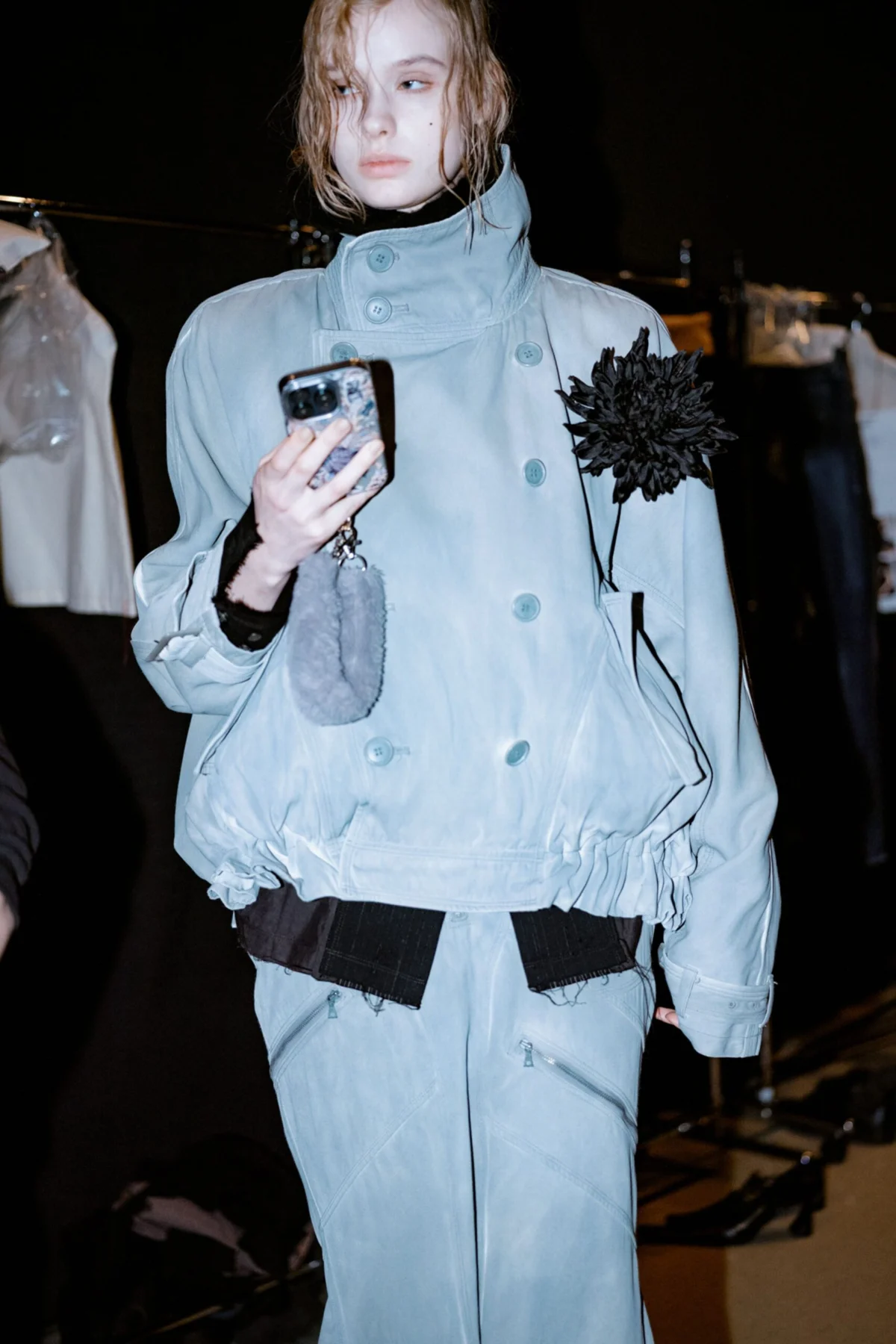
Japan’s fashion industry is experiencing a vibrant global resurgence, fueled by a confluence of factors including increased tourism driven by a favorable yen and a burgeoning international appreciation for Japanese design. This cultural wave has seen Japanese labels achieve significant milestones, notably three LVMH Prize wins in the past decade and the growing prominence of menswear brands like Auralee and Sstein on the prestigious Paris fashion circuit. As more Japanese designers gain international recognition, this article delves into the aspirations and challenges faced by emerging talents seeking to establish a global footprint from Japan. Through insights from five distinct designers, we explore the nuanced strategies and hurdles involved in building an international fashion business today.
The Rise of Japanese Fashion on the Global Stage
The current surge in Japan’s fashion influence is multifaceted. A weak yen has made the country an attractive destination for international travelers, many of whom are drawn by Japan’s rich cultural tapestry, including its distinctive fashion scene. This influx of visitors not only boosts the economy but also provides a tangible connection for global consumers to Japanese aesthetics and craftsmanship.

Simultaneously, a sustained interest in Japanese culture, from anime and manga to traditional arts and contemporary design, has translated into a deeper appreciation for its fashion. This has created fertile ground for Japanese designers to showcase their unique perspectives and innovative approaches to garment creation. The LVMH Prize, a highly coveted award recognizing emerging fashion talent, has twice honored Japanese designers in recent years (double-checking the source indicates three winners), underscoring the country’s prowess. Brands like Auralee and Sstein, which have successfully navigated the competitive Paris menswear calendar, exemplify the growing export potential of Japanese fashion. Their presence on the international stage signals a broader trend, with many more Japanese names poised to make their mark.
However, for the new generation of Japanese designers, translating this global enthusiasm into sustainable international business presents a complex set of challenges. The journey from Tokyo ateliers to global retail spaces involves navigating cultural differences, logistical complexities, and the ever-evolving demands of the international fashion market. This article gathers perspectives from five designers who are at the forefront of this movement, offering a candid look at what it takes to succeed.
Viviano: A Global Vision Rooted in Tokyo
Viviano Sue, the designer behind the eponymous brand Viviano, embodies a cosmopolitan approach to fashion, a perspective shaped by his upbringing between the US and China before he relocated to Tokyo to attend the esteemed Bunka Fashion College. Founded in 2014, Viviano’s brand has become synonymous with bold womenswear and, since 2024, a burgeoning menswear line. His designs, characterized by dramatic silhouettes and sophisticated tailoring, have garnered attention from international celebrities such as Lady Gaga and Bad Bunny, with a strategic focus on Hollywood endorsements.

"Starting my own brand in Japan as a foreign designer definitely wasn’t the easiest route," Sue admits. "I’d never worked for another fashion house before either, so I didn’t come with an established name or background that people immediately recognized. Japan is also a society where fitting in can be quite difficult, so being a foreign designer running an independent label naturally made me a bit of an outsider. Still, I approach things from a slightly different perspective, and I’ve always had a very international circle around me. So as the brand has become more international, that has definitely helped."
Sue’s strategic pivot towards celebrity dressing proved instrumental in elevating Viviano’s global profile. "Before taking our showroom to Paris, we felt we needed to build more international awareness, so we started working with a PR agency in LA. Initially, we focused quite heavily on magazines and traditional fashion media, but the results were quite limited, so we decided to shift more of our attention toward celebrity dressing. And that really changed things for us. What I learned is that making good clothes is only one part of it. You also need the right people who understand the clothes and know how to communicate them. And there is so much timing involved. The right piece, the right person, and the right moment all have to somehow meet. When they do, it can be incredibly powerful."
The impact of this strategy has been significant. "Our sales are roughly 40% menswear and 60% womenswear, and I think the gap will continue to shrink. There is masculinity and strength in the menswear collection, but also softness and elements that might traditionally be considered feminine; I’m interested in the tension between those things rather than choosing one side."

Viviano’s forward-looking plans include a debut showroom in Paris next January, coinciding with Men’s Fashion Week, where the menswear collection will be presented alongside select pieces from the pre-womenswear collection. This move signifies a commitment to deepening international engagement. "We will continue our work around A-list dressing and custom projects while beginning to build a stronger international wholesale network. Ideally, those things support each other: people discover Viviano through a great fashion moment, and then there is actually somewhere for them to experience or buy the clothes."
Pillings: The Art of Sustainable Knitwear
Ryota Murakami, the visionary behind Pillings, has carved a niche in the global market with his distinctive knitwear. Originally launching his brand in 2014, Murakami rebranded and relaunched as Pillings in 2020, focusing on off-kilter, handcrafted pieces that have resonated with discerning retailers like Dover Street Market and Andreas Murkudis. His brand was acquired by Little League, a subsidiary of The Sazaby League, in 2024, a move that has provided a significant boost to its business development.
"When I was working independently, I was responsible for sales and business development as well as design," Murakami explains. "Since joining Little League, however, we established sales partnerships both in Japan and overseas, so our number of business partners has gradually increased with sales steadily growing. The way we approach the brand’s creative direction and manufacturing has not changed significantly; having a clear business strategy means I can focus more on the creative side."

A cornerstone of Pillings’ philosophy is sustainability and mindful production. "When it comes to hand-knits, there’s a limit to how many pieces we can produce in a single season. Even if demand increases, we do not want to produce and sell large quantities of these special items simply to meet that demand. Rather than forcing an increase in production, it’s important to think about how we can continue this work sustainably, in a way that does not place an unreasonable burden on the people who make the knitwear."
Murakami highlights the strengths of the Japanese market while acknowledging its geographical challenges. "One of the main advantages for a brand here is that Japan has many excellent stores. There is a deep understanding of fashion, and each store selects brands based on its own unique perspective. Even when I talk with designers of my generation overseas, I get the impression that many of them are interested in the Japanese market. When it comes to expanding our business overseas, I think the physical distance from Europe and the US is one of the disadvantages. Although we can travel for trade shows, not being able to communicate with local buyers and other industry contacts on a daily basis can sometimes be a challenge."
The brand’s strategic focus is on internal growth and team development. "Our goal at the moment is strengthening the team. Rather than expanding the organization by hiring more people, I want to make each team member’s role clearer and create an environment where individual strengths and judgment can be fully utilized. As the brand continues to grow, my goal is to build a structure that allows us to do so as a team, rather than having everything revolve around me as an individual."

Khoki: The Collective Spirit of Innovation
Khoki, a menswear brand founded in 2019, operates as a collective of seven members, each bringing a wealth of technical expertise and experience from prominent Japanese fashion houses. Spearheaded by designer Koki Abe, Khoki is celebrated for its intricate handicrafts, including quilting and embroidery, bold patterns, and a distinctive "fleamarket" sensibility. The brand’s innovative approach earned it a shortlist for the LVMH Prize in 2024 and has cultivated a devoted following within the global menswear community.
"I think Japan is an environment where independent brands like ours can relatively easily establish themselves as viable businesses," Abe observes. "Younger generations are highly passionate about fashion and are willing to invest in pieces without being overly focused on price."
However, Abe also points out the potential pitfalls of this domestic strength. "At the same time, I think that can also become a disadvantage. Because it is possible to grow a brand to a certain extent within the domestic market alone, brands can sometimes venture overseas without having a clear vision of who they are or why they want to expand internationally. There is also the language barrier, and overseas you need to rethink the way you communicate with people altogether. Even looking at Japanese brands that have tried entering the Paris trade show circuit, quite a few often give up after just two or three seasons."

Khoki actively fosters a sense of "fun consumption," encouraging engagement beyond mere transactions. "We’ve traveled to different cities across Japan, working with local shop owners to create exclusive products and holding workshops where we make pouches with the customers." This community-centric approach extends to their creative endeavors. "We’re presenting our first runway show on September 4, 2027, as part of Rakuten’s byR project during Tokyo Fashion Week, so we’re currently focused on getting everything ready for that." The brand is also exploring the creation of a physical brand space. Regarding wholesale, Khoki prioritizes enduring relationships over sheer volume. "Building strong, long-term relationships is more important than simply increasing the number of stockists. We’d also like to continue putting on runway shows, even if they’re not on a regular schedule. This is partly something we want to do for ourselves as a team. Most of us entered this industry because we dreamed of being part of the brands that put on runway shows."
Ancellm: Mastering Craftsmanship in Okayama
Based in Okayama, a region renowned for its denim heritage and artisanal production, Ancellm, founded in 2020 by Kazuya Yamachika, leverages its proximity to top-tier factories to drive an experimental approach to garment creation. The brand’s expertise in fabric manipulation—including fading, texturing, dyeing, and washing—combined with accessible pricing, has fueled its rapid global expansion. Ancellm currently boasts 90 stockists worldwide and recently opened its inaugural flagship store in Tokyo’s Jingumae district.
"Being based in Okayama is essential to Ancellm," Yamachika states. "Okayama, especially areas such as Kojima, has a deep history of denim, washing, dyeing, and garment production. For us, being close to factories is not only about production efficiency; it allows us to experiment directly with craftspeople, make small adjustments, test new processes, and respond to unexpected results. Sometimes, the most interesting expressions come from irregularities or small accidents during processing. Because we are close to the production site, we can react to those moments and turn them into part of the design."

The opening of the Tokyo flagship store has been a significant milestone for Ancellm. "We currently welcome around a thousand visitors per month, and are aiming for annual sales of around JPY 150 million ($945,000)," Yamachika reports. "What has been encouraging is that customers are visiting not only from Japan and Asia, but also from Europe and the US. We are also planning retail collaborations with a leading department store, while researching possibilities for future stores both in Japan and internationally."
Yamachika acknowledges the dual nature of Japan’s fashion landscape. "Japan still has many factories and craftspeople with highly specialized skills, which allows us to create products with a level of detail and sensitivity that is difficult to replace. There is also strong international interest in Japanese brands right now, especially those that have a clear identity and a close relationship with materials, craft, and production. At the same time, production costs are rising, many factories are facing aging workforces, and the domestic market is not expanding easily. Japan gives us a very strong creative and production base, but building a global business requires patience, precision, and strong partnerships."
The brand’s long-term vision includes a presence at Paris Fashion Week, but not at the expense of its core values. "We are working every day with the ambition of one day presenting at Paris Fashion Week. We do not want to grow too quickly if that means losing the depth of the product or the strength of the brand’s expression. Our goal is to build a sustainable global presence through strong retail partners, our own stores, and deeper direct relationships with customers around the world."

Mukcyen: A Neo-Gothic Vision with Global Reach
Yuka Kimura launched Mukcyen in 2023 under the umbrella of Sohki Corporation, a move that provided her with the backing of a company that also manages the contemporary Tokyo menswear brand Masu. Kimura, a recipient of the JFW Next Brand Award and the Tokyo Fashion Award, brings a unique blend of experience from her tenure at Yohji Yamamoto and a successful career as a fashion influencer. Mukcyen, pronounced "muh-shan," has rapidly garnered attention for its neo-gothic aesthetic and figure-hugging silhouettes.
"Having a personal audience on social media has been incredibly valuable," Kimura shares. "It gives me a direct sense of how different forms of expression resonate across countries and cultures, which has also helped me understand the brand’s potential beyond Japan. At the same time, there are challenges when the distinction between me as an individual and Mukcyen as a brand becomes too blurred. Interest in me personally does not necessarily translate into a deeper understanding of the clothes or purchasing them."
Kimura emphasizes the significant advantages of manufacturing in Japan. "One of the greatest advantages of being in Japan is access to high-quality materials, sewing, and manufacturing techniques, which allows us to pursue an extremely high level of detail in our product development. At the same time, the domestic market has its limitations, and for a small brand, securing sufficient capital, talent, and an international sales network is not easy."

While wholesale currently forms the bulk of Mukcyen’s business, Kimura is actively developing the direct-to-consumer channel. "At the brand’s current scale, however, it’s particularly important for customers to encounter the clothing physically through our retail partners, to touch the materials and experience the silhouettes and styling firsthand, so wholesale will remain a central part."
Kimura’s international expansion strategy prioritizes quality over quantity. "It is important for us to work with retailers who understand the philosophy behind the brand and can communicate it thoughtfully to their customers. Internationally, we want to create more opportunities to connect with influential retailers in individual markets, as well as select stores whose aesthetic sensibilities align naturally with ours. Our priority is to build meaningful, long-term relationships rather than simply expanding distribution."
The collective insights from these five designers paint a compelling picture of the current landscape for emerging Japanese fashion talent. While a global spotlight and increasing consumer interest present unprecedented opportunities, navigating the complexities of international markets, maintaining creative integrity, and building sustainable businesses require strategic foresight, adaptability, and a deep understanding of both domestic strengths and global demands. As Japan’s fashion industry continues its ascent, these designers are paving the way for a new era of global influence, one meticulously crafted garment at a time.
