

While modern media frequently portrays climate change as a field defined by uncertainty and emerging theories, the fundamental physics of the greenhouse effect has been established within the scientific community for over a century and a half. The trajectory of climate science reveals a striking paradox: as the empirical evidence of human-caused warming grew more definitive, public perception in the United States became increasingly fragmented. This divergence was not an accidental byproduct of scientific complexity, but rather the result of a coordinated effort by industrial interests and political actors to systematically erode public confidence in atmospheric research.
The scientific foundation for understanding Earth’s climate began in the mid-19th century. In 1856, American scientist Eunice Foote conducted experiments using glass cylinders filled with various gases and exposed them to sunlight. Her findings, though overlooked for decades, were revolutionary; she demonstrated that carbon dioxide (CO2) trapped heat more effectively than other gases and theorized that an atmosphere with higher CO2 levels would result in a significantly warmer planet. Shortly thereafter, Irish physicist John Tyndall identified the specific infrared-absorbing properties of CO2 and water vapor, providing the mechanical explanation for the greenhouse effect. By the late 1890s, Swedish chemist Svante Arrhenius calculated that doubling the concentration of CO2 in the atmosphere could raise global temperatures by several degrees Celsius—a projection that remains remarkably close to modern climate model estimates.
The Quantification of Atmospheric Change
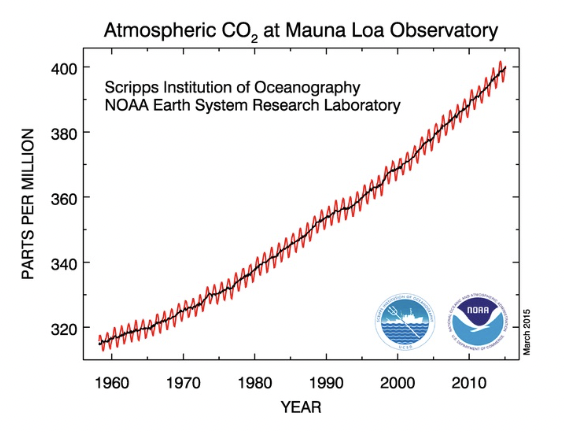
Following World War II, advancements in technology allowed scientists to transition from theoretical calculations to precise measurements. In the late 1950s, Charles Keeling of the Scripps Institution of Oceanography began a systematic monitoring program at the Mauna Loa Observatory in Hawaii. His work produced the Keeling Curve, a graph representing the continuous rise of atmospheric CO2. Keeling’s data provided the first definitive evidence that human industrial activity was tangibly altering the chemical composition of the global atmosphere.

As Keeling tracked the rising levels of carbon, other researchers looked backward in time to establish a baseline for natural fluctuations. By drilling deep into the ice sheets of Greenland and Antarctica, glaciologists extracted ice cores that act as a frozen archive of Earth’s history. These cores contain tiny bubbles of ancient air, allowing scientists to measure CO2 levels dating back 800,000 years. The data revealed that for nearly a million years, CO2 concentrations fluctuated between 170 and 300 parts per million (ppm). However, since the Industrial Revolution, those levels have surged, recently surpassing 420 ppm. This vertical spike in the data confirmed that the current atmospheric state is not part of a natural cycle, but an unprecedented anomaly driven by the combustion of fossil fuels.
By the 1970s, the scientific consensus had solidified. NASA scientist James Hansen and his colleagues developed general circulation models (GCMs) that could simulate the Earth’s climate system. These models allowed researchers to distinguish between short-term weather variability and long-term climate shifts. In 1981, Hansen published a landmark study in the journal Science, predicting that the world would experience noticeable warming by the 1990s and that the West Antarctic ice sheet could eventually melt, leading to catastrophic sea-level rise.
Industrial Foreknowledge and the Strategy of Denial
The fossil fuel industry was not a passive observer of this scientific progress. Internal documents from the 1970s and 1980s reveal that companies like Exxon, Shell, and Total were at the forefront of climate research. In 1977, James Black, a senior scientist at Exxon, warned the company’s management that there was general scientific agreement that the burning of fossil fuels was influencing the global climate. He estimated that humanity had a window of five to ten years before critical decisions regarding energy strategy would become necessary.
In 1980, John Laurmann, a scientist at Stanford University, addressed a meeting of the American Petroleum Institute (API), stating that if fossil fuel use continued unabated, "globally catastrophic effects" would likely manifest by the mid-21st century. Despite these internal warnings, the industry’s public-facing strategy shifted from research to resistance. Rather than pivoting toward renewable energy, major oil corporations began funding campaigns designed to emphasize scientific uncertainty and protect their market share.
This strategy of doubt found a powerful ally in the Reagan administration. In 1983, the administration commissioned a joint report from physical scientists and economists to address the growing concerns over CO2. While the scientists in the group emphasized the severity of the warming trend, the economists argued that it was impossible to predict the economic landscape fifty years into the future. They concluded that immediate policy changes were "irresponsible" based on what they framed as speculative science. The executive summary of the report, which served as the primary document for policymakers, prioritized the economists’ skepticism over the scientists’ warnings, setting a precedent for political inaction.
1988: The Public Turning Point
The year 1988 served as a watershed moment for climate awareness. James Hansen testified before the U.S. Senate during a record-breaking heatwave, stating with "99 percent confidence" that the warming trend was not a natural fluctuation but was linked to the greenhouse effect. The testimony sparked a media frenzy, with major outlets like The New York Times and Time magazine featuring global warming as a cover story.
The political response was initially bipartisan. During his 1988 presidential campaign, George H.W. Bush pledged to counter the "greenhouse effect with the White House effect," promising decisive federal action. Globally, the United Nations established the Intergovernmental Panel on Climate Change (IPCC) to provide a rigorous, objective source of scientific information.
However, as the momentum for regulation grew, the energy industry intensified its counter-offensive. In 1989, corporations including Exxon, Mobil, and Ford formed the Global Climate Coalition (GCC). The GCC’s primary objective was to stall international climate treaties by funding a small cadre of skeptical scientists. These individuals, often dubbed "merchants of doubt," were frequently not climate scientists themselves, yet they were given equal platform in the media under the guise of "balanced" reporting. This created a false equivalence in the public mind, suggesting a scientific debate existed where there was actually a near-unanimous consensus.

The Paradox of Perception and Pop Culture
The 1990s and early 2000s saw a strange divergence in how climate change was perceived by the American public. In 2000, Gallup polls indicated that 71% of Americans expressed concern about global warming. However, by 2004, that number had plummeted to 51%. This decline occurred even as the physical evidence—melting glaciers, rising sea levels, and intensifying storms—became more visible.
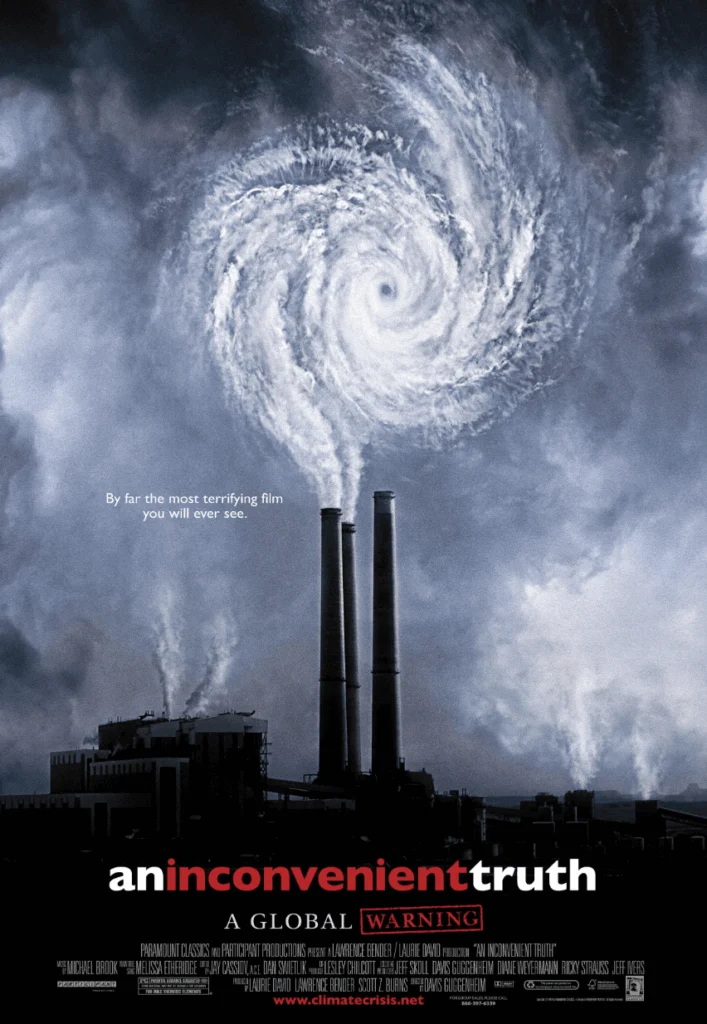
This period also saw climate change enter the mainstream of pop culture. The 2004 disaster film The Day After Tomorrow depicted a sudden, catastrophic ice age triggered by climate change, while Al Gore’s 2006 documentary An Inconvenient Truth became a global phenomenon, grossing over $50 million and winning an Academy Award. While these works raised the profile of the issue, they also inadvertently contributed to the polarization of the topic. Climate change became a cultural "litmus test" rather than a scientific reality, with political identity often dictating an individual’s belief in the data.
By 2011, nearly half of Americans—48%—believed that the threat of global warming was "generally exaggerated," a significant increase from 31% in 1997. The fossil fuel industry’s efforts to frame climate action as an economic threat to the working class proved highly effective, particularly in regions dependent on coal and oil production.
Modern Activism and the Challenge of Continuity
In the last decade, a new generation of activists has sought to break the political stalemate. Organizations like 350.org and the Sunrise Movement have shifted the focus from individual lifestyle changes to systemic political reform. The 2014 People’s Climate March in New York City, which saw 300,000 participants, signaled a resurgence of public pressure. This activism helped pave the way for the Paris Agreement in 2015 and more recent domestic policies like the Inflation Reduction Act.

Despite these strides, the legacy of the "campaign of doubt" continues to hamper progress. The lack of political continuity has resulted in a "pendulum effect," where climate regulations enacted by one administration are dismantled by the next. The Trump administration’s withdrawal from the Paris Agreement and the rollback of EPA emissions standards underscored the fragility of climate policy in a polarized environment.
The historical record suggests that scientific facts alone are insufficient to drive the necessary transitions in global energy infrastructure. The success of the fossil fuel industry in delaying action for forty years highlights the need for a more integrated approach that combines scientific communication with political strategy and economic transition plans.
Analysis of current trends indicates that while 76% of Americans now believe temperatures are rising, climate change still ranks lower on the list of voter priorities than immediate economic concerns. To achieve the targets set by the IPCC and avoid the most "catastrophic effects" warned of in 1980, the influence of energy lobbies on federal policy remains a primary hurdle. The history of climate science is not merely a chronicle of discovery, but a cautionary tale of how easily objective truth can be obscured by concentrated economic power. Future progress will depend not just on more data, but on the ability of the public to maintain focus in the face of sophisticated misinformation and to demand a consistent, long-term commitment to a post-carbon economy.
