

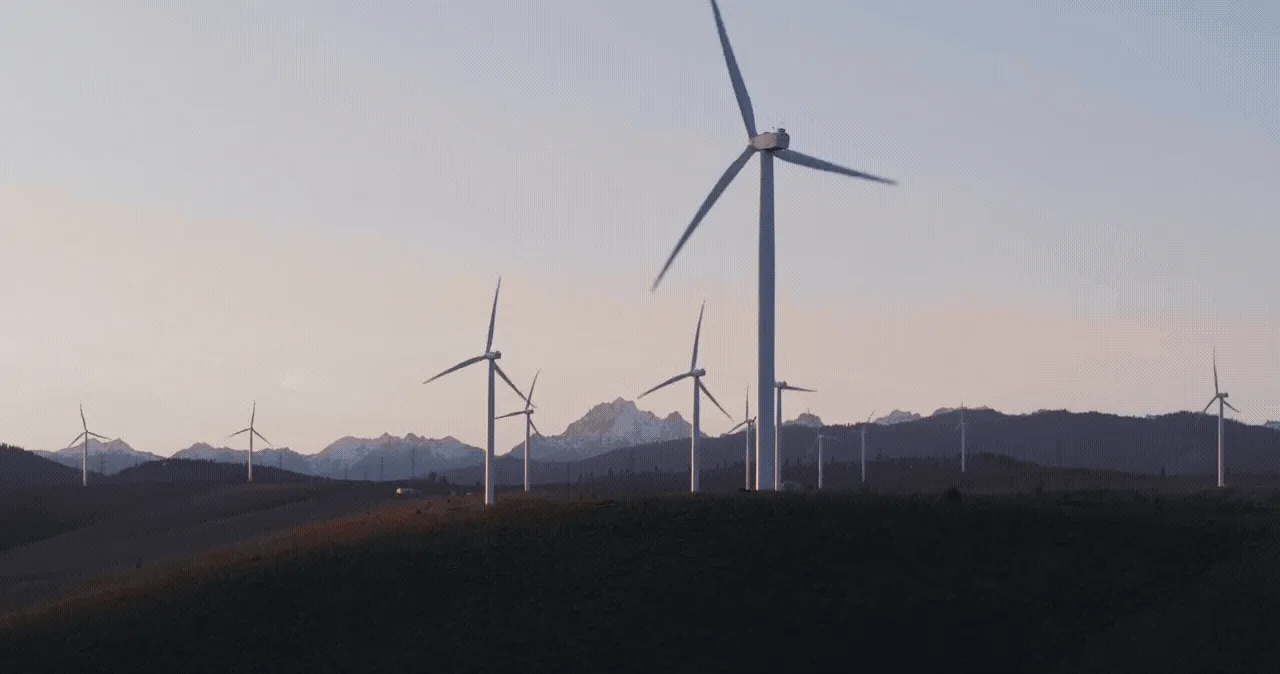
As the global community accelerates the deployment of renewable energy technologies to meet climate targets, a parallel surge in coordinated opposition has emerged, characterized by the systematic spread of misleading narratives and psychological fear campaigns. While the transition from fossil fuels to clean energy represents one of the most significant industrial shifts in human history, it is increasingly being met with a sophisticated barrage of claims designed to incite public skepticism. From assertions that offshore wind farms decimate property values and marine life to claims that solar arrays permanently ruin agricultural land, the discourse surrounding the energy transition is currently a primary theater for both organic misinformation and intentional disinformation.
The distinction between these two phenomena is critical for understanding the current landscape of public opinion. Misinformation typically involves the sharing of false or inaccurate information by individuals who believe it to be true, often driven by a lack of access to scientific data or a misunderstanding of complex engineering concepts. Conversely, disinformation refers to the deliberate seeding of false narratives by bad actors—often funded by entrenched fossil fuel interests—to distract the public, delay legislative progress, and avoid corporate accountability for environmental degradation. This coordinated effort seeks to stall the transition by shifting the focus from systemic climate solutions toward narrow, often exaggerated, local concerns.
A Historical Context of Fossil Fuel Influence
The current wave of energy disinformation is not a modern anomaly but rather the latest iteration of a decades-long strategy employed by the fossil fuel industry. For over half a century, major energy conglomerates have possessed internal research confirming the link between carbon emissions and global temperature rise. Documents unearthed from the 1970s and 1980s reveal that companies like Exxon maintained sophisticated climate modeling that accurately predicted current warming trends.
Despite this internal knowledge, these entities invested heavily in public relations campaigns designed to cast doubt on climate science. This "tobacco industry playbook"—delaying regulation by manufacturing scientific uncertainty—has evolved from denying climate change altogether to more subtle forms of obstruction. Modern campaigns often focus on the perceived "unreliability" of wind and solar, the "dangers" of battery storage, or the "inefficiency" of electric vehicles (EVs). By funding think tanks and strategic social media placements, these interests have successfully created a "red herring" effect, where minor or manageable transition challenges are presented as insurmountable systemic failures.
Chronology of the Anti-Renewable Narrative
The evolution of anti-renewable sentiment can be traced through several distinct phases of the last two decades. In the early 2000s, the primary argument against renewables was economic, focusing on the high cost of production and the lack of subsidies compared to coal and gas. However, as the Levelized Cost of Energy (LCOE) for wind and solar plummeted—becoming cheaper than fossil fuels in most parts of the world by the 2020s—the narrative shifted toward aesthetic and ecological concerns.
Between 2010 and 2020, the focus moved toward "Nimbyism" (Not In My Backyard), where local opposition was galvanized through claims of "Wind Turbine Syndrome" and plummeting property values, despite multiple academic studies finding no consistent negative impact on real estate prices near wind farms. By 2023 and 2024, the narrative had become increasingly politicized, with high-profile political figures and social media influencers amplifying claims that offshore wind development was responsible for whale strandings—a claim that has been repeatedly debunked by the National Oceanic and Atmospheric Administration (NOAA) and other scientific bodies, which point to ship strikes and entanglement in fishing gear as the primary causes of mortality.
Deconstructing Common Myths with Empirical Data
To understand the efficacy of disinformation, one must examine the specific claims that frequently gain traction in public forums. These concerns often touch on legitimate aspects of industrial development but strip them of their comparative context.
The Lifecycle Emissions of Electric Vehicles
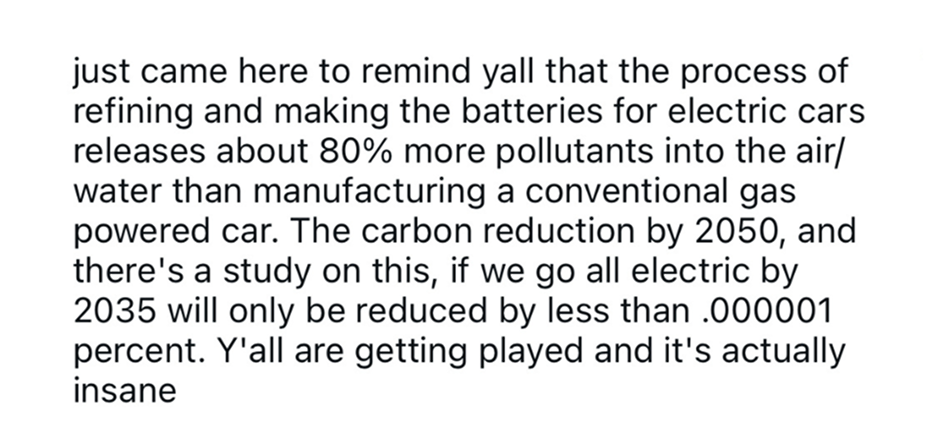
One of the most persistent narratives suggests that the production of electric vehicles, particularly the mining of minerals for batteries, is more harmful to the environment than the operation of internal combustion engine (ICE) vehicles. While mineral extraction does have an environmental footprint, comprehensive lifecycle analyses provide a different perspective.
Researchers at the Massachusetts Institute of Technology (MIT) conducted a study comparing the emissions of different vehicle types. Their findings indicate that, on average, gasoline-powered cars emit more than 350 grams of CO2 per mile driven over their entire lifetime. In contrast, hybrid and plug-in hybrid versions score approximately 260 grams per mile. Most notably, fully battery-electric vehicles create just 200 grams of CO2 per mile. This 43% reduction in emissions accounts for the manufacturing of the battery and the current energy mix of the electrical grid. As the grid becomes greener, the emissions gap between EVs and ICE vehicles will only continue to widen.
Offshore Wind and Marine Ecosystems
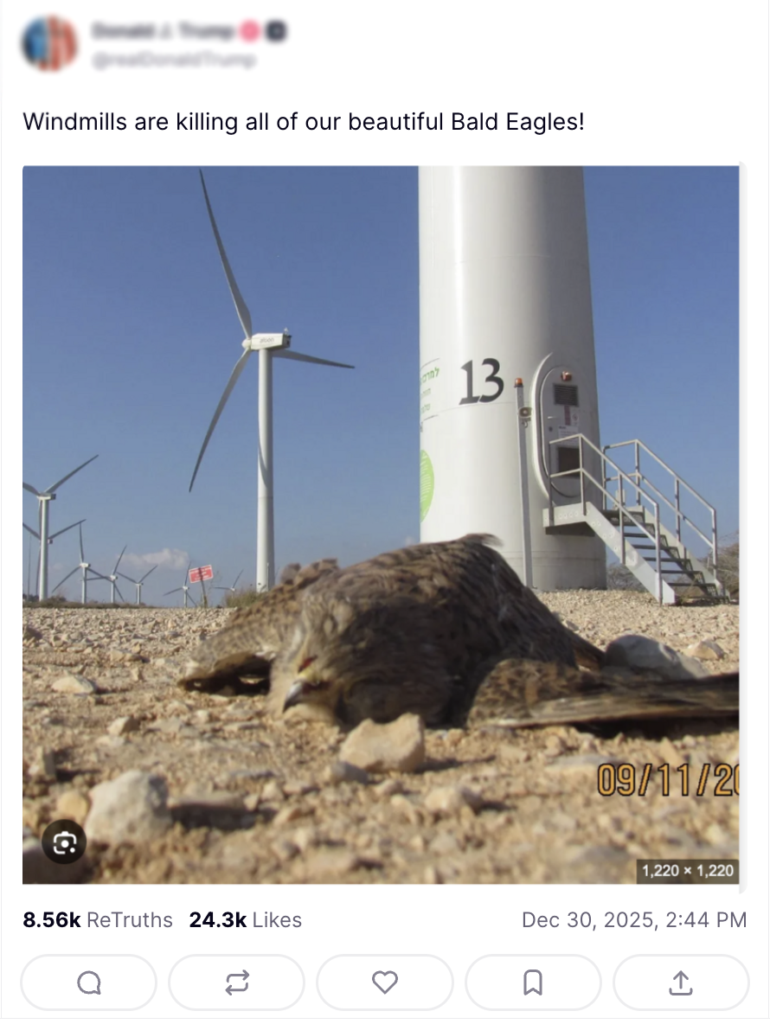
The claim that offshore wind farms are a primary threat to aquatic habitats is another cornerstone of modern energy disinformation. Critics often point to the noise of construction or the physical presence of turbines as destructive to marine life. However, marine biologists emphasize that the greatest threat to ocean ecosystems is climate change itself, which causes ocean acidification and rising water temperatures, leading to mass coral bleaching and shifts in migratory patterns.
While all industrial infrastructure requires careful environmental management, offshore oil and gas operations carry the inherent risk of catastrophic spills, which can poison entire ecosystems for decades. Offshore wind projects, by comparison, undergo rigorous environmental impact assessments. Furthermore, some studies have shown that the underwater structures of wind turbines can act as artificial reefs, providing new habitats for various marine species and actually increasing local biodiversity.
Land Use and Agriculture
The "solar vs. food" debate posits that solar farms are consuming valuable agricultural land, threatening food security. Data from the Department of Energy suggests that meeting the United States’ entire electricity demand through solar would require less than 1% of the country’s total land area. Furthermore, the emerging field of "agrivoltaics"—the dual use of land for both solar power and agriculture—allows crops to grow beneath solar panels, which can reduce water evaporation and protect sensitive plants from excessive heat.
Official Responses and Regulatory Action
Governments and international bodies have begun to recognize the threat that energy disinformation poses to national security and economic stability. The Intergovernmental Panel on Climate Change (IPCC) has noted in its recent reports that "rhetoric and misinformation on climate change and the deliberate undermining of science" have contributed to the slow pace of the energy transition.
In response, the European Union has implemented stricter regulations on "greenwashing," ensuring that companies cannot make vague or unsubstantiated environmental claims. In the United States, the Federal Trade Commission (FTC) is currently reviewing its "Green Guides" to crack down on deceptive environmental marketing. Moreover, scientific organizations are increasingly engaging in "pre-bunking"—the practice of educating the public about the common tropes of disinformation before they encounter them, thereby building cognitive resilience against false narratives.
Broader Impact and the Path Toward Climate Literacy
The proliferation of disinformation does more than just confuse the public; it has tangible impacts on the speed of infrastructure development. When local communities are saturated with false claims, the permitting process for renewable projects can be delayed by years, increasing costs and stalling the retirement of aging, high-emission coal plants.

To combat this, analysts suggest a shift toward "climate literacy." This involves moving beyond the mere acceptance of climate change toward a deeper understanding of energy systems. Recognizing logical fallacies, such as the "straw man" argument (attacking a distorted version of an opponent’s position) or the "false analogy" (comparing the localized impact of a wind farm to the global impact of fossil fuel extraction), is essential for modern civic engagement.
The transition to clean energy is not a claim of perfection, but a pursuit of progress. Every form of energy production requires some level of resource extraction and infrastructure development. However, the comparative data remains undisputed: renewable energy offers a significantly lower impact on the planet’s life-support systems than the continued extraction and combustion of hydrocarbons.
Conclusion: The Role of the Informed Citizen
The path forward requires a multi-faceted approach involving rigorous scientific research, transparent corporate communication, and an informed electorate. As the "Big Oil" disinformation bubble continues to be challenged by empirical evidence, the responsibility falls on individual citizens to utilize discernment when consuming information.
By verifying sources, supporting organizations dedicated to scientific integrity, and participating in the democratic process—particularly at the local level where zoning and energy decisions are made—the public can help ensure that the transition to a sustainable energy future is guided by facts rather than fear. The transition to renewables is not merely an environmental necessity; it is an economic and technological evolution that, when executed responsibly, provides the most viable path toward long-term global stability.
