

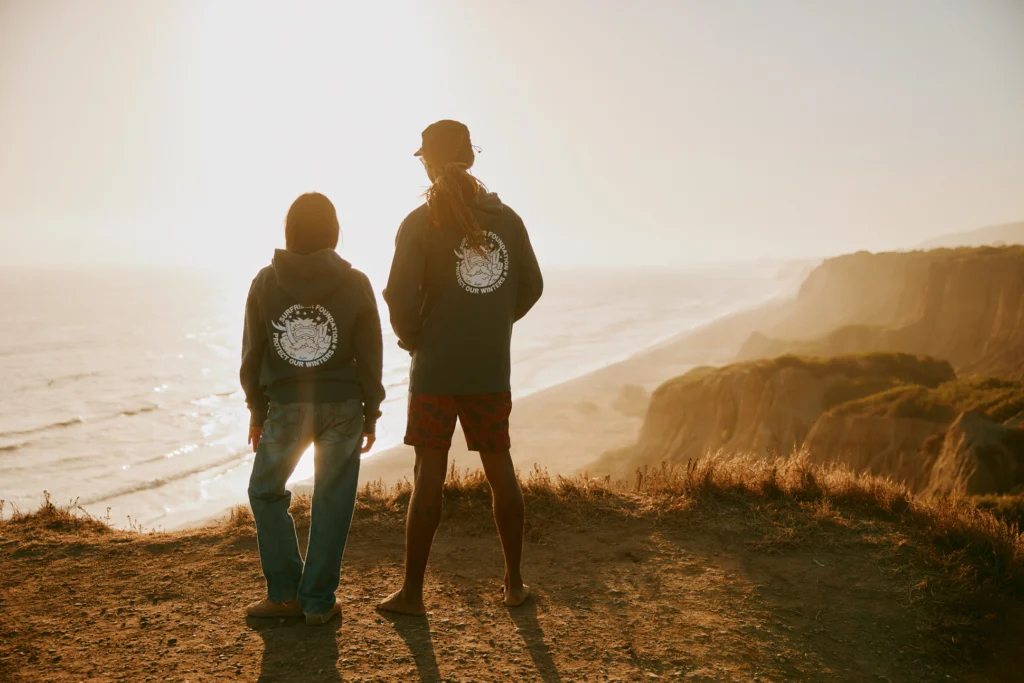
The intersection of outdoor recreation and environmental stewardship has reached a new milestone with the launch of the Ridge to Reef collection, a collaborative initiative between Protect Our Winters (POW), the Surfrider Foundation, and acclaimed artist Dominic McLeod of Dom Fish Designs. This partnership represents a strategic alignment between two of the most influential advocacy groups in the outdoor sector, aiming to mobilize a diverse coalition of surfers, skiers, mountain bikers, and climbers against the escalating threats of offshore oil and gas drilling and the extraction of natural resources from public lands. By utilizing visual storytelling and apparel-based advocacy, the collaboration seeks to bridge the perceived gap between mountain and marine environments, emphasizing that the health of one ecosystem is inextricably linked to the other.
The collection features the work of Dominic McLeod, an Ojai-based artist whose creative process is deeply rooted in the California landscape. McLeod’s work for the Ridge to Reef project serves as a narrative bridge, combining the grit of mountain sports with the fluid rhythm of coastal life. According to project organizers, 100 percent of the proceeds from the collection will be directed toward funding the advocacy efforts of both POW and the Surfrider Foundation. These funds are designated for the defense of public lands and waters, specifically targeting federal policy decisions that prioritize fossil fuel expansion over conservation and recreational access.
The Philosophical Foundation of Cross-Pollination
Dominic McLeod’s contribution to the Ridge to Reef collection is informed by a philosophy he describes as "cross-pollination." Growing up in Ojai, California, McLeod was positioned at a geographical nexus where the Topatopa Mountains meet the Pacific coastline. This proximity fostered a worldview in which the transitions between different outdoor disciplines are fluid rather than rigid. His artistic journey, which began with school-age illustrations, has evolved into a professional practice that captures the nuances of outdoor culture, from the camaraderie found in a surf lineup to the endurance required on a remote mountain trail.
McLeod’s creative process for the collection involved a rigorous methodology designed to ensure that the final designs resonated with both the aesthetic and the mission of the partner organizations. This process typically begins with discovery calls and the curation of mood boards, followed by the digitization of sketches on an iPad. The goal is to maintain a balance between versatility and a core message of conservation.
A significant turning point in McLeod’s perspective occurred following a severe ankle injury that prevented him from surfing for ten months. During this period of rehabilitation, he transitioned to bike packing, an experience that reinforced his belief that outdoor enthusiasts should not silo themselves by sport. This "cross-pollination" is reflected in the artwork of the collection, where elements such as a surfboard fin are integrated with mountain climbing scenes. This visual metaphor serves to challenge the traditional boundaries of outdoor subcultures and encourages a more unified approach to climate advocacy.
Historical Context and the Evolution of the Partnership
The collaboration between POW and the Surfrider Foundation is built upon a shared history of environmental activism. The Surfrider Foundation, established in 1984 by a group of surfers in Malibu, California, has spent four decades advocating for coastal protection, water quality, and beach access. Protect Our Winters was founded in 2007 by professional snowboarder Jeremy Jones, who recognized the immediate threat that climate change posed to the global snowpack and the winter sports industry.

The connection between the two organizations is personal for Jones. As a young surfer growing up on Cape Cod, he was influenced by the Surfrider Foundation stickers he saw on the vehicles of local surfers. By the age of 14, Jones had become a member of the foundation, an experience that shaped his commitment to being a "protector, not a plunderer" of the natural world. This early exposure to coastal advocacy eventually informed his approach to founding POW, which focuses on mobilizing the "Outdoor State"—a massive constituency of outdoor enthusiasts—to influence climate policy at the federal and state levels.
The Ridge to Reef collection represents a formalization of this long-standing ideological connection. By joining forces, the two organizations can leverage a broader demographic of supporters, moving beyond the traditional boundaries of "snow" or "surf" advocacy to address the systemic issues of carbon emissions and habitat destruction that affect all outdoor spaces.
Data and Economic Implications of the Outdoor State
The advocacy efforts supported by the Ridge to Reef collection are backed by significant economic data. According to the U.S. Bureau of Economic Analysis (BEA), the outdoor recreation economy accounted for $1.1 trillion in economic output in 2022, representing 2.2 percent of the U.S. Gross Domestic Product (GDP). This sector supports nearly five million jobs and is growing at a faster rate than the overall U.S. economy.
The "Outdoor State" encompasses approximately 168 million Americans who participate in outdoor activities annually. This demographic represents a potent political and economic force. However, the environments that sustain this economy are under increasing pressure. For example:
- Offshore Drilling: The federal government’s Five-Year Offshore Oil and Gas Leasing Program continues to be a point of contention. Advocacy groups argue that new leases in the Gulf of Mexico and other coastal waters threaten a $130 billion coastal tourism and recreation economy.
- Snowpack Decline: In the American West, the spring snowpack has declined by approximately 20 percent since the mid-20th century, threatening the viability of the multi-billion dollar ski industry and downstream water supplies.
- Ocean Acidification: Increased carbon dioxide absorption by the oceans has led to a 30 percent increase in acidity since the Industrial Revolution, jeopardizing coral reefs and marine biodiversity, which are critical for coastal protection and tourism.
The funds generated by the Ridge to Reef collection are intended to support legal challenges, policy research, and grassroots mobilization to address these specific data-backed threats.
Policy Threats and Official Responses
The current political landscape has seen a surge in measures aimed at expanding energy extraction on public lands. In late 2023 and early 2024, the Department of the Interior faced scrutiny over the 2024-2029 National Outer Continental Shelf Oil and Gas Leasing Program. While the plan included the fewest number of oil and gas lease sales in history, environmental groups, including the Surfrider Foundation, have argued that any new drilling is incompatible with the goal of reaching net-zero emissions.
In a statement regarding the Ridge to Reef initiative, representatives from the Surfrider Foundation emphasized that offshore drilling poses a "constant threat" to marine ecosystems through seismic blasting and the risk of catastrophic oil spills. Similarly, POW has focused its advocacy on the transition to a clean energy economy, arguing that protecting public lands from extraction is essential for maintaining the integrity of the winter season.
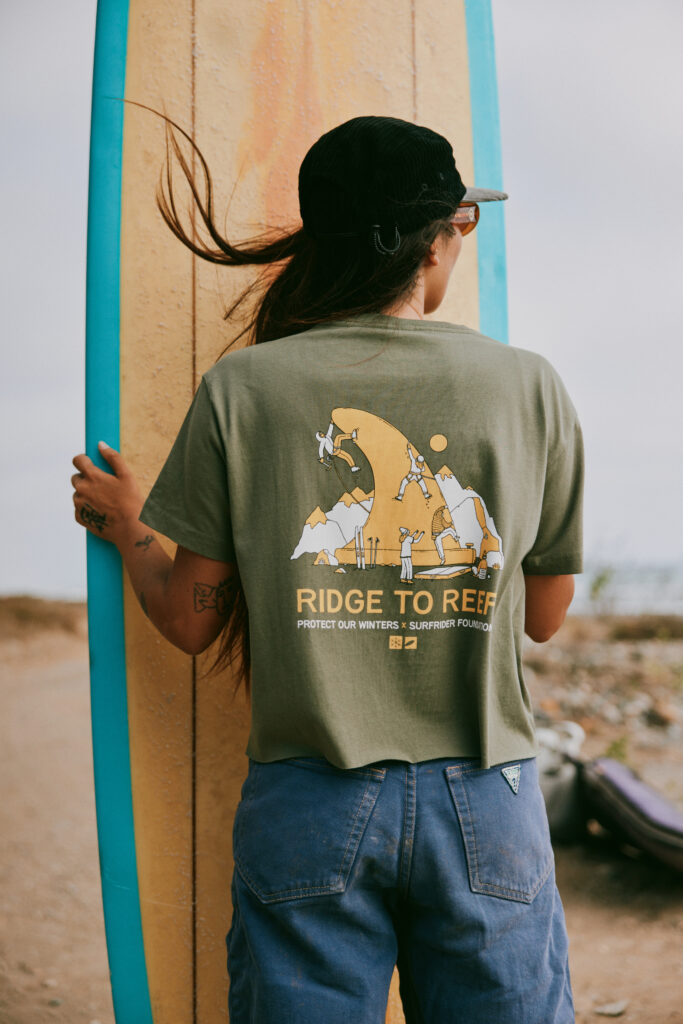
The Ridge to Reef collection serves as a vehicle for public engagement in these policy debates. By simplifying complex environmental issues into accessible visual narratives, the project aims to lower the barrier to entry for climate advocacy. Dominic McLeod noted that "you don’t have to be a mathematician or a climate scientist to contribute," emphasizing that individual skills—whether in art, storytelling, or community organizing—are vital to the broader movement.
Analysis of Visual Storytelling as a Catalyst for Change
The use of art in environmental movements is a well-documented strategy for social change. Visual storytelling has the capacity to bypass partisan rhetoric and appeal to shared values, such as the love for a specific landscape or the joy of outdoor movement. In the case of the Ridge to Reef collection, the artwork functions as a cultural signifier, signaling a commitment to a collective future.
The collection’s emphasis on "action over apathy" addresses a common psychological barrier in climate activism: the "perfection trap." Many individuals feel disqualified from advocacy because they still participate in a carbon-intensive economy—for example, by driving a gas-powered vehicle to a trailhead. McLeod’s philosophy suggests that advocacy is a journey of "cross-pollination" rather than a test of purity. This inclusive approach is designed to expand the base of the environmental movement, making it more resilient and representative of the general population.
Future Implications and Collective Impact
The long-term impact of the Ridge to Reef collaboration will be measured not only in the funds raised but in the cultural shift it promotes within the outdoor community. By framing the "Outdoor State" as a unified collective, POW and the Surfrider Foundation are building a foundation for more effective lobbying and public awareness campaigns.
As the effects of climate change become more pronounced—manifesting as shorter winters, more frequent coastal flooding, and degraded trails—the need for a coordinated response across different recreational sectors will intensify. The Ridge to Reef project provides a blueprint for how disparate organizations can align their missions to address shared threats.
The collaboration also highlights the growing role of the private and creative sectors in environmental policy. As consumers increasingly seek out products that align with their values, initiatives like this collection demonstrate how commerce can be leveraged to support non-profit advocacy. The success of this model could encourage further partnerships between artists, brands, and environmental organizations, creating a sustainable ecosystem for funding the protection of the wild places that define the outdoor experience.
In conclusion, the Ridge to Reef collection is more than a series of apparel designs; it is a strategic intervention in the fight for climate stability. By uniting the mountain and the ocean under a single banner of advocacy, Protect Our Winters, the Surfrider Foundation, and Dominic McLeod are reminding the public that the landscapes we cherish are part of a singular, interconnected system that requires a collective and diverse force to protect.
