


The trajectory of global climate mitigation is increasingly being determined not by technological limitations or economic viability, but by the structural integrity of democratic institutions and the shifting landscape of administrative power. Recent policy reversals and legislative amendments have highlighted a growing tension between environmental goals and the political mechanisms required to sustain them. As clean energy initiatives face unprecedented hurdles, advocacy groups such as Protect Our Winters (POW) are shifting their focus toward the protection of voting rights, arguing that the ability of the electorate to influence policy at the ballot box is the primary prerequisite for long-term climate progress.
The Economic and Legislative Shift in Energy Policy
A significant portion of the current climate debate centers on the "One Big Beautiful Bill Act," a piece of federal legislation that has fundamentally altered the financial landscape for renewable energy developers. Originally designed to provide a stable framework for the transition to a low-carbon economy, recent amendments to the act have introduced a series of "clawback" provisions targeting clean energy tax credits.
The most critical of these changes is the adjustment of the project "runway"—the period during which developers can claim federal incentives. The deadline was moved forward to July 2026, effectively reducing the planning and implementation window for major infrastructure from nine years to a single year. According to industry analysis, this legislative shift has led to the cancellation or indefinite delay of approximately $83 billion in solar, wind, and battery storage projects.
The economic ramifications of these cancellations extend beyond energy production. Estimates suggest that the stalled projects would have supported roughly 470,000 jobs across the manufacturing, construction, and engineering sectors. For many developers, the sudden lack of regulatory certainty has made large-scale capital investments untenable, as the compressed timeline does not account for the complexities of environmental permitting, supply chain logistics, and grid interconnection.
Environmental Deregulation and Land Management
Simultaneous with the shifts in energy policy, the federal government has moved to significantly reduce the scope of protected public lands. On July 13, the administration announced a 90 percent reduction in the size of the Bears Ears National Monument. The monument, which previously encompassed .36 million acres, was scaled down to approximately 121,000 acres.
This administrative action serves two primary functions: it opens the excised land to mining and mineral extraction within a 60-day window, and it effectively dissolves the tribal commission that previously co-managed the site. The removal of tribal oversight has drawn sharp criticism from indigenous leaders and conservationists, who argue that the decision ignores the cultural and ecological significance of the region. From a policy perspective, the reduction demonstrates how executive power can unilaterally reverse decades of conservation efforts without the requirement of a new legislative mandate or a shift in public consensus.
A Chronology of Recent Policy and Voting Rights Actions
To understand the current state of climate and democratic policy, it is necessary to examine the timeline of events that led to the present friction:
- March 2026: The administration issues an executive order directing the Department of Homeland Security (DHS) to compile citizen lists and instructs the United States Postal Service (USPS) to implement new restrictions on the delivery of mail-in ballots.
- April – May 2026: Legal challenges are filed against the USPS and DHS directives. Federal courts strike down key components of the order, citing constitutional violations regarding the right to vote and privacy protections.
- June 2026: The "One Big Beautiful Bill Act" is amended, implementing the July 2026 deadline for clean energy tax credits, leading to immediate market volatility in the renewable sector.
- July 1, 2026: The administration terminates the remaining members of the Election Assistance Commission (EAC). Without a quorum, the agency is unable to certify new voting systems or provide federal oversight for election security.
- July 13, 2026: The executive order reducing Bears Ears National Monument is signed into law, triggering a 60-day countdown for mining claims.
- August 2026: States including South Dakota and Utah implement new "documentary proof of citizenship" laws for voter registration, while Texas and Ohio begin large-scale voter roll purges using federal data sets that critics claim are outdated and flawed.
The Systematic Challenge to Ballot Access
The intersection of climate policy and voting rights becomes most apparent in the systematic changes to election administration. Advocacy groups argue that the same political forces rolling back clean energy initiatives are also working to restrict the electorate that supports such initiatives.
At the federal level, the loss of a quorum at the Election Assistance Commission (EAC) has created a vacuum in election security. The EAC is the primary body responsible for developing Voluntary Voting System Guidelines and certifying voting hardware. Without an active commission, the federal government’s ability to assist states in maintaining secure and fair elections is severely diminished.

At the state level, the implementation of "documentary proof of citizenship" requirements has created new barriers for thousands of eligible voters. While proponents argue these laws ensure election integrity, opponents point out that obtaining the necessary documentation can be difficult and costly for certain demographics, including young voters, low-income citizens, and those living in rural areas. In Texas, the purging of voter rolls has faced litigation after it was revealed that the data used to identify "ineligible" voters included naturalized citizens who were legally registered.
Professional Responses and Advocacy Efforts
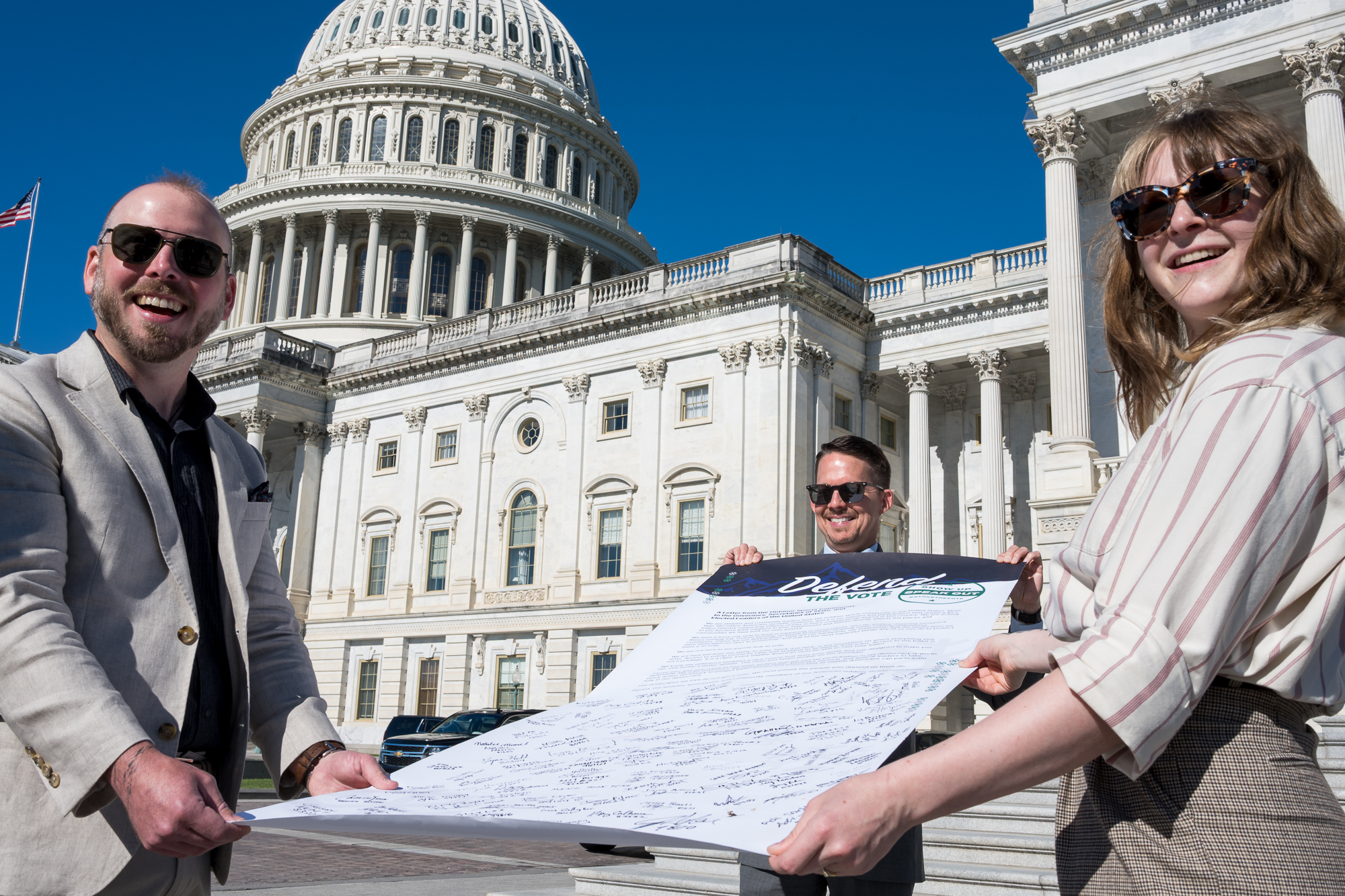
In response to these developments, Protect Our Winters has launched the "Defend the Vote" campaign. This initiative marks a strategic shift for the organization, moving from traditional environmental lobbying to a focus on election protection. The campaign specifically targets regions where POW has a significant presence and where election interference is deemed a high risk, including Montana and New Hampshire.
The organization has begun engaging directly with Secretaries of State to advocate for transparent and accessible voting procedures. This effort has garnered significant support from the private sector, with a record number of outdoor industry brands signing onto a public letter of support. The consensus among these stakeholders is that the "outdoor economy"—which relies on stable climates and accessible public lands—is directly threatened by policies that disenfranchise the voting public.
Legal experts and political analysts have noted that this trend represents a "maturation" of the climate movement. By recognizing that climate policy is a byproduct of political power, environmental groups are increasingly investing in the "infrastructure of democracy" rather than just the "infrastructure of energy."
Analysis of Implications for the Midterm Elections
The upcoming midterm elections are poised to be a referendum on both energy policy and the administration of elections. The data suggests that turnout will be the most significant variable in determining the future of the "One Big Beautiful Bill Act" and the restoration of national monuments.

If current voting restrictions remain in place, the electorate may see a shift in composition that favors the continuation of deregulatory policies. Conversely, if legal challenges to voter purges and registration laws are successful, a broader segment of the population—particularly those concerned with climate change—may be able to influence the legislative agenda.
The broader impact of these developments is the realization that climate action is no longer an isolated policy silo. It is inextricably linked to the health of democratic systems. For the renewable energy sector, the $83 billion in canceled projects represents a lost opportunity for American energy independence and a setback in the global effort to limit warming to 1.5 degrees Celsius. For the indigenous communities near Bears Ears, the reduction of the monument represents a loss of sovereignty and cultural heritage.
Conclusion: The New Frontier of Climate Action
The current landscape demonstrates that the battle for a sustainable climate is being fought on two fronts: in the atmosphere and at the ballot box. The evidence suggests that legislative progress on clean energy and land conservation is fragile and easily reversed by changes in administrative leadership.
As the July 2026 deadline for clean energy credits approaches and the 60-day window for mining claims in the former Bears Ears territory begins, the stakes for the next election cycle have become exceptionally high. The protection of the vote is no longer viewed as a separate civil rights issue by environmental advocates; it is now considered the foundational element of any successful climate strategy. The "Defend the Vote" and "Stoke the Vote" campaigns represent a new era of environmentalism—one that views the ballot as the most powerful tool for ecological preservation. In this context, the integrity of the electoral process is not just a matter of civic duty, but a critical component of planetary survival.
