

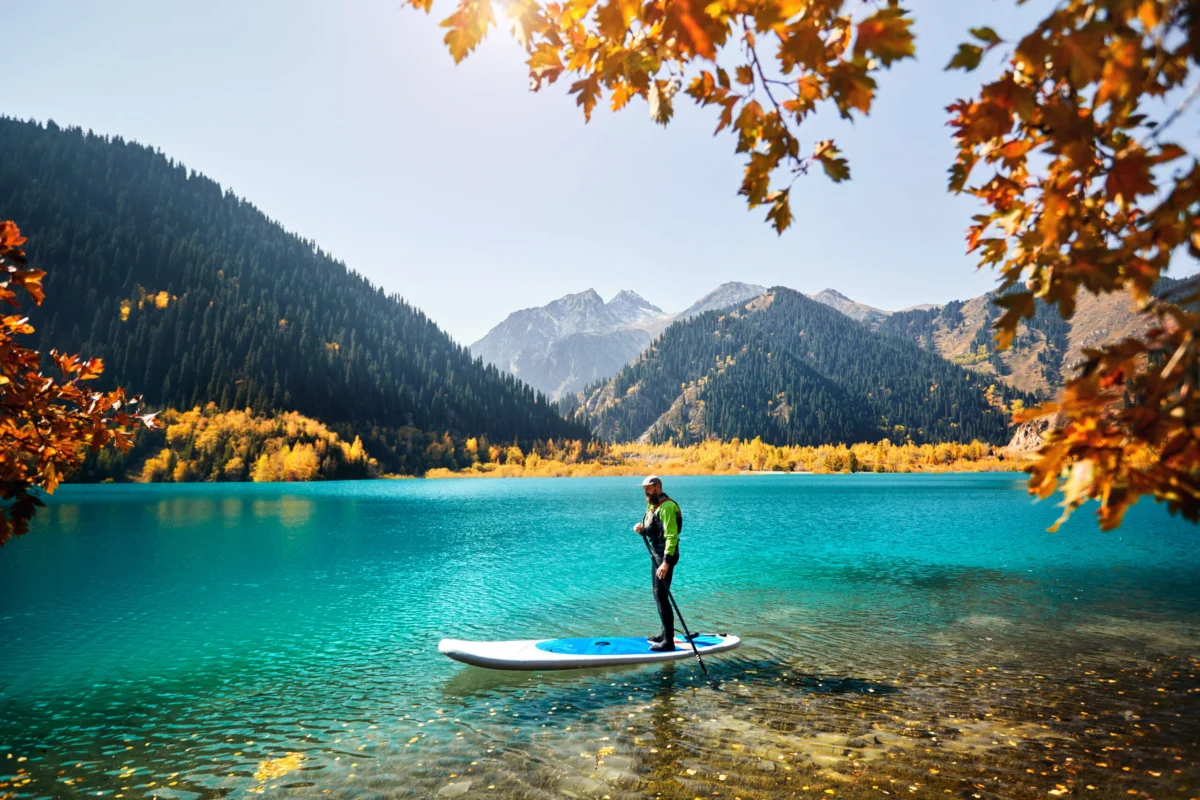
The landscape of American outdoor recreation has undergone a seismic shift over the past half-decade, culminating in a record-breaking 34 million citizens taking to the water in 2025. According to the newly released 2026 Paddlesports Report by the Outdoor Industry Association (OIA), the sector has added more than 10 million participants since 2019, marking one of the most significant periods of sustained growth in the history of human-powered watercraft. While the raw data suggests a booming industry, a closer examination of the metrics reveals a complex narrative of high-volume, low-frequency engagement that presents both a massive opportunity and a strategic challenge for manufacturers, retailers, and conservationists alike.
The 2025 participation figures represent a year-over-year increase of 446,000 individuals. This growth is spearheaded by recreational kayaking, which remains the dominant force in the market with 15.3 million participants. Canoeing follows as a sturdy second with 10.2 million participants. However, the most striking trend in the 2026 report is the nature of this engagement. Approximately 85% of all paddlers are classified as casual participants, defined as those who venture onto the water fewer than eight times per year. This "casualization" of the sport suggests that while the barrier to entry has lowered, the transition from a one-time renter to a dedicated enthusiast remains a bottleneck for the industry.
A Chronology of Growth: From Pandemic Pivot to Permanent Pastime
The current state of paddlesports cannot be understood without looking back at the trajectory established during the turn of the decade. The timeline of this growth reflects broader societal shifts in how Americans view leisure and the outdoors.
2019–2021: The Pandemic Catalyst
Prior to 2020, paddlesports were experiencing steady but modest growth. The onset of the COVID-19 pandemic acted as a massive accelerant. As indoor gyms, theaters, and travel hubs closed, Americans sought "socially distanced" recreation. Kayaking and canoeing offered the perfect solution: inherent physical distance, access to local waterways, and a relatively low learning curve. By the end of 2021, the industry had already seen a surge that analysts initially feared would be a temporary bubble.
2022–2024: Stabilization and Diversification
As the world reopened, the expected "churn"—where new participants abandon their pandemic hobbies—did not fully materialize. Instead, participation stabilized. The industry saw a shift toward "near-home" recreation. Inflatable paddleboards and entry-level rotomolded kayaks became staples in suburban garages. During this period, the industry began to notice that while people were keeping their gear, they were using it less frequently than the "hardcore" enthusiasts of previous generations.
2025: The Peak and the Pivot
The 2025 data, captured in the 2026 report, shows the highest participation rate on record at 34.4 million. However, this year also marked the first significant "softening" of the retail market. While more people were on the water, many were using gear purchased during the 2020–2022 boom or were utilizing the burgeoning rental and livery market.
Segment Analysis: Winners, Losers, and Rapid Risers
The 2026 report provides a granular look at the six primary disciplines within paddlesports: recreational kayaking, canoeing, rafting, stand-up paddling (SUP), sea/touring kayaking, and whitewater kayaking.
Rafting emerged as the surprise leader in terms of growth rate, posting a 4.8% increase in a single year. Industry analysts attribute this to the "experience economy." As travel surged in 2025, more families opted for guided rafting trips as part of their vacations. Rafting serves as a low-stakes entry point for casual users because it typically involves a guide, shared effort, and provided equipment, removing the logistical hurdles of transport and storage.
In contrast, sea and touring kayaking—the more technical and gear-intensive side of the sport—was the only category to see a decline, losing 92,000 participants. Experts suggest this is due to several factors: the aging demographic of traditional sea kayakers, the high cost of high-performance composite boats, and the significant time commitment required to develop the skills necessary for open-water navigation. The decline in this segment underscores the broader trend: Americans are gravitating toward activities that are easy to start and require minimal specialized knowledge.
The Casual Conundrum: Analyzing the 85%
The fact that 85% of paddlers get out fewer than eight times a year is the most significant finding for the future of the outdoor industry. This group is the primary engine of growth, but they are also the most "at-risk" for attrition.
For a casual paddler, the experience is often opportunistic. They may paddle once while on a summer vacation, once at a local park’s rental dock, and perhaps a few times if the weather is exceptionally favorable. This lack of "depth" in participation means these individuals are less likely to invest in high-end technical apparel, advanced safety gear, or expensive carbon-fiber paddles.
From a marketing perspective, the challenge for 2026 and beyond is "conversion." If the industry can move just 5% of those casual paddlers into the "core" category (those paddling 12 or more times a year), the economic impact would be worth hundreds of millions of dollars in recurring revenue for gear maintenance, upgrades, and club memberships.
Retail Realities and the "Softening" Market
Despite the record participation, the 2026 report highlights a "softening" in retail sales. This apparent paradox—more people paddling but fewer people buying—is the result of several economic factors.
First is the "inventory overhang" from the post-pandemic period. In 2021 and 2022, retailers over-ordered to meet unprecedented demand. By 2024 and 2025, the market became saturated. Furthermore, because kayaks and canoes are durable goods that can last decades, the millions of boats sold during the pandemic are still in active use or are flooding the secondary "used" market (sites like Facebook Marketplace and Craigslist), siphoning off sales from new retail units.
Secondly, the rise of the rental economy cannot be ignored. Many of the 34 million participants do not own their own craft. They prefer the convenience of "arrive and paddle" services provided by state parks, municipal lakes, and private liveries. While this is excellent for participation numbers, it shifts the purchasing power from the individual consumer to the fleet buyer, who demands different price points and durability standards.
Safety and Regulation: The Level 50 Revolution
A bright spot for the gear market mentioned in the report is the introduction of Level 50 flotation devices. Recently approved by the U.S. Coast Guard, these devices represent a shift toward more comfortable, less bulky life jackets.
For decades, the standard "Type III" PFD (Personal Flotation Device) was the industry norm. However, casual paddlers often cited discomfort and heat as reasons for not wearing them. The Level 50 devices are designed to be slimmer and more flexible, intended for use in calm waters where rescue is close at hand.
Industry leaders believe that the adoption of Level 50 standards will spark a new wave of consumer purchases as safety-conscious but comfort-seeking paddlers look to upgrade their old, bulky vests. "The harmonization of buoyancy standards across North America is a game-changer," noted one safety equipment manufacturer. "It allows us to innovate on design and aesthetics, making the life jacket something people want to wear, rather than something they have to wear."
Diversity and the Representation Gap
One of the more sobering sections of the 2026 Paddlesports Report addresses the demographic makeup of the paddling community. Despite the massive influx of new participants, the racial and ethnic diversity of paddlers still lags significantly behind the general U.S. population.
The report identifies "outdoor equity" as a primary area of opportunity. While the broader outdoor participant base has become more diverse over the last three years, paddling remains over-indexed toward white, middle-class participants with higher-than-average education levels. The barriers to entry for underrepresented communities often include lack of transportation to waterways, "gear-phobia," and a historical lack of representation in outdoor marketing.
Organizations like Outdoor Afro, Latino Outdoors, and various local "adaptive paddling" programs are cited as essential partners for the industry. The OIA emphasizes that the long-term sustainability of the sport depends on its ability to welcome a younger, more diverse generation of Americans who may not have grown up with a family tradition of canoeing or kayaking.
The Path Forward: Implications for the Industry
As the industry moves into the latter half of the decade, the 2026 report serves as a strategic compass. The data suggests that the "easy growth" of the pandemic era is over. Future success will require a more nuanced approach to consumer engagement.
1. Infrastructure Investment: To keep the 85% of casual paddlers coming back, there must be an investment in "user-friendly" infrastructure. This includes easy-launch docks, clear waterway signage, and clean facilities at launch points.
2. Focus on Education: Since many casual paddlers lack formal training, there is a massive opportunity for retailers and liveries to offer "micro-clinics"—one-hour sessions on basic strokes or safety—that build confidence and a sense of community.
3. Sustainability and Stewardship: With 34 million people on the water, the environmental impact on riverbanks and lake ecosystems is significant. The industry must lead the way in promoting "Leave No Trace" principles to ensure that the very waterways that draw people in remain viable for future use.
4. Product Innovation for the Casual User: Instead of focusing solely on elite, high-performance craft, manufacturers are increasingly looking at "crossover" designs—boats that are stable enough for a beginner but have enough features to keep a developing paddler interested.
In conclusion, the state of American paddlesports is one of unprecedented breadth but varying depth. The 34 million Americans on the water represent a powerful cultural shift toward aquatic recreation. While the dominance of the casual participant presents a challenge for traditional retail models, it also offers a vast reservoir of potential. The task for the next five years will be to ensure that these millions of casual visitors find enough value, safety, and community to return to the water season after season, turning a fleeting summer activity into a lifelong passion.
