

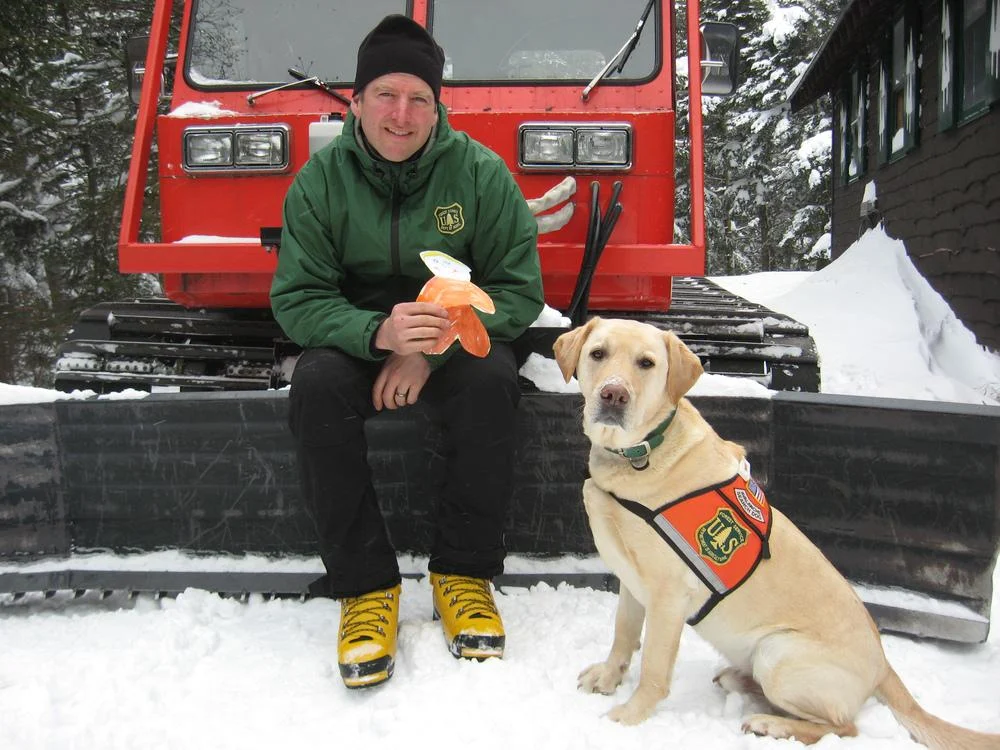
The Mount Washington Avalanche Center and the broader New England outdoor community are mourning the loss of Cutler, a dedicated avalanche search and rescue dog whose eleven-year career redefined safety protocols and public engagement within the White Mountain National Forest. Cutler, a Golden Retriever who served as a constant companion and professional partner to Mount Washington Avalanche Center Director Chris Joosen, passed away recently at the age of 14. Having spent approximately 80% of his life in active service, Cutler’s tenure represents one of the longest and most impactful K9 deployments in the history of the United States Forest Service’s winter operations in the Northeast. His death marks the end of an era for the Snow Rangers who patrol the high-consequence terrain of the Presidential Range, where Cutler was not only a vital tool for search and rescue but also a beloved ambassador for mountain safety.
A Career Defined by Service and Skill
Cutler’s primary theatre of operations was the rugged and often treacherous Alpine Zone of Mount Washington, a peak notorious for possessing some of the most erratic and dangerous weather conditions on the planet. For over a decade, Cutler worked alongside Chris Joosen, navigating the steep, wind-scoured slopes of Tuckerman Ravine and Huntington Ravine. These areas are magnets for backcountry skiers, ice climbers, and mountaineers, drawing thousands of visitors each winter despite the inherent risks of slab avalanches and extreme cold.
The role of an avalanche dog is physically demanding and intellectually rigorous. Unlike standard search dogs, an avalanche K9 must be trained to detect "pool scents" of human beings buried under several feet of compacted snow. In the aftermath of a slide, time is the most critical factor; statistics from the American Avalanche Association suggest that a victim’s chances of survival drop precipitously after 15 to 30 minutes of burial. While a human search team using probes can take hours to clear a debris field, a trained dog like Cutler could scan the same area in a fraction of the time, identifying the strongest scent cues to guide rescuers to the exact location of a burial.
Cutler’s career spanned 11 years of active duty, a remarkable feat considering the harsh environment of the White Mountains. During this time, he was a fixture of the Mount Washington Snow Rangers, participating in countless training exercises, patrols, and emergency responses. His presence provided a layer of security for the rangers themselves, who often work in visibility-limited conditions where mechanical sensors may fail but a dog’s olfactory senses remain sharp.
The Chronology of a K9 Legacy
Cutler’s journey began in the early 2000s when he was selected for his temperament, drive, and resilience. Training for an avalanche dog typically begins in puppyhood, focusing on "runaway" games that build a strong association between finding a human and receiving a high-value reward. By the time Cutler reached maturity, he was fully integrated into the Mount Washington Avalanche Center (MWAC) operations.
Throughout the mid-2000s and into the early 2010s, Cutler became a staple of the Tuckerman Ravine spring skiing season. This period is historically the busiest time on the mountain, as the "bowl" fills with enthusiasts looking to capitalize on the deep snowpack. It is also a time of significant transition in snow stability, where warming temperatures can trigger wet-slab avalanches. Cutler was on the front lines during these high-traffic periods, stationed at the Hermit Lake Shelters or patrolling the floor of the ravine.
By the time of his retirement, Cutler had become the face of the MWAC. Even after his physical capabilities slowed, his role as an educator grew. In his final years of life, he transitioned from the grueling physical demands of deep-snow SAR to a role focused on community outreach, helping the public understand the importance of carrying beacons, probes, and shovels. His passing at age 14 follows a three-year retirement during which he remained a close companion to the Joosen family, a testament to the deep bond formed between a handler and a working dog.
Supporting Data: The Importance of K9 Units in the Northeast
While the Western United States often dominates the conversation regarding avalanche safety due to the scale of the Rocky Mountains and the Sierras, the Presidential Range in New Hampshire presents unique hazards that make dogs like Cutler indispensable.
- Traffic Density: Tuckerman Ravine can see upwards of 2,000 to 3,000 visitors in a single spring weekend. This density increases the statistical likelihood of human-triggered slides.
- Search Efficiency: Research into K9 SAR effectiveness indicates that a single trained dog can search a one-hectare area (approximately 2.5 acres) in roughly 30 minutes. In contrast, a human "probe line" of 20 people would require nearly four hours to cover the same ground with the same level of thoroughness.
- Survival Windows: With 93% of avalanche victims surviving if recovered within 15 minutes, but only 3% surviving after 90 minutes, the speed of a dog like Cutler is often the only viable path to a live recovery in remote terrain.
- Climate Extremes: Mount Washington holds the record for some of the highest wind speeds ever measured by a human-operated station (231 mph). The rapid accumulation of wind-drifted snow makes manual searching dangerous for rescuers; a dog’s ability to move quickly over unstable debris reduces the time rescuers are exposed to secondary slides.
The Dual Role: Rescue and Public Relations
Perhaps the most significant aspect of Cutler’s contribution was his success in public relations. Historically, the relationship between government agencies like the U.S. Forest Service and the backcountry community can be fraught with tension, particularly regarding closures or safety warnings. Cutler acted as a bridge between the Snow Rangers and the public.
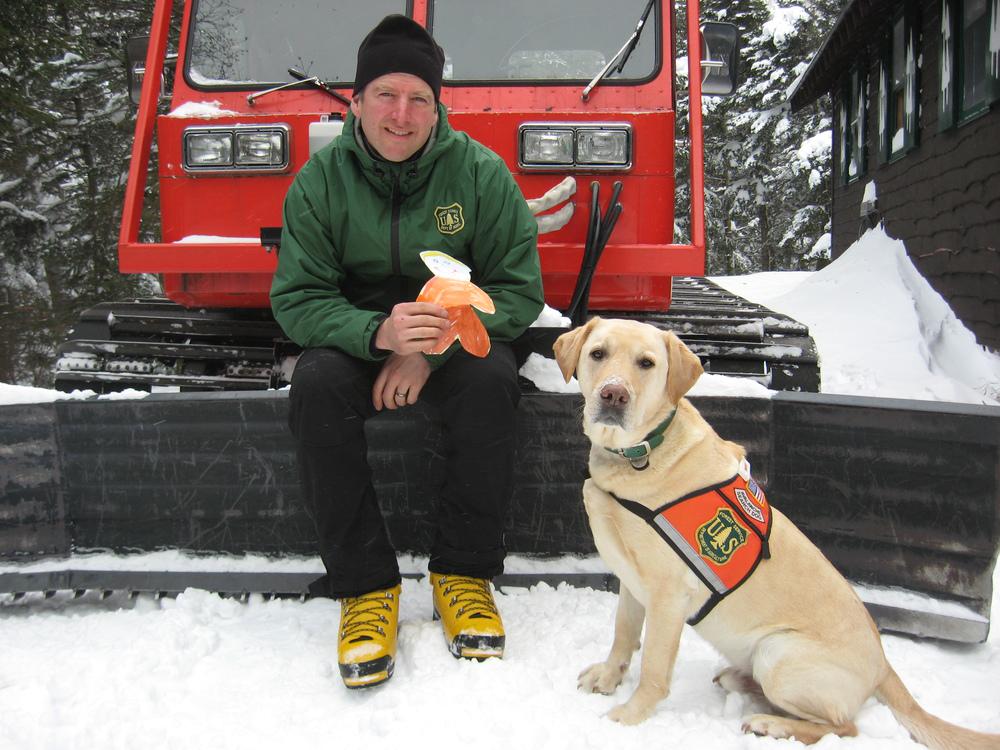
Chris Joosen noted that Cutler had an uncanny ability to disarm people. A ranger approaching a group of skiers to discuss safety might be met with skepticism or defensiveness, but a ranger accompanied by a friendly Golden Retriever was almost always welcomed. This "soft" power allowed the MWAC to disseminate critical safety information more effectively. Cutler became a focal point for educational demonstrations, where he would show off his skills by finding "buried" volunteers, leaving a lasting impression on visitors about the realities of avalanche burial.
The educational impact of a search dog is difficult to quantify but widely recognized by safety experts. By making the MWAC more approachable, Cutler helped foster a culture of safety and cooperation on the mountain. He was featured in numerous news segments, educational videos, and blog posts, becoming a symbol of the tireless work performed by the Forest Service to keep the public safe in one of the world’s most unforgiving environments.
Official Responses and Community Impact
Following the announcement of Cutler’s passing, tributes have poured in from the mountaineering and search and rescue communities. Chris Joosen, who shared nearly a decade and a half of life with Cutler, expressed profound gratitude for the dog’s service. In a detailed tribute posted to the Mount Washington Avalanche Center’s official channels, Joosen highlighted the "14 great years" they shared, emphasizing that Cutler was more than just a tool; he was a partner who looked out for the safety of the rangers just as much as the public.
The U.S. Forest Service and the White Mountain National Forest staff have also acknowledged the loss, noting that the presence of K9 units is a vital component of their winter safety strategy. Fellow rescuers described Cutler as a "consummate professional" who maintained his focus even in the chaotic environment of a busy trailhead or a high-stress rescue operation.
Local outdoor enthusiasts have taken to social media to share their memories of seeing Cutler at the "HoJo’s" (Hermit Lake) cabin or on the Tuckerman Ravine Trail. For many, Cutler was a reassuring sight—a sign that help was nearby and that the mountain was being watched over by dedicated professionals.
Broader Implications for Avalanche Safety Programs
The passing of Cutler brings into focus the future of K9 programs in the Northeast. Maintaining an avalanche dog program is a significant commitment for an agency, requiring hundreds of hours of annual training, specialized veterinary care, and the dedication of a handler who must live and work with the animal 24/7.
Cutler’s successful career serves as a blueprint for how these programs can be integrated into small, high-impact teams like the Mount Washington Snow Rangers. His legacy proves that even in an age of advanced technology—such as RECCO reflectors and GPS-enabled beacons—the biological capabilities of a dog remain unparalleled in specific rescue scenarios.
Furthermore, Cutler’s life underscores the importance of the "human-canine bond" in high-stakes professions. The psychological benefits of having a dog on the team cannot be overstated; for rangers who often deal with the grim reality of mountain fatalities, the presence of a loyal, high-spirited animal provides essential emotional support and stress relief.
As the Mount Washington Avalanche Center moves forward, the lessons learned from Cutler’s eleven years of service will continue to inform how they interact with the public and how they prepare for the inevitable challenges of the winter season. While new dogs may eventually fill the role, the trail blazed by Cutler—both through the deep snow of Tuckerman Ravine and in the hearts of the New England outdoor community—remains a permanent part of the mountain’s history.
In the final analysis, Cutler’s life was a testament to the power of service. From his early days as a trainee to his final years as a senior statesman of the forest, he remained focused on a single, noble goal: making the mountains a safer place for everyone. His 14 years were defined by a tireless work ethic and an unwavering loyalty, leaving behind a safer Mount Washington and a community that will not soon forget the Golden Retriever who stood watch over the "Home of the World’s Worst Weather."
