

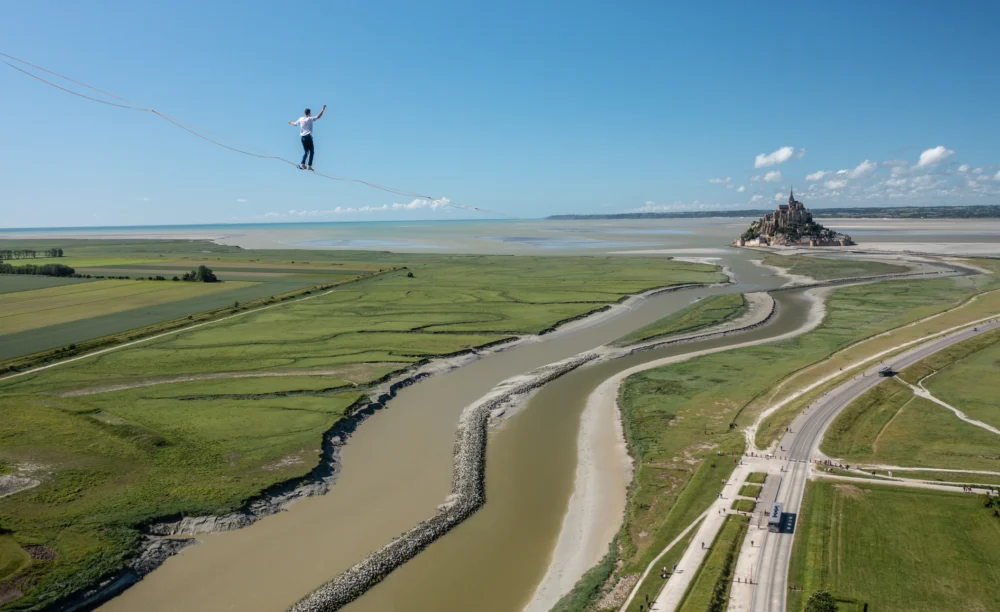
Following recent discussions on the dynamic evolution of freestyle highlining, this article shifts focus to another compelling facet of the discipline: the pursuit of scale, endurance, and profound mental clarity above vast, breathtaking landscapes. In this realm, few athletes have left an imprint as indelible as Nathan Paulin, the French highliner whose career has meticulously woven together record-setting crossings, aesthetically driven performances, and a deep philosophical engagement with his craft. Paulin’s journey transcends mere athletic prowess, positioning him as a vanguard at the intersection of extreme sport and contemporary performance art.
The Evolution of Highlining: Beyond Freestyle to Frontier Exploration

Highlining, a distinct evolution from the more accessible slacklining, involves walking a tensioned piece of webbing at significant heights, often thousands of feet above the ground. While freestyle highlining champions agility, creative tricks, and dynamic movements, a parallel frontier in the sport emphasizes the sheer scale of the crossing – its length, the endurance required, and the almost meditative focus needed to navigate immense aerial distances. This latter approach often transforms the athletic feat into a profound statement on human capability and connection with environment, a territory Nathan Paulin has not only explored but fundamentally reshaped.
Born and raised in a modest mountain village nestled within the French Alps, Paulin’s introduction to slacklining at the age of seventeen in 2011 was a serendipitous discovery. He quickly recognized in the taut webbing not just a physical challenge, but a conduit to an elevated state of mental being. "It’s instantaneous," Paulin recounts, "as soon as you step on it, you are focused, and your body and mind align immediately." This initial spark of curiosity soon ignited a deep passion. While the void of highlining initially presented a terrifying prospect, his inherent drive to access remote, vertical locations compelled him to confront and eventually conquer this fear. His early reliance on music to create a "comfortable bubble" against the "hostile environment" speaks volumes about the psychological battle inherent in the sport, a crutch he has since outgrown, achieving a state of comfort rooted purely in internal mastery.
Over the past decade, Paulin’s dedication has blossomed into one of the most influential careers in highlining. His early twenties saw him rapidly ascend to the pinnacle of the sport, driven by an "extremely passionate" approach and a relentless focus on skill enhancement. This period was marked by not only setting his first world records but also actively contributing to the development of new techniques, born from the novel challenges posed by an emerging discipline. This rapid progression, he explains, was fueled by the vast "range of possibilities to explore" that highlining offered.

Record-Breaking Ascents: The Pinnacle of Endurance and Logistics
Paulin’s name is now synonymous with monumental achievements, most notably his 2,240-meter (approximately 1.4-mile) crossing at Mont Saint-Michel in June 2022. This audacious feat, which at the time shattered previous world records, serves as a testament to the colossal demands of long-line highlining. Such a project extends far beyond individual athletic prowess, transforming into an intricate ballet of physical endurance, meticulous logistical planning, and unwavering team cohesion.
The Mont Saint-Michel crossing, for instance, required a week of intensive preparation involving a core team of 15 individuals, expanding to 30 on the critical day the webbing was installed across the bay. The logistical complexity involved securing precise anchoring points on historical structures, navigating environmental factors like tides and winds, and employing sophisticated tensioning systems to stretch a line of unprecedented length. Each meter of webbing, each piece of rigging, represented a calculated risk and a testament to the team’s engineering expertise and trust.

When preparing for lines of such extreme length, Paulin describes a distinct shift in the nature of the challenge. Initially, the focus is overwhelmingly logistical, requiring him to "control as many things as possible and keep everything in mind." This phase is about exhaustive planning, contingency strategies, and ensuring every technical detail is perfected. However, once the installation is complete and he steps onto the line, a profound psychological transformation occurs. He must "let go and forget about all the logistics," allowing his body to instinctively execute what it has been rigorously trained to do. This transition from macro-level control to micro-level sensory awareness is crucial for success on the line, where the slightest imbalance can lead to a fall.
The Mental Landscape: A State of Flow Above the Void
Highlining, particularly at Paulin’s elite level, demands an extraordinary degree of concentration and control. When "everything is working," he describes entering a coveted "state of flow." This psychological phenomenon, characterized by complete immersion in an activity, a distortion of time, and a sense of effortless control, is what Paulin actively seeks. In this heightened state, the seemingly uncontrollable situation becomes manageable, even fluid.

Crucially, this is not a retreat into a mental bubble. Paulin emphasizes his continued connection to his surroundings: "I hear, I see, I’m not in a bubble. I feel like I’m no longer a spectator of a landscape, but an actor in it, part of it." The act of balancing intensifies his sensations tenfold, making everything he perceives and feels more vivid and immediate. This profound engagement with the environment, rather than a detachment from it, defines his experience, transforming the perilous traverse into an intimate dialogue with the vastness below and around him.
Highlining as Performance Art: Blurring Boundaries
Increasingly, Paulin’s projects deliberately blur the lines between extreme sport and performance art. His collaborations with esteemed figures like choreographer Rachid Ouramdane and institutions such as the Théâtre de Chaillot exemplify this artistic evolution. These partnerships have allowed him to "imagine new ways of moving through space," transcending the traditional confines of athletic competition.

His highlines between iconic landmarks, including the Eiffel Tower, Mont Saint-Michel, cathedrals, and bridges, are not merely records but public spectacles. These performances are designed to engage a wider audience, transforming urban and historical landscapes into stages for breathtaking human expression. The "Vertigo projects" with Chaillot Theatre are a prime example, integrating multiple lines and artistic elements to create immersive, large-scale productions that challenge perceptions of space, movement, and human vulnerability.
For Paulin, aesthetics play a central role in site selection. He views visual beauty as a core motivator, consistently finding technical solutions to realize even the most ambitious artistic visions. While the final execution may appear deceptively simple, the underlying procedures are often immensely complex, involving intricate engineering, careful planning, and extensive negotiation with authorities. This fusion of technical mastery and artistic sensibility has broadened the appeal of highlining, drawing attention from cultural institutions and a diverse public.
Navigating Responsibility, Ethics, and Public Perception

Operating at such extreme heights, often in public view, brings with it a formidable weight of responsibility. Paulin’s philosophy on safety and ethics is paramount. He stresses that highlining at this level is entirely dependent on the meticulously constructed systems and the unwavering trust within his team. "I entrust my life to my team and I have 100% confidence in them," he states, underscoring the profound bond and shared responsibility inherent in such endeavors.
Ethical rigging, for Paulin, extends beyond mere safety protocols. It encompasses respect for his team, ensuring a positive experience for everyone involved, and making conscious choices about partnerships. His decision to avoid sponsorships from brands like Red Bull, instead seeking funding from "French companies involved in living heritage" for projects like Mont Saint-Michel, highlights a deliberate ethical stance. This approach ensures that his projects align with values of cultural preservation and community engagement, even if it presents a greater "challenge because they are not used to sponsoring this kind of project." He also cites his participation in a show in Saudi Arabia, which brought together Saudi and French artists and involved local children, as an example of "virtuous collaboration."
Performing in public spaces significantly amplifies the complexity and public scrutiny of his work. Convincing various authorities to permit such projects is a "huge challenge," involving extensive negotiations for safety zones, crowd management, and even air traffic control. Despite the inherent visual drama, Paulin firmly asserts that highlining, when executed properly, is "much safer than most people think." The discipline, he explains, allows for complete control over risks through redundant systems, rigorous planning, and a highly skilled team, even if communicating this safety aspect to the wider public remains a recurring task.

A Holistic Approach: Beyond the Line
Paulin’s pursuit of highlining excellence is complemented by a diverse range of other mountain sports, including paragliding, mountaineering, and trail running. These activities, he explains, are crucial for maintaining physical conditioning, particularly cardiovascular health, which highlining itself does not demand. They also provide an outlet for releasing hormones like endorphins and dopamine, contributing to his overall well-being and allowing him to adapt his practice to different seasons.
He draws inspiration from figures both within and outside his immediate world. Kilian Jornet, the celebrated endurance athlete, is a significant influence for his ability to "redefine the limits of the human body" and his "simplicity." Within the artistic sphere, Rachid Ouramdane is lauded as a "master of project management, always calm and kind." These diverse influences underscore Paulin’s multidisciplinary approach, where physical rigor meets thoughtful execution and artistic vision.

The Next Chapter: Meaning, Longevity, and Determination
Looking ahead, Paulin’s focus has shifted from simply breaking records to exploring "new things" within the artistic dimension of his craft. He finds meaning in "discovering new environments and the people who are part of them," allowing himself to be guided by new opportunities. His "Vertigo projects" with the Chaillot Theatre, involving multiple lines and artistic integration, represent the kind of large-scale, collaborative endeavors that now excite him most.
Regarding longevity in a discipline that perpetually invites bigger and more exposed ideas, Paulin remains unconcerned. He notes that while highlining is challenging to learn, "once you know how to do it, you don’t fall anymore and it’s quite gentle on the body." This confidence in his mastery suggests a sustainable path forward, allowing him to continue pushing boundaries without excessive physical toll.

For aspiring highliners drawn to large-scale projects, Paulin emphasizes the paramount importance of responsibility before ambition. He stresses the necessity of ambition tempered by respect for others and a thorough understanding of the "dangerous environment," citing potential issues like aircraft collisions as critical considerations in project planning. His ultimate pursuit, he concludes, can be encapsulated in a single word: "Determination."
Across record-setting crossings, historic landmarks, and groundbreaking stage collaborations, Nathan Paulin continues to propel highlining into uncharted territories. What began as a teenager’s quest for focus has evolved into a sophisticated practice that harmonizes endurance, aesthetics, and collective creation. Whether suspended above the ancient marvel of Mont Saint-Michel or weaving ethereal lines into ambitious artistic productions, Paulin’s work profoundly suggests that the future of highlining lies not solely in the increasing lengths it can span, but in the myriad directions the discipline itself can expand, challenging both athletic and artistic frontiers.
