

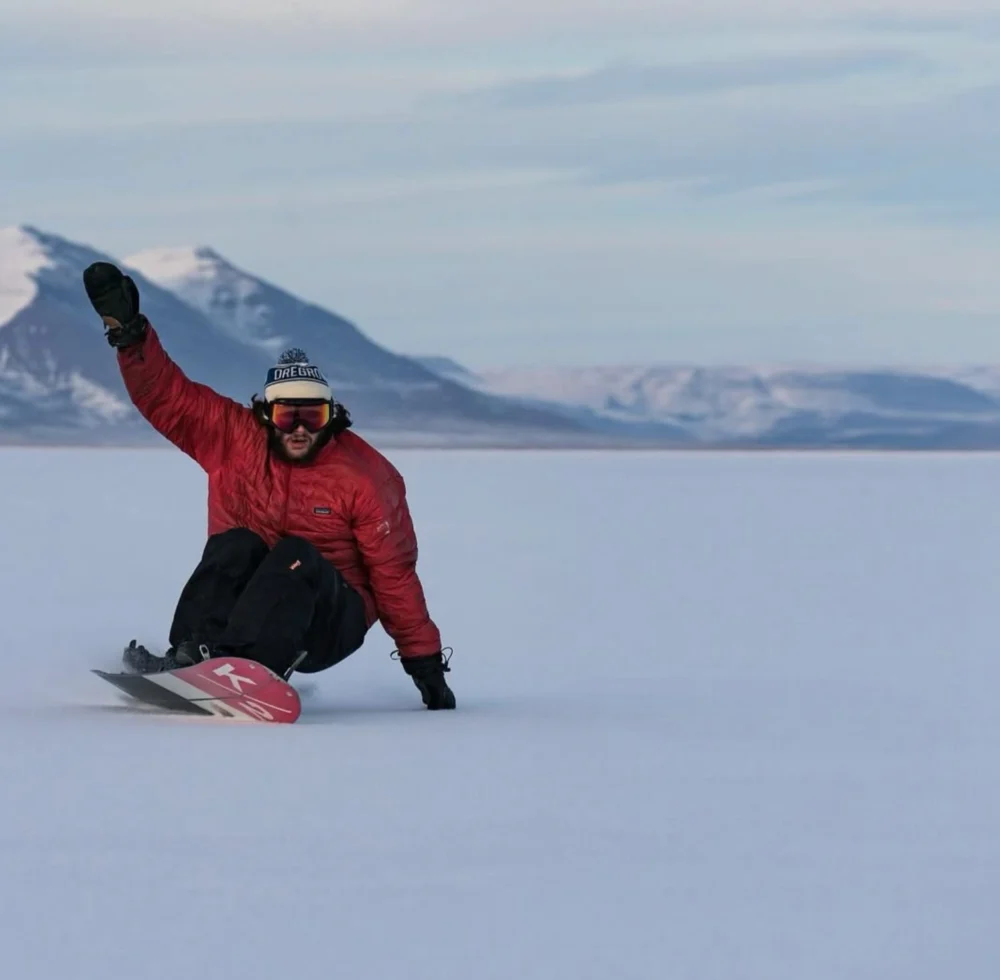
The backcountry community is reeling from the profound loss of Stratton Matteson, a 28-year-old professional splitboarder and revered figure from Bend, Oregon, who perished in a large-scale avalanche near Joffre Peak, British Columbia, on February 24, 2026. Initial reports from the Royal Canadian Mounted Police (RCMP) and local authorities erroneously identified Matteson as a "lone snowboarder," a detail now corrected by his touring partner, Ryan Morrison, who has come forward with a firsthand account of the devastating accident, shedding crucial light on the circumstances that led to Matteson’s death. This updated testimony underscores the complexities of rapid incident reporting in remote areas and highlights the critical importance of partner support and communication in the unforgiving backcountry environment.
The Incident: A Fateful Descent on Anniversary Glacier
According to Ryan Morrison’s poignant recollection, he and Matteson had embarked on their expedition toward the Anniversary Glacier, a challenging yet rewarding destination known for its expansive bowls and steep lines within the Joffre Peak region. The morning of February 24th had dawned clear and cold, presenting what initially appeared to be optimal conditions for a day of splitboarding. Matteson, renowned for his discerning eye for terrain and his "human-powered" ethos, suggested tackling the steeper right side of the glacier. Demonstrating his customary leadership and experience, he dropped into the line first, meticulously navigating the untouched powder. Upon reaching the bottom safely, he radioed Morrison, confirming "excellent conditions"—a message that, in retrospect, now carries an unbearable weight of tragic irony.
Morrison, relying on Matteson’s assessment, commenced his descent on an adjacent line. It was during this second descent that the unthinkable occurred. Without warning, the entire slope spontaneously released, triggering a formidable Size 3.5 avalanche. Such an avalanche is classified as large enough to bury and destroy a car, demolish a small building, or break trees, indicative of its immense power and destructive potential. The sudden, violent surge of snow engulfed Matteson, who had been waiting below, completely out of sight and beyond reach. The swiftness of the event left no time for evasive action, turning a moment of triumph into an instant of profound tragedy.
The Backcountry Environment of Joffre Peak
Joffre Peak, standing majestically at 2,721 meters (8,927 feet), is a prominent feature in the Garibaldi Provincial Park within the Coast Mountains of British Columbia. It is a highly sought-after destination for experienced ski mountaineers and splitboarders, particularly for its challenging alpine terrain, extensive glaciers, and breathtaking views. However, this allure comes with inherent risks, primarily from its complex and often unstable snowpack. The region is notorious for its variable weather patterns, which can lead to rapid changes in snow conditions, creating persistent weak layers within the snowpack that are difficult to detect and prone to sudden collapse.
Late February and early March typically mark a period of transition in the British Columbia snowpack. Days can be warmer, leading to surface melts and refreezes, while colder nights can preserve underlying instability. Wind loading, where strong winds transport snow from one area to another, can create dangerous cornices and thick, unstable slabs on leeward slopes, precisely the kind of conditions often found on glacier flanks and steeper aspects like the one Matteson and Morrison were navigating. Avalanche Canada, the national public avalanche safety organization, regularly issues bulletins for regions like the South Coast Inland, warning recreationalists of specific hazards, danger ratings, and recommended travel practices. While the exact danger rating for the Anniversary Glacier on February 24, 2026, is not publicly detailed in the immediate reports, it is common for such challenging terrain to carry significant risk, even on days perceived as "clear and cold."
A Life Defined by Purpose: The Legacy of Stratton Matteson
Stratton Matteson was far more than just a professional splitboarder; he was an icon in the Bend, Oregon, backcountry community and a fervent advocate for environmental stewardship. His "human-powered" approach to the sport was legendary. Eschewing motorized transport whenever possible, he frequently cycled dozens of miles to trailheads, embodying a deep commitment to reducing his carbon footprint and minimizing his impact on the pristine wilderness he so cherished. This philosophy wasn’t merely a preference; it was a core tenet of his existence, reflecting a profound respect for nature that resonated deeply with his peers and followers.
His dedication to the outdoor life was extraordinary. Last year alone, Matteson spent an astonishing 230 nights camping in the snow, a testament to his unwavering passion for immersive wilderness experiences and his relentless pursuit of untouched powder. This profound connection to the natural world fueled his advocacy and inspired countless others to adopt more sustainable practices in their outdoor pursuits. He was a vocal proponent of Leave No Trace principles, responsible backcountry travel, and climate action, using his platform as a professional athlete to champion causes close to his heart. His charismatic personality, combined with his exceptional skill on a splitboard, made him a powerful voice for environmental conservation within the action sports community.
The Aftermath: A Partner’s Anguish and a Community’s Grief
Following the massive avalanche, Ryan Morrison immediately initiated emergency protocols, desperately attempting to locate Matteson. Equipped with essential avalanche safety gear—transceiver, shovel, and probe—Morrison commenced a frantic search. The critical window for avalanche rescue is incredibly short, with survival rates plummeting dramatically after the first 15 minutes. Despite Morrison’s valiant efforts, the sheer scale of the Size 3.5 avalanche and the depth of the snow debris proved overwhelming. After an arduous and ultimately unsuccessful search, and realizing the grim reality of the situation, Morrison was forced to make the agonizing decision to descend and call for professional rescue services.

The distress call triggered a multi-agency response involving local Search and Rescue (SAR) teams, often supported by specialized avalanche dog handlers and helicopter resources, and coordinated by the RCMP. The challenging terrain and remote location of the Anniversary Glacier would have complicated and extended the rescue and recovery operations. Initial reports, often based on preliminary information gathered under immense pressure, are prone to inaccuracies, as was the case with the initial "lone snowboarder" description. Morrison’s decision to come forward was not only a correction of the public record but also a courageous act of bearing witness to a friend’s final moments and ensuring his memory was honored accurately.
The news of Matteson’s death sent shockwaves through the Bend, Oregon, community and the wider action sports world. Tributes poured in from fellow athletes, sponsors, and admirers who lauded his adventurous spirit, his environmental consciousness, and his unwavering positivity. The loss of such a vibrant and influential figure left a void, serving as a stark reminder of the inherent dangers, even for the most experienced and well-prepared individuals, in the backcountry.
Broader Implications: Avalanche Safety and Risk Assessment
Stratton Matteson’s tragic passing serves as a sobering reminder of the critical importance of rigorous avalanche safety protocols, even for seasoned professionals. While Matteson and Morrison were clearly experienced and equipped, the incident highlights several key lessons:
- Dynamic Conditions: Backcountry snow conditions are incredibly dynamic. What appears "excellent" one moment can become catastrophically unstable the next. Continuous assessment, even between consecutive descents on the same slope, is paramount.
- Terrain Traps: Steep glacier flanks and complex terrain can act as terrain traps, where avalanche debris accumulates deeply, increasing the burial risk.
- Group Dynamics and Communication: While Matteson and Morrison were communicating via radio, the incident underscores the need for constant vigilance and perhaps a more conservative approach when one partner is already in the run-out zone of a potentially unstable slope.
- Persistent Weak Layers: The mechanism of a spontaneous Size 3.5 release often points to a persistent weak layer deep within the snowpack, which can be difficult to identify without extensive probing or digging snow pits. These layers can fail unexpectedly under load, even light loads from a single rider.
Avalanche Canada, in its ongoing mission to reduce avalanche fatalities, would likely reiterate the importance of taking accredited avalanche skills training (AST) courses, carrying essential safety gear (transceiver, shovel, probe), practicing rescue techniques regularly, and making conservative decisions based on the daily avalanche forecast and observed field conditions. The "human factor"—decision-making under pressure, group dynamics, and cognitive biases—remains a significant contributor to avalanche accidents, even for experts.
Official Responses and Investigative Efforts
The RCMP, in collaboration with local search and rescue teams, conducted a thorough investigation into the accident. While the initial report was incomplete, subsequent statements from authorities would likely acknowledge Morrison’s critical role in providing accurate details, which are vital for understanding the incident and informing future safety advisories. Such investigations typically involve analyzing the avalanche path, snowpack characteristics, and weather data to reconstruct the sequence of events and identify any contributing factors. The goal is not to assign blame but to gather data that can help prevent similar tragedies.
Avalanche Canada would likely incorporate learnings from this incident into its educational materials and future forecasts, emphasizing the unpredictable nature of persistent weak layers and the specific hazards associated with glacier travel in the Coast Mountains. Industry organizations and professional athlete associations would also likely review their safety guidelines and continue to advocate for rigorous training and risk management practices among their members.
A Legacy Beyond the Snow: The Stratton Matteson Legacy
In the wake of this profound loss, Stratton Matteson’s family has established the "Stratton Matteson Legacy" (accessible via Instagram and other platforms). This initiative aims to preserve his memory not just as an elite athlete, but as a passionate environmentalist and a beacon of sustainable outdoor recreation. The Legacy will undoubtedly focus on supporting the environmental causes Matteson championed, promoting backcountry safety awareness, and inspiring future generations to embrace a human-powered, low-impact approach to enjoying the wilderness.
The fund is expected to support various initiatives, potentially including:
- Environmental Conservation: Partnering with organizations dedicated to protecting mountain ecosystems, advocating for climate action, and promoting sustainable land use practices.
- Backcountry Safety Education: Funding scholarships for avalanche safety courses, developing educational materials, and supporting research into avalanche phenomena.
- Youth Outdoor Programs: Introducing young people to the joys of human-powered outdoor sports, instilling a love for nature, and fostering responsible stewardship.
Through the "Stratton Matteson Legacy," his influence is destined to extend far beyond his athletic achievements, continuing to inspire a deeper connection to nature and a commitment to protecting the wild places he loved. His story serves as a powerful reminder of both the exhilarating beauty and the inherent dangers of the backcountry, urging all who venture into these wild spaces to do so with profound respect, meticulous preparation, and unwavering caution. His enduring spirit will continue to guide those who seek adventure with purpose, leaving tracks not just in the snow, but on the path toward a more sustainable and conscious future.
