


The 30th United Nations Climate Change Conference, known as COP30, held in the Amazonian city of Belém, Brazil, has concluded with a complex mix of diplomatic progress and systemic gridlock. Situated at the "gateway to the Amazon," the summit was intended to be a watershed moment for tropical forest conservation and the finalization of aggressive 2035 emission targets. However, as nearly 200 nations and over 60,000 attendees gathered to negotiate the future of the planet’s climate trajectory, the proceedings were characterized by a sharp divide between civil society’s demand for urgent action and the persistent influence of fossil fuel interests. While the summit saw historic levels of Indigenous participation and significant subnational climate agreements, the failure to include a direct mandate for the "phase-out" of fossil fuels in the final negotiated text has left many climate scientists and policy experts questioning the efficacy of the current international framework.
The Strategic Significance of the Belém Summit
Hosting COP30 in the heart of the Amazon was a deliberate choice by the Brazilian government, led by President Luiz Inácio Lula da Silva, to center the discourse on the intersection of biodiversity, Indigenous rights, and climate mitigation. The Amazon rainforest serves as one of the world’s most critical carbon sinks, yet it remains under constant threat from deforestation and industrial expansion. The conference aimed to secure commitments that would limit global warming to 1.5°C above pre-industrial levels, a target that the United Nations Environment Programme (UNEP) warns would require a 55% reduction in global greenhouse gas emissions by 2035.
The "Blue Zone," the restricted area dedicated to official UN negotiations, functioned as a microcosm of global climate ambitions and contradictions. National pavilions, ranging from the aesthetically grounded displays of India to the social hubs of Portugal, showcased technological innovations and climate adaptation strategies. However, the presence of the "Climate Mobility Hub" in a prominent location served as a somber acknowledgment of the "loss and damage" already occurring worldwide, highlighting the displacement of communities due to rising sea levels and extreme weather.
A Chronology of the Two-Week Summit
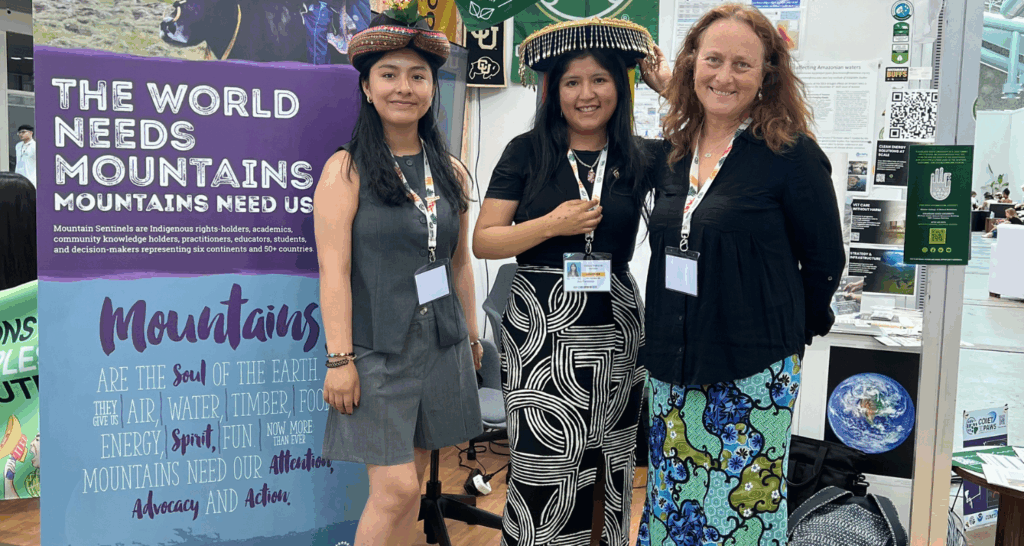
The proceedings began with a surge of energy from non-state actors and subnational leaders. During the first week, the focus remained on technical negotiations and the establishment of the Research and Independent Non-Governmental Organizations (RINGO) constituency’s presence. Academic institutions, including delegations from Colorado State University and the University of Colorado Boulder, engaged in knowledge-sharing exhibits that connected Alpine climate research with Andean mountain community needs.
Midway through the summit, the atmosphere shifted toward direct action and litigation. Saúl Luciano Lliuya, a Peruvian farmer whose landmark lawsuit against the German energy giant RWE has become a cornerstone of global climate litigation, participated in high-profile demonstrations. These actions, supported by organizations like Greenpeace, sought to create a "roadmap to phase out fossil fuels" and establish mechanisms to hold major polluters financially accountable for climate-related damages.
The final days of the conference were marked by intense, closed-door negotiations. Despite more than 80 nations advocating for a clear commitment to transition away from fossil fuels, the final document omitted the phrase entirely. This omission was largely attributed to the diplomatic pressure exerted by petrostates, illustrating the enduring friction between economic interests tied to oil and gas and the scientific necessity of decarbonization.
U.S. Presence: A Shift from Federal to Subnational Diplomacy
One of the most significant developments at COP30 was the absence of an official negotiating delegation from the United States federal government. Following the change in administration priorities, the lack of a formal U.S. presence in the negotiation rooms created a diplomatic vacuum. Historically, the U.S. has played a pivotal role in brokering compromises between developing nations and industrial powers. Former U.S. negotiators present in an unofficial capacity noted that this absence made it significantly more difficult to reach a consensus on high-stakes agreements.
However, the "Outdoor State" and various U.S. subnational entities stepped in to fill this void. The "America Is All In" coalition and the U.S. Climate Alliance—representing a significant portion of the American economy and emission profile—maintained a robust presence. California Governor Gavin Newsom emerged as a key figure during the first week, bypassing federal channels to sign methane reduction agreements with Colombia and electric vehicle (EV) expansion pacts with Nigeria.

Senator Sheldon Whitehouse of Rhode Island, the sole member of the U.S. Congress in attendance, addressed the summit with a stark warning regarding the influence of the fossil fuel industry. Whitehouse argued that the partisan divide over climate action in the U.S. is an "artificial state" created by massive spending from fossil fuel lobbyists. His presence underscored the ongoing domestic struggle for federal policy accountability and transparency.
Indigenous Leadership and the Reality of Inequity
COP30 saw a record-breaking 900 Indigenous delegates in the Blue Zone, a substantial increase from the 300 present at COP29. This surge in representation was intended to elevate traditional ecological knowledge and ensure that land stewardship by Indigenous communities is recognized as a primary climate solution. Indigenous leaders led numerous demonstrations, including a notable breach of security early in the week to demand that their lands be protected from extractive industries.
Despite the increased numbers, many delegates argued that their presence remained largely symbolic. The power dynamic within the summit favored industrial lobbyists; data indicated that fossil fuel representatives in the Blue Zone outnumbered Indigenous delegates by more than two to one. Furthermore, systemic barriers such as language and travel restrictions continued to marginalize certain voices. For example, members of the Mountain Sentinels Alliance reported that delegates from Cameroon were unable to secure transit visas, while Quechua-speaking participants from the Andes found many critical sessions inaccessible due to a lack of Spanish or Quechua translation in English-dominated programming.

Analysis of Outcomes: Progress Amidst Failure
The omission of "fossil fuels" from the final negotiated text is viewed by many scientists as a significant setback. Julia Klein, a professor of Ecosystem Science and Sustainability at Colorado State University and a member of the POW Science Alliance, noted that after three decades of studying climate impacts in mountain regions, the lack of a formal commitment to end fossil fuel use is "quite depressing." This sentiment reflects a broader frustration within the scientific community regarding the slow pace of international policy.
Nevertheless, COP30 was not without tangible successes:
- Methane Mitigation: The agreements signed between subnational entities like California and national governments like Colombia provide a framework for reducing short-lived climate pollutants, which have a high warming potential.
- Global EV Expansion: New partnerships aimed at bringing electric vehicle infrastructure to developing nations like Nigeria represent a critical step in decarbonizing the global transport sector.
- Loss and Damage Awareness: The prominence of climate mobility and the "Climate Mobility Hub" indicated a growing international consensus that the costs of climate change must be addressed through formal financial mechanisms.
- Litigation Momentum: The visibility of climate lawsuits, such as the Lliuya case, suggests that where diplomacy fails, the judicial system may become the next major front for climate accountability.
Broader Implications for the Future of Climate Governance
The results of COP30 highlight a growing trend in global climate governance: the decentralization of leadership. As national governments fluctuate in their commitment to international agreements, subnational leaders, NGOs, and the scientific community are increasingly taking the lead. The phrase "we need everyone, everywhere, all at once," echoed by negotiators in Belém, has become a rallying cry for a multi-faceted approach to the climate crisis.
The failure to address fossil fuels directly at COP30 places immense pressure on COP31 and future summits. With the 1.5°C threshold rapidly approaching, the window for meaningful intervention is closing. For climate-vulnerable regions—including the mountain communities of the Andes and the Himalayas, as well as the rainforests of the Amazon—the stakes could not be higher. The Belém summit served as a stark reminder that while the world is "hungry for climate action," the roadblocks remains deeply entrenched in the global economic and political order.
As the international community reflects on the outcomes of COP30, the focus turns toward the implementation of subnational deals and the continued push for federal accountability in major emitting nations. The "gateway to the Amazon" provided a beautiful and symbolic backdrop for these negotiations, but the true measure of the summit’s success will be found not in the speeches delivered in the Blue Zone, but in whether the global trajectory of emissions begins to align with the urgent warnings of the scientific community.
