

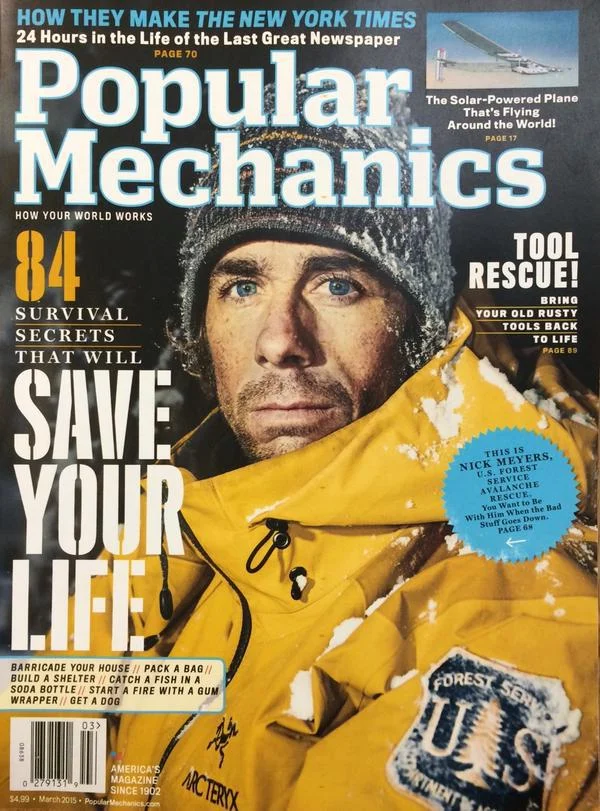
Nick Meyers, a pivotal figure in mountain safety and the Director of the Mount Shasta Avalanche Center, has achieved significant national recognition with his appearance on the cover of the esteemed Popular Mechanics magazine. This prominent feature highlights his expertise in avalanche rescue and survival, underscoring the critical role he and his colleagues play in safeguarding adventurers in treacherous mountain environments. The magazine’s decision to place Meyers on its cover signifies a broader acknowledgment of the importance of specialized knowledge in extreme conditions and the innovative approaches being developed in the field of mountain rescue.
The Making of a Cover Story: Expertise in the Spotlight
The feature in Popular Mechanics is not merely a profile of an individual but a testament to the depth of knowledge and practical experience that professionals like Nick Meyers bring to high-risk professions. His role as Lead Climbing Ranger on Mount Shasta, a notoriously challenging peak, provides him with an unparalleled understanding of the dynamic and often perilous conditions faced by climbers and skiers. This hands-on experience directly informs the insights shared in the magazine, positioning him as an authoritative voice on survival and rescue.
The article, accessible through links provided by the Mount Shasta Avalanche Center, delves into practical advice, focusing on essential survival gear and techniques that Meyers himself relies upon. This approach makes the content highly relevant to a wide audience, from seasoned mountaineers to outdoor enthusiasts who may find themselves in unexpected situations. The magazine’s choice to focus on "10 Survival Essentials an Avalanche Rescue Expert Always Carries" suggests a deep dive into practical, actionable information, moving beyond theoretical discussions to offer tangible preparedness strategies.
Background and Context: Mount Shasta and Avalanche Safety
Mount Shasta, a dormant volcano in Northern California, is an iconic and popular destination for mountaineering, climbing, and backcountry skiing. Its majestic presence, however, belies the significant avalanche hazards present, particularly during the winter and spring months. The mountain’s elevation, steep slopes, and susceptibility to rapid weather changes create a complex and unpredictable environment. The Mount Shasta Avalanche Center (MSAC) plays a vital role in monitoring these conditions, providing crucial information and forecasts to the public.
The MSAC operates as a critical resource, disseminating avalanche advisories, snowpack observations, and safety education programs. These efforts are essential for mitigating risks and promoting responsible decision-making among those venturing into the backcountry. Meyers’ leadership at the center means he is at the forefront of this vital work, coordinating research, analysis, and public outreach. His consistent presence and dedication to understanding and communicating avalanche dangers have undoubtedly contributed to a safer environment for all who seek to experience the allure of Mount Shasta.
The context of his appearance on Popular Mechanics also speaks to the evolution of outdoor recreation and the increasing demand for specialized knowledge. As more people engage in activities like backcountry skiing and mountaineering, the importance of understanding and respecting natural hazards, such as avalanches, becomes paramount. The magazine, with its broad readership interested in science, technology, and practical solutions, is an ideal platform to disseminate this critical safety information to a wider audience.
Timeline and Chronology of Recognition
While the specific timeline of the Popular Mechanics feature’s development is not detailed in the provided content, its publication marks a culmination of years of dedicated service and expertise from Nick Meyers. His tenure as Director of the Mount Shasta Avalanche Center and Lead Climbing Ranger on Mount Shasta represents a sustained commitment to public safety and mountain stewardship.
The process likely involved Popular Mechanics identifying Meyers as a leading expert in his field. This would typically involve research into his contributions to avalanche science, his operational experience on Mount Shasta, and his involvement in rescue efforts. Interviews, photographic sessions, and the compilation of his essential gear list would have followed. The cover story itself is the final product of this journalistic endeavor, aiming to capture the essence of his expertise and the criticality of his work.
The blog post linked from the original article, which offers further insight into Nick’s work, likely served as an initial point of interest for Popular Mechanics or as a companion piece to further elaborate on his contributions. Such blog posts often serve as informal but valuable platforms for sharing the day-to-day realities and successes of organizations like the MSAC, providing a rich source of material for deeper journalistic exploration.
Supporting Data and the Science of Avalanche Safety
The expertise highlighted in the Popular Mechanics article is underpinned by a robust understanding of snow science, meteorology, and human factors. Avalanche forecasting relies on a complex interplay of data, including:
- Snowpack Stratigraphy: The layering of snow, including the type of snow crystals, density, and the presence of weak layers, is meticulously analyzed. Understanding how these layers bond (or fail to bond) is crucial for assessing avalanche risk.
- Meteorological Data: Temperature, precipitation (type and amount), wind speed and direction, and solar radiation all significantly influence snowpack stability. Rapid temperature changes, heavy snowfall, or intense solar radiation can destabilize even seemingly stable snow.
- Topography: Slope angle, aspect (direction the slope faces), elevation, and terrain features like cornices or cliffs all play a role in avalanche formation and propagation.
- Recent Avalanche Activity: Observing natural avalanches provides direct evidence of current snowpack instability.
The "10 Survival Essentials" likely discussed in the article would directly relate to these scientific principles. For instance, specialized avalanche rescue gear such as transceivers, probes, and shovels are critical tools for locating and excavating buried victims, a process that requires speed and precision, often under duress. Understanding the mechanics of an avalanche – how it starts, travels, and deposits snow – informs the development of these tools and the strategies employed for rescue.
The Popular Mechanics feature, by focusing on an avalanche rescue expert, implicitly educates readers about the inherent dangers and the sophisticated methods used to mitigate them. It bridges the gap between the public’s perception of mountain activities and the scientific rigor involved in ensuring safety.
Statements and Reactions: Inferred Professional Recognition
While direct quotes from related parties are not provided, the recognition of Nick Meyers by a publication like Popular Mechanics can be logically inferred to have elicited positive reactions from various stakeholders within the mountain safety and outdoor recreation communities.
- Colleagues at the Mount Shasta Avalanche Center: It is highly probable that Meyers’ colleagues would express pride and admiration for his well-deserved recognition. His leadership is vital to their collective mission, and his success on a national platform reflects positively on the entire organization and its dedication to public safety.
- Partner Organizations: Agencies involved in land management, search and rescue, and outdoor education, such as the U.S. Forest Service (which likely oversees the MSAC), would see this as an endorsement of their commitment to safety protocols and the caliber of their personnel.
- The Mountaineering and Backcountry Community: Climbers, skiers, and snowboarders who utilize Mount Shasta and other backcountry areas would likely view this feature as a valuable educational resource and a testament to the expertise available to them. It reinforces the importance of heeding avalanche advisories and preparing thoroughly.
- Outdoor Gear Manufacturers: Companies that produce survival and avalanche safety equipment would also benefit from this exposure, as it highlights the practical application and importance of their products in real-world, life-saving scenarios.
The very act of being featured on the cover of Popular Mechanics is a significant professional achievement, signifying that Meyers’ contributions have been recognized at a national level by a publication known for its focus on practical innovation and expert insights.
Broader Impact and Implications: Elevating Avalanche Awareness
The feature of Nick Meyers on the cover of Popular Mechanics has several significant implications:
- Enhanced Public Awareness: By reaching a broad audience interested in technology, science, and practical applications, the article significantly raises public awareness about avalanche dangers and the sophisticated science behind avalanche safety. This can translate into more informed decision-making by outdoor enthusiasts.
- Validation of Expertise: The recognition validates the critical work performed by avalanche centers and rescue professionals. It underscores that these roles require highly specialized knowledge, extensive training, and unwavering dedication, often in challenging and dangerous environments.
- Promoting Preparedness: The focus on survival essentials encourages individuals to think critically about their own preparedness for outdoor activities. It shifts the narrative from simply enjoying nature to understanding and respecting its inherent risks and taking proactive steps to mitigate them.
- Inspiration for Future Professionals: Meyers’ story can inspire a new generation of individuals to pursue careers in mountain safety, meteorology, and related scientific fields. It demonstrates that dedication and expertise can lead to significant recognition and impact.
- Strengthening the Role of Avalanche Centers: The spotlight on Meyers and his work likely reinforces the importance of funding and supporting avalanche forecasting and education programs. These centers are not just informational resources; they are essential components of public safety infrastructure in mountainous regions.
The image accompanying the original article, likely a photograph of Nick Meyers in action or showcasing his gear, serves as a visual anchor to this narrative. It transforms abstract concepts of avalanche safety into a tangible human element, connecting the reader directly to the expertise and dedication of the individual. The Popular Mechanics feature, in essence, takes the vital, often unseen, work of avalanche professionals and brings it into the public consciousness, emphasizing its importance and the caliber of individuals dedicated to this critical mission. This elevated profile is a significant step in fostering a culture of safety and preparedness in the face of nature’s formidable power.
