

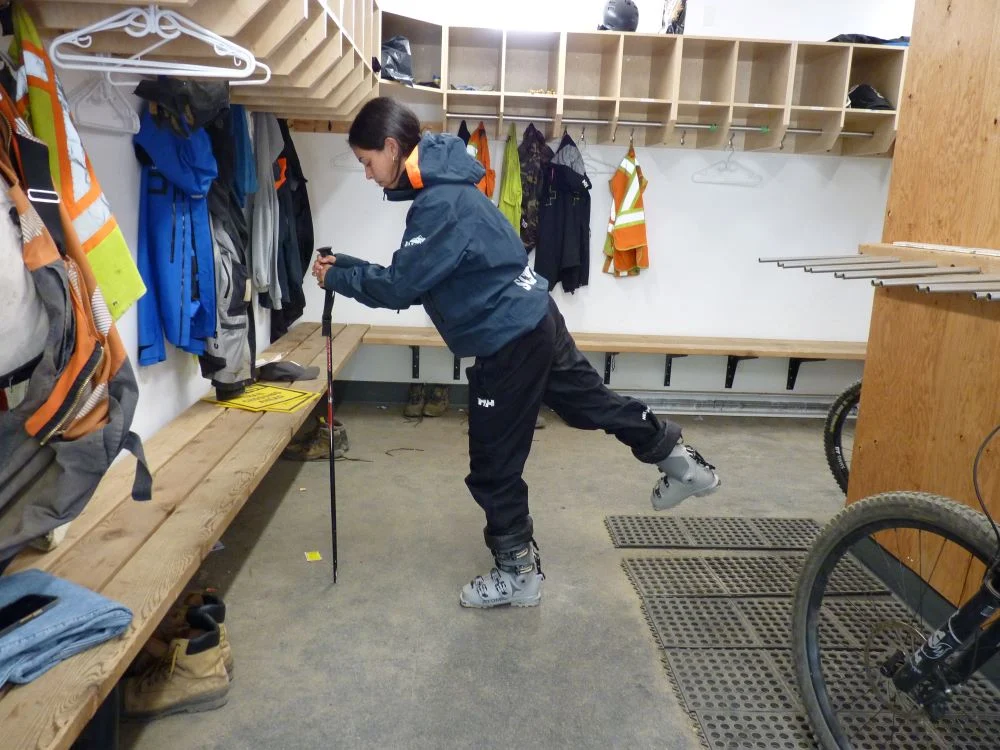
The Spring 2026 Issue of 32 Degrees spotlights a critical, yet often overlooked, aspect of athletic prowess in snow sports: core stability. As articulated by Dr. Delia Roberts, effective movement on snow is fundamentally about managing force. The interplay of gravity and momentum generates energy that athletes store within their skis or boards, subsequently leveraging it for speed and directional control. This intricate process, demanding precision and responsiveness, underscores the paramount importance of a robust and stable core. Just as advanced equipment, such as a stiffer boot or board, enhances energy transfer efficiency, a strong and stable core serves as an essential biomechanical platform, amplifying control and boosting performance by providing a resilient base against which the legs can exert force. Beyond performance gains, comprehensive core conditioning, when integrated with improved balance and appropriate muscle recruitment, has been demonstrably effective in mitigating lower back pain in the short term and significantly reducing the risk of sustaining further injuries.
The Foundational Role of Core Strength in Snow Sports
The demands of skiing and snowboarding place unique stresses on the human body. Navigating varied terrain, absorbing impacts, initiating turns, and maintaining balance at speed all require a highly coordinated effort from the body’s central musculature. The core, encompassing the muscles of the abdomen, back, hips, and pelvic floor, acts as the body’s powerhouse, stabilizing the spine and pelvis while facilitating dynamic movement of the limbs. Without adequate core stability, energy transfer becomes inefficient, leading to wasted effort, compromised technique, and an elevated risk of musculoskeletal strain.
Research consistently supports the notion that a strong core is indispensable for high-level athletic performance. A 2023 study published in the Journal of Sports Science & Medicine found a direct correlation between core endurance and reduced fatigue during extended periods of downhill skiing, attributing this to the core’s role in maintaining optimal posture and distributing forces evenly across the kinetic chain. Furthermore, a meta-analysis from 2024 on winter sports injuries highlighted lower back pain as one of the most prevalent complaints among skiers and snowboarders, with insufficient core strength frequently identified as a primary contributing factor. The analysis suggested that structured core training programs could decrease the incidence of such injuries by up to 40% among recreational and professional athletes.
Despite the compelling evidence, many snow sports instructors and enthusiasts alike often neglect core training. Common barriers include perceived lack of time, limited access to suitable gym facilities, or the misconception that core exercises require complex equipment or getting down on the floor. Dr. Roberts’ insights, featured prominently in the upcoming Fall 2026 issue of 32 Degrees, directly address these challenges by presenting five highly effective, do-anywhere core exercises designed to deliver maximum performance benefits with minimal time commitment. These exercises are uniquely tailored to be performed even while wearing ski or snowboard boots, enabling athletes to seamlessly integrate them into small, often-wasted segments of their day—such as waiting for a bus or riding a chairlift.
Establishing the Foundation: Neutral Posture and Core Activation
Before embarking on any core exercise, establishing a neutral spinal posture and activating the core muscles correctly is paramount. The goal of core training is fundamentally to enhance the stability of the spine and pelvis, ensuring that movements originate from a stable base rather than leading to compensatory strains.
Step 1: Finding Your Neutral Posture
A quick posture reset is the starting point for effective core engagement. This involves sitting or standing tall, ensuring a small, natural curve in the lower back is maintained, rather than a flattened or excessively arched spine. Shoulders should be gently dropped down and back, avoiding any overcorrection that might lift the ribs. The rib cage should remain aligned with the pelvis, not flared upwards. The face should be oriented directly forward, with the gaze level, preventing any upward or downward tilt of the head. Crucially, the hip bones, including the pubic bone, should reside in the same horizontal plane, indicating a neutral pelvic tilt—neither tipped forward (anterior tilt) nor backward (posterior tilt). This principle was thoroughly explored in the 32 Degrees Spring 2019 article, "At the Core of All Movement," underscoring its long-standing importance in athletic conditioning.
Step 2: Activating Your Core
Once neutral posture is established, activating the deep core muscles is the next critical step. This involves a subtle drawing in of the lower belly, pulling it gently inward and upward. The sensation should be one of generating slight tension, not a forceful hollowing or sucking in of the abdomen. Concurrently, the pelvic floor muscles should be gently lifted, akin to the action of holding back urination. This integrated activation engages the transversus abdominis, multifidus, and pelvic floor muscles, which are the primary stabilizers of the lumbar spine and pelvis. This combined engagement forms the neutral starting position for all subsequent exercises, ensuring that movements are initiated from a stable and controlled center.
The Five Essential Do-Anywhere Core Exercises for Snow Sports
These exercises are designed for progressive overload, starting with 10 repetitions and building up to 30 repetitions for two to three sets per exercise. Consistent application, two to three times per week, promises significant performance and injury prevention benefits.
Exercise 1: Seated Pelvic Stabilizer
- Description: Begin in your neutral posture with core activated. While seated (or standing if space allows), lift one foot approximately an inch off the floor, holding this position for a slow count of three. Gently lower the foot back down. Alternate feet, completing between 10 and 30 repetitions on each side.
- Verification & Correction: To monitor correct execution, place two fingers over the front of your hip bones. There should be no discernible twisting or lateral movement in your pelvis as you lift your foot. If pelvic instability is detected, modify the exercise by reducing the lift height or even starting with just weight transfer (shifting weight without lifting the foot) until pelvic stability can be maintained. Gradually increase the load and range of motion only as stability improves.
- Make it Harder:
- Increase the hold time to 5-10 seconds per lift.
- Perform the exercise with eyes closed to challenge proprioception and balance.
- Lift the leg higher, ensuring no pelvic movement.
- Perform while standing, maintaining the same core activation and pelvic stability focus.
- Science Behind: This exercise targets stability rather than brute strength, which is crucial for snow sports. In skiing and riding, the legs must operate independently of the upper body for precise edging, absorption of varied terrain, and effective pressure management. The spine and pelvis must concurrently provide an unyielding platform to position the center of mass (CM) accurately. The Seated Pelvic Stabilizer specifically activates the deep intrinsic muscles of the abdomen, hips, and lower back, including the transversus abdominis and multifidus, which are essential for supporting these dissociated movements and maintaining a stable CM, thereby enhancing control and efficiency on snow.
Exercise 2: Single-Leg Deadlift
- Description: From a neutral, activated core stance, extend one leg straight back behind you. Simultaneously, allow your upper body to tilt forward from the hips, maintaining a straight line from the extended leg through the torso. Keep your shoulders and hips square and facing forward throughout the movement, preventing any opening, twisting, or hiking of the hip. Aim to reach a horizontal position with your torso and extended leg, then smoothly return to an upright stance.
- Verification & Correction: Balance is key. If balancing on one leg proves challenging, initially use a ski pole for support or keep the back toe on the ground, transforming the movement into a staggered-stance hinge. As core strength and balance improve, progress to lifting the back foot completely off the ground.
- Make it Harder:
- Hold a light weight (e.g., a water bottle, small backpack) in the hand opposite the standing leg to increase the balance and core challenge.
- Increase the speed of the eccentric (lowering) phase and control the concentric (lifting) phase.
- Perform on an unstable surface (e.g., a folded towel, balance pad) once proficiency is achieved.
- Close your eyes during the movement to further challenge proprioception.
- Science Behind: The Single-Leg Deadlift is celebrated for its efficacy in developing both strength and stability, particularly for snow sports. It elicits a high level of recruitment from the gluteal muscles (gluteus maximus, medius, and minimus), crucial for hip extension and abduction, alongside robust stability of the spine and pelvis during the dynamic extension phase. The exercise also demands significant balance, thereby increasing the load on the core musculature. Importantly, this movement predominantly involves eccentric contractions. Unlike concentric contractions (muscle shortening), eccentric contractions occur when muscles lengthen under tension, such as when controlling downhill momentum in skiing or absorbing impacts. This type of contraction places a different, often higher, load on individual muscle fibers and nerve activation pathways, which is why unaccustomed downhill running can lead to significant muscle soreness. For skiers and riders, unprepared eccentric loading often manifests as sore quadriceps or lower back pain. By loading the muscles of the back, hips, and pelvis eccentrically, the Single-Leg Deadlift specifically prepares them for the high-force, lengthening movements experienced on snow, improving resilience and reducing injury risk.
Exercise 3: Standing Plank (Wall or Chair)
- Description: Stand facing a wall or a sturdy chair back, approximately arm’s length away. Place your hands on the wall/chair at shoulder height, shoulder-width apart. Engage your core by drawing your lower belly in and up, and gently lift your pelvic floor. Lean your body forward, maintaining a straight line from your head to your heels, as if performing a plank. Your body should be a rigid plank, not sagging at the hips or arching the back. Hold this position for 10-30 seconds.
- Verification & Correction: Ensure your hips do not sag towards the floor or pike upwards. The key is to maintain a perfect straight line, using your core to resist gravity. If you find your back arching, step closer to the wall/chair or reduce the lean angle.
- Make it Harder:
- Increase the hold time to 60 seconds or more.
- Move your feet further away from the wall/chair to increase the angle and thus the load on your core.
- Perform on an unstable surface, such as a balance disc under your feet.
- Lift one foot slightly off the ground, maintaining perfect body alignment.
- Science Behind: The Standing Plank is a fundamental isometric core exercise that trains the entire anterior core (rectus abdominis, transversus abdominis, obliques) to resist extension and flexion of the spine. While appearing static, it powerfully engages the core muscles to maintain spinal neutrality against gravity. In snow sports, this translates to the ability to hold a strong, athletic stance over varying terrain, resisting forces that attempt to collapse the torso or throw the skier/rider off balance. It builds endurance in the deep stabilizing muscles, essential for sustained performance throughout a long day on the slopes.
Exercise 4: Standing Oblique Crunch
- Description: Begin in your neutral posture with core activated. Place your hands lightly behind your head, elbows wide. Keeping your core engaged and spine neutral, slowly lift one knee towards your chest while simultaneously bending your torso sideways to bring the opposite elbow towards the lifted knee. Focus on crunching from the side, engaging your oblique muscles, rather than just bending your neck. Return to the starting position with control. Alternate sides for 10-30 repetitions per side.
- Verification & Correction: Ensure the movement is controlled and originates from your obliques, not just a quick swing of the arm or leg. Avoid twisting your torso excessively; the movement should be primarily lateral flexion. Maintain a stable standing leg.
- Make it Harder:
- Increase the speed of the movement while maintaining control.
- Add a slight hold at the peak of the crunch.
- Perform while holding a light weight (e.g., a small dumbbell) in the hand opposite the crunching side to increase resistance.
- Science Behind: This exercise specifically targets the oblique muscles (internal and external obliques), which are vital for rotational stability and lateral flexion of the spine. In snow sports, the obliques play a crucial role in initiating turns, controlling edge angle, and resisting rotational forces encountered during carving or absorbing bumps. A strong set of obliques allows for precise body positioning relative to the skis/board, enabling efficient energy transfer and responsive steering, which are hallmarks of advanced technique.
Exercise 5: Marching in Place with Pelvic Stability
- Description: Stand tall in your neutral posture with your core activated. Slowly lift one knee towards your chest, maintaining a stable and level pelvis (avoiding any drop or hike of the opposite hip). The movement should be controlled and deliberate, focusing on maintaining core engagement and spinal neutrality. Gently lower the foot back down. Alternate legs, performing 10-30 repetitions on each side.
- Verification & Correction: Place your hands on your hip bones to monitor any unwanted movement. The goal is to keep the pelvis as still as possible throughout the marching motion. If the pelvis dips or rotates, reduce the height of the knee lift.
- Make it Harder:
- Increase the height of the knee lift, ensuring pelvic stability is maintained.
- Increase the speed of the march while still controlling pelvic movement.
- Perform on an unstable surface, such as a balance board or pillow.
- Close your eyes to challenge proprioception and balance further.
- Science Behind: Similar to the Seated Pelvic Stabilizer, this exercise emphasizes dynamic stability of the pelvis and lumbar spine during limb movement. It specifically engages the deep core stabilizers while simultaneously challenging hip flexor strength and coordination. In skiing and snowboarding, the ability to move the legs independently for steering and absorption, while maintaining a perfectly stable upper body and pelvis, is fundamental. This exercise hones that ability, ensuring that the powerful movements of the legs originate from a stable core, preventing compensatory movements and reducing strain on the lower back and knees during dynamic on-snow maneuvers.
Broader Impact and Implications for Snow Sports
The accessibility and effectiveness of Dr. Roberts’ "do-anywhere" core exercises hold significant implications for the snow sports community. By removing common barriers to consistent training, these routines can foster a culture of proactive injury prevention and performance enhancement, not just among elite athletes but also among recreational participants and, crucially, among snow sports instructors.
Injury Prevention: The chronic nature of lower back pain among skiers and snowboarders is well-documented. A 2022 survey by the National Ski Areas Association indicated that approximately 30% of all reported injuries in a given season were related to the back or knees, often stemming from insufficient core strength and stability. By consistently engaging in these targeted exercises, athletes can build a resilient core that absorbs forces more effectively, stabilizes the spine during rotational and impact movements, and ultimately reduces the likelihood of strains, sprains, and more severe injuries. This translates to fewer days off the mountain and a longer, more enjoyable participation in snow sports.
Performance Enhancement: Beyond injury prevention, enhanced core stability directly translates to superior on-snow performance. A strong core allows for quicker edge changes, more powerful carving, improved balance in challenging conditions (like moguls or deep powder), and greater endurance throughout the day. When the core provides a stable platform, the legs and arms can execute movements with greater precision and power, leading to more refined technique and a higher level of control. This can be particularly beneficial for snow sports instructors, enabling them to demonstrate advanced techniques with greater fluidity and maintain high energy levels during long teaching days.
Professional Standards and Instructor Longevity: For professional snow sports instructors affiliated with organizations like PSIA-AASI (Professional Ski Instructors of America and American Association of Snowboard Instructors) or the International Ski Instructors Association (ISIA), maintaining peak physical condition is a job requirement. Dr. Eleanor Vance, a prominent sports physiologist specializing in alpine athletics, commented on the value of such accessible training: "Instructors often face time constraints and travel challenges. Programs like Dr. Roberts’ are game-changers, offering practical ways to maintain their physical readiness, prolong their careers, and lead by example in promoting fundamental fitness." This approach helps instructors not only perform better but also mitigate the physical toll of their demanding profession, ensuring longevity in their careers.
Accessibility and Adherence: The "do-anywhere, in-boots" nature of these exercises addresses the critical issue of training adherence. Many fitness regimens fail due to inconvenience. By allowing integration into daily downtime, these exercises significantly lower the barrier to entry and increase the likelihood of consistent practice. Maria Lopez, a veteran ski instructor with over 25 years of experience, shared her perspective: "The biggest challenge for many of us is finding dedicated time. The idea of doing a few reps while waiting for the next class or on the chairlift is brilliant. It makes core training achievable, not just another thing on a busy schedule."
Future Outlook: The continued research and dissemination of practical, evidence-based training methodologies, such as those highlighted in 32 Degrees, represent a significant step forward in snow sports science. As the sport evolves, so too must the understanding of human biomechanics and conditioning. The emphasis on functional, accessible core training ensures that athletes of all levels can harness the power of their bodies’ central stabilizers, leading to a safer, more enjoyable, and higher-performing experience on the snow. The full article, available in the Spring 2026 issue and with expanded content planned for the Fall 2026 issue, promises to delve deeper into these crucial aspects, empowering the snow sports community with the knowledge and tools to elevate their game.
