

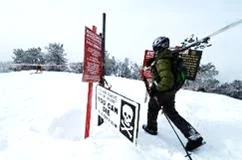
The modern skiing and snowboarding landscape has undergone a radical transformation over the last two decades, driven by advancements in equipment technology and an increasing desire for untouched powder. This evolution has brought a significant portion of the skiing public to the boundary lines of major resorts, where the transition from managed slopes to wild, unpatrolled terrain is often marked by nothing more than a single rope or a backcountry access gate. While these areas are frequently referred to as "sidecountry" or "slackcountry" due to their proximity to chairlifts, experts warn that the terminology itself creates a dangerous illusion of safety. In reality, the moment a recreationist steps beyond the resort boundary, they enter a world where the rules of the ski area no longer apply, and the environment is effectively "Rated R" for its inherent risks and lack of institutional oversight.
The Illusion of Proximity and the Safety Paradox
The term "sidecountry" suggests a middle ground between the controlled environment of a commercial ski resort and the remote wilderness of the deep backcountry. This proximity to infrastructure—lodges, chairlifts, and groomed runs—often lulls skiers and snowboarders into a false sense of security. Because they can see the resort from the ridgeline, or because they accessed the terrain via a high-speed lift, many users mistakenly believe that the area is subject to the same rigorous avalanche mitigation efforts performed by professional ski patrols within the resort boundaries.
However, the operational reality is starkly different. Ski patrols at United States resorts typically manage avalanche hazards through the use of explosives, ski cutting, and physical monitoring only within the legally defined permit area. Once a user exits through a gate, they are on public land, usually managed by the U.S. Forest Service or the Bureau of Land Management. In these zones, no avalanche control is performed. The snowpack is wild, unpredictable, and entirely dependent on the whims of weather and topography.
The "Rated R" metaphor, popularized by avalanche safety advocates, highlights the mature level of responsibility required for such terrain. Just as an R-rated film is deemed unsuitable for those without the maturity to process its content, sidecountry terrain is unsuitable for those without the proper equipment, training, and partners. As Doug Richmond and other industry experts have noted, there is a growing concern regarding parental awareness. Many parents drop their children off at the resort parking lot, assuming they are in a supervised environment, unaware that their children may be spending the day in high-consequence, uncontrolled terrain where the resort has no obligation or ability to intervene in the event of a slide.
Historical Context and the Rise of Backcountry Access
The transition toward sidecountry skiing began in earnest during the late 1990s and early 2000s. Before this era, "ducking the rope" was often a strictly prohibited offense that could lead to a permanent ban from the resort. However, as public demand for off-piste terrain grew, many resorts worked with federal land managers to establish "open boundary" policies. This allowed skiers to legally exit the resort to access public lands, provided they did so through designated access points.
This policy shift coincided with a revolution in gear. The advent of "fat" skis with rockered profiles and splitboards made it significantly easier for intermediate-level athletes to navigate deep, ungroomed snow. What was once the exclusive domain of elite mountaineers became accessible to the general public. Consequently, the volume of traffic in out-of-bounds areas adjacent to resorts like Jackson Hole, Whistler Blackcomb, and the resorts of the Wasatch Range has increased exponentially.
Statistical Overview of Avalanche Fatalities
Data from the Colorado Avalanche Information Center (CAIC) and Avalanche.org illustrates a sobering trend regarding out-of-bounds accidents. Since the year 2000, there has been a notable shift in the demographics of avalanche victims. While traditional backcountry tourers (those who hike or skin from the trailhead) remain a high-risk group, "sidecountry" users represent a significant and growing portion of annual fatalities.
According to national statistics, the United States averages approximately 25 to 30 avalanche deaths per winter season. A deep dive into the data reveals that a substantial percentage of these incidents occur within one mile of a ski area boundary. In many of these cases, the victims were found to be lacking essential safety equipment—specifically a beacon, probe, and shovel. The lack of gear is often attributed to the "lift-access" mentality; if a skier didn’t have to "earn their turns" by hiking, they often fail to perceive the need for specialized rescue equipment.
Furthermore, the "social proof" factor plays a major role in these statistics. When a sidecountry slope is visible from a lift, and multiple sets of tracks are already present, users often assume the slope is stable. Avalanche experts refer to this as a "heuristic trap." In reality, tracks in the snow do not indicate stability; they merely indicate that the previous skiers were lucky.
The Responsibility of Rescue and the Role of Ski Patrol
One of the most critical distinctions between in-bounds and out-of-bounds terrain is the protocol for search and rescue (SAR). Within the resort, the ski patrol is the primary responding agency. They are staffed, equipped, and trained to reach an accident site within minutes.
However, once an accident occurs outside the boundary, the legal responsibility for rescue shifts to the local county sheriff’s department, often assisted by volunteer SAR teams. While ski patrols may assist in a rescue if they have the resources and the terrain is safe for their personnel, they are not mandated to do so. In many instances, a resort’s insurance policy or internal safety protocols may actually prohibit patrollers from entering certain out-of-bounds areas during active storm cycles.
The logistics of an out-of-bounds rescue are complex and time-consuming. It can take hours for a SAR team to mobilize, reach the trailhead, and navigate to the victim. In the context of an avalanche burial, where the window of survival drops precipitously after 15 minutes, the delay inherent in an external rescue operation is almost always fatal. Thus, the "R-rated" nature of the terrain dictates that the rider is their own first responder.
Educational Initiatives and the "Know Before You Go" Movement
In response to the rising number of sidecountry incidents, organizations like the American Institute for Avalanche Research and Education (AIARE) and the Northwest Avalanche Center (NWAC) have intensified their outreach efforts. The "Know Before You Go" (KBYG) program was specifically designed to target the younger demographic and the casual resort skier who might be tempted to duck through an access gate.
The educational curriculum emphasizes five key pillars:
- Get the Gear: Always carry a transceiver, probe, and shovel on your person, not in a backpack that could be ripped off in a slide.
- Get the Training: Attend at least an introductory avalanche awareness clinic or a Level 1 certification course.
- Get the Forecast: Check the daily avalanche bulletin provided by local centers (such as the Utah Avalanche Center or CAIC) to understand the specific snowpack problems of the day.
- Get the Picture: Observe the weather and look for signs of instability, such as recent avalanches or "whumpfing" sounds.
- Get Out of Harm’s Way: Only expose one person at a time to a slope and maintain constant communication with partners.
Management Challenges and the Future of Access
Ski resort operators face a difficult balancing act. On one hand, they wish to provide the "total mountain experience" that modern consumers demand. On the other hand, they face significant liability concerns and the emotional toll that fatalities take on their staff and the community.
Some resorts have experimented with "controlled sidecountry," where they perform limited mitigation on popular out-of-bounds runs, but this creates a legal gray area that many corporate legal teams find unacceptable. Others have opted for more aggressive signage, using "skull and crossbones" imagery and explicit warnings that "You Can Die" to pierce through the complacency of casual visitors.
In some European jurisdictions, the distinction is even more rigid. In many French and Swiss resorts, "off-piste" refers to anything away from the groomed trail, even if it is technically within the resort’s geographic footprint. The American model of a "secured boundary" is unique, and as the sidecountry continues to see record-breaking numbers of visitors, the pressure on this model is reaching a breaking point.
Conclusion: The Mandate for Personal Accountability
The "Sidecountry: Rated R" designation serves as a vital reminder that nature does not recognize man-made boundaries. The snowpack on one side of a rope is not inherently safer than the snow on the other; the only difference is the human intervention of the ski patrol.
As the industry moves forward, the emphasis must remain on personal accountability. The convenience of lift-access backcountry does not negate the need for the same level of preparation required for a remote expedition. For skiers and snowboarders, the gate is more than just a physical opening in a fence—it is a transition into a high-stakes environment where the margin for error is zero. Understanding that the sidecountry is "Rated R" is the first step in ensuring that a day in the mountains ends with a safe return to the parking lot, rather than a call to search and rescue. For the parents waving goodbye, and for the riders themselves, education and awareness are the only tools capable of bridging the gap between the thrill of the descent and the reality of the risk.
