

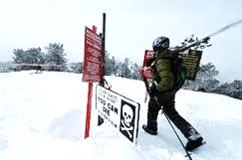
The allure of untouched powder and the thrill of venturing beyond the ropes have long captivated skiers and snowboarders. Many of the nation’s premier ski resorts are strategically situated on or adjacent to vast expanses of public land, offering an irresistible invitation to explore the untamed backcountry. While this accessibility presents an unparalleled recreational resource, it also ushers in a realm of inherent risks, characterized by a stark absence of control and patrol. Unlike the meticulously managed slopes within resort boundaries, these uncontrolled areas are not subject to avalanche mitigation efforts by ski patrols. Crucially, in the unfortunate event of an accident in these zones, the responsibility for rescue falls squarely upon the individuals involved and their companions, rather than resort-based rescue teams. This critical distinction, often overlooked by eager powder hounds, raises profound questions about awareness and preparedness, particularly concerning younger, less experienced riders venturing into potentially hazardous terrain.
The Siren Call of the Uncharted
The concept of "sidecountry" skiing and snowboarding refers to terrain accessible from a ski resort’s boundary, typically via gates or hiking, but which lies outside the patrolled and avalanche-controlled areas of the resort. This terrain often boasts steep, ungroomed slopes and pristine, deep snow, offering a compelling alternative to crowded resort runs. For many, it represents the pinnacle of the skiing and snowboarding experience, a chance to escape the manicured perfection of the resort and embrace the raw beauty and challenge of the natural environment. The accessibility factor is key; skiers can often ascend to these areas with minimal effort from the resort’s lift system, making the transition from in-bounds to out-of-bounds relatively seamless. This ease of access, however, belies the significant increase in objective hazards, primarily avalanches, but also terrain traps, cliffs, and the potential for getting lost.
A Growing Trend with Unforeseen Consequences
The popularity of sidecountry and backcountry skiing has surged in recent years, driven by a confluence of factors. The development of lighter, more efficient touring equipment has made ascending slopes more feasible for recreational users. Social media platforms, awash with images and videos of epic powder turns in remote settings, have further fueled aspirations. Furthermore, the rising cost of lift tickets at many resorts has also encouraged some skiers to seek alternative, often free, access to challenging terrain. Data from the U.S. Forest Service indicates a steady increase in backcountry use permits and visitation in popular wilderness areas adjacent to ski resorts. For instance, in the Intermountain West, a region dotted with numerous ski resorts bordering national forests, backcountry use has been documented to be as high as 30% of total skier visits in some popular areas during peak winter months.
This burgeoning interest, however, is not always accompanied by a commensurate understanding of the risks involved. The article referenced, "Sidecountry: Rated R," published by avalanche.org, highlights a critical concern voiced by experienced professionals like Doug, who questions parental awareness. "After a parent waves goodbye in the ski area parking lot do they know what the kids are doing? Are they leaving the ski area for R-rated terrain?" This rhetorical question underscores a fundamental disconnect: parents may assume their children are staying within the safe confines of the resort, unaware of their decision to traverse through gates and into uncontrolled avalanche terrain. The term "R-rated terrain" is a stark, albeit informal, descriptor that encapsulates the heightened dangers associated with these areas, implying content unsuitable for general audiences due to its inherent risks.
The Uncontrolled Environment: A Stark Contrast to Resort Safety
Within the boundaries of a ski resort, a dedicated team of ski patrollers works tirelessly to ensure the safety of guests. Their responsibilities include avalanche control work, which involves strategically triggering small avalanches in unstable snowpacks to prevent larger, more dangerous slides. They also mark hazardous areas, rescue injured individuals, and educate the public about mountain safety. This robust infrastructure of safety protocols and trained professionals is entirely absent in the sidecountry.
In uncontrolled backcountry areas, skiers and snowboarders are entirely reliant on their own knowledge, equipment, and decision-making. This necessitates a comprehensive understanding of avalanche science, including snowpack assessment, weather patterns, and terrain analysis. Essential avalanche safety gear includes an avalanche transceiver, a probe, and a shovel. Crucially, individuals venturing into these areas should have received formal avalanche education, typically through courses offered by organizations like the American Avalanche Association or local avalanche centers. The National Avalanche Center reports that between 2010 and 2020, an average of 27 avalanche fatalities occurred annually in the United States, with a significant portion of these occurring in areas accessible from ski resorts.
A Timeline of Accessibility and Risk
The expansion of ski resorts onto or adjacent to public lands is a historical trend dating back to the mid-20th century. As ski areas grew in popularity and sought to offer more challenging terrain, their boundaries often extended to the edge of national forests or Bureau of Land Management (BLM) lands. This created a natural interface between the controlled resort environment and the uncontrolled backcountry.
- Mid-20th Century: Early ski resorts begin to develop on public lands, often with limited understanding of long-term backcountry use implications.
- Late 20th Century: The advent of more sophisticated ski equipment and increasing interest in off-piste skiing leads to more frequent excursions beyond resort boundaries.
- Early 21st Century: The rise of social media, the internet, and improved touring gear amplifies the appeal and accessibility of sidecountry terrain. Avalanche awareness and education efforts begin to gain more traction, but often lag behind the surge in participation.
- Present Day: Ski resorts grapple with managing the interface between in-bounds and out-of-bounds terrain, while backcountry use continues to climb. Concerns regarding the preparedness of recreational users, particularly younger demographics, become increasingly prominent.
The legal and ethical responsibilities surrounding sidecountry access are complex. While ski resorts may provide access points, they generally disclaim liability for incidents occurring outside their designated and patrolled areas. This is typically communicated through signage at resort boundaries and waivers signed by patrons. However, the ease with which individuals can transition from a resort run to an uncontrolled slope can create a false sense of security.
Official Responses and Expert Opinions
The concern articulated by Doug in the original piece is echoed by many in the avalanche safety community. Avalanche centers across the country, such as the Colorado Avalanche Information Center (CAIC) and the Northwest Avalanche Center (NWAC), consistently issue avalanche forecasts and educational materials aimed at mitigating risks. These organizations emphasize the importance of backcountry education, proper gear, and conservative decision-making.
"We see a significant number of incidents involving individuals who have entered the backcountry with inadequate preparation," stated a spokesperson for a prominent avalanche education organization, speaking on condition of anonymity to avoid speaking on behalf of their institution. "The temptation of fresh snow just beyond the rope line is powerful, but the consequences of underestimating avalanche danger can be tragic. We strongly advocate for formal training and a thorough understanding of the terrain and snow conditions before venturing out."
Ski resorts themselves are also increasingly aware of the challenges posed by sidecountry access. While they are not responsible for avalanche control outside their boundaries, many are investing in educational programs and clearer signage to alert skiers to the inherent dangers. Some resorts have implemented more stringent gate management policies and provide information about local avalanche centers to their patrons. However, the ultimate responsibility for safe travel in the backcountry remains with the individual.
Broader Impact and Implications
The increasing popularity of sidecountry skiing and snowboarding has several broader implications. Firstly, it places a greater demand on backcountry rescue resources. While ski resorts have established rescue teams, local search and rescue organizations, often comprised of volunteers, bear the brunt of responding to incidents in uncontrolled areas. This can strain their resources and put volunteer rescuers at risk.
Secondly, it highlights a generational challenge in outdoor recreation. Younger generations, often more connected to social media trends and less experienced with traditional outdoor pursuits, may be drawn to the allure of the backcountry without fully grasping the depth of knowledge and skill required. The "Rated R" nature of sidecountry terrain necessitates a level of maturity and preparedness that may not always be present.
Finally, the trend underscores the importance of ongoing public education and awareness campaigns. As access to public lands for recreation continues to grow, fostering a culture of safety, responsibility, and respect for the mountain environment is paramount. This involves not only providing information but also ensuring that individuals have the opportunity to acquire the necessary skills and knowledge to recreate safely. The stark reality is that the "sidecountry" is not a controlled playground; it is a wild and unpredictable environment where knowledge, preparedness, and a healthy dose of caution are the only guarantees of a safe return.
