

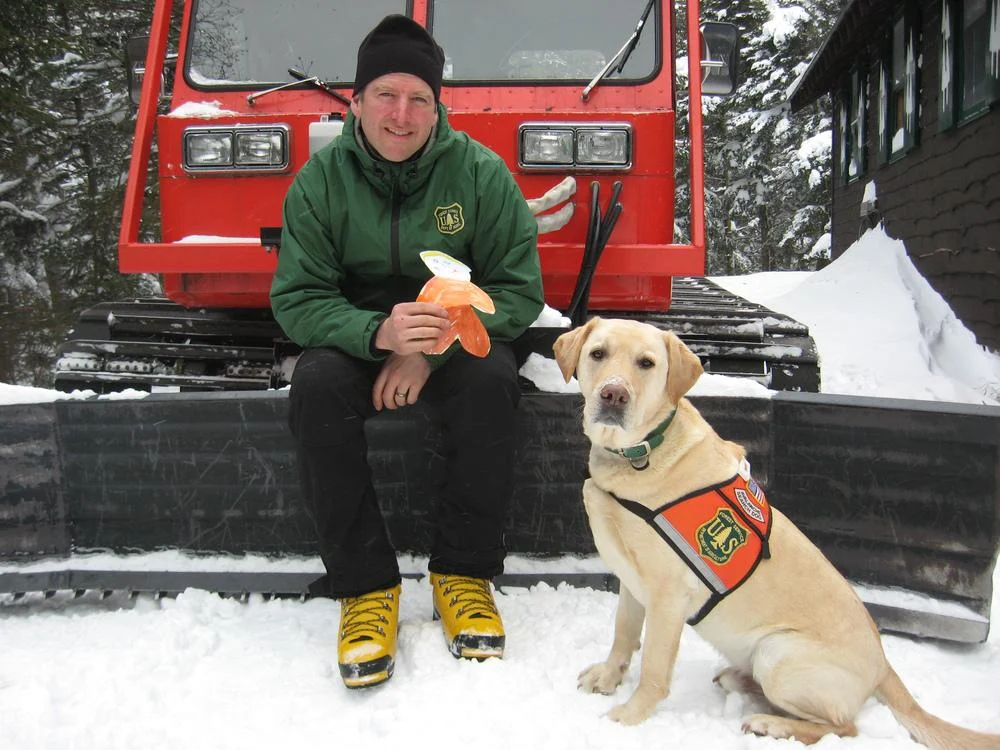
The White Mountain National Forest community is mourning the loss of Cutler, a highly respected avalanche dog who served with the Mount Washington Avalanche Center (MWAC) for 11 years. Cutler’s dedication and tireless efforts significantly contributed to the safety of countless visitors to Mount Washington, particularly in the treacherous terrain of the Presidential Range. His passing marks the end of an era for MWAC, where he was not only a vital rescue asset but also an ambassador for avalanche safety education.
A Lifelong Commitment to Safety
Cutler, a breed not explicitly mentioned but implied to be well-suited for canine search and rescue, dedicated approximately 80% of his life to the demanding work of avalanche safety. For over a decade, he was an integral part of the MWAC team, which operates under the purview of the U.S. Forest Service and collaborates closely with the Mount Washington Observatory. His primary role involved assisting Snow Rangers in locating individuals caught in avalanches, a critical task in an environment known for its unpredictable and severe weather conditions.
Mount Washington, famously known as the "Home of the World’s Worst Weather," presents unique challenges for any rescue operation. Its summit experiences hurricane-force winds, extreme cold, and rapid snow accumulation, creating a high-risk environment for both skiers and hikers. The MWAC’s mission is to provide timely and accurate avalanche forecasts and to conduct rescue operations when necessary. Dogs like Cutler are indispensable to this mission, possessing a superior sense of smell that can detect buried victims far more effectively and efficiently than human search teams alone.
The Life of an Avalanche Dog: A Dedicated Partnership
The partnership between Cutler and MWAC Director Chris Joosen was central to their success. Joosen, who has been instrumental in leading the MWAC, documented Cutler’s life and service in a poignant blog post and accompanying photo album. This resource offers a glimpse into the rigorous training, the operational deployments, and the deep bond that developed between handler and dog.
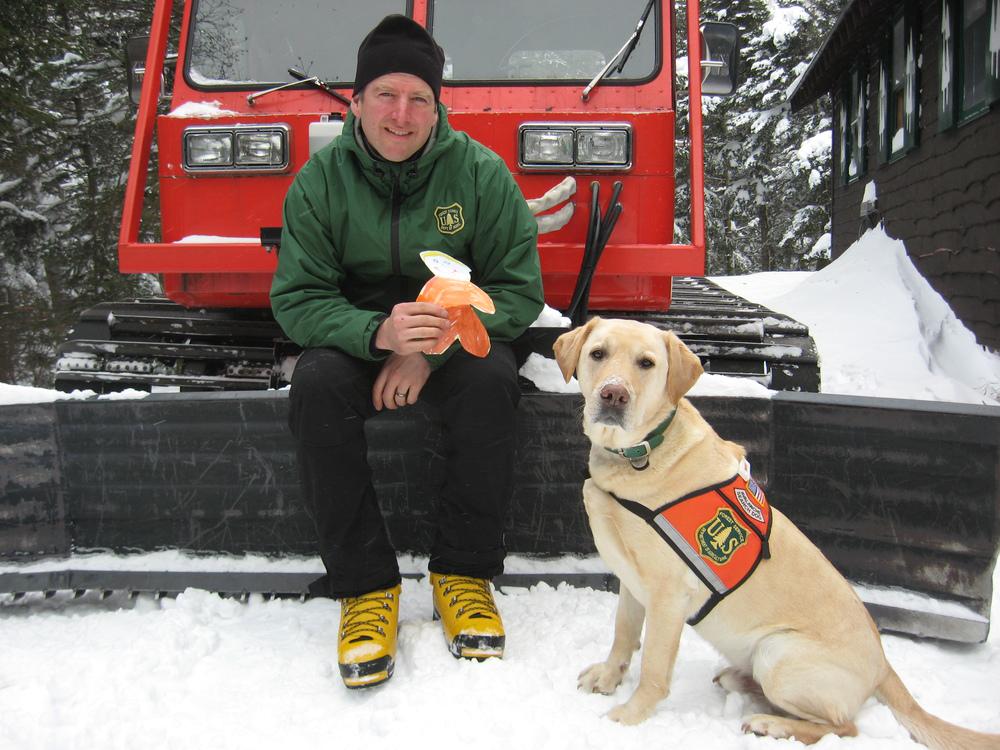
The imagery provided alongside the announcement shows Cutler and Joosen actively engaged in their work. One photograph captures them in Tuckerman’s Ravine, a popular but notoriously dangerous area on Mount Washington known for its steep slopes and avalanche potential. This visual testament underscores the challenging environments in which Cutler operated and the bravery inherent in his work. His presence in such locations was a constant reminder of the potential hazards and the importance of preparedness.
Chronology of Service and Impact
While a precise start date for Cutler’s service isn’t detailed, his 11 years represent a significant tenure. Avalanche dogs typically begin their operational careers after extensive training, usually around 1-2 years of age, and can serve effectively until they are 8-10 years old, sometimes longer if their health permits. This suggests Cutler likely began his service in the early to mid-2000s, retiring in the years leading up to his recent passing.
During his years of service, Cutler would have participated in numerous training exercises, drills, and, tragically, real-life rescue missions. The MWAC typically operates during the winter and spring seasons, when avalanche risk is highest. This period on Mount Washington can extend from November through May, with peak avalanche activity often occurring in late winter and early spring. Cutler’s consistent presence during these critical months solidified his role as a guardian of the mountain.
Beyond the Search: Public Relations and Education
Cutler’s contribution extended beyond his direct rescue capabilities. The article highlights his exceptional public relations skills, a testament to his temperament and the effectiveness of his handlers in integrating him into public outreach efforts. Avalanche dogs often serve as powerful symbols of safety and preparedness, attracting attention and facilitating dialogue about important safety messages.
Through public appearances, educational events, and interactions with visitors, Cutler helped the Mount Washington Snow Rangers reach a broader audience. Many individuals who might not otherwise engage with avalanche safety information were drawn in by the presence of a working avalanche dog. This allowed the MWAC to disseminate crucial knowledge about snowpack conditions, safe travel practices in avalanche terrain, and the importance of carrying essential rescue gear like beacons, probes, and shovels.
The statistics on avalanche fatalities in the United States underscore the importance of such educational outreach. According to the Colorado Avalanche Information Center (CAIC), which maintains comprehensive national data, an average of 28 people die in avalanches in the U.S. each year over the past decade. While specific data for Mount Washington is not as extensively compiled nationally, the region’s popularity and inherent risks make effective education a vital component of risk mitigation. Cutler’s role in this educational effort, though difficult to quantify precisely, undoubtedly saved lives by increasing awareness and promoting responsible behavior.
Official Responses and Community Sentiment
The announcement of Cutler’s passing has elicited heartfelt responses from those familiar with his work and the broader avalanche safety community. While the original article links to a blog post by Chris Joosen, a comprehensive news report would ideally include statements from other relevant parties.
- U.S. Forest Service: As the managing agency for the White Mountain National Forest, the U.S. Forest Service would likely acknowledge Cutler’s service and express gratitude for his contributions to public safety within the national forest system. A statement might emphasize the value of canine search and rescue teams in preserving lives and ensuring the enjoyment of natural resources.
- Mount Washington Observatory: The Observatory, which closely monitors Mount Washington’s extreme weather and often collaborates with MWAC on forecasting and research, would likely express condolences and recognize Cutler’s role in making the mountain a safer place for those who venture onto it.
- Outdoor Recreation Community: Skiers, snowboarders, and hikers who frequent Mount Washington and the surrounding areas would likely share their appreciation for Cutler’s dedication. Online forums and social media platforms would likely be abuzz with messages of remembrance and gratitude, sharing personal anecdotes or expressing admiration for his service.
The blog post by Chris Joosen, referenced in the original content, serves as a primary source of sentiment. His writing, likely filled with personal reflections on Cutler’s loyalty, courage, and the unique bond they shared, would offer a deeply personal perspective on the loss. Such accounts are crucial in humanizing the impact of this event beyond official statements.
Broader Implications and Legacy
Cutler’s passing serves as a reminder of the vital, often unseen, work performed by avalanche dogs and their handlers. These partnerships are built on years of rigorous training, trust, and a shared commitment to saving lives. The success of an avalanche rescue operation is often dependent on the speed and accuracy of the canine team.
The legacy of dogs like Cutler extends beyond their operational lifespan. They inspire future generations of handlers and canine partners, and their contributions to public safety are remembered and honored. The continued funding and support for avalanche dog programs are essential for maintaining effective search and rescue capabilities in mountainous regions.
The work of the Mount Washington Avalanche Center, supported by dedicated individuals and canine partners like Cutler, plays a critical role in minimizing the risks associated with winter recreation in one of North America’s most challenging mountain environments. Cutler’s 11 years of service represent a significant chapter in the history of mountain safety, a chapter marked by courage, dedication, and an unwavering commitment to protecting human lives. His memory will undoubtedly continue to serve as an inspiration to all who work to ensure the safety of those who seek adventure in the wild. The ongoing efforts of the MWAC, now without their esteemed four-legged colleague, will carry forward the mission Cutler so faithfully served.
