

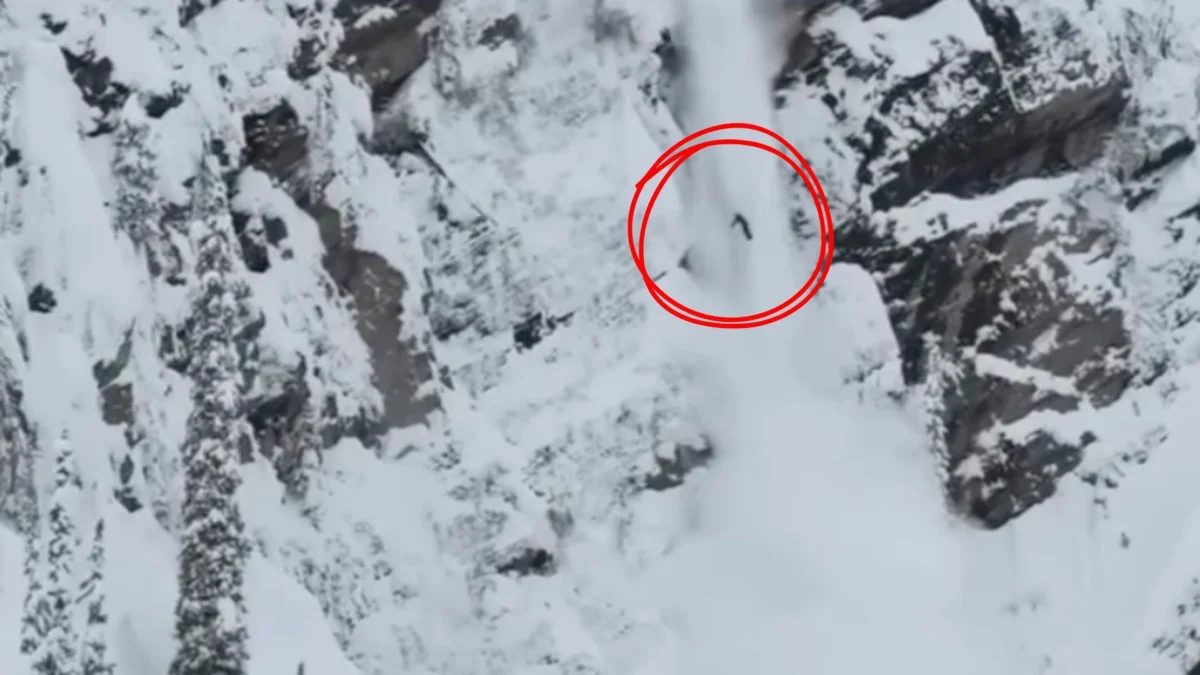
In an astonishing display of resilience against the unforgiving forces of nature, Alberta snowmobiler Taylor Hoffmann endured a harrowing 700-foot free fall at the infamous Big Iron Chute Out in Revelstoke, British Columbia, before incredibly riding his damaged machine away from the scene. The incident, which occurred after Hoffmann ascended the treacherous Gibbs Gash, has sent ripples of awe and caution throughout the global action sports community, highlighting both the extreme risks inherent in backcountry snowmobiling and the remarkable capacity for survival in dire circumstances. While Hoffmann walked away, albeit with a fractured T7 vertebrae, his ordeal stands as a stark reminder of the razor-thin margin between triumph and tragedy in the pursuit of extreme winter sports.
The Perilous Ascent and Fatal Miscalculation at Gibbs Gash
The event unfolded in a region renowned for its challenging terrain and deep snowpacks, a magnet for elite snowmobilers seeking the ultimate test of skill and nerve. Revelstoke, nestled amidst the Selkirk and Monashee Mountains, offers some of North America’s most demanding backcountry, making locations like Gibbs Gash legendary among the sport’s most daring participants. The Big Iron Chute Out, while not explicitly detailed as a formal competition in the public domain, is understood within the snowmobiling subculture as a high-stakes gathering where riders push the limits on iconic, often named, steep lines and chutes.
On the day of the incident, Hoffmann, an experienced rider known for his aggressive style and mastery of technical terrain, successfully navigated the steep, challenging ascent of Gibbs Gash. This particular line, characterized by its extreme gradient and propensity for unpredictable snow conditions, demands absolute precision and an intimate understanding of snow dynamics. Reaching the summit of such a chute is often only half the battle; the descent or the maneuver to turn around in limited space presents its own unique set of dangers.
It was during this critical transition at the ridge’s edge that the unforeseen occurred. As Hoffmann attempted to reposition his high-powered snowmobile, the machine sank into a pocket of deep, unconsolidated snow. This soft, unstable foundation proved catastrophic; the sheer weight of the sled combined with the rider’s momentum caused the snow cornice or ledge beneath them to collapse. In a fraction of a second, the ground vanished, and Hoffmann, still tethered to his machine, was plunged into a terrifying free fall down the sheer 700-foot cliff face. This immediate loss of control, amplified by the immense height and the knowledge of the unforgiving rock faces below, presented a scenario from which few could expect to emerge. Hoffmann later recounted on the Sledder Cast podcast the chilling certainty that gripped him during the descent: he believed his survival was impossible.
The Physics of a Fall: A Desperate Descent and a Miraculous Impact
A 700-foot fall is equivalent to dropping from the top of a 70-story building. The forces involved in such an event are typically lethal. In free fall, an object accelerates at approximately 9.8 meters per second squared (g), meaning that without air resistance, Hoffmann and his sled would have reached terminal velocity or a significant fraction of it by the time they impacted. While air resistance and the tumbling motion would have played a role, the speed at impact would still have been immense, generating kinetic energy capable of inflicting catastrophic trauma. The average human body can withstand only a fraction of the forces associated with such a fall, especially when impacting solid ground or rock.
What transpired next, however, defied typical outcomes. Hoffmann’s survival hinged on a confluence of factors often referred to as sheer luck, but also potentially influenced by the dynamic nature of the fall itself. As he plummeted, he was fortunate enough to avoid direct impact with the exposed, jagged rock formations that typically characterize such cliff faces. Instead, his trajectory led him towards what the snowmobiling community often refers to as a "pillow" – a deep, voluminous accumulation of extremely soft, freshly fallen snow. This natural cushioning acted as a massive, albeit violent, shock absorber. The soft snow significantly extended the deceleration time upon impact, distributing the force over a larger area and longer duration than a hard surface would. This crucial difference reduced the peak force exerted on Hoffmann’s body, preventing instant, fatal injuries.
Eyewitnesses, initially paralyzed by the horrifying sight, quickly mobilized as Hoffmann came to rest. To their utter disbelief and profound relief, the rider not only showed signs of life but also managed to stand up almost immediately. The first communications from Hoffmann to the stunned onlookers confirmed the miracle: he was conscious, coherent, and, against all odds, able to move. The astonishment did not end there; his snowmobile, a complex piece of machinery, also appeared to be largely intact and, remarkably, functional. Hoffmann was able to restart the engine and, with an incredible display of grit, ride his sled out from the scene under his own power, further cementing the incident’s legendary status.
Immediate Aftermath and Medical Assessment
Following his self-extraction from the precarious fall site, Hoffmann was transported to a local hospital for a comprehensive medical evaluation. Despite his immediate ability to walk and ride, the sheer force of the impact had taken its toll internally. Doctors confirmed a fractured T7 vertebra, a serious spinal injury that underscores the severity of the fall. The thoracic spine (T1-T12) is crucial for core stability and protecting the spinal cord, and injuries to this region can range from mild compression fractures to severe instability and neurological damage. Hoffmann’s specific injury, while significant, was not immediately life-threatening and, critically, did not result in permanent paralysis or severe neurological deficits. This outcome, given the circumstances, is considered extraordinarily fortunate by medical professionals.

Recovery from a T7 vertebral fracture typically involves a period of immobilization, pain management, and physical therapy. Depending on the stability of the fracture, surgical intervention may be required, but often, non-surgical management is pursued. The prognosis for full recovery, particularly for active individuals like Hoffmann, is generally positive, though it requires patience and adherence to rehabilitation protocols. His high spirits and determination to return to full health are crucial components of his recovery journey.
The Broader Context: Allure, Risk, and Evolution of Backcountry Snowmobiling
Backcountry snowmobiling, especially at its extreme end, is a sport defined by high stakes and immense rewards. Riders are drawn to the freedom, the challenge, and the unparalleled access to remote, pristine landscapes. The evolution of snowmobile technology, with lighter, more powerful, and agile machines, has pushed the boundaries of what is possible, allowing riders to ascend increasingly steep and technical terrain. However, this advancement also means riders can access more hazardous environments, where the consequences of error are amplified.
Data from various outdoor recreation safety organizations consistently highlights the inherent dangers of backcountry activities. Avalanches, tree wells, mechanical failures in remote areas, and falls are among the leading causes of injury and fatality. While precise statistics for falls of this magnitude are rare due to their infrequent and often fatal nature, the rarity of Hoffmann’s survival underscores the extreme unlikelihood of his outcome. This incident serves as a powerful case study for risk assessment, terrain management, and the crucial role of snowpack stability in extreme environments.
The snowmobiling community, while celebrating Hoffmann’s survival, is also acutely aware of the cautionary tale it represents. Discussions around the "no-fall zone" philosophy, where even a minor error can lead to catastrophic consequences, are central to advanced backcountry education. The incident prompts a renewed focus on conservative decision-making, thorough route planning, and the importance of having robust safety protocols in place, including communication devices, emergency beacons, and skilled partners.
Community Reaction and Safety Implications
The news of Taylor Hoffmann’s miraculous survival spread rapidly through the action sports world, especially within the tight-knit snowmobiling community. Reactions ranged from disbelief and shock to immense relief and admiration for his fortitude. Fellow riders, many of whom have experienced their own close calls, expressed profound gratitude that Hoffmann lived to tell his story. The incident immediately became a topic of intense discussion on forums, social media, and podcasts dedicated to the sport, reigniting conversations about safety, preparedness, and the fine line between calculated risk and reckless abandon.
Safety advocates within the snowmobiling community emphasized that while Hoffmann’s survival was extraordinary, it should not lead to complacency regarding backcountry dangers. Instead, it should reinforce the critical importance of continuous education, advanced training in avalanche safety, first aid, and self-rescue techniques. The incident is a vivid reminder that even the most experienced riders can face unforeseen circumstances where the environment itself becomes the ultimate arbiter. Organizations dedicated to snowmobile safety and avalanche awareness will undoubtedly use this incident as a powerful teaching moment, reinforcing lessons on terrain assessment, snow stability evaluation, and the necessity of wearing appropriate protective gear, even if it didn’t directly prevent the fall’s initial impact.
The Legacy of a Fall: A Testament to Resilience and a Call for Caution
Taylor Hoffmann’s fall at Revelstoke’s Big Iron Chute Out will undoubtedly be etched into the annals of extreme sports history. It stands as a testament to human resilience, the unpredictable benevolence of nature, and the sheer audacity of those who push the boundaries of what is thought possible. His ability to not only survive but also self-rescue, riding his sled away from a scene that could have easily claimed his life, elevates this incident beyond a mere accident to a narrative of extraordinary survival.
As Hoffmann embarks on his recovery, his story serves a dual purpose: it inspires awe at the human spirit’s capacity to overcome, and it delivers a potent, sobering message about the inherent risks of engaging with wild, untamed environments. The backcountry offers unparalleled beauty and exhilaration, but it demands respect, preparation, and an unwavering commitment to safety. Hoffmann’s experience will resonate for years to come, a powerful reminder that while dreams may come true in the mountains, so too can the most terrifying of nightmares, and sometimes, miraculously, both can converge in a single, unforgettable moment. The incident will continue to fuel discussions among riders, manufacturers, and safety experts, shaping future approaches to extreme snowmobiling and ensuring that the lessons learned from this incredible survival story contribute to a safer, more informed community.
