

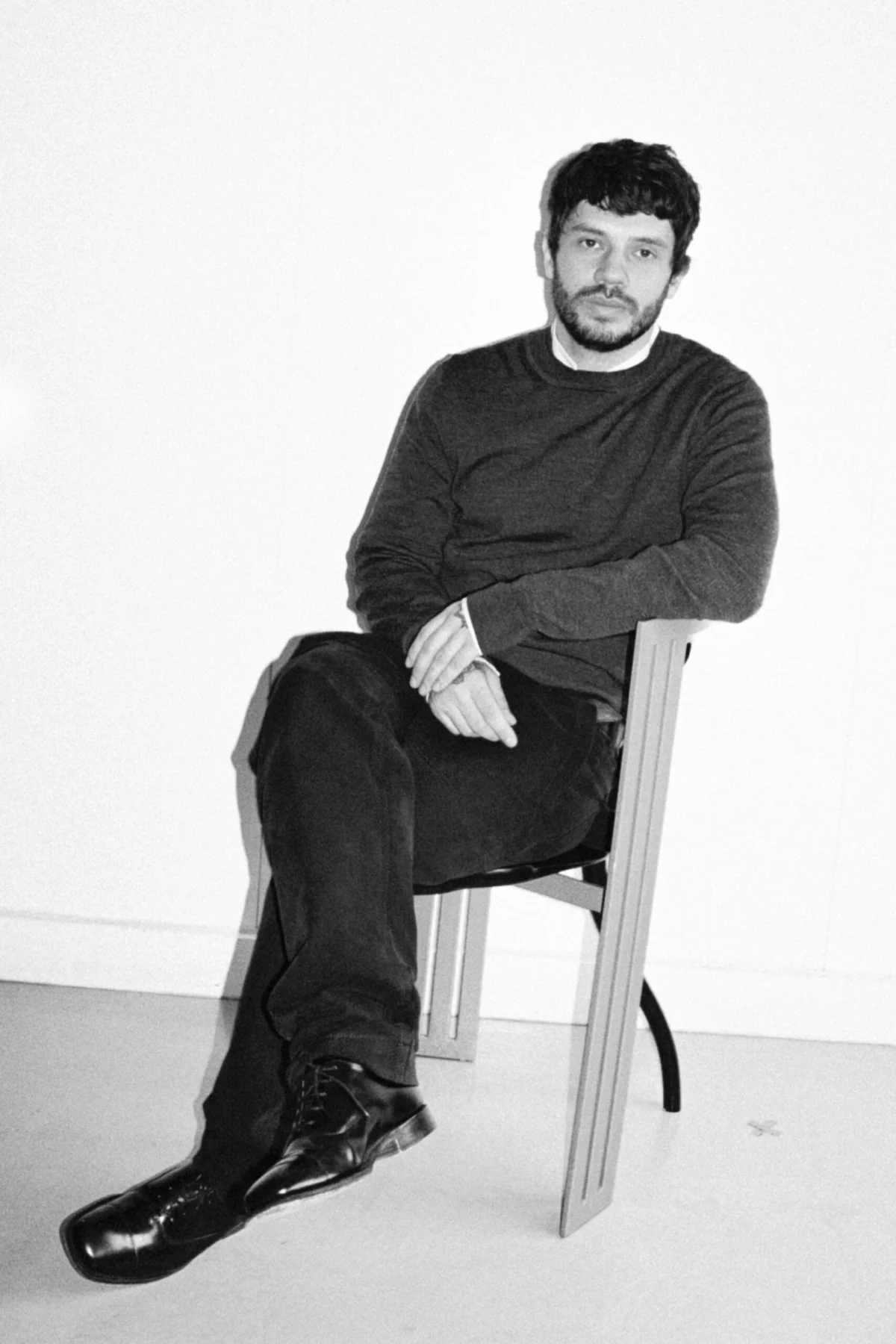
The transformation of AllSaints, a British premium brand with a rich history rooted in London’s industrial heritage, is underway, spearheaded by the appointment of acclaimed designer Aaron Esh as Chief Creative Officer. This strategic pivot marks a significant moment for the company, aiming to redefine its identity and recapture its cultural cachet for a new generation of consumers. Esh, a London native celebrated for his eponymous buzzy label, is at the helm of this ambitious overhaul, meticulously finalizing nearly a year’s worth of creative groundwork, poised for a grand reveal on September 1st. The central question on the fashion industry’s radar: can Esh revitalize AllSaints and make it "cool" again?
The initial stages of Esh’s tenure have been characterized by a deliberate and strategic unveiling of his vision. A significant move was the enigmatic wiping of the brand’s Instagram account in August, a prelude to a carefully curated drip-feed of new content. This campaign has introduced Esh and his key collaborators in the brand’s revamp, including art director Jamie Reid, stylist Katy England, and Matthew Whitehouse, Head of Editorial Content and Creative at Farfetch. Whitehouse, with his experience editing the free zine The Ram, is set to play a role in the relaunch during London Fashion Week. Behind the scenes, Esh has been instrumental in bolstering the AllSaints atelier, attracting talent from prestigious houses such as McQueen, Marni, and Burberry. The early indications, gleaned from showroom tours, suggest a collection focused on "forever pieces" with a high-quality finish, designed to integrate seamlessly into both directional and more conventional wardrobes. This aesthetic evolution is being underscored by a broader brand narrative that is deeply rooted in its London origins.
A Shifting Brand Identity: From Indie Sleaze to Elevated Cool
Globally, the perception of AllSaints is varied, as acknowledged by company representatives. In Asia, the brand currently enjoys a stronger, more premium positioning, often regarded as high-end. However, for many consumers in the United Kingdom, AllSaints’ peak recognition arguably occurred during the 2000s and early 2010s. This era was synonymous with the "indie sleaze" aesthetic, characterized by studded belts, military boots, distressed denim, and a cultural resonance amplified by popular youth culture television series like Skins. Across other international markets, the brand has historically maintained a more robust image than in its domestic market.

The brand’s foundational DNA was forged in the rock ‘n’ roll spirit under founding designers Stuart Trevor and Kait Bolongaro in 1994. A pivotal shift occurred in 2005 when Trevor sold the brand to fashion entrepreneur Kevin Stanford, who initiated a period of significant expansion. By 2012, Will Beedle, who had joined the company in 2006 as menswear director, ascended to the role of Chief Creative Director, a position he held until his departure in 2021. Prior to Esh’s appointment, the brand’s image had become a significant challenge, requiring more than superficial marketing adjustments; a comprehensive reset was deemed necessary. This reset includes a notable update to the brand’s iconic ramskull logo, a symbol intrinsically linked to its identity.
Building the Foundation for a New Era
Esh candidly admits to the initial state of the creative infrastructure: "The structure and the systems of the creative team here were really bad." However, he views this as an opportunity: "But what did that give me? An opportunity to build it." This foundational rebuilding extends across design, social media presence, and the brand’s website. At AllSaints, Esh commands a workforce of approximately 2,000 employees and benefits from the backing of a trusting CEO, Peter Wood. This is a stark contrast to the lean team he manages for his own eponymous label, launched in 2022. "It’s a different proposition than a traditional fashion house, but it’s also my first [corporate] job," Esh notes. "I’m 35, so in the context of creative directors, I’m a baby. I’m learning on the job."
CEO Peter Wood’s Strategic Gamble on Creativity
CEO Peter Wood has placed considerable faith in Esh’s creative vision, a decision that underscores a significant strategic shift for the company. "As a CEO, you have to make changes with the team, and you have to be comfortable with that," Wood states. "This brand’s had amazing people work for it. Now, this is where we are. We’ve got Aaron." He further elaborates on the immediate priority: "The first thing I wanted to do was signal that we’re starting with creativity."

This move by Wood, who marks his eighth anniversary as chief executive on September 1st, is both bold and potentially transformative. Wood joined AllSaints in 2010 as CFO before assuming the CEO role eight years later. During his tenure, the company has navigated periods of significant growth and considerable challenges. In 2011, AllSaints was rescued from financial distress through a majority stake investment from Lion Capital. Subsequently, under former CEO William Kim, the brand experienced a resurgence, driven by the expansion of its digital channels and strategic growth in Asian and North American markets.
Financial Resilience Amidst Global Turmoil
In Wood’s inaugural year at the helm, AllSaints achieved its most robust financial performance to date, reporting revenues of £364.1 million for the fiscal year ending February 1, 2020. The onset of the COVID-19 pandemic necessitated a pivot from growth-oriented strategies to a focus on survival. This period was fraught with logistical nightmares, including shipping disruptions in the Suez Canal, the ongoing conflict in Ukraine, and the impact of tariffs. The United States represents a substantial portion of the company’s business, accounting for 53.5% of its operations. The UK follows with 31.4%, Asia with 8%, and Europe with 7.1%. For the AllSaints brand specifically, Wood estimates a balanced 50-50 split between men’s and women’s sales. Market analysis from Similar Web indicates that the largest demographic of shoppers falls between the ages of 25-34 (31.1%), with the 35-44 age group representing 16.6%.
Currently, the business is in a stable position. For the fiscal year ending February 1, 2025, the group’s revenue reached £441.3 million, a slight decrease of 4% from £459.5 million in 2024. The AllSaints brand contributed 84.4% of the total revenue in 2025. Year-on-year, the gross margin saw an improvement, rising to 65.2% from 63%, attributed to shortened promotional periods and earlier release of seasonal products to enhance full-price sell-through and optimize inventory management.
Navigating Future Challenges with a Refreshed Brand Vision

Looking ahead, the company faces the persistent headwinds of inflation and geopolitical instability. A crucial element of its future success will lie in carefully managing its brand image, aligning with a consumer base that has increasingly distanced itself from traditional high-street shopping habits. Simultaneously, AllSaints must continue to scale its operations and elevate its value proposition. Esh’s appointment aligns with a broader industry trend of high fashion collaborating with more accessible brands, as evidenced by partnerships like John Galliano at Zara, Christopher Kane at Mulberry, and the runway showcases by M&S, H&M, and Topshop. The overarching hope for AllSaints is that Esh’s creative intuition will inject renewed vitality into the brand.
London to the World: Cultivating a Distinctly British Identity
A core tenet of AllSaints’ forward strategy is to prominently feature its distinctively British sensibility, leveraging its rich London heritage. "I think what we like is that idea of London-ness, as much as Britishness," explains Esh. "There’s a very specific way that people dress, and part of that is high-low. I think it’s about how you package that and sell it to the world in the same way that Ralph Lauren packages Americana and sells it to the world."
Wood strongly endorses this strategy, drawing on his observations of the AllSaints aesthetic resonating across international borders. He notes that Taiwan, for instance, ranks as AllSaints’ third-largest revenue market by territory. "I go there twice a year, and have the privilege to drive around Taipei, and you almost believe that the brand was born there," he shares, highlighting the brand’s successful global resonance.
There is also significant potential for growth within Europe. AllSaints currently operates a relatively limited number of stores on the continent, a market Wood aims to capitalize on. Rather than investing heavily in new physical retail spaces to build brand awareness, the company is pursuing a more strategic approach. A key partnership with Zalando, which boasts a substantial customer network, allows AllSaints to leverage an established platform. "They’ve already done that heavy lifting," Wood comments. Reinforcing this strategic direction, AllSaints appointed Nichole Strydom, formerly a commercial director for Zalando, as its Chief Merchant in May.
Currently, AllSaints operates with a 70% Direct-to-Consumer (DTC) model and 30% wholesale. Wood firmly views DTC as integral to the brand’s momentum and energy. Allsaints.com reportedly attracts more traffic than any of the physical stores, prompting a comprehensive website redesign, with Esh spearheading the creative direction. "We’re going to make it easy for customers to access the brand," Wood states. "At the beginning of this year, Aaron and I sat together with other leadership teams in the business, [asking] ‘Where should we start?’ The first place we can signal is allsaints.com."

For its physical DTC presence, AllSaints has applied an equally meticulous level of detail to its store revamps. Esh has even commissioned Davy Reed, former Music Director of The Face, to curate in-store playlists, aiming to evoke a sense of self-discovery and expression previously associated with high-street retail, moving beyond mere transactional experiences.
The Go-to-Market Moment: A Campaign of Authenticity and Inclusivity
The marketing collateral accompanying the relaunch is designed to exude a premium feel. The new campaign, captured by renowned photographer Alasdair McLellan, features 17 portraits of individuals from diverse backgrounds and professions. This curated selection aims to embody the unique yet accessible "London-isms" that define AllSaints. The cast includes cult artist Dick Jewell, model Kiki Willems, fashion student and "It-kid" Lux Gillespie, alongside individuals from outside the immediate fashion circle, such as a carpenter, a chef, and a retail assistant. In response to inquiries regarding the remuneration of the talent involved, AllSaints declined to comment on whether they were paid their usual commercial rates or collaborated on a reduced basis due to their working relationships with Esh.
"It’s important that it has a sense of identity in terms of direction, but making that democratic is the trick," Esh explains. "I think at this level of the market, it’s important." Esh is cognizant of the risk of alienating segments of the brand’s audience with overly directional content, expressing a particular sensitivity towards anything that might be perceived as "too Parisian" for the US menswear market.
Beyond the main campaign, the launch also includes a lookbook and a series of editorial images commissioned from emerging stylists and photographers. "All of them have a different purpose and speak to different people," says Esh, emphasizing the strategic balance between upper-funnel and lower-funnel marketing efforts. "Jamie [Reid] has come in and really worked with me on how we create images for different buckets." This approach aims to crystallize a cohesive brand tone of voice while simultaneously enabling audience segmentation.
The clothing itself reflects this carefully calibrated balancing act. For a brand that appeals across various income brackets, professions, and lifestyles, infusing quality into a broad consumer base serves as a smart differentiator in a market that can, at times, compromise on construction. Consequently, Esh’s DTC launch prominently features new product designs, following a rigorous refitting process and an enhanced focus on the value-for-money proposition of each garment. This translates to superior fabrics, refined finishes, and enhanced hardware choices. The intention is to create enduring pieces, such as jeans and T-shirts, that can withstand the test of time and trends. "I think that’s how you elevate a brand; not by trying to pretend or [just] paying a big photographer to make it look expensive," Esh asserts. "When someone comes in and tries a jacket on or tries on a pair of pants, they’ll feel it when they put it on their body."

The cut and fit of the garments are central to their appeal, offering premium-positioned high-street clothing through a more editorialized lens. Visually, there are elements that fashion insiders will recognize from Esh’s eponymous brand, such as cropped leather jackets and slim-fit trousers, alongside sinuous silk gowns. Additionally, the collection incorporates codes that resonate with the designer’s North East London community of muses, evident in the heavily distressed denim twinsets and suede boot combinations, as well as the faux fur jackets.
Investing in the Future: A Commitment to Growth
This comprehensive revitalization effort necessitates significant internal investment, a calculated risk that AllSaints is prepared to undertake. Wood is confident that if the inputs are strategically sound, the outputs – namely, revenues – will follow. "I stood up at the start of this year and said to our global team, ‘We’re going to spend more on product, talent, and marketing than ever before in our history,’" he declares. "I think with all the challenges of the world, a very natural response is almost to retreat, retrench. But I’m a big believer that you’ve got to be in the game if you want to win the game." This bold commitment signals a clear intent to not only weather current economic uncertainties but to emerge stronger and more relevant in the evolving fashion landscape.
