

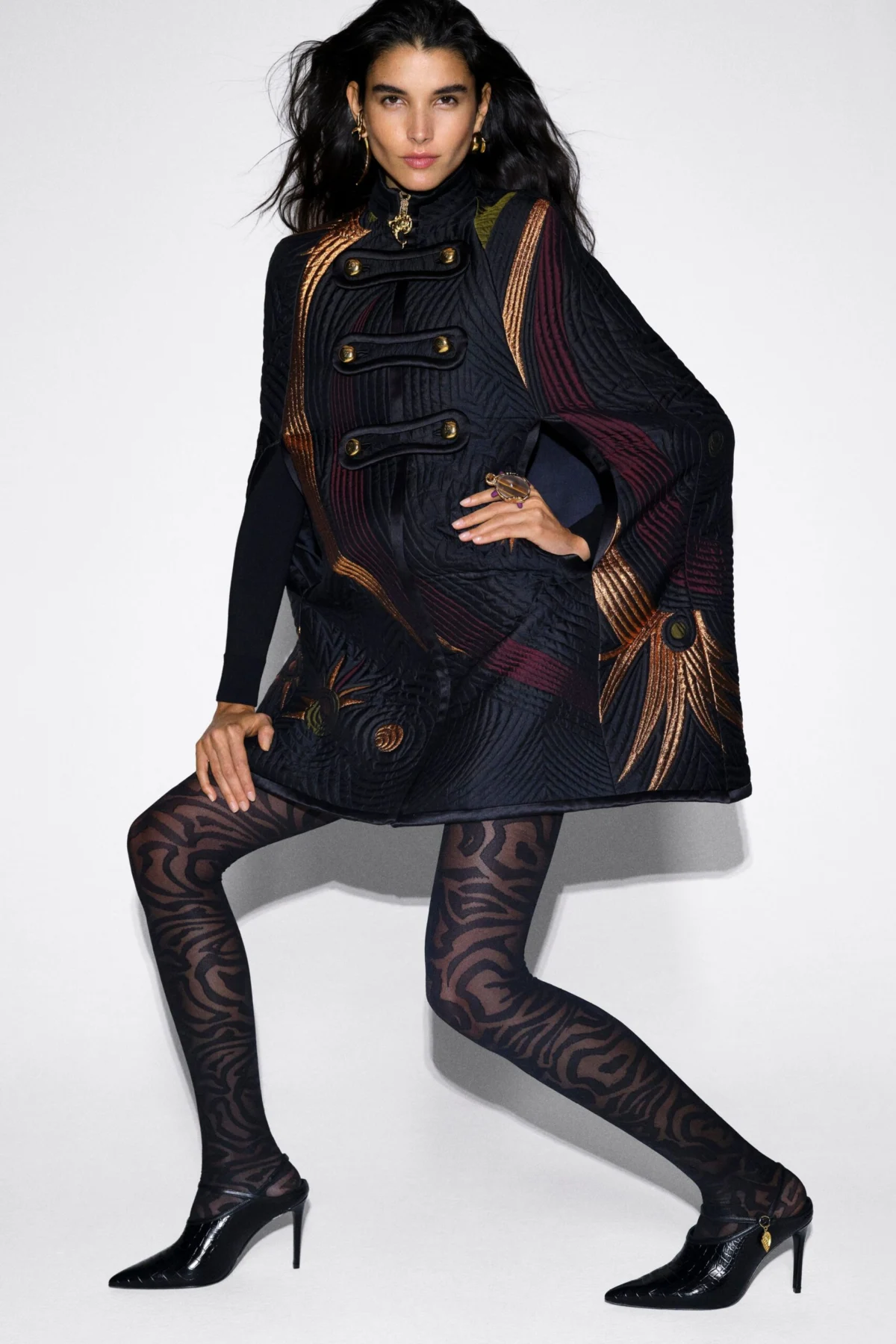
Camille Miceli, the creative director of Emilio Pucci, has masterfully woven the visceral energy of the Palio di Siena into her latest collection, transforming the historic bareback horse race and its rich medieval traditions into a potent source of inspiration. This season marks a deliberate departure from the brand’s celebrated 1970s psychedelic aesthetic, signaling a strategic rediscovery of Pucci’s Florentine heritage, extending its historical resonance beyond its well-known graphic prints. The Palio, a centuries-old spectacle held in Siena’s Piazza del Campo, a UNESCO World Heritage site, provides an unlikely yet remarkably fitting canvas for Pucci’s inherent exuberance and flair.
The Palio di Siena, a tradition dating back to the 17th century, is not merely a horse race; it is a profound expression of Sienese identity and rivalry. The event is organized around ten contrade, or districts, each with its own distinct heraldic symbols, colors, and fiercely loyal inhabitants. These contrade, which have existed in various forms since medieval times, engage in an intense competition that culminates in a dramatic and often perilous bareback horse race around the Piazza. The pageantry preceding the race, including the procession of flag-throwers and the solemn presentation of the Palio (a painted banner), amplifies the historical and cultural weight of the occasion. This deeply ingrained sense of history, community, and visual spectacle has provided Miceli with a fertile ground for reimagining the Pucci narrative.
Miceli’s deep dive into the archives of the Siena Contrade revealed a fascinating connection: Emilio Pucci himself had previously drawn inspiration from the iconography of these historic districts. This discovery became the cornerstone of her creative process. She meticulously translated the animals and emblems of the Contrade – symbols steeped in centuries of local lore and pride – into a sophisticated array of prints, intricate jewelry, and compelling motifs. However, her approach was not one of mere reproduction. Miceli pushed the decorative quality of these historical elements, infusing them with a contemporary sensibility that feels both relevant and forward-looking. The result is a collection that honors its historical roots while speaking directly to the modern fashion landscape.
The familiar Pucci visual vocabulary has been sharpened, imbued with a newfound pointedness and a heightened sensuality. A striking black-and-gold "zebra" print, for instance, evokes the dramatic intensity of a heraldic creature, commanding attention with its bold graphic presence. Other glyphs, stretched and manipulated vertically and horizontally, gain a dynamic sense of movement, suggesting the fluidity and speed inherent in the Palio’s thrilling races. The strategic use of gold throughout the collection lends a nocturnal, decadent energy, evoking the opulence and mystery of an evening affair. While the characteristic Pucci flamboyance is undeniably present, Miceli has demonstrated a clear intention to move beyond the perception of Pucci as solely a purveyor of exceptional prints.
This has become a central tenet of Miceli’s creative mission: to establish Pucci as a fully realized fashion house, recognized for its design integrity and craftsmanship, rather than solely for its iconic prints. To achieve this, she has introduced a range of meticulously crafted pieces that serve as deliberate counterpoints to the more overtly graphic elements. These include luxurious black-on-black jacquards, expertly executed quilting, sumptuously knitted garments, elegant ribbons, and thoughtfully designed, deliberately understated pieces. These elements provide textural depth and a sophisticated foundation, allowing the prints to shine without overwhelming the overall aesthetic.
The silhouettes in the collection echo the theatricality and historical grandeur of the Palio. Waists are artfully cinched, creating a flattering and defined silhouette, while skirts flare with a graceful volume. Certain dresses possess a captivating duality, blending medieval influences with a dynamic, almost skating-like quality, a juxtaposition that feels surprisingly natural within the Pucci universe. Miceli also delved into Emilio Pucci’s personal archives, unearthing previously unused sketches. By extracting subtle details and proportions from these historical drawings, she has managed to infuse the collection with a sense of authentic heritage, moving beyond the brand’s most recognizable motifs. The transition to the autumn/winter season provided Miceli with an ideal opportunity to further develop the tactile dimension of the Pucci proposition. The emphasis on rich textures – the depth of jacquards, the comforting embrace of quilting, the refined hand of knits, and the luxurious feel of varied surfaces – ensures that the prints are not merely applied decoration but are intrinsically woven into the very fabric of the garments, enhancing their overall coherence and desirability.
Camille Miceli is renowned for her innate ability to infuse her collections with a sense of joy and celebration. If Siena provided the dramatic historical backdrop, the legendary Studio 54 served as the muse for the collection’s after-dark attitude and pulsating energy. The accompanying advertising campaign, conceptualized around themes of dancing and revelry, powerfully reinforces the idea of Pucci as an "occasion brand" – clothing designed for moments when making a statement and being seen is paramount. This philosophy is central to Miceli’s vision: Pucci embodies a feminine, daring, and energetic spirit, celebrating women who are confident and unafraid to stand out. Crucially, she believes that these garments should be effortlessly wearable, requiring no complex styling or extensive explanation. As she articulates it, they are designed to be a "no-brainer" – a piece that one can simply grab, put on, and confidently step out in.
This apparent simplicity is a testament to the meticulous craftsmanship and deep understanding of the female form that underpins the collection. Behind the exuberant prints lies a precise attention to detail, focusing on how a garment interacts with the body: "where a waist should sit, where a motif should fall, what should be revealed and what might be better left to the imagination." This nuanced approach, driven by Miceli’s perspective as a woman designing for women, is profoundly persuasive. Her creations are not aimed at an abstract ideal; instead, they are thoughtfully designed for real women, with their actual bodies and lived experiences. While the inherent fantasy of Pucci remains intact, Miceli has successfully rendered it more wearable, attainable, and pragmatic for everyday life.
The true brilliance of this collection lies in this delicate balance. Miceli is not attempting to temper Pucci’s signature vibrancy. Instead, she is providing its kaleidoscope of color, pattern, and glamour with a robust framework: stronger, more defined silhouettes, richer, more luxurious materials, and a tangible connection to contemporary reality. While the Palio di Siena may be steeped in centuries of history, Miceli views it not as an exercise in historical reenactment but as another powerful avenue for Pucci to excel at its core competency: making an unforgettable entrance and celebrating the pure, unadulterated joy of dressing up. The collection, therefore, serves as a testament to Pucci’s enduring legacy, reimagined for a new era with a blend of historical reverence and contemporary flair.
