

The international mountaineering community is gripped by profound concern and sorrow following a devastating avalanche on Pakistan’s Broad Peak (8,047 meters), a formidable giant nestled in the Karakoram range. The incident, which occurred on Thursday morning, has claimed the lives of at least four climbers and left several others, including the acclaimed Nepali mountaineer Nirmal “Nims Dai” Purja, unaccounted for amidst a rapidly unfolding and perilous high-altitude search and rescue operation.
At approximately 9:30 a.m. local time on Thursday, July 25th, a powerful snow slide swept through a 10-member international expedition team. The group was making a crucial summit push, navigating a high-exposure gulley estimated to be at an altitude of approximately 6,600 meters (21,650 feet). The sheer force of the avalanche, believed to be a large slab release, propelled climbers downwards across treacherous terrain, with satellite tracker data later indicating that several individuals were swept nearly 1,000 meters (3,280 feet) down the mountain face. This catastrophic event immediately plunged the expedition into a desperate fight for survival, triggering an urgent, multi-faceted response.
The Initial Response and Grim Discoveries
The alarm was raised shortly after the avalanche, initiating a rapid, albeit extremely challenging, search and rescue effort. Ground teams, comprising highly experienced local high-altitude porters and expedition members who were either lower on the mountain or managed to escape the direct path of the slide, began their perilous ascent through unstable snow and debris fields. Their tireless work in the immediate aftermath, under the constant threat of further slides, led to the grim discovery of four bodies on Friday, July 26th.
Among the deceased, two victims have been officially identified by the Alpine Club of Pakistan (ACP), which is spearheading the rescue coordination. They are Omani mountaineer Nadhira Al Harthy and Nepalese climber Pur Bahadur Gurung, affectionately known in the climbing fraternity as "Yukta."
Nadhira Al Harthy was a trailblazer, celebrated as the first Omani woman to successfully summit Mount Everest in 2019. Her ascents were not merely personal achievements but symbols of inspiration, particularly for women in the Arab world, demonstrating courage and perseverance against formidable natural challenges. Her passing is a profound loss to the global mountaineering community and to her nation, which celebrated her pioneering spirit. Pur Bahadur Gurung, or "Yukta," was a highly respected and seasoned Nepalese high-altitude worker, whose invaluable experience and strength have been integral to countless expeditions in the Himalayas and Karakoram. Climbers like Gurung form the backbone of high-altitude mountaineering, providing critical support, guiding, and logistical expertise, often at immense personal risk. His loss underscores the inherent dangers faced by these unsung heroes of the mountains.
The Search for Nims Dai and the Remaining Missing Climbers
The most prominent name among those currently unaccounted for is Nirmal "Nims Dai" Purja. The Nepali mountaineer has achieved legendary status in the climbing world for his audacious feats, most notably his "Project Possible," which saw him summit all 14 of the world’s 8,000-meter peaks in a record-breaking six months and six days in 2019. He further cemented his reputation by leading the first successful winter ascent of K2 in January 2021, an achievement previously deemed impossible. Purja was reportedly leading this expedition on Broad Peak, and his disappearance has sent shockwaves through the global climbing community, which now watches anxiously for any news of his status. As of the latest reports, his official condition remains unreported by authorities, maintaining a precarious hope among his millions of followers and peers.
The remaining members of the 10-person team caught in the slide include a mix of international athletes and experienced guides. While their names have not been publicly released, they represent the diverse, multinational composition typical of high-altitude expeditions, often including climbers from various European nations, North America, and other Asian countries, alongside Nepali Sherpas and local Pakistani high-altitude porters. The fate of these individuals remains a critical focus of the ongoing search.
A Critical Race Against Time: High-Altitude Search and Rescue
The search and rescue operation on Broad Peak is a desperate race against time, complicated by the extreme conditions inherent in 8,000-meter mountaineering. Two Pakistan Army Aviation helicopters have been immediately deployed to conduct aerial sweeps of the avalanche-affected gulley and the lower slopes. These highly specialized aircraft, often equipped with advanced sensors and piloted by exceptionally skilled aviators, are critical for reconnaissance and, if possible, extraction in such challenging environments. However, their operations are severely constrained by volatile summer weather patterns, which can bring sudden whiteouts, high winds, and further snowfall, dramatically reducing visibility and increasing the risk for aircrews.

High-altitude rescue missions are among the most dangerous and technically demanding operations on Earth. Unstable snowpacks, the constant threat of further avalanches, rapidly changing weather, and the sheer objective hazards of the terrain—including crevasses, séracs, and exposed rock faces—make every move treacherous for response crews. Furthermore, the physiological challenges for rescuers operating at altitudes well above 6,000 meters are immense, requiring acclimatization, specialized equipment, and a profound understanding of the risks. The time window for survival for individuals trapped or injured in such conditions is tragically short, particularly without immediate medical attention or shelter from the elements.
Broad Peak: A Formidable Karakoram Giant
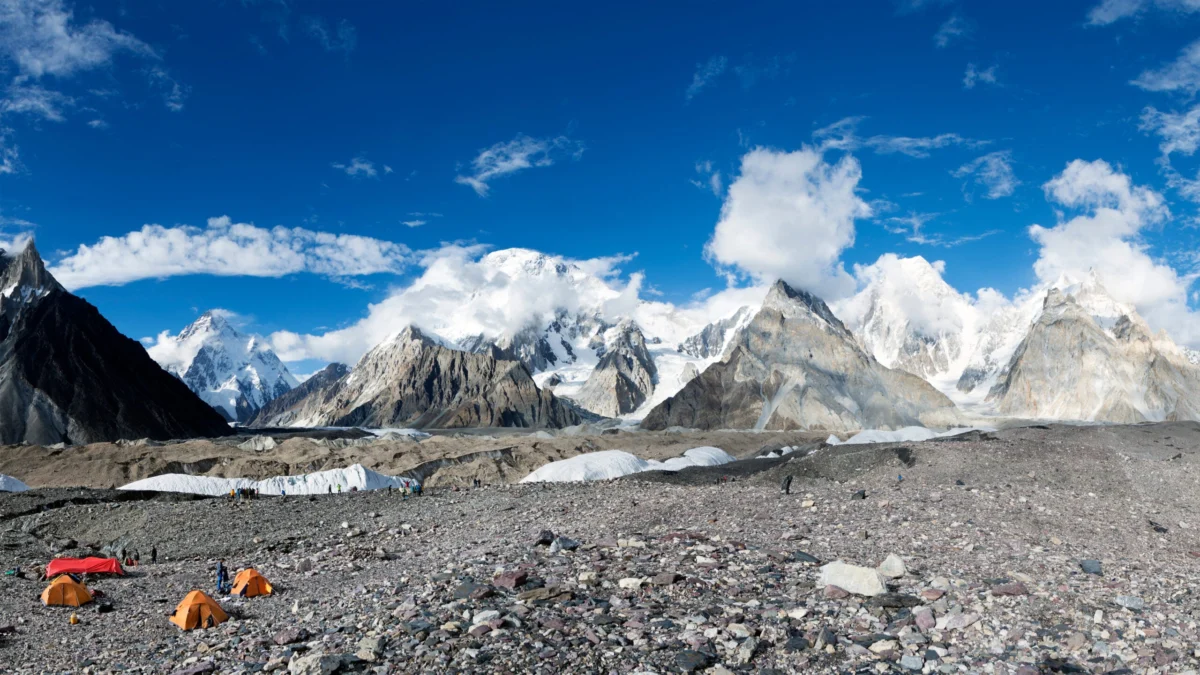
For those unfamiliar with the region, Broad Peak, meaning "Pangore Ri" in the local Balti language, is the 12th highest mountain in the world. It sits majestically in the heart of the Karakoram range, straddling the border between Pakistan and China, directly across the Godwin-Austen Glacier from the formidable K2, the world’s second-highest peak. Broad Peak is renowned for its immense breadth at the summit, hence its name.
While often considered less technically demanding than its notorious neighbor K2, Broad Peak is far from an "easy" 8,000-meter peak. Its standard route, typically via the West Face and Southwest Ridge, involves navigating complex icefalls, exposed ridgelines, and steep snow slopes. Climbers must contend with severe objective risks, including falling ice, hidden crevasses, and, as tragically demonstrated, large-scale slab avalanches. The section where the avalanche occurred, at approximately 6,600 meters, is a known area of significant exposure and often features challenging snow conditions, making it a critical point on the ascent.
The Karakoram Climbing Window and Heightened Avalanche Risks
High-altitude mountaineering in the Karakoram range is governed by a very tight and specific summer climbing season window. Unlike the Himalayas in Nepal, where the primary climbing season occurs in the spring (typically April to May), the Karakoram’s standard window runs strictly from late June through early August. During this narrow period, warmer temperatures begin to melt the heavy winter snowpack, offering relatively more manageable winds and clearer summit opportunities. This window is crucial as it avoids the harshest winter conditions and the full impact of the monsoon, which affects the Karakoram differently than the central Himalayas, often bringing significant snowfall at altitude rather than heavy rains.
However, this late July to early August period, while offering "manageable" conditions, also presents its own set of critical risks. Rising temperatures can destabilize high-altitude snowpack, especially on steep, sun-exposed faces. Fresh snowfall, often a result of localized weather systems or the fringes of monsoon activity, followed by warming trends, creates perfect conditions for slab avalanches – where a cohesive layer of snow slides over a weaker underlying layer. The very conditions that enable ascents can, paradoxically, increase the likelihood of such catastrophic events, highlighting the delicate balance climbers must constantly assess. The timing of this avalanche, in late July, falls squarely within this period of heightened snow instability.
Official Coordination and Broader Implications
The Alpine Club of Pakistan (ACP) has taken the lead in coordinating the complex rescue efforts. In a statement released via social media, the ACP confirmed, "President of the Alpine Club of Pakistan, Major General Irfan Arshad, HI(M), along with the senior leadership of the Club, is in constant contact with the highest government authorities and all relevant agencies to facilitate an immediate search and rescue operation." This level of coordination is essential, involving not only the Pakistani military but potentially diplomatic missions from the affected climbers’ home countries, international rescue organizations, and the broader mountaineering community.
When disasters of this magnitude strike, the entire mountain community feels the impact deeply. Tributes have begun to pour in for the identified victims, and expressions of solidarity and concern for the missing are widespread across social media platforms and mountaineering forums. The incident will inevitably spark renewed discussions about safety protocols, risk assessment in commercial expeditions, and the inherent dangers of pursuing extreme altitudes. It serves as a stark reminder of the unpredictable and unforgiving nature of the world’s highest peaks, even for the most experienced and celebrated climbers.
As aerial and ground teams continue their arduous and dangerous work on Broad Peak, under the watchful eyes of the world, our thoughts remain with the families, friends, and rescue crews on the ground in Pakistan. The hope for survivors, though diminishing with each passing hour, persists. Further updates will be provided as confirmed statements are released by the Alpine Club of Pakistan and other official channels.
