

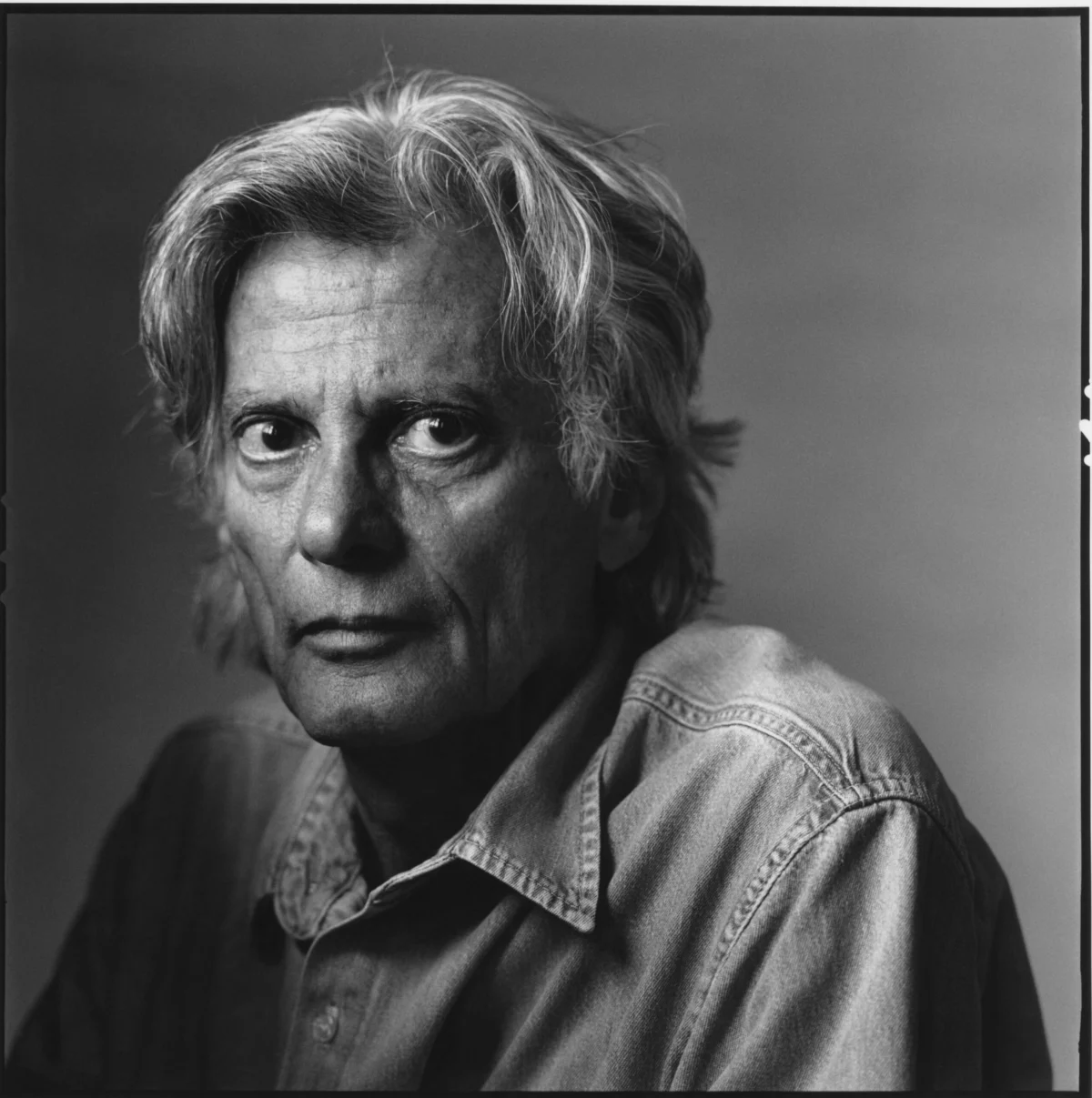
Richard Avedon, the legendary American photographer whose incisive gaze has shaped the visual landscape of the 20th century, found himself at the epicenter of both critical acclaim and fierce debate in early 1994. A retrospective of his work, a monumental undertaking at the Whitney Museum of American Art, was poised to open, accompanied by the publication of his deeply personal project, "An Autobiography." This period marked a significant moment for Avedon, a celebrated figure who, at 70, was navigating a career that spanned over five decades, now amplified by intense public scrutiny and a renewed engagement with his own legacy.
The genesis of this spotlight can be traced to Avedon’s profound immersion in Ingmar Bergman’s production of "Long Day’s Journey into Night" in Stockholm. His dedication to witnessing the play seven times, a feat he admits no film could inspire, underscored his theatrical sensibilities. "There’s no movie I could see seven times," Avedon remarked, "but when a great living performance captures me, I could go every night, forever." He found a peculiar resonance in the Royal Dramatic Theater’s ceiling motif of comedy and tragedy masks, both rendered as tragic, a sentiment he attributed to the Swedish atmosphere, finding it "the perfect place for me, obviously." This theatrical metaphor, deeply embedded in his life and work, seemed to foreshadow his own turn in the public eye, a performance of sorts orchestrated by his own creative output and the art world’s reception to it.
The confluence of his autobiography and the Whitney retrospective thrust Avedon into a period of unprecedented publicity. Major media outlets, including Newsweek, dedicated extensive coverage to his oeuvre. He made appearances on prominent television programs such as Prime-Time Live, the Today show, and Charlie Rose, signaling the broad appeal and cultural significance attributed to his work. The cultural elite also paid homage; a gala at the New York Public Library, attended by 300 guests, was hosted by Harold Evans, head of Random House (publisher of "An Autobiography"), and Tina Brown, then editor of The New Yorker, who had appointed Avedon as the magazine’s first and only staff photographer a year prior. This sustained attention, coupled with the sheer volume of his output, suggested a deliberate acceleration of his career, even as he maintained an intimate engagement with his personal life, notably by preparing gourmet meals for those he met.
The Avedon Loft: A Stage of Creative Chaos
Avedon’s personal environment, a vast and monumentally cluttered loft on the Upper East Side, served as a microcosm of his creative process. Once a commercial laundry, the space was now a sprawling studio and living area, indicative of his demanding professional life. His team of fifteen associates occupied additional workspaces across several floors, a testament to the scale of his operation. The sheer abundance of objects – seventeen different-sized lighted candles, bowls overflowing with fruit and cheese, framed and unframed photographs, exotic plants, and even a bright red leather boxing glove from Paris, a gift after a difficult week – created an overwhelming visual symphony. This curated chaos, as described by the author, was not merely decorative but an extension of Avedon’s dynamic and multifaceted personality.
A Whirlwind of Conversation and Critique
Avedon himself was a figure of constant motion, a "lithe, compact bundle of nervous energy." Dressed in blue jeans and loafers, he wore a blue shirt emblazoned with "ASTAIRE LIVES," a poignant tribute to his childhood idol. His conversations were characterized by a rapid, almost centrifugal flow, touching upon an astonishing range of subjects. In the brief period before dinner, he delved into the origins of his favorite chicken recipes, the prolific output of Anton Chekhov, his son John’s work as a foreign relations advisor and biographer to the Dalai Lama, a recent photographic session with a young boxer in Phoenix, and, crucially, the polarizing reception of "An Autobiography."
Despite the book’s $100 price tag, initial sales were not significantly hampered by three negative reviews in The New York Times Book Review. However, the critical onslaught was palpable. Hilton Kramer, in The New York Observer, had launched a preemptive attack on the forthcoming Whitney exhibition two years prior, labeling it "the ultimate capitulation to celebrity, money and fashion at the expense of art." Avedon, however, maintained a stoic resilience. "Reviews no longer victimize me," he declared, "Or define me, or elate me, or stop me from working." This detachment, hard-won through decades of critical engagement, underscored his commitment to his artistic vision, independent of external validation.
The Dichotomy of Fashion and Art
The savage criticism leveled against Avedon often stemmed from his immense success in fashion photography, a realm perceived by some as inherently commercial and antithetical to fine art. Avedon, however, vehemently challenged this dichotomy throughout his career, asserting a seamless continuum between his fashion work, his reportage, and his portraiture. David Ross, the director of the Whitney Museum, strongly supported this view, stating, "I think art history will see him as one of the great portraitists of the twentieth century." Ross highlighted Avedon’s lifelong pursuit of self-understanding, describing him as a "tortured, self-driven Jewish man who is trying to understand himself by looking at other people and their lives, and looking at the way things work, and trying to see into that borderline area between madness and beauty and power and powerlessness."
The organization of the Whitney retrospective itself was a collaborative effort, with Ross emphasizing Avedon’s willingness to cede curatorial control to Jane Livingston. While Avedon, alongside his designer Mary Shanahan, exerted directorial influence on the exhibition’s design, the primary selection of images and the narrative arc were Livingston’s. This approach allowed Avedon to step back, enabling a more objective presentation of his life’s work.
The Art of Control and the Subject’s Agency
Criticisms of Avedon’s portraits frequently centered on accusations of manipulation, over-control, and narcissism. Maud Lavin, writing in The New York Times Book Review, argued that Avedon’s "close, hard stare, his emptied backgrounds and his graphically spectacular compositions do not tell us any more about the social context of napalm victims than they do about fashion models." Margo Jefferson, in the daily New York Times, expressed a sense of detachment from the subjects in Avedon’s book, noting, "By the end, I was rooting for anyone who managed to escape with a shred of self-determination intact." Andy Grundberg echoed these sentiments in a later review, describing "An Autobiography" as showcasing Avedon "at his most characteristic: controlling of his subjects and manipulative of his audience, driven to redeem himself from the taint of commerce, obsessed with the judgments of a disembodied posterity."
Avedon, however, countered that all great portraits are, to some extent, self-portraits, and that artistic manipulation and control are inherent to the creative process. He viewed each portrait as a record of an "intense, indelibly personal encounter" between photographer and subject. Even when confronted with subjects who did not readily "perform," such as politicians like David Dinkins and Rudy Giuliani, Avedon embraced the challenge as part of his professional duty. He recounted the sitting with Steve Martin, a comedian whose comic genius served as a protective barrier. "There’s no penetrating it, and I respect that," Avedon stated, acknowledging the subject’s right to maintain their inner defenses. Martin’s subsequent note of appreciation for the enjoyable sitting further illustrated Avedon’s ability to connect, even when facing inherent resistance.
David Ross offered a compelling anecdote from Avedon’s "In the American West" series, illustrating Avedon’s extraordinary capacity to disarm and connect with subjects who appeared intimidating. He described Avedon approaching a man at a state fair whose demeanor suggested toughness and potential psychosis. Within minutes, Avedon had established a rapport, eliciting a profound outpouring of energy from the subject in front of a simple backdrop. This ability to "communicate and put people at ease and allow them to come through" was, for Ross, a hallmark of Avedon’s genius.
A Culinary Performance and Culinary Philosophy
The dinner that Avedon prepared, a testament to his "executive cook" persona, was a carefully orchestrated affair. The herbed chicken, prepared by his housekeeper Verlie Fisher, was served in a loft that exemplified a controlled yet abundant aesthetic. The dining table, laden with multiple candle types, bowls of fresh fruit, nuts, cheeses, and an out-of-control bamboo tree, created a vibrant backdrop. The meal itself, simple yet extravagant, featured Avedon’s special house salad, served with bread folded into napkins. The choice of a 1987 Margaux and oversized Italian faience plates further underscored the performative aspect of his life and work. Avedon’s dismissive remark, "You mustn’t think that I care about candle colors and tablecloths and stuff like that," was delivered with a clear awareness that these elements were integral to the "Avedon performance."
His culinary repertoire extended beyond this single meal. He spoke of dishes like baked potatoes with beluga caviar, borscht enriched with piroshki, and Cipriani pasta, showcasing a refined palate and a passion for sharing culinary experiences. His collection of sixteen pasta boxes, readily accessible in his open larder, hinted at a deep appreciation for the finest ingredients. This meticulous attention to detail, whether in his photography or his choice of pasta, underscored his belief that "the visual world" was to be engaged with "in all its forms."
The "Avedon Face": A Dialogue of Contradictions
When asked to define an "Avedon face," Avedon offered a nuanced perspective. He cited Michelangelo Antonioni’s as a prime example, explaining that it wasn’t about flaw or ravage, but about "contradictions, dialogue, arguments. The soul’s confusion on the face." He contrasted this with Federico Fellini’s, whose complexity was less accessible to his camera. Roy Lichtenstein’s face, however, possessed the "Avedon quality." This concept highlighted Avedon’s pursuit of capturing not just outward appearance, but the internal landscape of his subjects, the subtle interplay of their complexities. Penelope Tree’s letter, reflecting on her portrait, confirmed this insight: "Of course I identified with being caged, isolated, and utterly bewildered, but I thought I was doing a better job of hiding it! Trust you to see right through. I guess you always did."
Avedon’s unflinching gaze extended to his own family, most poignantly in his series of photographs of his father, Jacob Israel Avedon, in his final days. He described this intimate work as a profound mutual recognition: "I was looking at him, and he was looking at me. The last thing he saw as he was dying was his son. It’s clear to me that he became, in that moment, in that image, what he saw. And what he saw was me." This deeply personal testament revealed the transformative power of his lens, capable of capturing moments of ultimate vulnerability and connection.
A Portrait by a Rival: Irving Penn’s Gaze
In a revealing turn, Avedon chose Irving Penn, his contemporary and long-standing rival, to photograph him for the article. The sitting occurred while Avedon was suffering from the flu and severe stomach pains, necessitating a doctor’s call from Penn’s studio. His doctor’s wry response, "No loopier than usual," alluded to Avedon’s famously energetic and often unpredictable persona. Despite his discomfort, Avedon brought a legendary shearling coat from the 1950s, a piece with a rich history, having warmed Marilyn Monroe and been worn by Isabelle Adjani in an Avedon photograph.
While Penn captured some images in the coat, the striking portrait that emerged depicted Avedon in an open-collared work shirt, exuding a "haunted and strangely romantic" aura. Penn described it as possessing "a drama that we got that I don’t associate with him. Like something out of the French Revolution." Avedon, for his part, felt this was the "first time" he had been "ready" for Penn’s lens, calling it "the only real portrait of me by Penn. Maybe by anybody." He recognized Penn’s profound ability to capture the "crumbling part of me that’s a cross between arrogance and suspicion," a rawness that transcended mere composition. "It’s more of an Avedon than a Penn," he mused, "And yet it could never have been taken by anyone but Penn."
The Avedon vs. Penn Dialogue: Composition vs. Confrontation
The distinction between an Avedon portrait and a Penn portrait, as articulated by Avedon, lay in their fundamental approaches. "I think Penn’s great strength lies in his power of composition and in the very still moment that reveals," Avedon explained. "From the beginning, I’ve felt that any composition that is visible in my photographs takes you away from the direct confrontation that I look for." For Avedon, overt compositional brilliance in his work was a sign of failure, indicating a distraction from the essential encounter between photographer and subject.
The term "rivalry" seemed inadequate to describe the complex relationship between the two photographers. Avedon acknowledged Penn’s influence during their overlapping careers at Harper’s Bazaar and Vogue. He admitted to closely observing Penn’s every move, which "helped define me." Avedon described a constant push and pull, a desire to "top him or equal him, or be the opposite of him." He saw Penn as a "classicist" and himself as an "eclectic," admitting that Penn’s "standards, his rigor, his excellence" served as a powerful source of inspiration.
Photographic Pantheon and Shifting Paradigms
Avedon’s admiration extended to a pantheon of photographers. Henri Cartier-Bresson was held in the highest regard, described as the "photographic Tolstoy of the twentieth century," with photographers like Robert Frank and the "Bresson babies" working within the territory he had mapped. Diane Arbus and Julia Margaret Cameron were also mentioned as significant influences from earlier eras.
He recognized Helmut Newton’s transformative impact on fashion photography, calling him the "leader of the post-Avedon, post-Penn period." Newton, in Avedon’s view, "redefined what a fashion photograph could be," injecting wit and a daring exploration of vulgarity that shifted the erotic focus and rendered certain conventional depictions obsolete. The simple act of "a girl stepping out of a taxi," while common, became "boring" unless reinterpreted with Newton’s provocative sensibility.
Bruce Weber, a prominent fashion photographer of the current generation, saw Avedon’s influence as enduringly vibrant. He described Avedon as an energetic presence who "really is open, he engages you in what’s going on in his life, and he makes you then think about your own." Weber emphasized that Avedon’s work was not about fame but about "still being a kid and not being afraid to show it," a sentiment that resonated with a generation of photographers inspired by his authenticity.
A Life in Progress: Ambitions and Legacy
Avedon’s personal life, as depicted in his loft, was as rich and varied as his professional one. His dining table, adorned with an array of desserts, from Sant Ambroeus orange cake to Bonté macaroons, hinted at his penchant for celebration and indulgence. He spoke of future culinary endeavors, like Mike Nichols’s "Peach Orgasm," and maintained a file of recipes, a potential book in itself. However, his immediate future was occupied by ten book contracts with Random House, including further photographic collections, teaching books based on his master classes, and an autobiographical novel he envisioned working on for the rest of his life.
The walls of his loft were a sprawling visual autobiography, a collage of photographs, clippings, postcards, and reproductions of art. Images of Fred Astaire, Audrey Hepburn, and significant news events like Liz Taylor’s eighth marriage mingled with poignant mementos. A news photo of a man frozen to death, press cards from his time in Vietnam, and a striking image of four coal miners from his "American West" series offered glimpses into the darker aspects of his subjects and his own psyche. He pointed to a blown-up page of The New York Times Magazine featuring headshots of seventeen individuals executed by Stalin, remarking, "They were photographed and then they were killed. Look, aren’t these the most pure and perfect portraits?" This statement underscored his enduring fascination with the power of the image to capture a person at a critical, often final, juncture.
Curiously absent from this personal archive were many of his iconic fashion photographs. This omission, and the fact that only one room at the Whitney retrospective would be dedicated to his fashion work, raised questions about his repeated assertion of a unified artistic vision. His relationship with the fashion world, while financially enabling, had been marked by ambivalence. A significant falling out with Anna Wintour, Vogue‘s new editor in 1988, led to him no longer photographing Vogue covers, a role he had held since 1966. His offer to "bury the lipsticks" in a letter to Wintour suggested a desire to mend bridges, even as he secured major commercial assignments, such as an upcoming campaign for Versace.
The Enduring Influence of the Muse
Avedon’s practice of working with a singular model at a time, exemplified by his intense collaborations with Suzy Parker in the 1950s and Penelope Tree in the 1960s, spoke to his desire for a deep, almost intimate connection with his subjects. Suzy Parker recalled their relationship as one of mutual attunement, characterized by shared humor and a dynamic approach to photography, a stark contrast to the static and often constricting modeling practices of the era. Penelope Tree described her experiences with Avedon as "intensely personal," akin to a "love affair, except it wasn’t at all physical."
Facing Mortality and the Unseen
The back wall of his studio, adorned with photographs of disturbed-looking women and portraits of his father and Oscar Levant, revealed the darker currents in Avedon’s artistic exploration. He famously stated, "It is through the dark part of the eye that we see light." This introspective gaze extended to his critique of his own work; he expressed dissatisfaction with a coal miner portrait from the "American West" series, finding his "hand is just too strong in it. Just too much of me manipulating. The craftsmanship, the composition. It’s all too apparent. It doesn’t reach below the surface."
In a moment of profound introspection, Avedon mused about emptying his current space and starting anew, a desire to "see who I become. Try to do it better, more deeply." He expressed a fear of becoming complacent, of ending up like Edward Steichen, photographing idyllic scenes without challenging himself.
His personal effects, like the unused 1923 Lafite-Rothschild bottle and three unopened parcels from a significant individual, hinted at a deeply personal relationship with time and memory. The parcels, intended to be opened just before his death, represented a profound connection, a source of comfort and discovery in his final moments.
The Rhythm of a Life Dedicated to Art
Avedon’s daily routine, beginning at 5 AM, was marked by discipline and a commitment to his craft, even down to washing dishes as a form of "therapy." His personal trainer’s visits and his meticulously prepared breakfasts underscored a dedication to maintaining his physical and mental well-being.
Even as the interview concluded, Avedon’s restless energy was evident. He contacted the author the following morning in a state of agitation, feeling the interview hadn’t "worked" and proposing a redo. This time, he invited his friend Twyla Tharp, allowing the author to observe their unscripted conversation. The evening unfolded as a warm, familial gathering, with his son John and grandson Michael present. The scene, with seventeen candles nearly igniting a bamboo tree, underscored the continuing vibrancy of his life. The conversation, as always, flowed in myriad directions, offering yet another "portrait of Richard Avedon," a testament to the endless possibilities of capturing the essence of a singular artistic vision.
