

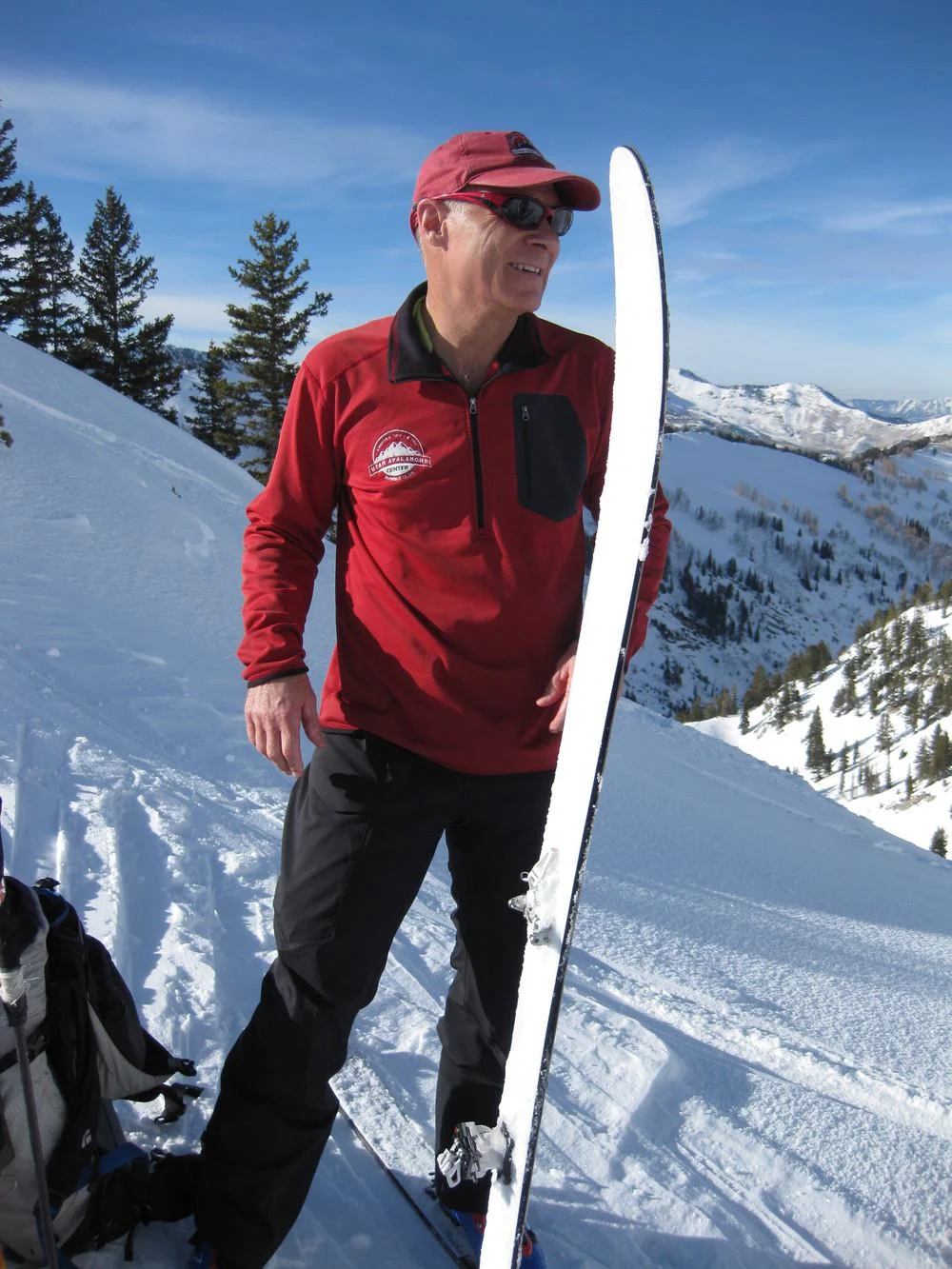
The Utah Avalanche Center (UAC) has announced the retirement of its long-serving Director, Bruce Tremper, marking the end of an influential era for avalanche safety and forecasting in the United States. Tremper, a towering figure in the avalanche community for nearly 30 years, will step down from his position with the Forest Service at the close of August, leaving behind a legacy of innovation, education, and enhanced public safety. His departure coincides with the appointment of Mark Staples as the new Director of the UAC, signaling a transition in leadership for one of the nation’s most respected avalanche forecasting organizations.
A Trailblazer in Avalanche Forecasting and Public Education
Bruce Tremper’s tenure at the helm of the Utah Avalanche Center, beginning in 1986, has been characterized by a relentless pursuit of improving avalanche forecasting and public outreach. Under his direction, the UAC evolved significantly, moving from a nascent stage of providing basic phone-recorded advisories to a sophisticated, multi-platform information hub. This evolution mirrored the broader technological advancements in communication and data dissemination, but Tremper and his team were at the forefront of this transformation, consistently pushing the boundaries of what was possible.
A key innovation during Tremper’s leadership was the introduction of visual aids and standardized terminology to avalanche advisories. The UAC became pioneers in using icons to represent avalanche problems and danger ratings, making complex information more accessible to a wider audience, including recreational backcountry users. This user-friendly approach was crucial in demystifying avalanche danger and empowering individuals to make more informed decisions in avalanche terrain. The conceptual model of avalanche danger and the associated danger scale, developed in 2010, further refined how avalanche risk was communicated, and Tremper was an integral member of the working group responsible for this significant advancement.
Tremper’s influence extended far beyond the borders of Utah. His extensive experience, gained through early career work in Montana and Alaska, provided him with a comprehensive understanding of avalanche phenomena across diverse snowpacks and terrains. He earned his Master of Science degree at Montana State University, studying under Dr. John Montagne, and applied his academic knowledge to practical avalanche control work at renowned ski areas like Bridger Bowl and Big Sky. His formative years as an avalanche forecaster at the Alaska Avalanche Center, working alongside prominent figures such as Doug Fesler, Jill Fredston, and Jim Woodmency, further solidified his expertise. This broad foundation allowed him to contribute significantly to the national and international avalanche safety discourse.
A Multifaceted Career Dedicated to Avalanche Safety
Beyond his directorial responsibilities, Bruce Tremper has been a prolific contributor to the field of avalanche safety. For six years, he served as the editor of The Avalanche Review, a vital publication for the avalanche community, disseminating research, best practices, and industry news. His prolific writing career includes numerous published papers in scientific journals and two highly regarded books on avalanches, which have become essential references for professionals and enthusiasts alike. These books, known for their clarity and comprehensive coverage, have played a significant role in educating generations of avalanche professionals and backcountry skiers.

Tremper’s commitment to safety was also evident in his leadership role during the 2002 Salt Lake City Olympics. He was directly responsible for backcountry avalanche safety during the event, a critical undertaking given the proximity of some Olympic venues to avalanche-prone areas. His ability to effectively manage risks and communicate safety protocols in such a high-stakes environment underscored his competence and leadership. Furthermore, Tremper has been a frequent and respected voice in media interviews, consistently advocating for avalanche awareness and providing expert commentary on avalanche incidents. His dedication to public education has extended to decades of teaching at the National Avalanche School, where he has mentored countless aspiring avalanche professionals.
A Transition to New Leadership
With Bruce Tremper’s retirement, the Utah Avalanche Center has appointed Mark Staples as its new Director. Staples brings a wealth of experience and a deep understanding of avalanche science to the role. His professional background includes significant contributions to ski patrol and snow safety at Big Sky Ski Area, where he honed his practical skills in avalanche hazard mitigation.
Staples also possesses a strong academic foundation, having earned a Master of Science degree in Engineering from Montana State University, where his research focused on snow avalanches. This academic rigor, combined with his extensive fieldwork, provides him with a unique perspective on avalanche dynamics and forecasting. He has undertaken several special projects for the National Avalanche Center, demonstrating his engagement with broader national initiatives in avalanche safety. Prior to his appointment as UAC Director, Staples spent eight seasons as a backcountry avalanche forecaster at the Gallatin National Forest Avalanche Center, gaining invaluable experience in a region known for its challenging avalanche conditions. Staples expressed his enthusiasm for joining the "top-notch UAC team," indicating a commitment to continuing and building upon the center’s established reputation for excellence.
The Enduring Impact and Future Outlook
Bruce Tremper’s retirement marks the end of a distinguished career, but his influence is expected to persist. He has indicated his intention to remain active in avalanche safety, continuing his work in teaching, writing, and contributing to avalanche safety projects. This commitment ensures that his vast knowledge and experience will continue to benefit the avalanche community. It is also anticipated that Tremper, along with his wife Susi, will spend even more time enjoying the backcountry skiing for which the Wasatch Mountains are renowned. This personal pursuit of the sport he has dedicated his professional life to protecting others in will undoubtedly offer him renewed enjoyment and perspective.
The transition in leadership at the UAC is a significant moment for avalanche safety in Utah and beyond. Mark Staples inherits a well-established and highly respected organization. His background suggests a continuation of the UAC’s commitment to scientific rigor, innovative forecasting, and effective public education. The challenges facing avalanche forecasting are ongoing, including adapting to changing snowpack conditions due to climate shifts and reaching an increasingly diverse range of outdoor enthusiasts. Staples’ appointment signals a forward-looking approach, aiming to build upon the strong foundation laid by Tremper.
The Utah Avalanche Center’s evolution under Bruce Tremper serves as a case study in the development of modern avalanche forecasting. From humble beginnings, it has become a vital resource, contributing to a significant reduction in avalanche fatalities through improved information and education. The center’s proactive approach to communication, its embrace of technological advancements, and its dedication to scientific understanding have set a benchmark for similar organizations worldwide. As Mark Staples takes the helm, the focus remains on safeguarding lives in the backcountry, ensuring that the UAC continues to be a leader in avalanche safety for years to come. The public can anticipate a continued stream of high-quality advisories, educational materials, and a steadfast commitment to understanding and communicating avalanche risk in the breathtaking but often perilous landscapes of Utah.
