

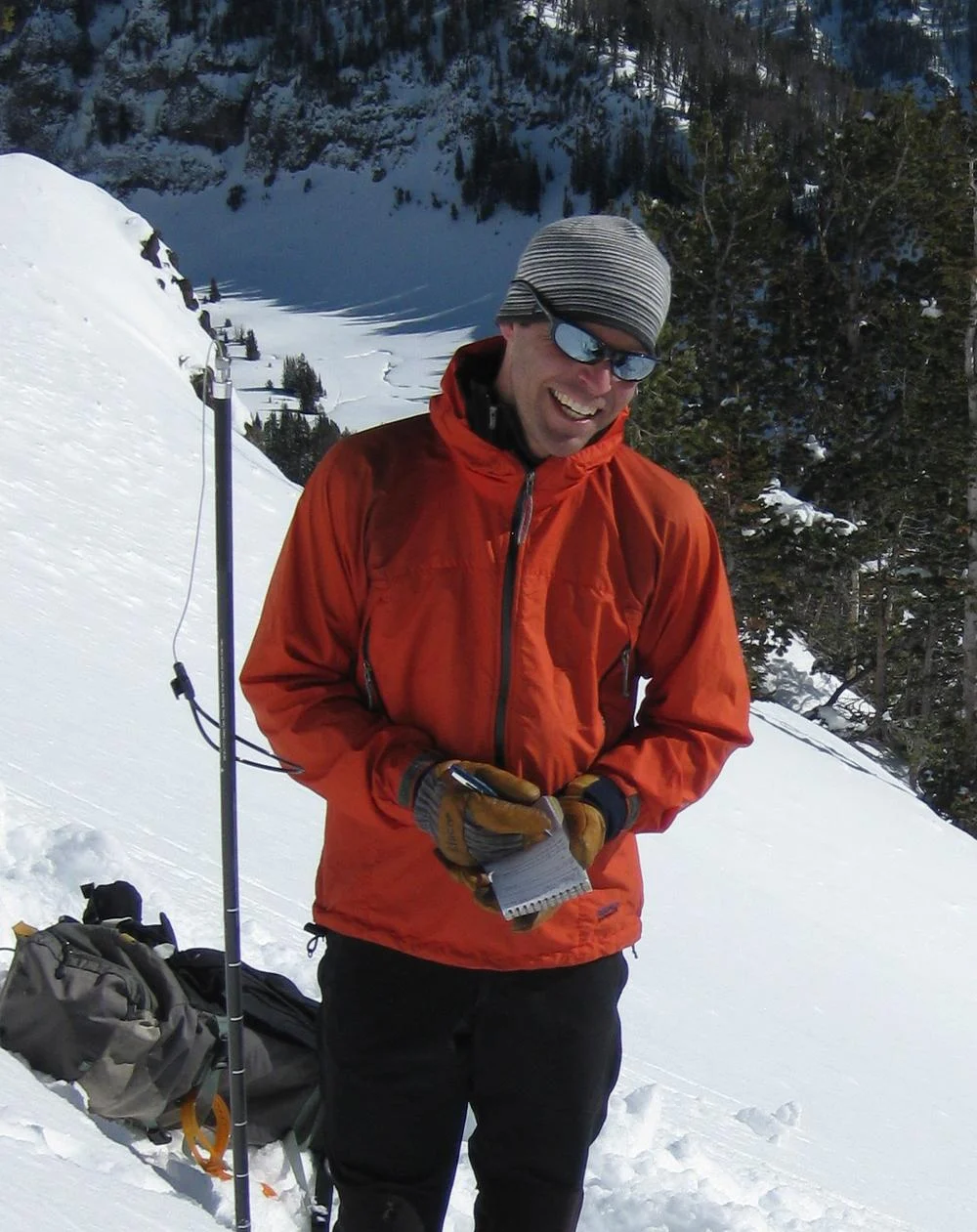
The Utah Avalanche Center (UAC) is marking a significant transition as Bruce Tremper, its long-serving Director, prepares to retire from the Forest Service at the end of August. Tremper’s tenure, spanning 29 years, has left an indelible mark on avalanche safety and forecasting not only in Utah but across the United States and internationally. His departure signals a new chapter for the UAC, with Mark Staples stepping in to assume the role of Director.
A Legacy Forged in Snow and Science
Bruce Tremper’s career in avalanche science is a testament to a deep commitment to public safety and an unwavering passion for understanding and mitigating avalanche hazards. His journey began in Montana, where he pursued his Master of Science degree at Montana State University under the guidance of Dr. John Montagne. This academic foundation was quickly translated into practical experience, with Tremper engaging in avalanche control work at prominent ski areas such as Bridger Bowl and Big Sky. These early roles provided him with invaluable hands-on knowledge of avalanche dynamics and the challenges of managing snowpack stability in mountainous terrain.
Following his Montana experience, Tremper broadened his expertise by working as an avalanche forecaster at the Alaska Avalanche Center. There, he collaborated with esteemed figures in the field, including Doug Fesler, Jill Fredston, and Jim Woodmency. This period in Alaska, known for its extreme avalanche conditions, further honed his forecasting skills and deepened his understanding of complex snowpack behavior.
In 1986, Tremper assumed the directorship of the Utah Avalanche Center, a position he held for nearly three decades. During his leadership, the UAC evolved significantly, mirroring the advancements in technology and communication within the avalanche industry. Tremper was at the forefront of this evolution, steering the center from its initial reliance on phone-recorded advisories to the sophisticated, multi-platform internet-based products that are now the standard. Under his guidance, the UAC became an innovator, introducing clear visual icons and distinct "avalanche problems" to its advisories, enhancing public comprehension and the actionable nature of the forecasts. This strategic shift made avalanche information more accessible and understandable to a wider audience, from recreational backcountry users to professional ski patrollers and emergency responders.
Beyond the Forecast: A Multifaceted Contributor to Avalanche Safety
Tremper’s influence extends far beyond his directorship of the UAC. He has been a prolific educator, writer, and advocate for avalanche safety. For six years, he served as the editor of The Avalanche Review, a respected publication within the avalanche community, where he shaped the discourse and dissemination of critical research and best practices. His academic contributions include numerous published papers that have advanced the scientific understanding of avalanches.
Recognizing the power of visual communication, Tremper has also produced several avalanche safety videos, which have been instrumental in educating the public about avalanche awareness and rescue techniques. His two seminal books on avalanches are considered essential reading for anyone involved in the sport, offering comprehensive insights into snowpack physics, hazard assessment, and safe travel practices.
Tremper’s expertise was also called upon during significant public events. He was instrumental in managing backcountry avalanche safety for Salt Lake City’s 2002 Olympic Games, a role that demanded meticulous planning and execution in a high-stakes environment. His ability to communicate complex information clearly and effectively has made him a sought-after spokesperson, and he has represented the UAC and the Forest Service in hundreds of media interviews, consistently presenting the agency and its mission in a positive and informative light.
Furthermore, Tremper has been a dedicated instructor at the National Avalanche School for decades, mentoring generations of avalanche professionals. He was also a key member of the working group that developed the conceptual model of avalanche danger and the associated avalanche danger scale in 2010. This conceptual model and scale have become foundational tools for understanding and communicating avalanche risk, providing a standardized framework used globally.
A Continued Presence in the Backcountry
While Tremper is retiring from his official role with the Forest Service, his commitment to avalanche safety remains strong. He has expressed his intention to continue teaching, writing, and contributing to avalanche safety projects. This news will undoubtedly be welcomed by the avalanche community, who have come to rely on his expertise and dedication.
His personal passion for the mountains is well-known. Tremper and his wife, Susi, are avid backcountry skiers, and it is anticipated that his retirement will allow them even more time to explore the legendary snow-covered landscapes of the Wasatch and beyond. Those who frequent the backcountry are advised to maintain their fitness, as keeping pace with the Trempers on the slopes is a formidable challenge. The announcement of his retirement is met with widespread appreciation for his decades of service and well wishes for his future endeavors.

A New Era for the Utah Avalanche Center
With Bruce Tremper’s departure, the UAC has appointed Mark Staples as its new Director. Staples brings a robust background and a wealth of experience to this leadership role. His professional journey includes significant experience in ski patrolling and snow safety at Big Sky Ski Area, providing him with a practical understanding of avalanche management in a ski resort context.
Academically, Staples holds a Master of Science degree in Engineering from Montana State University, where his research focused on snow avalanches. This advanced academic training complements his practical experience, equipping him with a strong theoretical and analytical foundation. He has also contributed to several special projects for the National Avalanche Center, further embedding him within the national avalanche safety network.
Prior to his appointment as UAC Director, Staples accumulated eight seasons of experience as a backcountry avalanche forecaster at the Gallatin National Forest Avalanche Center. This extensive fieldwork in a region known for its challenging avalanche conditions has provided him with deep insights into forecasting techniques and the complexities of real-world snowpack assessment. Staples has expressed his enthusiasm for joining the UAC team, recognizing it as a leading organization in the field. His leadership is expected to continue the UAC’s tradition of innovation and public service.
The Evolving Landscape of Avalanche Forecasting
Bruce Tremper’s tenure at the UAC coincided with a period of dramatic technological and informational advancement. The transition from analog to digital communication channels has fundamentally reshaped how avalanche information is disseminated and consumed. In the early days, avalanche centers relied heavily on daily phone hotlines, where callers would listen to recorded messages detailing snowpack conditions and potential hazards. While effective for its time, this method had limitations in terms of accessibility and the depth of information that could be conveyed.
Tremper recognized the potential of the burgeoning internet to revolutionize avalanche forecasting. Under his leadership, the UAC embraced digital platforms, developing a comprehensive website that offered detailed daily forecasts, observational data, and educational resources. This shift allowed for a richer, more interactive user experience, enabling backcountry enthusiasts to access critical information at their convenience.
The introduction of graphical elements, such as icons representing different avalanche problems (e.g., wind slab, persistent slab, wet avalanche), was a significant innovation. These visual cues provided an immediate and intuitive understanding of the primary hazards, complementing the textual descriptions. This approach was particularly valuable for a diverse user base, including those with varying levels of avalanche education.
The UAC, under Tremper’s direction, also played a crucial role in developing standardized terminology and conceptual models for avalanche danger. The establishment of a clear avalanche danger scale, which ranges from low to extreme, provides a consistent framework for communicating risk levels across different regions and forecasting centers. This standardization is vital for building public trust and ensuring that safety messages are understood uniformly.
The impact of this evolution in forecasting is measurable. Increased accessibility to reliable avalanche information is believed to have contributed to a reduction in avalanche fatalities over the years. While the inherent risks of the backcountry cannot be eliminated, enhanced forecasting, education, and awareness campaigns have empowered individuals to make more informed decisions.
Looking Ahead: Continuity and Evolution
The transition in leadership at the Utah Avalanche Center represents both continuity and evolution. Mark Staples inherits a well-established organization with a strong reputation, built by Bruce Tremper’s dedication and vision. Staples’ own background, blending practical field experience with academic rigor, positions him well to lead the UAC into the future.
The ongoing challenge for avalanche centers like the UAC is to adapt to changing recreational patterns, evolving technologies, and the persistent impacts of climate change on snowpack stability. As more people venture into the backcountry, the demand for accurate and accessible avalanche information will only increase. Staples and his team will undoubtedly continue to innovate, exploring new methods of data collection, analysis, and dissemination to meet these growing needs.
The retirement of Bruce Tremper marks the end of an era for the Utah Avalanche Center, but his legacy will undoubtedly continue to influence avalanche safety practices for years to come. His contributions have not only enhanced public safety but have also advanced the scientific understanding and professionalization of avalanche forecasting and mitigation. As Mark Staples assumes leadership, the UAC is poised to continue its vital mission of keeping Utah’s backcountry users safe.
